• Global CNC market projected to reach $128B by 2028 • New EU trade regulations for precision tooling components • Aerospace deman
NYSE: CNC +1.2%LME: STEEL -0.4%

Manufacturing Industry margins shrink when downtime is misread
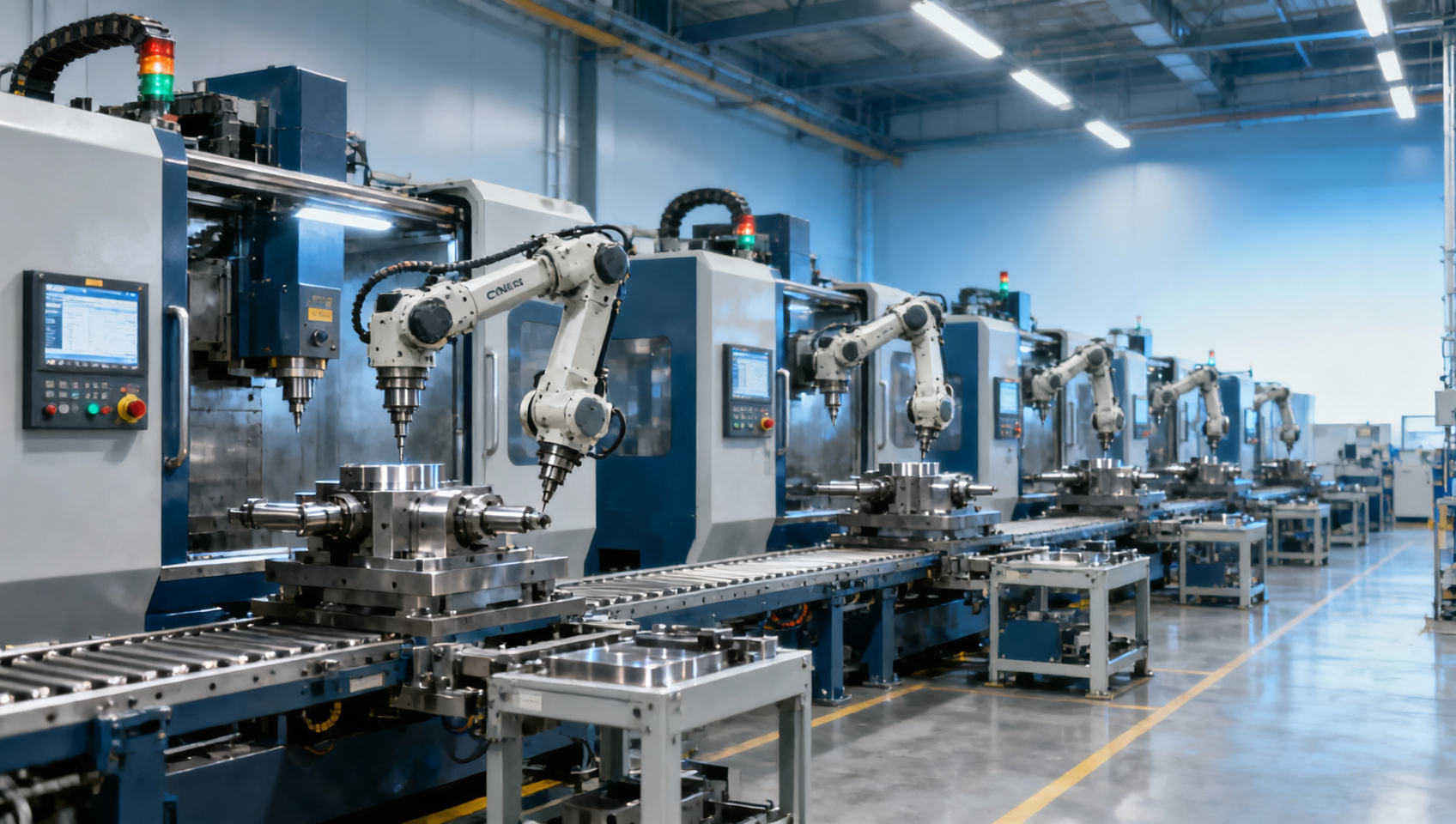
In the Manufacturing Industry, margins disappear fast when downtime is misread as a minor issue instead of a production process failure. From metal machining and CNC milling to automated production lines and industrial robotics, every delay affects output, quality, and cost. This article explores how industrial CNC operations can identify hidden losses, improve CNC production efficiency, and protect profitability in a more competitive Global Manufacturing landscape.
For researchers, plant operators, sourcing teams, and business decision-makers, the issue is not only how often a machine stops, but how accurately the stop is classified, measured, and corrected. A 12-minute spindle alarm, a 40-minute fixture setup delay, or a 2-hour robot recovery event may all be logged as “downtime,” yet each has different root causes and different cost implications.
In CNC machining, precision manufacturing, and automated production, misreading downtime often leads to the wrong investment decisions. Companies may buy more machines before fixing scheduling logic, replace cutting tools before correcting coolant control, or add labor before addressing unstable workholding. The result is lower OEE, slower throughput, and shrinking contribution margins even when order volume remains stable.
Why downtime classification matters more than most factories admit
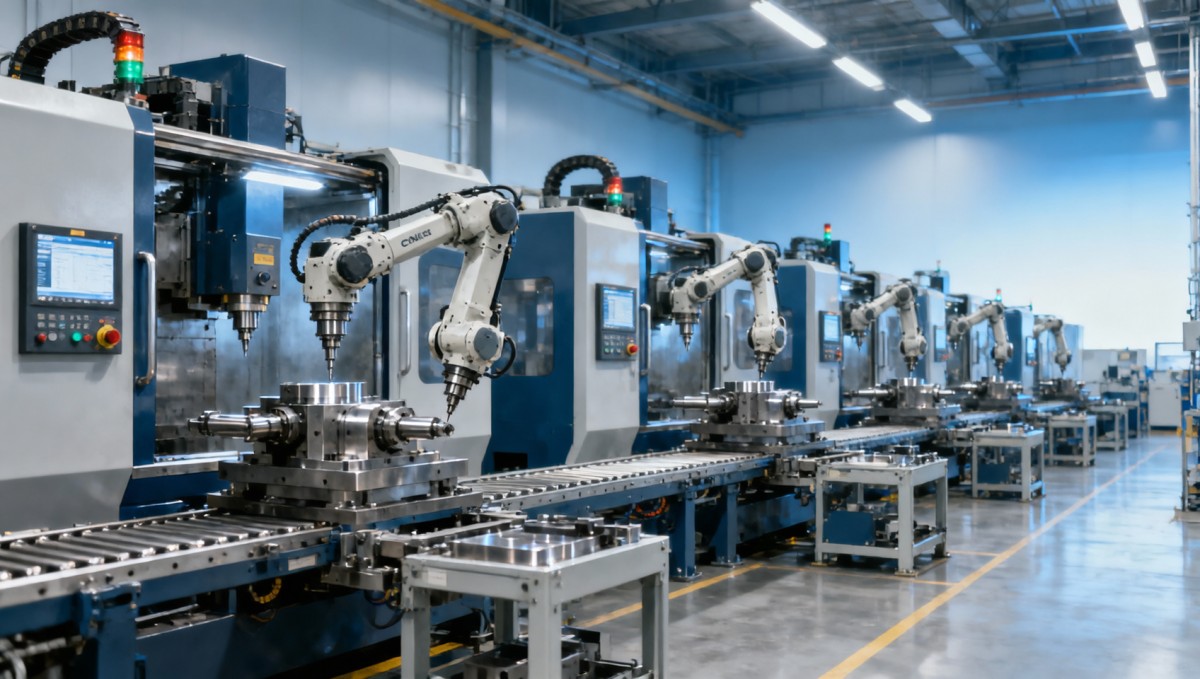
In many machine shops and smart factory environments, downtime is tracked as a single KPI. That approach is too broad. A CNC machining center that stops 6 times per shift for 5 minutes each is operationally different from a line that stops once for 30 minutes because of a robot handoff failure. Both equal 30 minutes of lost time, but the planning response, maintenance response, and cost recovery strategy should not be the same.
The first hidden loss appears in misclassification. Planned setup, first-piece inspection, material waiting, tool change, and machine fault are often grouped together. When that happens, production teams cannot see whether the constraint is equipment reliability, process engineering, staffing, or upstream material flow. In a plant running 2 shifts per day and 22 working days per month, even a modest 18-minute misread loss per shift adds up to 13.2 hours per month on a single asset.
The second hidden loss appears in pricing and margin analysis. Procurement and management may assume that the machine hourly rate is accurate, but if downtime codes are wrong, the real cost per machined part rises quietly. On high-mix, low-volume work, a 6% increase in non-cutting time can erase profit on small batches of 50 to 200 parts. On larger automotive or electronics runs, the same issue can create backlog pressure across multiple cells.
The third issue is data credibility. If operators, supervisors, and maintenance teams use different definitions, reports become inconsistent. One team logs “alarm,” another logs “setup,” and a third records “waiting.” This weakens ERP, MES, and production scheduling decisions. In digital manufacturing, bad categorization is often more damaging than no data at all because it creates false confidence.
Three common downtime buckets that should never be merged
- Equipment failure downtime: spindle alarms, servo issues, sensor faults, lubrication faults, coolant pump failure, robot communication loss.
- Process-related downtime: unstable tool life, probing errors, fixture alignment correction, program revision, first-off approval delays.
- Flow-related downtime: material shortage, WIP queue imbalance, forklift delay, missing operator, inspection bottleneck, shift handover lag.
Separating these 3 categories allows a plant to assign ownership correctly. Maintenance should not be judged on material shortages, and production planners should not be blamed for servo drive faults. Clear separation also improves capex decisions, because a plant may need better scheduling software or standardized fixturing rather than another machining center.
A practical framework for reading lost time
A useful rule is to classify every stop longer than 3 minutes but shorter than 30 minutes, every stop from 30 to 120 minutes, and every stop above 2 hours. Short stops usually point to process stability or operator interaction. Mid-length stops often indicate troubleshooting or support delays. Long stops typically expose failures in spare parts availability, maintenance response, or root-cause control.
The main takeaway is simple: the same total downtime can have very different commercial effects. That is why accurate coding, event ownership, and response timing are now core manufacturing management disciplines, not just maintenance tasks.
Where hidden losses build up in CNC machining and automated lines
In CNC lathes, vertical machining centers, 5-axis systems, and robotic transfer lines, hidden losses often accumulate outside obvious machine failures. A machine may show 85% availability on paper while still delivering poor profitability because actual chip-cutting time is much lower than expected. The key is to look beyond “machine running” and measure what portion of the shift creates sellable output at target quality.
Tool management is one of the most common sources of misread downtime. If inserts are changed too early, tool cost increases. If they are changed too late, scrap risk and rework increase. In many operations, tool life variability of just 8%–15% is enough to create frequent feed holds, offset corrections, and inspection interruptions. These are often logged as operator delays even though the root issue is process control.
Fixture and workholding instability is another major source. When a batch of precision discs or shaft components requires repeated re-clamping or zero-point verification, setup time expands. This is especially costly in mixed production where batch size may range from 20 pieces to 300 pieces. A 25-minute setup overrun on a short batch has a much larger margin effect than the same overrun on a long run.
Material flow also matters. In flexible production lines, machine downtime can be caused by upstream shortages rather than equipment condition. A robot cell waiting 14 minutes for pallets or a machining center waiting 9 minutes for pre-inspected blanks is not a maintenance problem. Yet if the event is logged simply as machine stop, the factory may invest in the wrong spare parts or service contract.
Typical hidden loss points by process area
The table below shows where hidden production losses usually sit in a precision manufacturing environment and what teams should review first before approving additional capex.
This pattern matters to sourcing teams as well. If downtime is mostly process-driven, buying a more expensive machine will not automatically improve throughput. If losses come from setup variation or material handling, investment should focus on fixtures, automation interfaces, software integration, or operator training before machine replacement.
Signals that a plant is misreading downtime
- Availability looks acceptable, but on-time delivery falls below target for 2 or more consecutive months.
- Scrap or rework rises after “minor stops,” showing that restarts are poorly controlled.
- Operators report frequent waiting, but maintenance reports low breakdown frequency.
- Machine investment requests increase even though utilization reports remain below 75%.
When these signs appear together, margin compression is usually already underway. The plant does not just need more uptime; it needs better interpretation of non-productive time across the entire production system.
How to build a more accurate downtime diagnosis system
A useful downtime diagnosis system should be simple enough for operators to use in real time and detailed enough for management to act on. Most factories can begin with a 4-layer model: event category, cause code, duration band, and financial impact. This does not require a large digital transformation project on day one. Many sites start by standardizing reason codes across 1 cell, 1 line, or 1 product family over a 30-day pilot period.
The first step is code design. Keep the top level limited to 5–7 categories, such as breakdown, setup, material, quality, tooling, programming, and labor/coordination. If the code tree is too complex, operators will skip it or select the nearest option. A practical rule is that an operator should be able to log the event in less than 20 seconds, while a supervisor can still drill down into root cause at shift close.
The second step is time threshold definition. For example, events under 3 minutes may be grouped as micro-stops, 3–15 minutes as short interruptions, 15–60 minutes as recoverable downtime, and above 60 minutes as major incidents. Using standard time bands helps compare machines, shifts, and factories without relying on subjective descriptions.
The third step is ownership and escalation. If a stop lasts 10 minutes, the operator and team leader may handle it. At 30 minutes, maintenance or quality should join. Beyond 60 minutes, production control and management need visibility because customer delivery and machine loading plans may need adjustment. Without escalation rules, response time expands even when technical recovery is straightforward.
A 5-step implementation approach
- Map the top 10 stop reasons for the last 4–8 weeks using existing logs, operator notes, and maintenance history.
- Standardize event names and define duration bands for every recorded stop.
- Test the coding structure on 1 high-value machine or 1 automated cell for 30 days.
- Review stop frequency, stop duration, and output impact weekly with production, maintenance, and quality teams.
- Link findings to corrective actions such as tool presetting, fixture redesign, spare stock rules, or shift planning changes.
Digital tools can strengthen this process, but discipline matters more than software alone. An MES, machine monitoring platform, or IIoT dashboard can collect machine states every second, yet manual validation is still needed to distinguish “machine idle for setup” from “machine idle waiting for forklift service.” The strongest systems combine automated event capture with human cause verification within the same shift.
What buyers and managers should ask solution providers
When evaluating machine monitoring systems, line integration services, or factory analytics platforms, buyers should ask practical questions tied to margin improvement, not only dashboard features.
- Can the system separate planned setup from unplanned downtime without manual spreadsheet cleanup?
- Does it support machine-level, shift-level, and job-level analysis across at least 3 operational views?
- Can it connect CNC equipment, robot cells, and inspection stations in one reporting logic?
- How quickly can a pilot be completed: 2 weeks, 4 weeks, or longer?
These questions help procurement teams avoid buying data tools that collect signals but do not improve decision quality. In B2B manufacturing, the value of visibility lies in the corrective action it enables.
Procurement and investment decisions when margins are under pressure
When margins shrink, many manufacturers feel pressure to upgrade equipment quickly. Sometimes that is justified, especially when spindle capacity, axis accuracy, or automation compatibility is clearly limiting output. But in many cases, the better investment is not a new machine tool. It may be a more stable fixture system, offline tool presetting, better coolant management, robot interface optimization, or faster maintenance response supported by critical spare parts.
Decision-makers should compare at least 4 dimensions before approving new capex: downtime source, load profile, part mix, and recovery potential. If a machining center is loaded above 85% and downtime is mostly equipment-related, replacement or retrofit may be justified. If utilization is below 70% and most losses come from setup and scheduling, the investment case is weaker.
This is especially relevant in global manufacturing clusters across China, Germany, Japan, and South Korea, where suppliers compete on delivery stability as much as on machining capability. Buyers increasingly ask about process control, lead time predictability, and digital traceability. A supplier that reduces downtime variation from shift to shift can often outperform a better-equipped competitor with unstable planning discipline.
Investment comparison for common downtime scenarios
The table below can help procurement teams and plant leaders match the investment type to the real production bottleneck rather than reacting only to visible machine stops.
The strongest procurement decisions start with downtime evidence. A machine tool, tooling package, automation module, or digital monitoring system should solve a defined loss mechanism. If the loss mechanism is unclear, the investment may improve appearance more than profitability.
Four buying criteria for margin-focused manufacturers
- Recovery speed: how quickly can the supplier support troubleshooting, spare parts, and process stabilization?
- Integration fit: can the solution connect with current CNC controls, robots, and production software?
- Changeover impact: will it reduce setup time by a measurable range such as 10%–30%?
- Data usefulness: can it translate machine events into decisions for planners, buyers, and plant managers?
This buying logic applies not only to large OEMs but also to mid-sized precision machining suppliers that need stable margins on complex parts, export orders, and fluctuating batch volumes.
Operational practices that protect profitability over time
Once downtime is classified properly, factories need routines that keep the improvements in place. The most effective plants treat downtime review as a weekly operating rhythm rather than a one-time project. A 20- to 30-minute review per week on the top 5 stop reasons is often enough to expose repeat causes before they turn into margin loss across a quarter.
Operators play a central role here. In CNC and automated production, they are often first to notice subtle changes: unusual spindle load, extra chip buildup, slower clamp response, or robot pickup hesitation. If the reporting system is too complicated, those signals never enter the analysis. Training should therefore focus on practical observation, code consistency, and restart discipline rather than on abstract KPI theory.
Maintenance teams should also shift from average response thinking to downtime pattern thinking. A plant may report a respectable 25-minute average response time, but if 3 repeat failures create 70% of long-stop hours, then maintenance priorities should center on those repeat modes. Condition checks on lubrication, coolant concentration, pneumatic stability, and sensor reliability can often reduce repeated stops more effectively than general inspection rounds.
For management, the goal is to connect operational data to financial consequences. When a 90-minute outage on a multi-axis machine delays a high-value aerospace or energy equipment batch, the impact includes overtime, schedule disruption, potential expedited logistics, and customer confidence risk. Profitability protection depends on seeing downtime not only as lost minutes, but as lost business options.
FAQ: practical questions from manufacturing teams
How often should downtime codes be reviewed?
For most plants, weekly review is the minimum and daily review is ideal for high-value cells. A weekly cycle works well when each line or machine group has fewer than 20 significant stop events. If there are more than 20 events per week, daily review helps stop repeat losses from spreading.
What downtime level should trigger management attention?
There is no single universal threshold, but repeated unplanned downtime above 5% of available production time usually deserves management review. For automated lines with tight takt expectations, even 2%–3% recurring unplanned loss may be financially significant if downstream delivery commitments are strict.
Is manual logging still useful in smart factories?
Yes. Automated systems are strong at capturing machine state changes, cycle start, cycle stop, and alarm timing. Manual input is still needed for cause context such as waiting for inspection, missing material, program revision, or customer drawing clarification. The best practice is to combine machine signals with operator confirmation inside the same shift.
Which factories benefit most from better downtime interpretation?
High-mix precision machining suppliers, automated component lines, and plants making automotive, aerospace, electronics, or energy equipment parts usually see the fastest value. These operations depend on tight tolerances, repeatable cycle time, and delivery reliability, so hidden losses convert quickly into margin pressure.
When downtime is measured accurately, manufacturers gain more than cleaner reports. They improve production planning, stabilize quality, strengthen procurement logic, and protect the real profitability of CNC machining and automated manufacturing assets. Better interpretation reveals whether the true bottleneck sits in equipment, tooling, setup, quality flow, or coordination across the line.
For information researchers, operators, buyers, and decision-makers, that clarity supports better action: more targeted investment, smarter maintenance priorities, and stronger output from existing capacity. If your operation is facing delivery pressure, rising machine-hour cost, or inconsistent production efficiency, now is the time to review how downtime is being classified and corrected.
To evaluate the right path for CNC production efficiency, machine tool optimization, or automated line improvement, contact us to discuss your production scenario, request a tailored solution, or learn more about practical strategies for reducing hidden downtime in global manufacturing.
Recommended for You
 Heavy-duty Machining Center for mold making: Why coolant filtration standards evolve faster than OEM manualsMachine Tool Industry Editorial Team
 Quick-change Fixture Design for CNC turning: Why clamping force consistency drops after 200 cyclesCNC Machining Technology Center
 5 Axis Machining for impeller manufacturing: Why toolpath smoothing affects surface fatigue lifeCNC Machining Technology Center
 Lean Production Process implementation: Where value stream mapping fails to expose hidden machine downtimeManufacturing Market Research Center
 Modular Tooling System for flexible manufacturing: Why interface repeatability degrades faster than expectedMachine Tool Industry Editorial Team
 Industrial Automation control system for CNC machines: When cybersecurity updates disrupt scheduled maintenanceMachine Tool Industry Editorial Team

Aris Katos
Future of Carbide Coatings
15+ years in precision manufacturing systems. Specialized in high-speed milling and aerospace grade alloy processing.
▶
Heavy-duty Machining Center for mold making: Why coolant filtration standards evolve faster than OEM manualsMachine Tool Industry Editorial Team▶
Quick-change Fixture Design for CNC turning: Why clamping force consistency drops after 200 cyclesCNC Machining Technology Center▶
5 Axis Machining for impeller manufacturing: Why toolpath smoothing affects surface fatigue lifeCNC Machining Technology Center▶
Lean Production Process implementation: Where value stream mapping fails to expose hidden machine downtimeManufacturing Market Research Center▶
Modular Tooling System for flexible manufacturing: Why interface repeatability degrades faster than expectedMachine Tool Industry Editorial Team
Mastering 5-Axis Workholding Strategies
Join our technical panel on Nov 15th to learn about reducing vibrations in thin-wall components.

Providing you with integrated sanding solutions
Before-sales and after-sales services
Comprehensive technical support