• Global CNC market projected to reach $128B by 2028 • New EU trade regulations for precision tooling components • Aerospace deman
NYSE: CNC +1.2%LME: STEEL -0.4%

What limits Industrial Robotics in high-mix production?
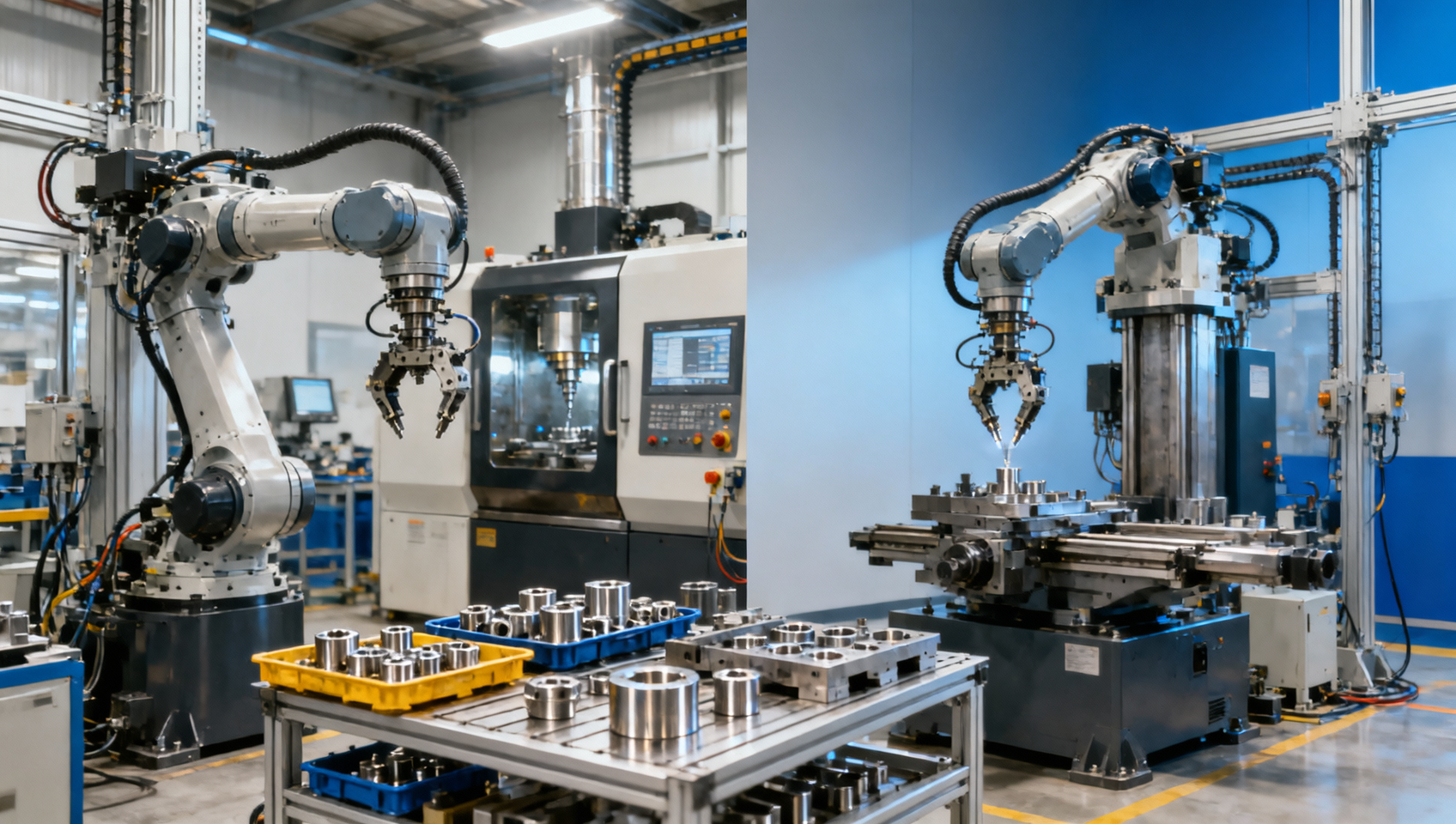
Industrial Robotics promises faster automated production, but in high-mix environments its limits become clear. Frequent changeovers, complex CNC programming, variable part geometries, and tight production process requirements challenge even advanced industrial CNC and automated production line systems. For manufacturers in metal machining and the Global Manufacturing sector, understanding these constraints is essential to improving flexibility, cost control, and CNC production efficiency.
In sectors such as aerospace parts, automotive prototyping, energy equipment, and electronics housings, production is rarely a simple repeat of one SKU for months at a time. A factory may run 20 to 200 part numbers in a single week, with batch sizes ranging from 5 pieces to 500 pieces. Under these conditions, industrial robots can still deliver value, but their limits become more visible than in high-volume, low-variation lines.
For operators, the main question is practical usability. For procurement teams, it is total cost and payback. For plant managers and executives, it is whether robotics can improve throughput without reducing flexibility. In CNC machining and precision manufacturing, the answer depends less on robot speed alone and more on programming time, fixturing strategy, part stability, inspection requirements, and line integration quality.
Why high-mix production exposes the limits of industrial robotics
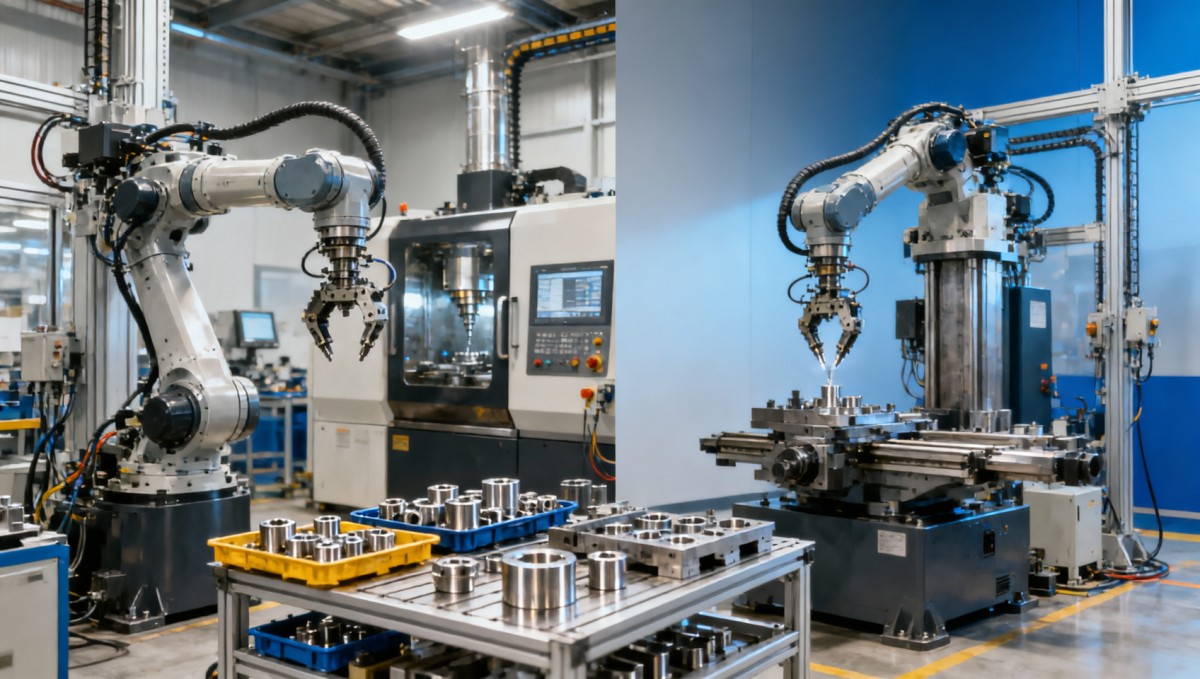
High-mix production means frequent product variation, shorter production runs, and more process interruptions. In a typical CNC workshop, one robot cell may need to handle different raw stock lengths, 3 to 6 fixture types, and several machining cycles within a single shift. A robot can repeat a taught motion with excellent consistency, but it does not automatically understand every new part, clamp position, or tolerance change.
The first limit is changeover time. In a dedicated line, a robot may run the same motion for 8 to 16 hours with minimal adjustment. In a high-mix environment, however, changing grippers, updating offsets, verifying part orientation, and confirming CNC program compatibility can consume 20 to 90 minutes per switch. If batches are small, setup time can erode most of the expected automation benefit.
The second limit is process variability. Different metals, wall thicknesses, and surface requirements change the way parts should be handled. Thin aluminum housings, hardened steel shafts, and irregular cast blanks do not behave the same during loading, unloading, or intermediate transfer. Even a high-precision robot can struggle if upstream material consistency or fixture repeatability is weak by more than ±0.2 mm to ±0.5 mm.
The third limit is economic rather than technical. A robotic cell may be justified in a stable production environment with utilization above 70%. In a workshop where robot utilization drops to 35% to 50% because of waiting time, frequent adjustment, or inspection delays, the investment case becomes more difficult. This is especially relevant for small and midsize manufacturers balancing capital expenditure against labor flexibility.
What makes a task suitable or unsuitable
Not all CNC-linked tasks fail in high-mix settings. Repetitive machine tending, pallet transfer, deburring of consistent edges, and end-of-line packing remain strong use cases. Problems appear when the task needs frequent manual judgement, adaptive orientation, or unstable gripping points. A cell that handles 2 highly standardized parts is very different from one handling 25 geometrically varied parts each month.
- Good candidates: stable part families, repeatable fixture locations, consistent cycle times, and clear pick-and-place references.
- Challenging candidates: irregular forged parts, reflective surfaces that confuse vision systems, mixed trays, and parts requiring in-process manual correction.
- High-risk candidates: low-volume jobs with less than 30 pieces per run and setup-intensive cells needing multiple end-of-arm tool changes.
Key technical bottlenecks in CNC and automated production line applications
In CNC machining, industrial robotics does not operate in isolation. It sits inside a chain that includes raw material preparation, fixturing, spindle access, tool life management, gauging, chip evacuation, and part traceability. A robot may have repeatability in the range of ±0.02 mm to ±0.08 mm, yet the overall cell performance can still be poor if the machine door timing, chuck condition, or fixture wear is unstable.
Programming complexity is another bottleneck. Offline programming can reduce downtime, but it still requires accurate digital models, reachable paths, collision checks, and process logic. In mixed-part production, engineers often maintain dozens of robot routines and CNC variants. A small change in jaw position, tool length, or part orientation can trigger a new round of verification. This raises engineering hours and increases the risk of hidden errors during launch.
Vision systems help, but they are not a universal solution. Cameras can detect orientation, locate parts in bins, or verify presence, yet performance depends on lighting stability, surface reflectivity, and cycle time targets. For example, a vision step that adds 4 to 8 seconds per part may be acceptable in a 6-minute machining cycle, but inefficient in a 40-second handling cycle. Integration must match takt time rather than technology preference.
End-of-arm tooling also limits flexibility. One gripper rarely fits every geometry. Parallel grippers, vacuum tools, magnetic tools, and servo-adjustable fingers all serve different needs. Tool changers improve adaptability, but they add hardware cost, maintenance points, and programming steps. In high-mix metalworking, gripper design is often the difference between a practical robot cell and one that spends too much time waiting for manual intervention.
Typical bottlenecks by process area
The table below shows where limits usually appear in CNC machine tending and flexible automation projects.
The main conclusion is that robotic speed is only one variable. In many machine tool applications, the limiting factor is not the robot arm itself but the surrounding process discipline. Procurement teams should therefore evaluate the full cell architecture, not just payload, reach, or repeatability specifications.
A practical engineering checklist
- Confirm part family range, including dimensions, weight, surface condition, and orientation rules.
- Measure actual setup time by job type, not only theoretical cycle time.
- Check fixture repeatability and machine interface stability over 3 to 5 production runs.
- Define whether vision, force sensing, or manual confirmation is required.
- Estimate maintenance and recovery time after faults, jams, or part changes.
Cost, utilization, and ROI limits for manufacturers and buyers
Many decision-makers assume that industrial robotics always lowers labor cost. In reality, high-mix production changes the math. The investment is not only the robot arm. It includes guarding, grippers, fixtures, sensors, PLC integration, programming, operator training, safety validation, and sometimes spindle or conveyor modifications. A seemingly moderate project can become expensive when 4 to 6 product families must run on one cell.
ROI depends heavily on utilization. If one robot tends two CNC machines with steady cycle times, annual output gains can be attractive. If the same cell loses 1 to 2 hours per day to changeovers, troubleshooting, and mixed scheduling, the payback period may stretch from 18 months to 36 months or longer. This does not mean the project is wrong, but it means the evaluation must be realistic.
For procurement teams, the hidden cost categories matter. Spare grippers, software updates, fixture duplication, preventive maintenance, and support response time can materially affect total ownership cost over 3 to 5 years. For operators, the cost of poor usability is equally real. If a system requires a specialist for every new part introduction, the cell becomes dependent on limited engineering resources.
A better buying approach is to compare not only automation level, but also flexibility level. In some factories, a semi-automated CNC loading station with quick-change fixtures and simple robot logic produces a stronger business result than a fully complex cell. The best solution is often the one that protects throughput while keeping changeover time within a practical window, such as under 15 to 30 minutes for a standard part family switch.
Procurement evaluation factors
Before approving a robotic automation project for mixed-part production, buyers should score the following factors in a structured way.
This comparison highlights a common purchasing mistake: buying by hardware specification alone. In flexible manufacturing, usability, serviceability, and integration often influence ROI more than maximum speed or payload capacity.
How to improve flexibility without over-automating the cell
The most effective response to robotic limits in high-mix production is not always more automation. It is smarter system design. Manufacturers can improve results by grouping similar parts into families, standardizing raw material presentation, simplifying fixture interfaces, and using modular end-of-arm tooling. Even a 20% reduction in variation at the input stage can significantly improve robot uptime and programming stability.
A practical strategy is to automate only the most repeatable steps. For example, a robot may handle loading and unloading between a rack and CNC machine, while operators manage first-piece validation and exception handling. This hybrid model fits many precision manufacturing environments because it preserves human judgement where needed, while removing repetitive motion from the highest-frequency tasks.
Digital standardization also matters. Recipe-based control, barcode or RFID job selection, and parameterized robot routines can reduce setup errors. Instead of rewriting programs from scratch, teams can work from a controlled library of part families. In some workshops, this lowers new-job introduction time from several hours to less than 60 minutes for a familiar geometry group.
Training should not be overlooked. A flexible robotic cell is only as effective as the people who run it. Operators should be able to recover from common alarms, verify gripper condition, check offsets, and confirm part presence without waiting for engineering support every time. A structured training program over 2 to 5 days can make a substantial difference in uptime and confidence.
Implementation priorities for CNC workshops
- Standardize part loading references so the robot sees fewer orientation variations.
- Use quick-change grippers or modular fingers for the top 3 to 5 recurring part families.
- Set target changeover time and track it as a KPI, not only machine cycle time.
- Link robot recipes to CNC job data to reduce operator input errors.
- Design manual bypass procedures so urgent short runs do not stop the entire line.
Common mistakes to avoid
A frequent mistake is trying to automate highly unstable processes before basic manufacturing discipline is in place. If fixturing lacks repeatability, part incoming quality varies significantly, or CNC cycle time changes from 4 minutes to 11 minutes across similar jobs, the robot cell will inherit those problems. Another mistake is selecting a system with no simple recovery logic. In a real production environment, fault recovery time should be measured in minutes, not dependent on rare engineering expertise.
Selection guidance, FAQ, and next steps for decision-makers
For information researchers, users, buyers, and executives, the key issue is not whether industrial robotics works in high-mix production, but where it works reliably and economically. The strongest projects usually share four features: stable part families, repeatable fixtures, manageable changeovers, and a realistic balance between automation and human intervention. Where these factors are weak, robotics can still help, but the scope should be narrower and more phased.
A sound implementation path often begins with one pilot cell, one machine group, and a limited set of 3 to 10 representative part numbers. This makes it easier to validate cycle time, operator interaction, scrap risk, and support needs before scaling to a larger automated production line. Measured expansion is generally safer than a plant-wide rollout based on theoretical assumptions.
For CNC and precision manufacturing businesses, the best automation partners are those that understand both robotics and machining realities. They should be able to discuss grippers, fixtures, spindle access, loading logic, safety, recipe management, and after-sales support in one integrated conversation. That level of practical alignment matters far more than generic automation claims.
FAQ: What buyers and production teams ask most often
How do I know if my high-mix CNC shop is ready for robotics?
Start with three checks: batch size, changeover frequency, and part-family similarity. If more than 60% of your weekly volume comes from repeat part families and standard fixture references, robotics is usually easier to justify. If most jobs are one-off or highly irregular, a semi-automated approach may be more practical.
What is an acceptable changeover time for a flexible robot cell?
There is no universal number, but many workshops target 10 to 30 minutes for a standard family change and under 60 minutes for a more complex switch. If real changeovers regularly exceed the machining cycle value they are meant to support, the automation design should be reconsidered.
Are collaborative robots better for high-mix production?
Sometimes, but not always. Collaborative robots can simplify deployment and operator interaction, especially for lighter payloads and lower-risk handling tasks. However, heavier metal parts, enclosed CNC access, and higher throughput demands may still favor traditional industrial robots with dedicated safety design.
What should procurement prioritize besides purchase price?
Look at support response, programming workflow, gripper flexibility, spare part lead time, and machine integration depth. Over a 3-year period, these factors often influence actual ownership cost more than the initial hardware quotation.
Industrial robotics remains a powerful tool for CNC machining, precision manufacturing, and automated production lines, but its limits in high-mix production are real and should be planned for early. Factories that align robotics with stable process families, modular tooling, disciplined fixturing, and realistic ROI targets are far more likely to achieve lasting gains in productivity and flexibility. If you are evaluating robot-ready CNC solutions, flexible production strategies, or machine tool automation options, contact us to discuss your application, compare suitable configurations, and get a tailored solution for your manufacturing goals.
Recommended for You
 Heavy-duty Machining Center for mold making: Why coolant filtration standards evolve faster than OEM manualsMachine Tool Industry Editorial Team
 Quick-change Fixture Design for CNC turning: Why clamping force consistency drops after 200 cyclesCNC Machining Technology Center
 5 Axis Machining for impeller manufacturing: Why toolpath smoothing affects surface fatigue lifeCNC Machining Technology Center
 Lean Production Process implementation: Where value stream mapping fails to expose hidden machine downtimeManufacturing Market Research Center
 Modular Tooling System for flexible manufacturing: Why interface repeatability degrades faster than expectedMachine Tool Industry Editorial Team
 Industrial Automation control system for CNC machines: When cybersecurity updates disrupt scheduled maintenanceMachine Tool Industry Editorial Team

Aris Katos
Future of Carbide Coatings
15+ years in precision manufacturing systems. Specialized in high-speed milling and aerospace grade alloy processing.
▶
Heavy-duty Machining Center for mold making: Why coolant filtration standards evolve faster than OEM manualsMachine Tool Industry Editorial Team▶
Quick-change Fixture Design for CNC turning: Why clamping force consistency drops after 200 cyclesCNC Machining Technology Center▶
5 Axis Machining for impeller manufacturing: Why toolpath smoothing affects surface fatigue lifeCNC Machining Technology Center▶
Lean Production Process implementation: Where value stream mapping fails to expose hidden machine downtimeManufacturing Market Research Center▶
Modular Tooling System for flexible manufacturing: Why interface repeatability degrades faster than expectedMachine Tool Industry Editorial Team
Mastering 5-Axis Workholding Strategies
Join our technical panel on Nov 15th to learn about reducing vibrations in thin-wall components.

Providing you with integrated sanding solutions
Before-sales and after-sales services
Comprehensive technical support