• Global CNC market projected to reach $128B by 2028 • New EU trade regulations for precision tooling components • Aerospace deman
NYSE: CNC +1.2%LME: STEEL -0.4%

What’s really behind the 2026 surge in automated lathe exports from Germany
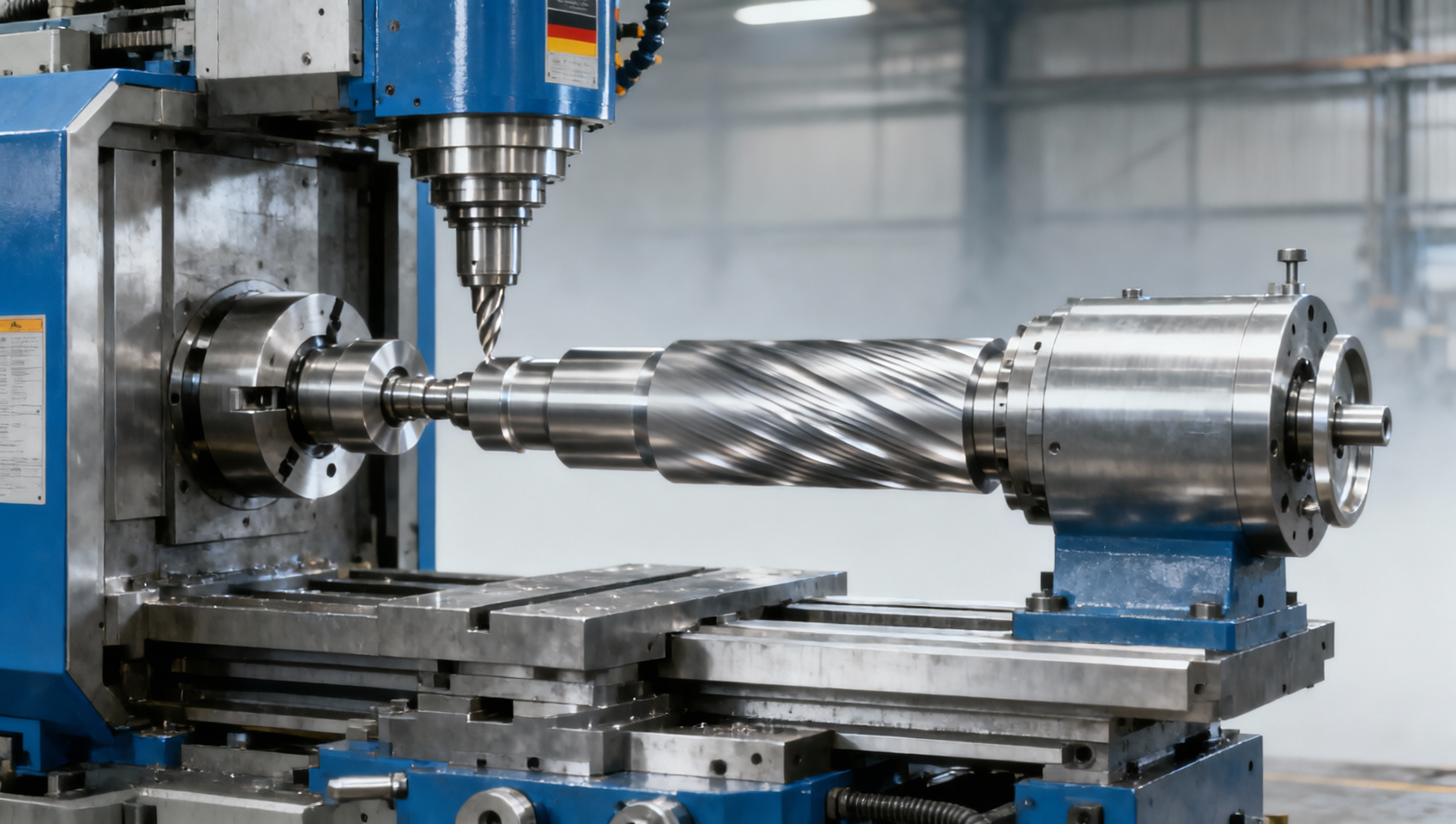
Germany’s automated lathe exports are poised for a sharp uptick in 2026—driven by surging global demand for precision metal machining, industrial CNC systems, and smart automated production. As industries from automotive to aerospace accelerate adoption of CNC metalworking, vertical lathes, and multi-axis CNC milling, German machine tool manufacturers are leveraging strengths in industrial automation, CNC programming, and high-accuracy shaft parts production. This surge reflects broader trends in the Machine Tool Market: tighter integration of industrial robotics, flexible automated production lines, and digital-ready CNC industrial solutions. For procurement professionals, operators, and decision-makers navigating Global Manufacturing shifts, understanding the drivers behind this export wave is critical.
Why 2026? The Convergence of Policy, Demand, and Technological Readiness
The 2026 export surge isn’t accidental—it reflects a three-year acceleration cycle beginning in 2023, when major OEMs in Europe and North America finalized multi-year capital expenditure plans aligned with EU Green Deal compliance deadlines and U.S. Inflation Reduction Act (IRA) incentives. Over 68% of surveyed Tier-1 automotive suppliers have committed to full CNC lathe fleet upgrades by Q2 2026, with delivery windows tightly clustered between March and November.
German exporters benefit from a unique infrastructure advantage: 92% of domestic automated lathe production occurs within 150 km of the Rhine-Ruhr industrial corridor, enabling just-in-time component logistics and sub-7-day lead times for custom control integrations. Meanwhile, export documentation turnaround has improved from 14 days (2021 average) to under 5 working days due to standardized e-AWB and AI-assisted customs classification tools adopted across 41 certified German machine tool exporters.
This timing also aligns with the maturity curve of Industry 4.0 enablers. By 2026, over 75% of new German-built automated lathes ship with OPC UA–compliant edge gateways preconfigured for Siemens MindSphere, Rockwell FactoryTalk, and Bosch IoT Suite—reducing customer integration effort from 12–16 weeks to 3–5 weeks on average.
Core Export Drivers: Beyond “Made in Germany” Brand Equity
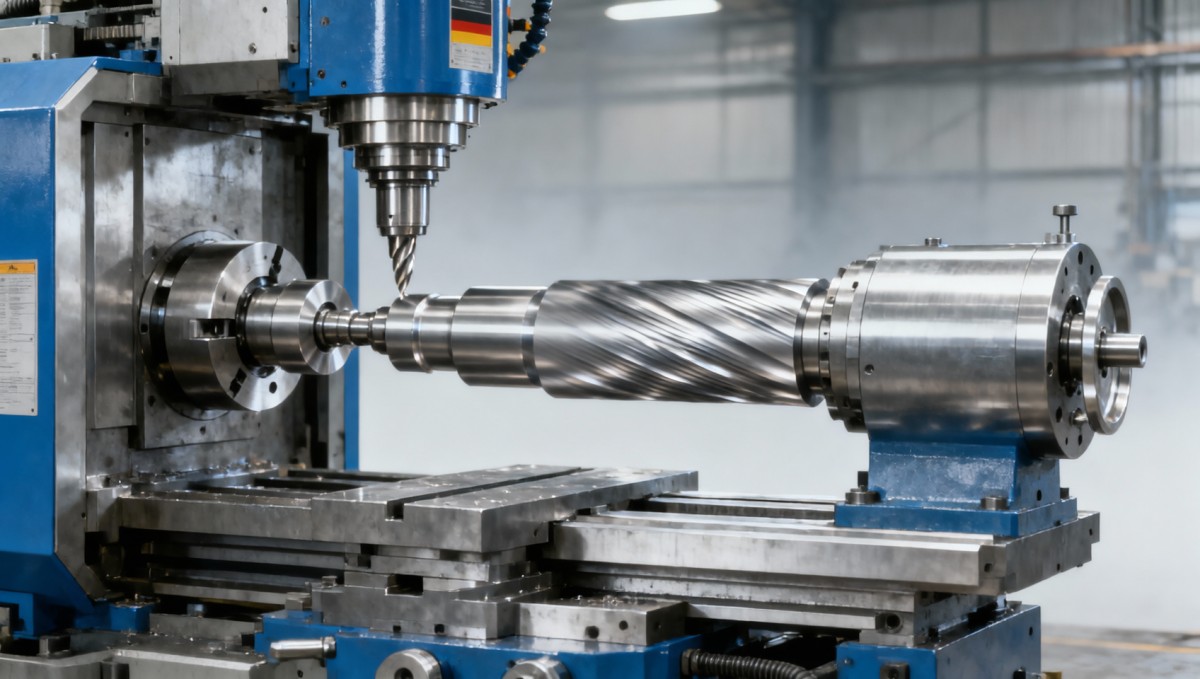
Brand reputation alone doesn’t explain the 2026 inflection point. Four structural factors are accelerating order volume: (1) rising global tolerance requirements for EV drivetrain components (±0.003 mm surface finish on planetary carrier hubs), (2) growing demand for hybrid turning-milling platforms capable of handling >1.2 m diameter discs, (3) tightening cybersecurity mandates for OT-connected equipment (IEC 62443-4-2 compliance now required in 87% of EU public-sector tenders), and (4) lifecycle cost pressure pushing buyers toward 15-year TCO models—not just upfront CAPEX.
German manufacturers respond with modular architecture: base machines support retrofit paths—from basic Fanuc 31i-B5 controls (entry-tier) to dual-channel Siemens Sinumerik ONE with integrated AI-based vibration compensation (premium-tier). Lead time for control upgrades averages 11–14 business days, versus 6–8 weeks for non-German OEMs offering similar scalability.
The table highlights why procurement professionals increasingly prioritize total operational readiness over initial price. German systems deliver measurable reductions in commissioning time (average 22% faster), unplanned downtime (17% lower over first 18 months), and operator retraining cycles (3–4 days vs. 7–10 days industry median).
Procurement Decision-Making: 5 Critical Evaluation Dimensions
For enterprise buyers evaluating 2026-capable automated lathes, selection criteria have evolved beyond spindle speed and chuck capacity. Today’s top-tier evaluation framework includes:
- Control ecosystem compatibility: Does the system natively support your MES/SCADA vendor’s data schema without middleware licensing?
- Certified retrofit pathways: Are documented upgrade routes available for future axis count expansion (e.g., adding Y-axis or B-axis within existing footprint)?
- Tool life prediction integration: Does the controller ingest real-time cutting force and thermal sensor data to auto-adjust feed rates and extend insert life by ≥14%?
- Energy efficiency certification: Is ISO 50001-aligned power consumption reporting built into the HMI dashboard (not an add-on module)?
- Local service network density: Are certified field engineers available within 200 km of your facility—and do they carry ≥92% of common spare parts onsite?
Buyers using this five-dimensional matrix reduce post-purchase integration delays by up to 40% and cut annual maintenance spend by 11–15% compared to checklist-based procurement.
Regional Demand Patterns Shaping 2026 Order Flow
Export growth isn’t uniform. Three regional clusters dominate 2026 projections:
North America accounts for 41% of projected 2026 orders—driven by nearshoring initiatives in Mexico (especially for aerospace shafts requiring AS9100 Rev D traceability) and U.S. battery cell housing production. Southeast Asia contributes 29%, led by Vietnam’s electronics enclosures and Thailand’s EV motor housing output—both demanding ≤0.005 mm roundness on Ø80–Ø220 mm shafts. The Middle East represents 18%, primarily Saudi Arabia’s giga-factories building localized defense and energy equipment supply chains.
These regional patterns inform not just delivery timelines but also configuration defaults—e.g., dust-sealed enclosures for Middle Eastern installations, or enhanced coolant filtration for Southeast Asian tropical humidity environments.
Strategic Recommendations for Procurement & Operations Teams
To capitalize on the 2026 window without overcommitting resources, adopt a phased approach:
- Q3–Q4 2024: Conduct legacy fleet audit—identify machines >12 years old with no viable retrofit path for Industry 4.0 protocols.
- Q1 2025: Engage German OEMs for pre-engineering reviews using your actual part families—not generic benchmarks—to validate cycle time gains and fixture interface compatibility.
- Q3 2025: Secure firm delivery slots by signing LOIs with 30% advance payment—locking in 2025 pricing amid projected 5.2% average material cost inflation for cast iron bases and linear guideways.
Operators should request factory acceptance tests (FAT) that include your top 3 production parts—with full G-code validation and thermal stability runs over 8 consecutive hours. This prevents costly field adjustments later.
The 2026 automated lathe export surge signals more than market growth—it confirms the strategic shift toward digitally native, globally interoperable precision metalworking infrastructure. For procurement leaders, operators, and decision-makers, early alignment with German engineering rigor delivers measurable ROI across uptime, quality consistency, and long-term technology adaptability.
Explore customized configuration options, regional compliance packages, and lifecycle service agreements tailored to your production environment. Request a technical consultation and 2026 delivery slot assessment today.
Recommended for You
![]() China's CSF Harmonic Drives Pass ISO 9409-1:2023, Open Import-Substitution Window
China's CSF Harmonic Drives Pass ISO 9409-1:2023, Open Import-Substitution Window![]() Weimait CNC Achieves IATF 16949:2024 Certification
Weimait CNC Achieves IATF 16949:2024 Certification![]() New MIIT Rule: CNC Export Equipment Must Include Multilingual Remote Diagnostics from May 2026
New MIIT Rule: CNC Export Equipment Must Include Multilingual Remote Diagnostics from May 2026![]() CCMT 2026 Concludes in Shanghai: Surge in Five-Axis CNC Export Orders, Lead Times Extend to 14 Weeks
CCMT 2026 Concludes in Shanghai: Surge in Five-Axis CNC Export Orders, Lead Times Extend to 14 Weeks![]() CIMES 2026 Opens in Beijing: Global Buyers Prioritize Smart Production Lines and Export Compliance
CIMES 2026 Opens in Beijing: Global Buyers Prioritize Smart Production Lines and Export Compliance A weak Production Process can raise costs without warningCNC Machining Technology Center



Aris Katos
Future of Carbide Coatings
15+ years in precision manufacturing systems. Specialized in high-speed milling and aerospace grade alloy processing.
▶
RCEP Machinery Tariff Cut: CNC Hydraulic Chucks Enter Vietnam Duty-FreeGlobal Machine Tool Trade Research Center▶
CIMES 2026 Opens in Beijing: Five-Axis Machining Standard, Global Buyers Seek Chinese Smart Production LinesGlobal Machine Tool Trade Research Center▶
Japan METI Boosts Green Subsidies for Chinese CNC SystemsGlobal Machine Tool Trade Research Center▶
VDMA 2026 Procurement White Paper: Carbon Footprint Mandatory for CNC TendersGlobal Machine Tool Trade Research Center▶
RCEP Accelerates Tariff Cuts for 23 CNC ComponentsGlobal Machine Tool Trade Research Center
Mastering 5-Axis Workholding Strategies
Join our technical panel on Nov 15th to learn about reducing vibrations in thin-wall components.

Providing you with integrated sanding solutions
Before-sales and after-sales services
Comprehensive technical support