• Global CNC market projected to reach $128B by 2028 • New EU trade regulations for precision tooling components • Aerospace deman
NYSE: CNC +1.2%LME: STEEL -0.4%

Industrial CNC exports are facing stricter documentation checks
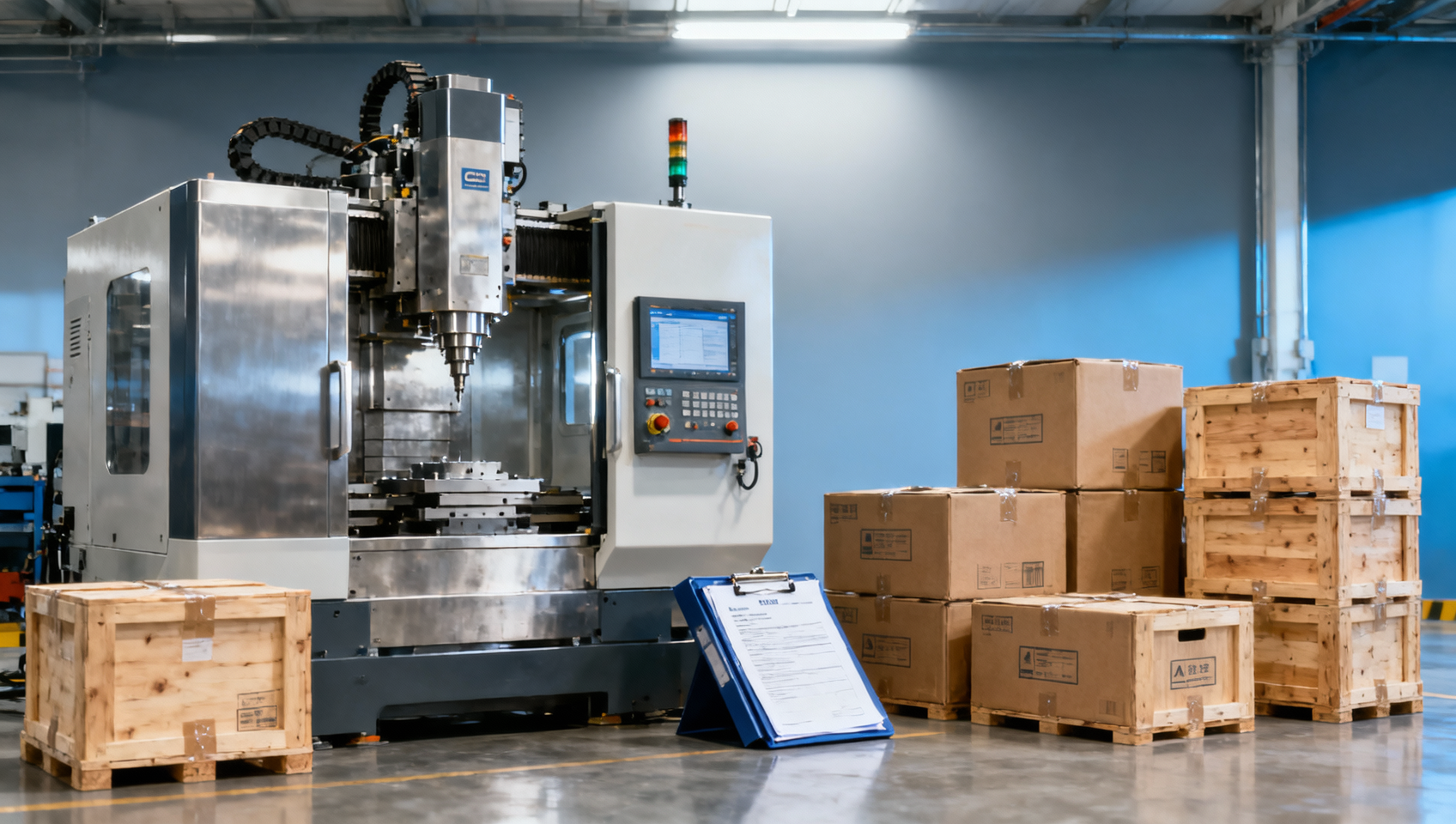
As industrial CNC exports face stricter documentation checks, manufacturers and buyers across Global Manufacturing must adapt quickly. From metal machining and CNC metalworking to automated production lines, compliance now affects every production process, delivery schedule, and sourcing decision. This article explores how the Machine Tool Market and Manufacturing Industry can reduce export risks while maintaining efficiency, traceability, and competitiveness.
For information researchers, operators, procurement teams, and business decision-makers, the issue is no longer limited to customs paperwork. Documentation quality now influences whether a CNC lathe ships on time, whether a multi-axis machining center is delayed for 7–21 days, and whether an overseas buyer accepts a machine without additional inspection. In many export cases, missing technical files, inconsistent HS codes, unclear country-of-origin statements, or incomplete end-use declarations can trigger holds, reclassification, or extra review.
In the CNC machine tool industry, where lead times often range from 4–12 weeks and project values can be substantial, documentation errors create both direct and hidden costs. These include port storage fees, rework in shipment planning, delayed commissioning, and reduced buyer confidence. A stronger documentation strategy has therefore become part of operational excellence, not just administrative compliance.
Why Documentation Checks Are Tightening in Industrial CNC Trade
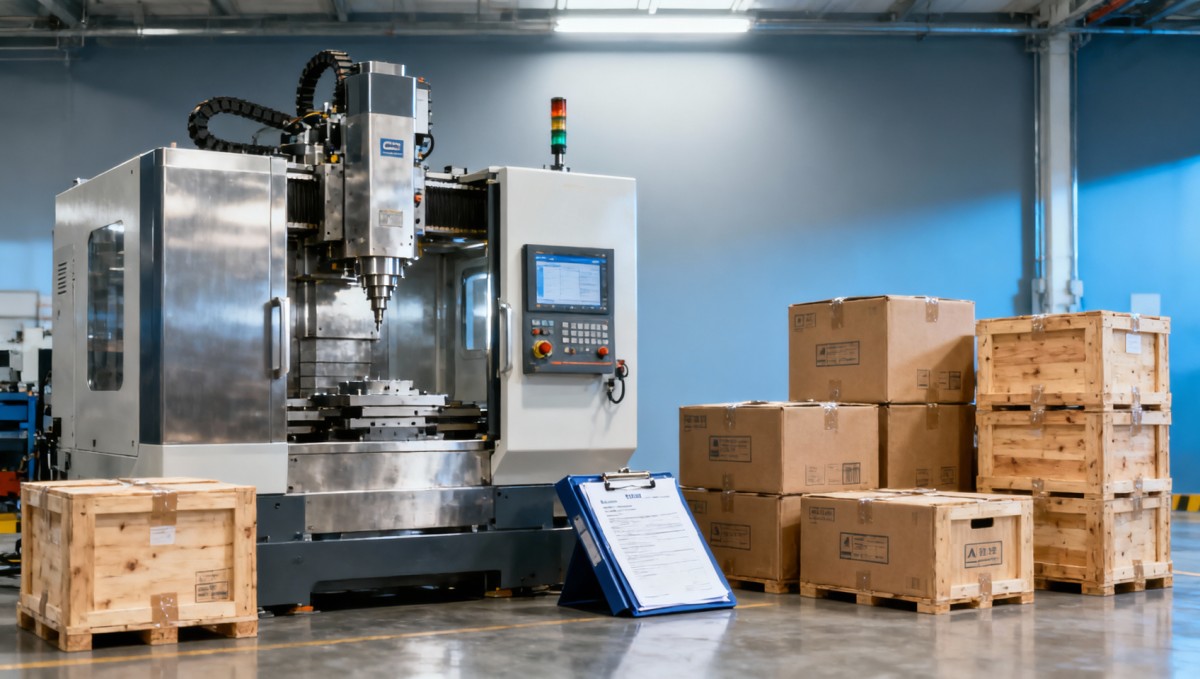
Documentation checks are becoming stricter because CNC equipment sits at the intersection of advanced manufacturing, cross-border regulation, and industrial traceability. Machine tools are not simple commodity exports. A single shipment may include the main machine, electrical cabinets, servo systems, cutting tools, fixtures, software media, spare parts, and installation documents. If one set of records does not match the others, customs or the consignee may request clarification before release.
Another reason is the rise of dual-use sensitivity and industrial control standards. High-precision machining centers, 5-axis systems, and CNC grinders may attract closer review when declared accuracy, spindle speed, or end-use industry suggests possible strategic applications. Even when the machine is intended for civil production, exporters must be able to explain technical specifications, customer identity, and application scope in a clear and consistent way.
Global buyers are also raising internal compliance standards. Automotive, aerospace, energy equipment, and electronics producers often require supplier files that go beyond standard export documents. They may ask for packing lists, machine test records, electrical diagrams, maintenance manuals, component origin lists, and CE- or equivalent-related declarations where applicable. The result is that export readiness now begins long before the container reaches port.
The practical impact varies by market, but three patterns are common: more document matching, more technical review, and less tolerance for vague descriptions. Terms such as “machine equipment” or “industrial device” are no longer sufficient. Buyers and authorities increasingly expect specific labels such as CNC turning center, vertical machining center, gantry machining system, or automated loading line.
Common triggers behind export review
- Declared product description is too broad and does not match the commercial invoice or packing list.
- Technical parameters such as axis count, spindle power, voltage, or control system are omitted.
- Country of origin, manufacturer name, and actual production site are inconsistent across 3 or more documents.
- End-user or end-use information is missing in projects involving energy, defense-adjacent, or high-precision sectors.
- Accessories and spare parts are listed separately but not cross-referenced to the main machine shipment.
For CNC exporters, the lesson is clear: documentation quality has become a commercial differentiator. Suppliers that can present a complete file package often reduce clearance friction, accelerate buyer approval, and shorten the interval between factory acceptance and site installation by 5–10 working days.
Key Documents That Matter Most for CNC Machine Exports
A strong export package for industrial CNC equipment should be built around consistency, traceability, and technical clarity. While exact requirements vary by destination and machine type, most successful shipments rely on a core set of documents that align commercial, logistics, and engineering information. Problems usually appear when these three layers are prepared by different teams without a final cross-check.
For example, a machining center may be sold under one commercial name, packed under a shortened internal code, and described in the user manual with a different model extension. That mismatch can be harmless inside the factory, but in export review it may raise questions about whether the delivered machine is the same item listed on the invoice and shipping documents.
The table below summarizes the document set that buyers and exporters should verify before shipment. It is especially useful for procurement teams comparing suppliers, because the completeness of documentation often predicts the smoothness of installation and after-sales support.
The key conclusion is that no single document works in isolation. In high-value CNC exports, consistency across 5–8 files matters more than having one well-written invoice. A buyer may accept a shipment only after the commercial description, technical sheet, and packing list fully align.
How detailed should the technical file be?
For standard CNC lathes and vertical machining centers, the technical file should at minimum include working envelope, spindle range, tool capacity, power supply, controller brand or platform, machine weight, and main application. For more advanced systems such as 5-axis machining centers or flexible production cells, it is advisable to add automation scope, robot interface information, safety interlock notes, and software or PLC architecture summaries.
In practice, a 2–4 page specification package is often sufficient for standard equipment, while integrated production lines may require 10 pages or more when exported with conveyors, loading units, and vision or inspection modules. The right level of detail reduces back-and-forth communication and protects the delivery schedule.
Minimum cross-check routine before shipment
- Match model name and serial number across invoice, packing list, and test report.
- Verify that voltage and frequency match the destination market, such as 380V/50Hz or 460V/60Hz.
- Confirm that all accessories, from toolholders to coolant units, are listed in the same shipment logic.
- Review destination-specific language needs for manuals, labels, and safety instructions.
Operational Risks for Manufacturers, Buyers, and Procurement Teams
Stricter documentation checks create different risks for different roles in the manufacturing chain. For exporters, the main concern is delayed release and increased administrative cost. For buyers, the bigger risk is project disruption. If an imported CNC machine arrives 10 days late, the issue may extend beyond transport. Foundation work, electrical preparation, operator scheduling, and trial production may all need to be moved, adding avoidable cost across multiple departments.
Operators and plant managers face another challenge: inadequate documentation often means poor commissioning support. A machine that clears customs but arrives with incomplete manuals, missing lubrication schedules, or unclear parameter backup procedures can lose 2–5 production days during installation. In sectors such as automotive components or precision electronics, that time loss can affect customer delivery commitments.
Procurement teams should also understand that documentation maturity reflects supplier capability. A vendor that cannot keep invoice data aligned with technical data may also struggle with spare parts coding, service records, and future retrofits. In long-life machine tool investments, where equipment may remain in service for 8–15 years, document control is part of lifecycle value.
The matrix below helps buyers and suppliers assess where the biggest export-related risks usually appear in CNC machine transactions.
The table shows that many export risks are predictable and manageable. Most do not require expensive systems at the beginning. A disciplined process with version control, responsibility assignment, and shipment review checkpoints can eliminate a large share of avoidable errors.
Common mistakes that still appear in CNC exports
- Listing the machine as a generic “industrial equipment” without travel, spindle, or axis information.
- Sending only a user manual while omitting wiring diagrams and spare parts references.
- Failing to align serial number plates with the shipment documents and final acceptance report.
- Ignoring destination-specific format needs, such as language, signature, or stamped copies requested within 48 hours.
For buyers, these warning signs are useful during supplier evaluation. A quotation that arrives with a clear document checklist, standard lead time assumptions, and named responsibilities is often a safer choice than a lower-priced offer with vague export support.
A Practical Compliance Workflow for CNC Export Readiness
The most effective way to reduce export friction is to treat documentation as part of production planning. In many factories, engineering completes the machine, sales prepares the invoice, logistics books transport, and service writes the manual later. That sequence creates gaps. A better method is a 5-step workflow that begins when the order is confirmed and ends after the final document pack is validated.
This approach is especially valuable for companies shipping CNC machining centers, CNC lathes, robotic loading cells, or flexible manufacturing units to multiple markets. It helps standardize outputs while still allowing destination-specific customization for voltage, labeling, and regulatory expectations.
Recommended 5-step workflow
- Order intake: define machine scope, application, destination country, and customer compliance requirements within the first 24–72 hours.
- Technical file setup: create a controlled dossier with model code, serial number logic, core specifications, and accessory list.
- Mid-production verification: check any engineering changes that may affect invoice wording, weight, dimensions, or declared configuration.
- Pre-shipment audit: compare at least 6 items across invoice, packing list, nameplate, manual, test record, and transport documents.
- Post-shipment archive: store the final export set for 12–36 months to support warranty, reorders, and customs follow-up.
Manufacturers that build this workflow into their ERP, MES, or document management routine usually see better shipment accuracy. Even without full digital integration, a spreadsheet-based control list with revision dates and responsible persons can significantly improve consistency. What matters most is that trade, engineering, and service teams work from the same final version.
For procurement leaders buying from overseas suppliers, it is reasonable to request a document readiness milestone before final payment or before container loading. This can include a draft invoice, draft packing list, technical specification package, and manual index. Reviewing these files 5–7 days before shipment often prevents last-minute corrections.
What should be checked at factory acceptance?
Factory acceptance should not focus only on machining accuracy or cycle performance. It should also confirm that machine identification, installed options, software version, and test conditions match the export documents. If the accepted configuration differs from what is declared, customs questions and buyer disputes become more likely.
A practical rule is to link acceptance records to the final commercial scope. If a machine includes an automatic tool changer with 24 stations, a chip conveyor, and a through-spindle coolant function, those features should be consistently reflected wherever they are commercially or technically relevant.
How Buyers Can Choose Safer CNC Suppliers Under Stricter Trade Controls
When documentation review becomes more demanding, supplier selection should go beyond machine price and basic technical fit. Buyers in the machine tool market need to evaluate whether a supplier can support international delivery with stable records, predictable communication, and documented after-sales capability. A cheaper CNC machine can become more expensive if the shipment is delayed, installation files are incomplete, or spare parts are hard to identify later.
A robust procurement decision should balance 4 dimensions: machine performance, documentation maturity, delivery execution, and service continuity. This is relevant for both stand-alone machines and integrated lines. In automated production environments, one missing document can hold up an entire project involving robots, conveyors, fixtures, and inspection stations.
The evaluation table below provides a practical scoring framework for buyers comparing CNC suppliers for export-sensitive projects.
This comparison method helps procurement teams avoid a narrow price-based decision. In CNC metalworking and precision manufacturing, reliability of information can be just as important as spindle power or rapid traverse speed. The best supplier is often the one that combines technical suitability with low execution risk.
Supplier questions worth asking before order placement
- Can you provide a sample document pack for a similar machine type?
- How many days before shipment will draft documents be available for review?
- How are options, spare parts, and accessories linked to the machine serial number?
- What manuals, wiring files, and maintenance guides are included as standard?
- Who is responsible for final document verification: sales, engineering, or logistics?
Clear answers to these questions reduce sourcing uncertainty. They also help decision-makers compare suppliers on operational strength, not only on quotation format or sales responsiveness.
FAQ and Next Steps for CNC Export Risk Reduction
Many companies in the manufacturing industry are still adjusting to stricter export review standards. The most effective response is not to wait for a rejected shipment, but to create a documentation system that supports precision manufacturing, automated production lines, and international procurement from the start. The following questions reflect common concerns from buyers, engineers, and operational teams.
How much delay can a documentation issue cause in CNC exports?
Minor inconsistencies may be corrected within 1–3 working days, but more serious issues such as product reclassification, origin clarification, or missing end-use files can extend delays to 7–21 days. The exact impact depends on destination, shipment value, and machine type. For project-based deliveries, even a short hold can disrupt commissioning schedules and labor planning.
Which machines need the most careful documentation?
Higher-risk categories usually include 5-axis machining centers, precision grinders, advanced turning-milling systems, and integrated automation cells. These systems involve more components, more technical detail, and often more scrutiny around end use. However, even standard CNC lathes and vertical machining centers should have complete and consistent files.
What should a buyer prepare on the receiving side?
Buyers should prepare import instructions, consignee details, site utility requirements, and a review process for draft documents before shipment. It is also helpful to assign one coordinator to align purchasing, engineering, and installation teams. In medium-size projects, this single-point coordination can reduce communication loss and improve start-up efficiency during the first 2 weeks after arrival.
How can suppliers improve quickly without major software investment?
A practical start includes a standardized document checklist, revision-number control, serial-number mapping, and a mandatory pre-shipment review meeting. Even these basic steps can improve document accuracy significantly. Over time, the process can be integrated into ERP or PLM systems, but the first gains usually come from discipline, ownership, and cross-team coordination rather than technology alone.
Stricter documentation checks are reshaping industrial CNC exports, but they also create an opportunity for stronger exporters and smarter buyers to stand out. Companies that connect technical data, commercial records, and after-sales documentation into one controlled process are better positioned to protect delivery schedules, reduce trade risk, and support long-term machine performance.
If you are evaluating CNC machines, automated production solutions, or export-ready manufacturing partners, now is the right time to review your documentation workflow. Contact us to discuss your application, request a tailored sourcing or compliance checklist, or learn more about practical solutions for machine tool export readiness.
Recommended for You
![]() Iranian LNG Vessels Breach U.S. Strait Blockade; Shanghai Crude Surges 4%Manufacturing Market Research Center
Iranian LNG Vessels Breach U.S. Strait Blockade; Shanghai Crude Surges 4%Manufacturing Market Research Center![]() Pakistan Launches CNC Localization Tender for CPEC II Smart Manufacturing ParkGlobal Machine Tool Trade Research Center
Pakistan Launches CNC Localization Tender for CPEC II Smart Manufacturing ParkGlobal Machine Tool Trade Research Center![]() NVIDIA Joins $1T Club; AI-Driven CNC Digital Twin Gains Global TractionCNC Machining Technology Center
NVIDIA Joins $1T Club; AI-Driven CNC Digital Twin Gains Global TractionCNC Machining Technology Center![]() World's First 5-Axis Middle-Grade Wire EDM Machine Enters Mass ProductionMachine Tool Industry Editorial Team
World's First 5-Axis Middle-Grade Wire EDM Machine Enters Mass ProductionMachine Tool Industry Editorial Team![]() China’s CNC Machine Tool Export Prices Up 11.3% in Q1 2026Global Machine Tool Trade Research Center
China’s CNC Machine Tool Export Prices Up 11.3% in Q1 2026Global Machine Tool Trade Research Center![]() Saudi Energy Security Boosts CNC Import Efficiency in Middle EastGlobal Machine Tool Trade Research Center
Saudi Energy Security Boosts CNC Import Efficiency in Middle EastGlobal Machine Tool Trade Research Center


Aris Katos
Future of Carbide Coatings
15+ years in precision manufacturing systems. Specialized in high-speed milling and aerospace grade alloy processing.
▶
Saudi Energy Security Boosts CNC Import Efficiency in Middle EastGlobal Machine Tool Trade Research Center▶
China's CNC Machine Tool Exports Q1 2026: ASEAN +23.6%, EU -1.2%Global Machine Tool Trade Research Center▶
How to Compare CNC Tooling System Suppliers in GermanyGlobal Machine Tool Trade Research Center▶
CNC manufacturing exporter: What customs documentation pitfalls delay first shipments?Global Machine Tool Trade Research Center▶
Machine Tool Market Recovery Depends on More Than ExportsGlobal Machine Tool Trade Research Center
Mastering 5-Axis Workholding Strategies
Join our technical panel on Nov 15th to learn about reducing vibrations in thin-wall components.

Providing you with integrated sanding solutions
Before-sales and after-sales services
Comprehensive technical support