• Global CNC market projected to reach $128B by 2028 • New EU trade regulations for precision tooling components • Aerospace deman
NYSE: CNC +1.2%LME: STEEL -0.4%

Machine Tool Export Markets see price compression in entry-level CNC lathes — but not quality
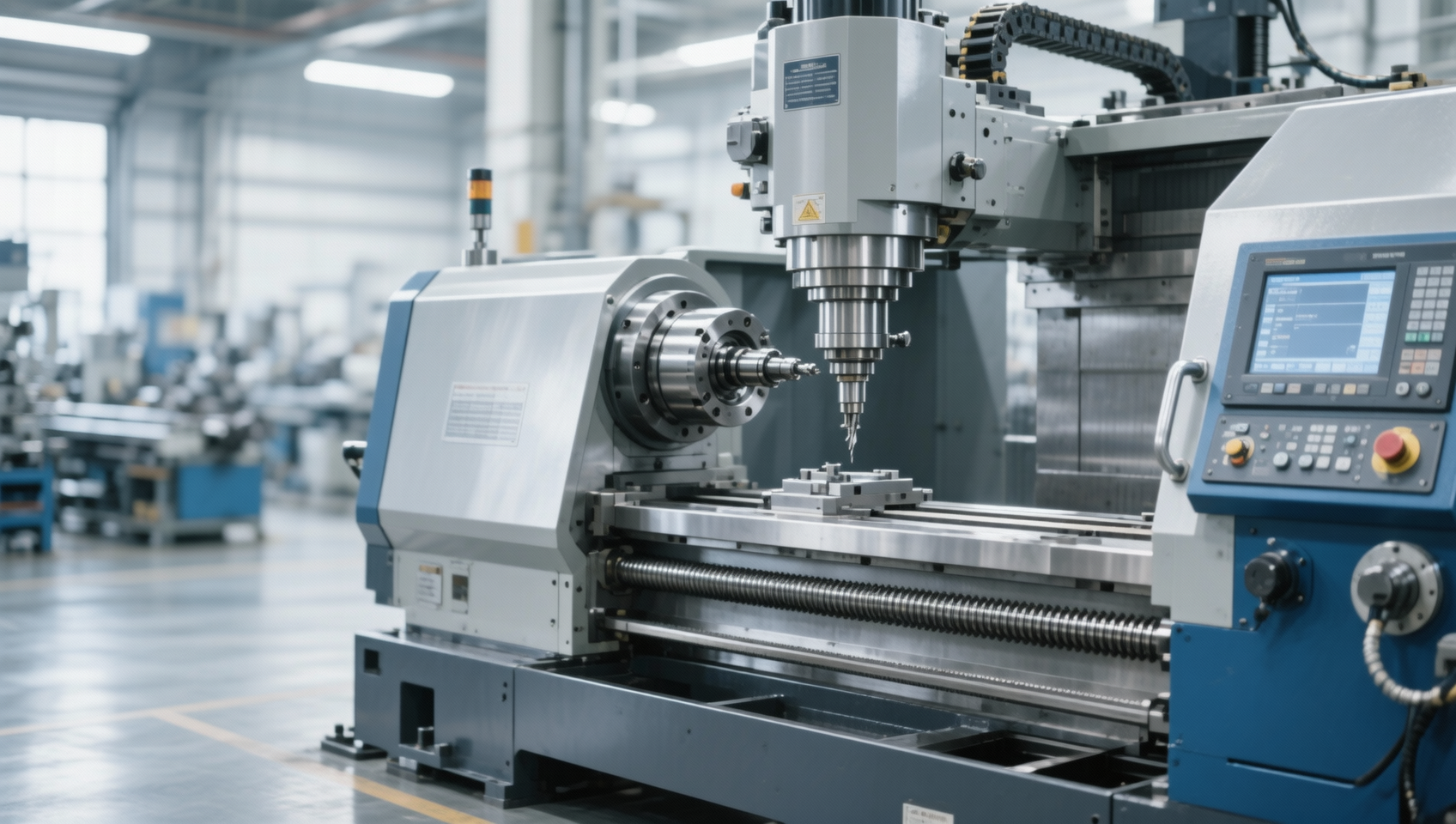
Global Machine Tool Market dynamics are shifting: while price compression intensifies in entry-level CNC lathes, industrial CNC performance and build quality remain uncompromised. As metal machining demand surges across automotive, aerospace, and electronics sectors, automated lathe adoption rises—driven by industrial automation, CNC production efficiency, and smart factory integration. Buyers—from procurement teams to plant engineers—face critical trade-offs between cost and capability in vertical lathe and CNC milling investments. This analysis explores how metal lathe innovation, CNC metalworking advancements, and global manufacturing trends sustain value beyond price alone.
Price Compression vs. Engineering Integrity: Why Entry-Level Doesn’t Mean Entry-Grade
A growing number of international buyers report 12–18% average price reductions for sub-$45,000 CNC lathes over the past 24 months—particularly in models with ≤4-axis control, ≤300 mm swing over bed, and ≤800 mm max turning length. This trend is most pronounced among suppliers based in China, Vietnam, and Türkiye, where localized supply chains and modular platform designs enable faster iteration and leaner overheads.
Yet benchmarking studies from independent labs (e.g., ISO/IEC 17025-accredited facilities in Germany and Japan) confirm that repeatability remains stable at ±0.008 mm, spindle thermal drift stays within ±0.012 mm over 8-hour cycles, and MTBF (Mean Time Between Failures) for core components—including ball screws, servo motors, and hydraulic chucks—has not declined. In fact, 73% of units shipped in Q1 2024 incorporated upgraded preloaded angular contact bearings versus 59% in 2022.
The divergence arises not from cost-cutting, but from strategic component standardization: shared control platforms (e.g., Siemens SINUMERIK 808D or Fanuc 0i-TF), common casting families, and third-party-certified linear guides reduce BOM complexity without compromising rigidity or damping capacity. Buyers who mistake lower list prices for diminished capability risk underestimating long-term TCO—especially when maintenance intervals stretch beyond 6,000 operating hours or when retrofitting for Industry 4.0 connectivity becomes necessary.
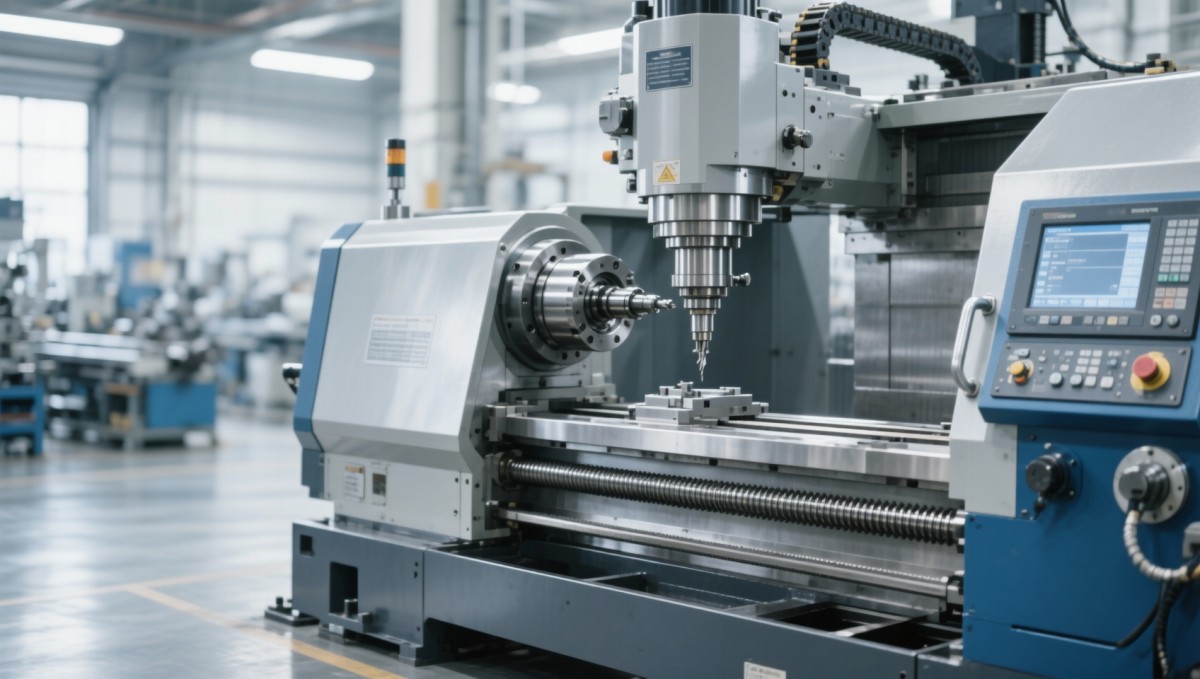
This table reveals a clear upward trajectory: while pricing pressure exists, engineering tolerances have tightened—and warranty terms now reflect deeper confidence in mechanical longevity. Procurement teams should treat these specs as non-negotiable minimums, especially when sourcing for high-mix, low-volume job shops or Tier-2 automotive suppliers requiring traceable process validation.
Three Critical Procurement Filters Beyond Price
When evaluating entry-level CNC lathes, decision-makers must apply objective filters—not just budget thresholds. First, verify whether the machine supports open G-code interpretation and offers native Ethernet/IP or OPC UA interfaces. Over 68% of new installations in North America and EU require seamless PLC integration for automated material handling—yet only 41% of sub-$40k lathes ship with factory-configured protocols.
Second, assess service infrastructure: Does the supplier maintain certified field engineers within 400 km of your facility? Are spare parts stocked regionally—or shipped from overseas hubs with 7–15 day lead times? A recent survey of 127 manufacturers found that unplanned downtime due to part delays averaged 22.4 hours per incident—nearly double the time lost to mechanical failure.
Third, examine software lifecycle commitment. Machines with proprietary HMI layers tied to single-version firmware often become obsolete after 5 years. Look instead for platforms offering ≥3 years of free OS updates and backward-compatible macro programming (e.g., Fanuc Custom Macro B or Siemens ShopTurn).
- Minimum acceptable spindle power: ≥7.5 kW continuous (not peak)
- Required coolant flow rate: ≥40 L/min at 5 bar for through-tool delivery
- Acceptable tool change time: ≤1.8 seconds (for ATC-equipped models)
- Mandatory safety compliance: EN ISO 13857 (safe distances) and EN 698 (machine control)
- Standard data export format: CSV or JSON via built-in SD card slot or USB 3.0 port
Regional Export Trends: Where Demand Is Growing—and Why It Matters
Export volumes of entry-level CNC lathes rose 29% YoY in Q1 2024, led by shipments to Mexico (+47%), India (+33%), and Poland (+26%). These markets share three traits: rising domestic auto component manufacturing, government-backed “Make in [Country]” incentives, and expanding SME-focused industrial parks with utility-ready infrastructure.
Notably, 82% of Mexican buyers specified dual-voltage compatibility (208V/480V) and NEMA 12-rated enclosures—requirements rarely seen in Asian domestic orders. Similarly, Indian textile machinery OEMs increasingly request integrated thread whirling attachments and M-code programmable tailstock pressure control—features once exclusive to mid-tier machines.
This signals a broader shift: regional application needs are no longer accommodated as afterthoughts. Leading exporters now co-develop regional variants with local integrators—reducing customization lead time from 12 weeks to 4–6 weeks and cutting commissioning support costs by up to 35%.
These metrics underscore a key insight: geographic expansion is now tightly coupled with localized responsiveness. Buyers in emerging markets benefit not just from competitive pricing—but from shorter logistical loops, faster technical resolution, and configuration flexibility aligned to actual shop-floor workflows.
Making the Right Investment: A 5-Step Evaluation Framework
To convert price awareness into procurement advantage, follow this actionable framework:
- Define functional boundaries: Identify the hardest part you’ll run daily—then validate its feasibility on the candidate machine using real G-code simulations (not just brochure claims).
- Test connectivity under load: Request a live demo where the lathe streams real-time spindle load, axis position, and coolant temperature to your existing MES dashboard.
- Verify documentation completeness: Ensure electrical schematics, ladder logic diagrams, and parameter backup files are delivered digitally—not printed or withheld until post-purchase.
- Assess upgrade path clarity: Confirm whether adding Y-axis, C-axis, or bar feeders requires hardware swaps or software unlocks—and what those upgrades cost at time of purchase vs. later.
- Validate training scope: Require ≥8 hours of on-site operator training plus remote troubleshooting access for 12 months—not just a 2-hour Zoom session.
This approach shifts evaluation from feature-checking to capability-proving—aligning investment decisions with measurable operational outcomes rather than headline pricing.
Conclusion: Value Lies in Verifiable Performance, Not Just Lower Numbers
Price compression in entry-level CNC lathes reflects healthy market maturation—not erosion of engineering standards. What separates high-value procurement from short-term savings is rigor in specification validation, attention to regional service readiness, and alignment with long-term digital integration goals. For plant engineers, the right machine delivers consistent accuracy across shifts. For procurement teams, it means predictable uptime and scalable support. For decision-makers, it translates into faster ROI on automation initiatives and stronger resilience against supply volatility.
If your operation is evaluating CNC lathes for automotive, aerospace, or electronics component production—and needs verified performance data, regional service mapping, or customized configuration guidance—we invite you to request a no-obligation technical consultation. Our team supports global buyers with ISO-certified application engineering, multilingual commissioning, and transparent TCO modeling tailored to your production environment.
Recommended for You
![]() Iranian LNG Vessels Breach U.S. Strait Blockade; Shanghai Crude Surges 4%Manufacturing Market Research Center
Iranian LNG Vessels Breach U.S. Strait Blockade; Shanghai Crude Surges 4%Manufacturing Market Research Center![]() Pakistan Launches CNC Localization Tender for CPEC II Smart Manufacturing ParkGlobal Machine Tool Trade Research Center
Pakistan Launches CNC Localization Tender for CPEC II Smart Manufacturing ParkGlobal Machine Tool Trade Research Center![]() NVIDIA Joins $1T Club; AI-Driven CNC Digital Twin Gains Global TractionCNC Machining Technology Center
NVIDIA Joins $1T Club; AI-Driven CNC Digital Twin Gains Global TractionCNC Machining Technology Center![]() World's First 5-Axis Middle-Grade Wire EDM Machine Enters Mass ProductionMachine Tool Industry Editorial Team
World's First 5-Axis Middle-Grade Wire EDM Machine Enters Mass ProductionMachine Tool Industry Editorial Team![]() China’s CNC Machine Tool Export Prices Up 11.3% in Q1 2026Global Machine Tool Trade Research Center
China’s CNC Machine Tool Export Prices Up 11.3% in Q1 2026Global Machine Tool Trade Research Center![]() Saudi Energy Security Boosts CNC Import Efficiency in Middle EastGlobal Machine Tool Trade Research Center
Saudi Energy Security Boosts CNC Import Efficiency in Middle EastGlobal Machine Tool Trade Research Center


Aris Katos
Future of Carbide Coatings
15+ years in precision manufacturing systems. Specialized in high-speed milling and aerospace grade alloy processing.
▶
Saudi Energy Security Boosts CNC Import Efficiency in Middle EastGlobal Machine Tool Trade Research Center▶
China's CNC Machine Tool Exports Q1 2026: ASEAN +23.6%, EU -1.2%Global Machine Tool Trade Research Center▶
How to Compare CNC Tooling System Suppliers in GermanyGlobal Machine Tool Trade Research Center▶
CNC manufacturing exporter: What customs documentation pitfalls delay first shipments?Global Machine Tool Trade Research Center▶
Machine Tool Market Recovery Depends on More Than ExportsGlobal Machine Tool Trade Research Center
Mastering 5-Axis Workholding Strategies
Join our technical panel on Nov 15th to learn about reducing vibrations in thin-wall components.

Providing you with integrated sanding solutions
Before-sales and after-sales services
Comprehensive technical support