• Global CNC market projected to reach $128B by 2028 • New EU trade regulations for precision tooling components • Aerospace deman
NYSE: CNC +1.2%LME: STEEL -0.4%

What to compare before buying CNC production equipment
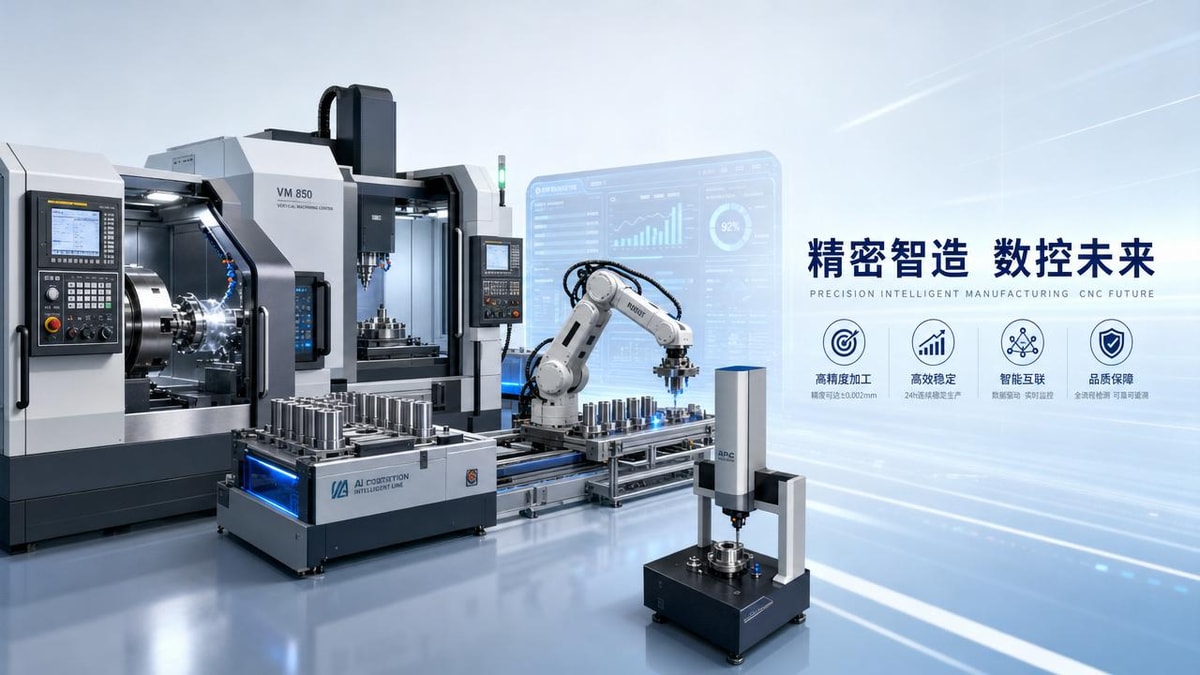
Before investing in CNC production equipment, buyers need to compare more than price alone. Machine accuracy, automation level, production capacity, maintenance support, and compatibility with future manufacturing needs all directly affect long-term value. Understanding these factors helps procurement teams reduce risk, improve efficiency, and choose equipment that supports both current operations and future growth.
Understanding what CNC production equipment includes
For procurement teams, the term CNC production equipment covers more than a single machine. It refers to a broader manufacturing system that may include CNC lathes, machining centers, multi-axis machines, cutting tools, workholding fixtures, tool changers, automation units, inspection devices, and software used to manage production. In modern manufacturing, these systems are not evaluated only by technical specifications. They are judged by how well they support quality, throughput, labor efficiency, traceability, and long-term operational stability.
This is especially important in industries such as automotive, aerospace, electronics, energy equipment, and general industrial parts manufacturing. Buyers are no longer selecting standalone assets. They are assessing whether a machine platform can fit into an automated line, connect with digital production systems, and remain productive as product designs evolve. That broader perspective changes how CNC production equipment should be compared before purchase.
Why the industry pays close attention to equipment comparison
The global machine tool industry is moving toward higher precision, faster cycle times, more intelligent control, and stronger integration with robotics and smart factory technologies. In many factories, machine uptime and process consistency now have a greater financial impact than the initial purchase price. A machine that seems affordable at the start can become costly if it delivers unstable tolerances, requires frequent manual intervention, or depends on slow service support.
For purchasing professionals, this means comparing CNC production equipment in the context of total manufacturing performance. If the business expects mixed-batch production, frequent part changeovers, or higher export quality standards, then machine flexibility and software compatibility may matter as much as spindle speed or table size. In short, procurement decisions now affect operational resilience, customer delivery, and future competitiveness.
Core factors to compare before buying CNC production equipment
A structured comparison helps buyers avoid decisions based on incomplete data. The following dimensions should be reviewed together rather than in isolation.
Among these factors, accuracy is often the most visible, but not always the most decisive. A highly precise machine may still underperform if setup time is long, operators require complex manual adjustments, or service parts are difficult to source. The strongest purchasing decisions usually come from balancing process quality, operational efficiency, and lifecycle support.
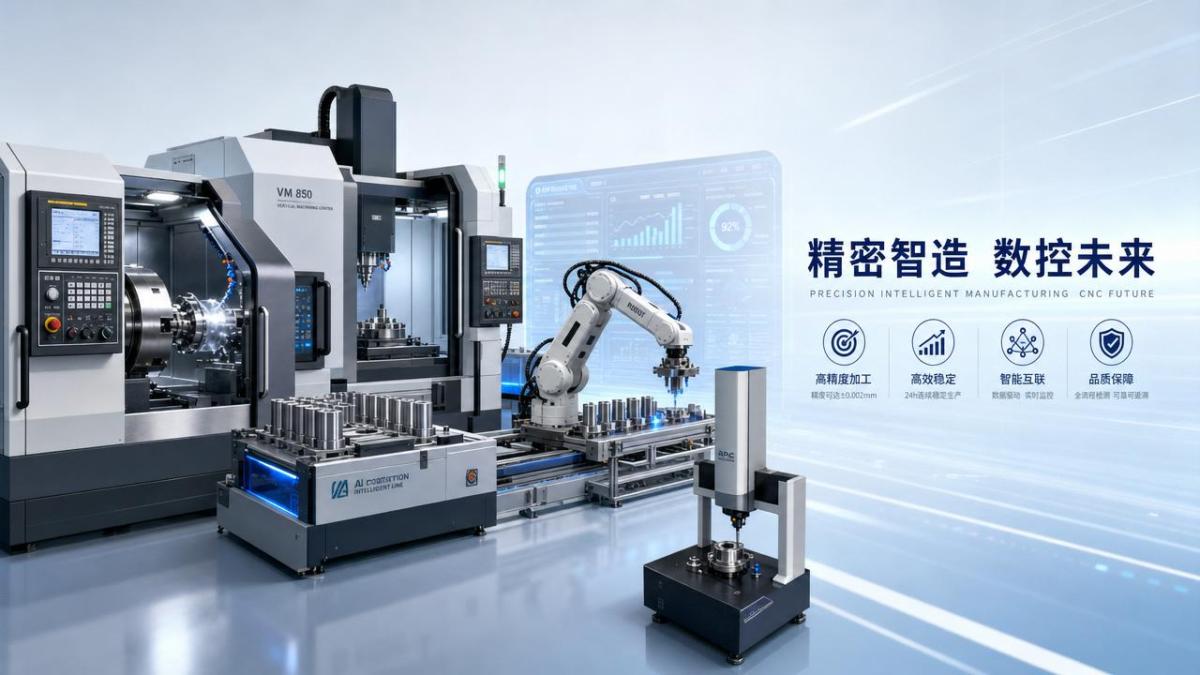
How equipment requirements differ by production environment
Not every factory should compare CNC production equipment using the same priorities. Production type, part geometry, batch size, quality standard, and labor conditions all influence the right choice. For example, a supplier producing high-volume automotive shafts may prioritize throughput and automation integration, while a manufacturer of aerospace structural parts may focus more on multi-axis capability, precision stability, and traceable process control.
Procurement teams benefit from mapping equipment options to the real production environment instead of relying on generic specifications. A machine that performs well in demonstration conditions may not match the actual workpiece material, fixture setup, coolant requirement, or shop-floor workflow in daily production.
Typical equipment fit by application
Looking beyond specifications to operational value
Technical specifications matter, but buyers should also evaluate how a machine behaves over time. Operational value comes from dependable output, smooth operator use, predictable maintenance, and the ability to support future process upgrades. That is why many experienced procurement teams request trial cutting, benchmark parts, and real production references before final approval.
When comparing CNC production equipment, ask practical questions. How long does setup take for a new part? How easy is it to train operators? Can the controller communicate with the factory’s digital systems? How often do customers of the same machine platform report unplanned downtime? Answers to these questions reveal the gap between a machine that looks strong on paper and one that performs reliably in continuous production.
The role of automation and digital integration
Automation is no longer limited to very large factories. Even mid-sized manufacturers increasingly expect CNC production equipment to work with robotic loading, pallet changers, in-process measurement, and production monitoring software. This shift is driven by labor shortages, rising quality expectations, and the need for more flexible scheduling.
Digital integration has a similar impact. Equipment that can share data with MES or ERP systems helps production managers monitor utilization, tool life, alarm history, and output quality in real time. For buyers, this means the machine’s control platform and communication protocols deserve careful attention. A lower-cost machine with limited connectivity may create hidden barriers if the company later expands into smart factory management or cross-site production reporting.
Supplier evaluation is part of equipment evaluation
A strong machine is only one part of a strong procurement decision. The supplier’s engineering capability, application support, installation experience, and after-sales responsiveness should be compared with the same discipline used for machine features. In many cases, weak technical support creates more cost than a slightly higher equipment price.
For example, if a supplier can help optimize tooling, cycle parameters, fixture selection, and preventive maintenance planning, the buyer gains more than equipment delivery. The buyer gains manufacturing support. In the CNC machine tool industry, this distinction is important because process performance often depends on the interaction between machine structure, tooling strategy, material behavior, and operator skill.
Practical comparison steps for procurement teams
A practical assessment process keeps equipment comparison objective and aligned with business goals. Procurement teams can improve decision quality by following a structured review path:
First, define the target production scenario clearly, including part types, annual volume, material range, tolerance requirements, and expected automation level. Second, compare shortlisted CNC production equipment against those real conditions instead of broad catalog claims. Third, evaluate lifecycle support, including spare part lead time, local service capability, software updates, and operator training resources.
Fourth, request evidence. This may include machine acceptance data, customer references from similar industries, trial machining results, or productivity case studies. Fifth, calculate total cost of ownership rather than purchase price alone. Sixth, consider future compatibility. If production may expand into lights-out machining, higher-mix orders, or digital quality management, equipment flexibility becomes a strategic advantage.
Common buying mistakes to avoid
One common mistake is overemphasizing initial price. Another is selecting equipment based only on peak technical specifications without confirming real process fit. Some buyers also underestimate the cost of training, tooling adaptation, fixture redesign, and software integration. These issues can delay production launch and reduce expected return on investment.
A further mistake is treating all machine suppliers as interchangeable. In reality, response speed, engineering support, and application knowledge vary widely. For companies working in high-precision or delivery-sensitive sectors, the support ecosystem behind the machine may be as important as the machine itself.
A balanced approach to choosing CNC production equipment
The best CNC production equipment is not simply the fastest, most advanced, or least expensive option. It is the option that aligns with the factory’s product mix, quality targets, workforce capability, automation strategy, and growth plan. Buyers who compare machines through that broader lens are more likely to secure stable output, lower long-term cost, and stronger manufacturing resilience.
For procurement professionals, a careful comparison process turns equipment purchasing from a transactional decision into a strategic one. By examining production fit, lifecycle support, automation readiness, and digital integration together, companies can choose solutions that serve current operations while preparing for the next stage of manufacturing development.
Recommended for You
![]() ANVISA New Rule: Portuguese Biocompatibility Labels for Medical CNC Machines in BrazilManufacturing Policy Research Center
ANVISA New Rule: Portuguese Biocompatibility Labels for Medical CNC Machines in BrazilManufacturing Policy Research Center![]() EMO Hannover 2027 Booth Booking Opens: China AI-Machining Pavilion LaunchesGlobal Machine Tool Trade Research Center
EMO Hannover 2027 Booth Booking Opens: China AI-Machining Pavilion LaunchesGlobal Machine Tool Trade Research Center![]() KATS Updates KC Rules: CNC Cybersecurity Modules Must Meet IEC 62443-4-2Manufacturing Policy Research Center
KATS Updates KC Rules: CNC Cybersecurity Modules Must Meet IEC 62443-4-2Manufacturing Policy Research Center![]() Shanghai Port Launches Green Clearance Channel for CNC EquipmentManufacturing Market Research Center
Shanghai Port Launches Green Clearance Channel for CNC EquipmentManufacturing Market Research Center![]() ISO 23218-3:2026 Published: CNC Digital Twin Interoperability StandardCNC Machining Technology Center
ISO 23218-3:2026 Published: CNC Digital Twin Interoperability StandardCNC Machining Technology Center![]() Vietnam Cuts CNC Equipment Import Tariff to 3.8% from June 2026Global Machine Tool Trade Research Center
Vietnam Cuts CNC Equipment Import Tariff to 3.8% from June 2026Global Machine Tool Trade Research Center


Aris Katos
Future of Carbide Coatings
15+ years in precision manufacturing systems. Specialized in high-speed milling and aerospace grade alloy processing.
▶
EMO Hannover 2027 Booth Booking Opens: China AI-Machining Pavilion LaunchesGlobal Machine Tool Trade Research Center▶
What to compare before buying CNC production equipmentGlobal Machine Tool Trade Research Center▶
Industrial Lathe Buying Errors That Raise Lifetime CostGlobal Machine Tool Trade Research Center▶
What to check before ordering CNC production equipmentGlobal Machine Tool Trade Research Center▶
What Buyers Miss When Comparing CNC Production EquipmentGlobal Machine Tool Trade Research Center
Mastering 5-Axis Workholding Strategies
Join our technical panel on Nov 15th to learn about reducing vibrations in thin-wall components.

Providing you with integrated sanding solutions
Before-sales and after-sales services
Comprehensive technical support