• Global CNC market projected to reach $128B by 2028 • New EU trade regulations for precision tooling components • Aerospace deman
NYSE: CNC +1.2%LME: STEEL -0.4%

What to check before ordering CNC production equipment
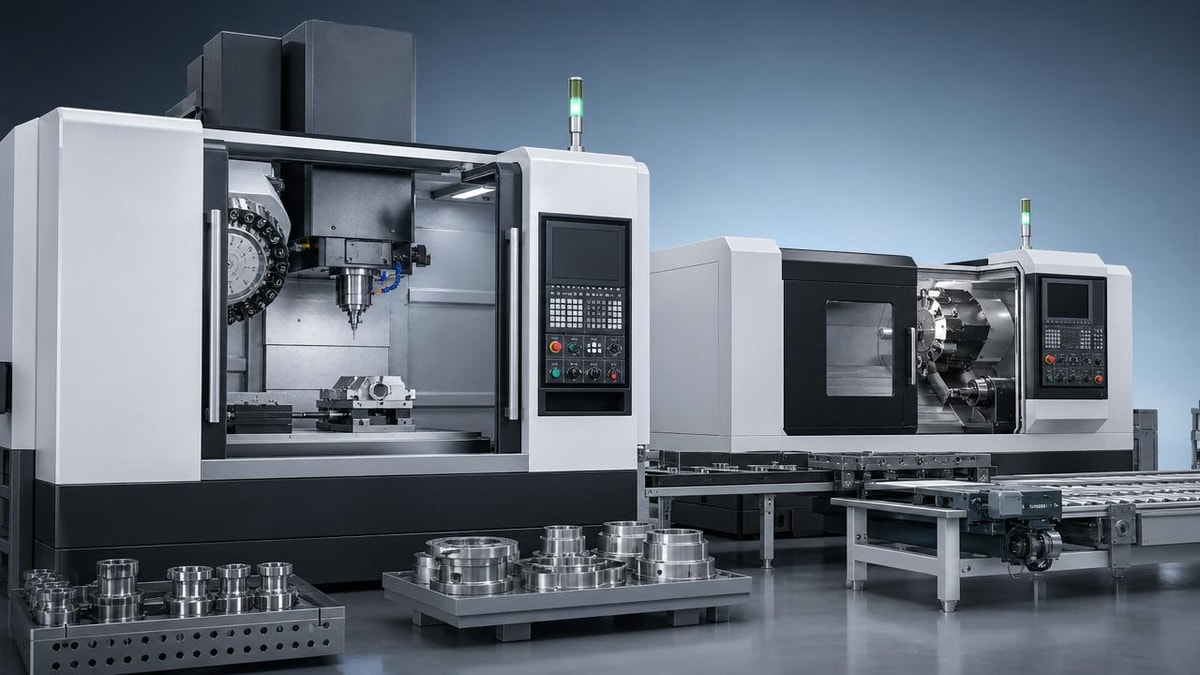
Before investing in CNC production equipment, buyers need to evaluate more than price alone. Machine accuracy, production capacity, automation compatibility, after-sales service, and long-term operating costs all directly affect purchasing value. This guide outlines the key factors procurement professionals should review to reduce risk, improve efficiency, and choose equipment that matches real manufacturing needs.
For procurement teams in modern manufacturing, a CNC machine is rarely a single-item purchase. It is usually part of a wider production decision involving tooling, fixturing, software, operator capability, maintenance planning, and delivery targets. Whether the application is automotive parts, aerospace components, energy equipment, or electronics manufacturing, the wrong machine specification can create 12 to 36 months of avoidable cost, downtime, and quality instability.
That is why checking CNC production equipment in a structured way matters. Buyers should compare machine capability against part requirements, expected output, factory conditions, and long-term service support. A lower initial quotation may still lead to higher lifecycle cost if spindle failures, weak local support, or poor automation integration reduce line efficiency by even 5% to 10% over time.
Define the production requirement before comparing suppliers
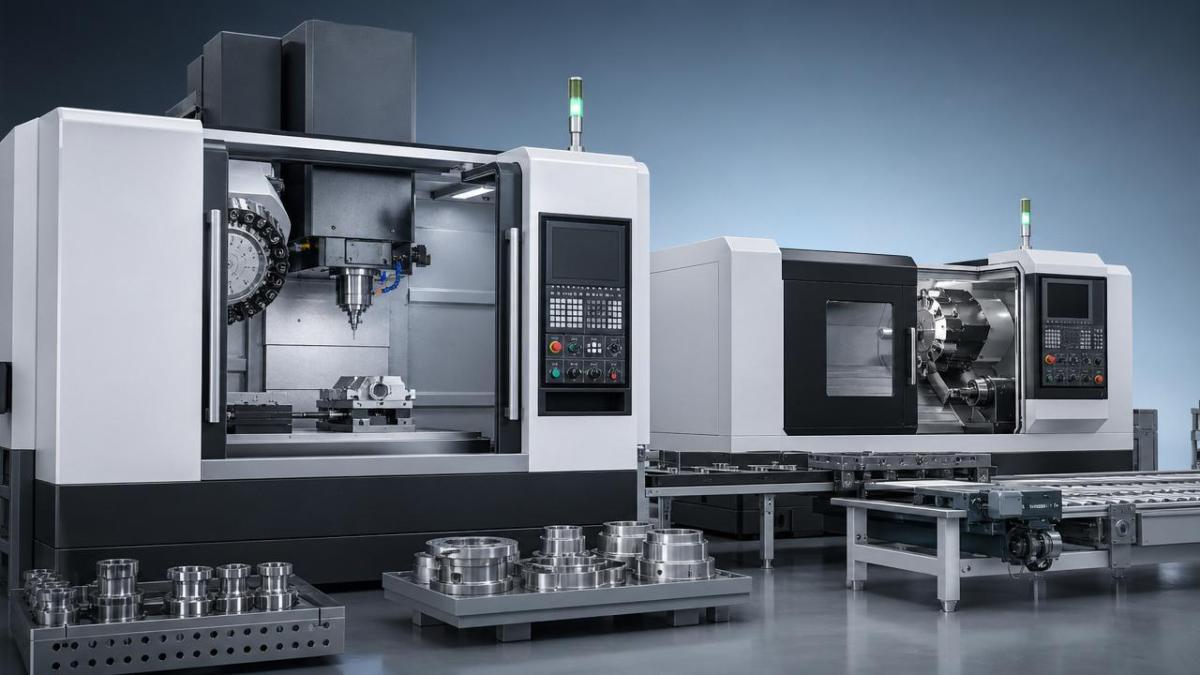
The first step in sourcing CNC production equipment is to define what the machine must actually produce. Many purchasing delays happen because technical expectations are not translated into measurable buying criteria. A machine for low-volume prototype work has very different priorities from equipment intended for 2-shift or 3-shift serial production.
Start with part family, tolerance, and annual volume
Procurement should collect at least 4 core inputs from production and engineering teams: material type, part size range, tolerance requirement, and annual output target. For example, a simple shaft part in carbon steel may fit a standard CNC lathe, while aluminum housing parts with multiple faces may require a vertical machining center or a 4-axis to 5-axis setup.
Tolerance expectations should be converted into machine capability ranges. If the drawing requires repeatability within ±0.01 mm, the buyer should not only check the catalog figure but also ask how that accuracy is maintained after 8 to 12 hours of continuous operation. Thermal stability, guideway design, spindle runout, and machine foundation all affect actual performance.
Questions that should be confirmed internally
- Is the target batch size under 100 pieces, 100 to 1,000 pieces, or above 10,000 pieces per year?
- Will the equipment run 1 shift, 2 shifts, or 24-hour production with automation?
- Are there future part variants that may require an extra axis, larger travel, or live tooling?
- What scrap rate is acceptable during ramp-up: below 3%, below 1%, or near zero for critical parts?
A clear internal profile helps buyers avoid a common mistake: purchasing a machine based on current demand only. In many factories, a machine is expected to serve for 5 to 10 years. If part complexity is likely to increase within 24 months, selecting a slightly higher-capacity configuration may reduce reinvestment pressure later.
Match machine type to manufacturing scenario
Different CNC production equipment categories support different manufacturing goals. The table below helps procurement teams connect application needs to practical equipment choices without relying on broad marketing claims.
The main takeaway is that CNC production equipment should be selected by production mode, not by machine category alone. Buyers who align machine type with part family and throughput requirements usually reduce specification changes, fixture redesign, and commissioning delays during the first 30 to 90 days after installation.
Check technical capability beyond brochure specifications
Machine brochures often highlight spindle speed, rapid traverse, and maximum travel, but these figures do not fully describe real manufacturing performance. Procurement teams should verify how the equipment behaves under load, over time, and within the actual material mix used in production. This is especially important when CNC production equipment will be used for hardened steel, stainless steel, titanium alloys, or thin-wall precision parts.
Accuracy, rigidity, and stability are not the same thing
A machine may show good no-load positioning accuracy but still perform poorly during real cutting. Buyers should ask for test cut conditions, not only geometric inspection values. A practical review should include spindle taper condition, machine casting rigidity, backlash control, thermal compensation logic, and vibration behavior at common cutting ranges such as 3,000 to 8,000 rpm or 8,000 to 15,000 rpm, depending on application.
For many procurement projects, it is useful to request a sample machining demonstration using a representative material and a part feature similar to actual production. Even if the final part cannot be shared, a test coupon can reveal surface finish consistency, burr control, dimensional repeatability, and cycle time realism within a single evaluation session.
Review the control system and software ecosystem
The control system affects programming speed, operator training time, maintenance diagnostics, and future digital integration. Buyers should confirm whether the controller is widely supported in their region and whether spare parts are available within 24 to 72 hours. A lower-cost machine with a difficult-to-service controller can create long stoppages if a board, servo, or HMI component fails.
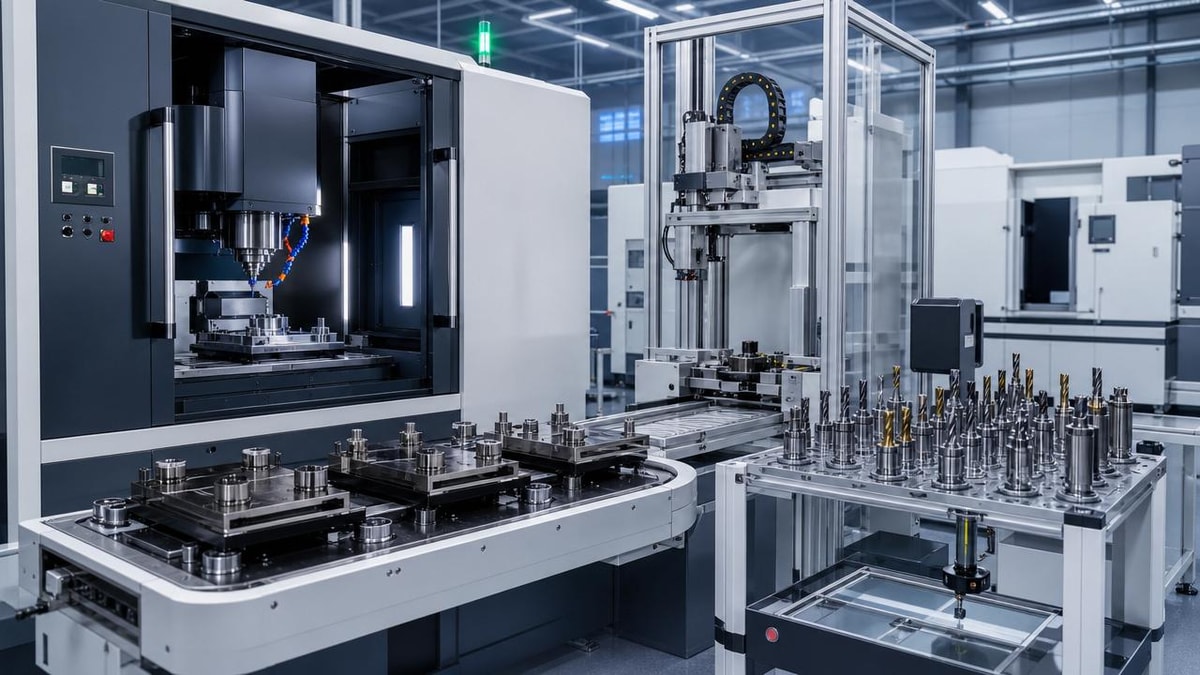
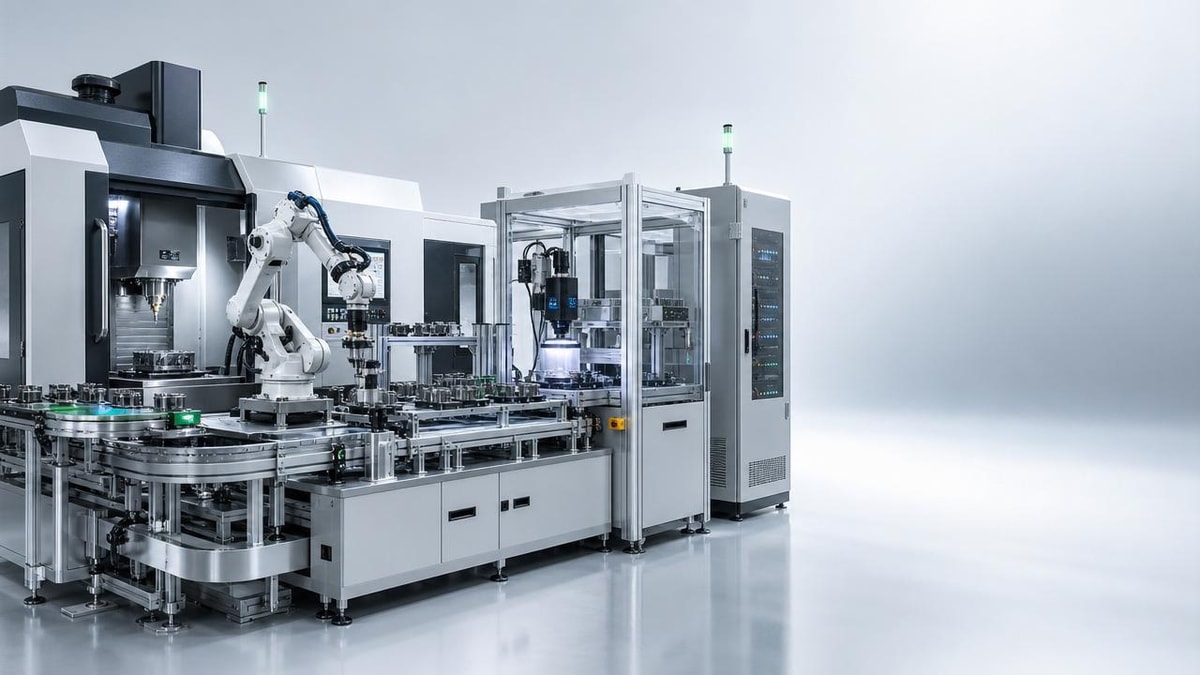
If the plant plans to implement automation, the CNC production equipment should support standard communication and interface options for robots, pallet changers, tool monitoring, and production data collection. Compatibility with common CAD/CAM workflows and shop-floor data systems can shorten commissioning by several days or even weeks.
Technical checks worth including in supplier review
- Axis travel and usable cutting envelope, not just nominal travel.
- Spindle power curve across low, medium, and high rpm ranges.
- Tool magazine capacity, tool-to-tool change time, and maximum tool weight.
- Fixture installation space and chip removal efficiency for continuous production.
- Electrical standard, air requirement, coolant system capacity, and floor load demand.
These details matter because hidden mismatches can slow line readiness. A machine with excellent cutting ability may still cause implementation problems if the plant power supply, compressed air pressure, or coolant treatment system does not match the installation requirement.
Evaluate total cost of ownership, not purchase price only
For procurement professionals, the real value of CNC production equipment is measured over years, not the day the purchase order is issued. Total cost of ownership usually includes machine price, tooling, freight, installation, training, preventive maintenance, spare parts, energy use, and downtime risk. In many projects, these indirect and post-purchase items can add 15% to 40% above the base equipment quotation over the first 3 years.
Identify the cost drivers that affect long-term performance
A procurement team should compare at least 6 cost drivers: initial equipment cost, tooling consumption, maintenance interval, service response time, spare parts availability, and expected machine utilization. If two machines differ in purchase price by 8% but one reduces cycle time by 12% and local service response by 48 hours, the more expensive option may still deliver better return in under 18 months.
The table below can be used as a practical ownership-cost checklist when comparing suppliers of CNC production equipment.
This comparison makes one point clear: the cheapest CNC production equipment is not always the lowest-cost option in operation. For plants with tight delivery obligations, service delay and ramp-up inefficiency often cost more than a moderate difference in machine price.
Consider installation and hidden readiness costs
Buyers should also ask what is included in the quotation. Transportation, rigging, foundation preparation, coolant units, chip conveyors, transformer requirements, tool holders, probing systems, and software licenses are not always standard. A quotation that appears 10% lower can become more expensive after all necessary accessories are added.
For imported CNC production equipment, lead times should be checked carefully. Typical delivery may range from 8 to 20 weeks depending on configuration, origin, and customization level. If the equipment includes special automation modules or non-standard tooling packages, project scheduling should include additional time for FAT, shipping, customs, and SAT.
Assess supplier reliability, service depth, and risk control
Even a technically suitable machine can become a poor investment if supplier execution is weak. In CNC production equipment procurement, supplier capability should be reviewed across commercial response, engineering support, documentation quality, installation planning, and after-sales coverage. This is particularly important for buyers managing multi-site production or cross-border sourcing.
What procurement should verify before placing an order
A reliable supplier should be able to explain machine scope, optional items, acceptance conditions, and service boundaries in writing. Buyers should request a detailed technical proposal, preliminary layout, utility list, recommended consumables, and training plan. If these documents are vague, the risk of later disagreement increases significantly.
Core supplier checks
- Service response commitment: remote support within 4 to 24 hours and on-site availability where applicable.
- Commissioning scope: who handles leveling, parameter setup, trial cutting, and final acceptance.
- Warranty terms: what components are covered and which wear parts are excluded.
- Documentation package: electrical drawings, maintenance manual, spare parts list, and backup parameters.
- Training depth: operator training only, or also programming, preventive maintenance, and troubleshooting.
For global buyers, local partner strength is often more important than brand visibility alone. A strong regional service network can reduce stoppage duration, support operator retraining, and keep critical spares accessible during peak production periods.
Use a structured acceptance process to reduce disputes
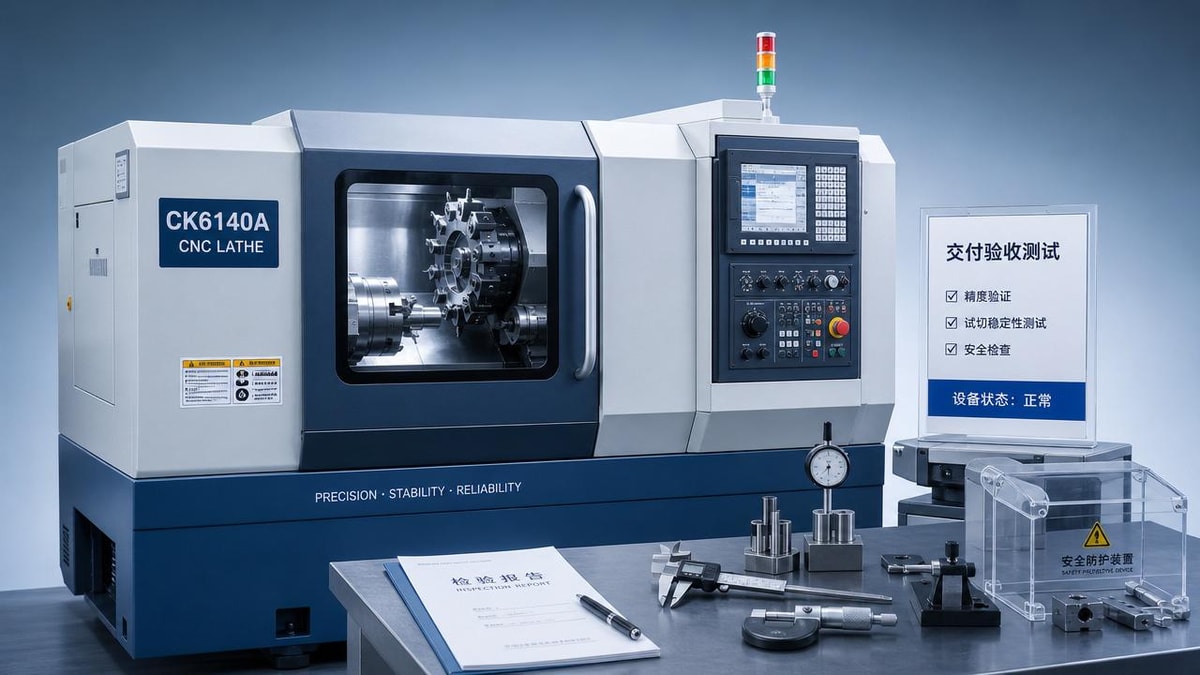
A formal acceptance process protects both buyer and supplier. Procurement teams should define at least 3 acceptance stages: pre-shipment document review, factory acceptance test, and site acceptance test. Each stage should include measurable criteria such as axis movement, spindle function, alarm checks, dry cycle verification, sample machining, and final repeatability confirmation.
If the CNC production equipment is part of an automated line, acceptance should also include communication with the robot, pallet system, barcode tracking, or MES interface. Many expensive delays happen not because the machine cannot cut parts, but because upstream and downstream devices fail to communicate reliably during 2-shift production.
Common purchasing mistakes and how to avoid them
Procurement errors in CNC production equipment projects usually come from incomplete specification, insufficient testing, or poor cross-functional communication. Avoiding a few common mistakes can significantly improve purchase quality and shorten the time from PO to stable production.
Mistake 1: Buying for maximum speed, not stable output
A machine with higher spindle speed or faster rapid traverse is not automatically better. If the real process depends on heavy cutting, stable torque and rigidity may matter more than top speed. Procurement should compare cycle time under realistic cutting parameters, not ideal catalog values.
Mistake 2: Ignoring operator and maintenance capability
Advanced CNC production equipment can create value only when the factory can use it effectively. A highly automated 5-axis system may be excessive if the site lacks CAM support, trained setup staff, or preventive maintenance discipline. Matching machine complexity to workforce readiness can reduce startup loss during the first 60 to 120 days.
Mistake 3: Failing to plan for future automation
Some buyers source a stand-alone machine to control budget, then discover 12 months later that retrofit automation is difficult or costly. Even if robot loading is not purchased immediately, it is wise to check whether the machine is automation-ready, with interface options, door logic, safety integration, and layout space already considered.
Mistake 4: Treating quotations as directly comparable
Two quotations for CNC production equipment may look similar while covering very different scopes. One may include probing, chip conveyor, transformer, tool package, installation, and 5 days of training, while another excludes most of them. Procurement should normalize all bids into a side-by-side comparison before making a decision.
A practical checklist for procurement teams
Before issuing a final order for CNC production equipment, buyers can use a short but disciplined checklist to confirm readiness. This process helps align purchasing, engineering, production, and maintenance teams around one decision framework.
Seven-point pre-order review
- Confirm part range, material, tolerance, and annual output target.
- Verify machine envelope, spindle range, tooling capacity, and fixture space.
- Request test cutting data or sample validation for critical features.
- Review automation compatibility, controller support, and data interface options.
- Compare full ownership cost over 3 to 5 years, not quotation only.
- Check warranty, spare parts lead time, and local service capability.
- Define FAT, SAT, training scope, and written acceptance criteria before PO release.
A disciplined review process improves decision quality and reduces project risk. For procurement teams handling competitive bids, this checklist also creates a fairer supplier comparison and makes internal approval easier because technical, operational, and commercial points are all documented clearly.
Selecting CNC production equipment is ultimately a balance of precision, throughput, scalability, support, and cost control. The best purchasing decisions come from matching machine capability to actual manufacturing demand, validating supplier execution, and planning for the full operating lifecycle rather than the initial price alone. If you are evaluating CNC lathes, machining centers, multi-axis systems, or automated production solutions, contact us to discuss your application, get a tailored equipment recommendation, and explore more production-focused solutions.
PREVIOUS ARTICLE
NEXT ARTICLE
Recommended for You
 Industrial Robotics payback depends on more than labor savingsManufacturing Market Research Center
 Shaft Parts machining problems that show up after final inspectionCNC Machining Technology Center
 Which Production Process changes bring the fastest output gains?CNC Machining Technology Center
 Industrial Automation projects fail when integration is underestimatedCNC Machining Technology Center
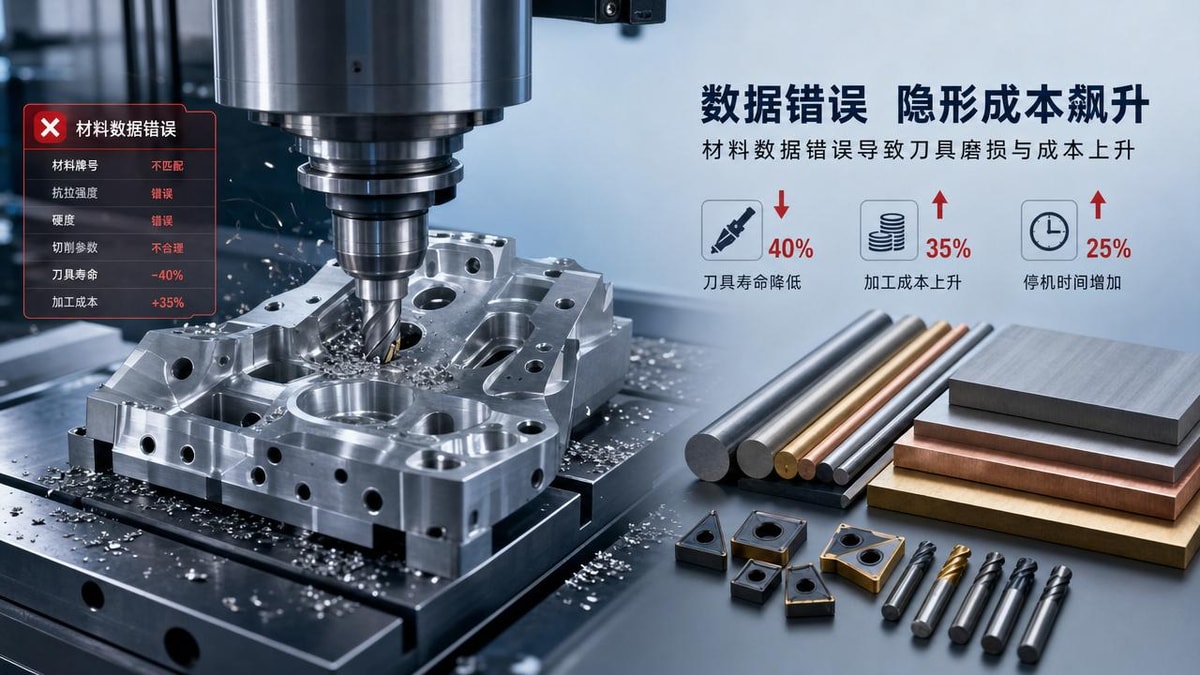
 CNC metal cutting costs rise fast when material data is wrongCNC Machining Technology Center
 High precision lathe claims to verify before accepting deliveryMachine Tool Industry Editorial Team

Aris Katos
Future of Carbide Coatings
15+ years in precision manufacturing systems. Specialized in high-speed milling and aerospace grade alloy processing.
▶
What to check before ordering CNC production equipmentGlobal Machine Tool Trade Research Center▶
What Buyers Miss When Comparing CNC Production EquipmentGlobal Machine Tool Trade Research Center▶
Japan’s METI Launches Green Machine Tool Subsidy 2.0 for Chinese CNC ImportsGlobal Machine Tool Trade Research Center▶
2026 Foshan Tanzhou Auto Expo: EV Parts Sourcing FocusGlobal Machine Tool Trade Research Center▶
Industrial CNC buying errors that lead to hidden upgrade costsGlobal Machine Tool Trade Research Center
Mastering 5-Axis Workholding Strategies
Join our technical panel on Nov 15th to learn about reducing vibrations in thin-wall components.

Providing you with integrated sanding solutions
Before-sales and after-sales services
Comprehensive technical support