• Global CNC market projected to reach $128B by 2028 • New EU trade regulations for precision tooling components • Aerospace deman
NYSE: CNC +1.2%LME: STEEL -0.4%

Industrial Lathe Buying Errors That Raise Lifetime Cost
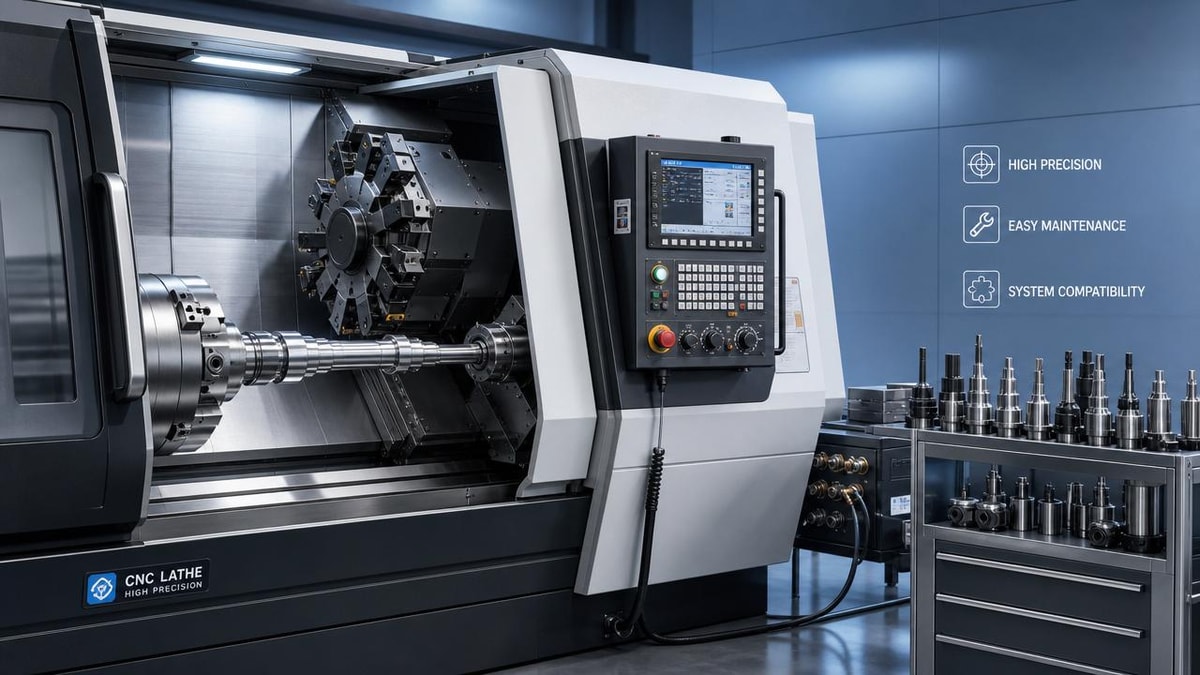
Buying an industrial lathe based only on price, spindle size, or quoted accuracy can create hidden costs that outweigh the initial savings. For procurement teams, common mistakes often appear in maintenance planning, automation compatibility, tooling support, and long-term production stability. Understanding these buying errors is essential to reducing lifetime cost, improving machine utilization, and making more reliable sourcing decisions in competitive manufacturing environments.
Why lifetime cost errors are becoming more visible now
The way companies buy an industrial lathe is changing because manufacturing itself is changing. In the past, many buyers could justify a narrow decision model: compare machine price, compare technical brochures, and choose the fastest delivery. That logic is now weaker. Production lines are more connected, labor is harder to replace, part complexity is rising, and downtime costs more than before. As a result, the wrong industrial lathe no longer causes only inconvenience. It can damage scheduling reliability, raise tooling cost, limit future automation, and create quality instability across the full life of the asset.
This shift matters especially for procurement teams in automotive components, energy equipment, aerospace suppliers, precision machining, and contract manufacturing. Buyers are no longer purchasing a standalone machine; they are often purchasing a node in a digital, semi-automated, and capacity-sensitive production system. In that environment, the cheapest industrial lathe may become the most expensive option over five to ten years.
The market signals behind smarter industrial lathe decisions
Several industry signals explain why lifetime cost has become a central evaluation factor. First, manufacturers are asking more from each machine. A modern industrial lathe may need to support mixed-batch production, tighter tolerances, unattended shifts, and data exchange with MES or shop-floor monitoring tools. Second, machine tool suppliers are differentiating less on basic capability and more on service speed, control openness, software integration, and upgrade paths. Third, procurement departments are under pressure to defend capital spending with measurable total-cost logic rather than simple purchase-price comparisons.
Another important change is the expansion of global sourcing. Buyers can compare more industrial lathe suppliers than ever before, but they also face wider variation in build consistency, spare parts lead time, local service readiness, and application engineering depth. A competitive quote can hide long-term risk if support infrastructure is weak. This is why buying errors are increasingly linked to sourcing assumptions rather than to obvious technical failures.
The most expensive buying errors are shifting from hardware to ecosystem fit
One of the biggest procurement mistakes is evaluating an industrial lathe as if hardware specifications alone define value. Spindle power, swing, bed length, and repeatability still matter, but they no longer tell the whole story. In many factories, the real cost drivers now come from machine ecosystem fit: controller familiarity, fixture compatibility, tool magazine logic, chip handling efficiency, coolant management, software support, and service responsiveness.
For example, a machine with attractive base pricing may require custom fixture redesign, nonstandard toolholders, or special post-processing work. Those costs rarely appear in the first quotation, yet they affect every batch. Likewise, an industrial lathe that performs well in a demo may become difficult in daily production if alarms are hard to diagnose or if spare parts are only available through long overseas lead times.
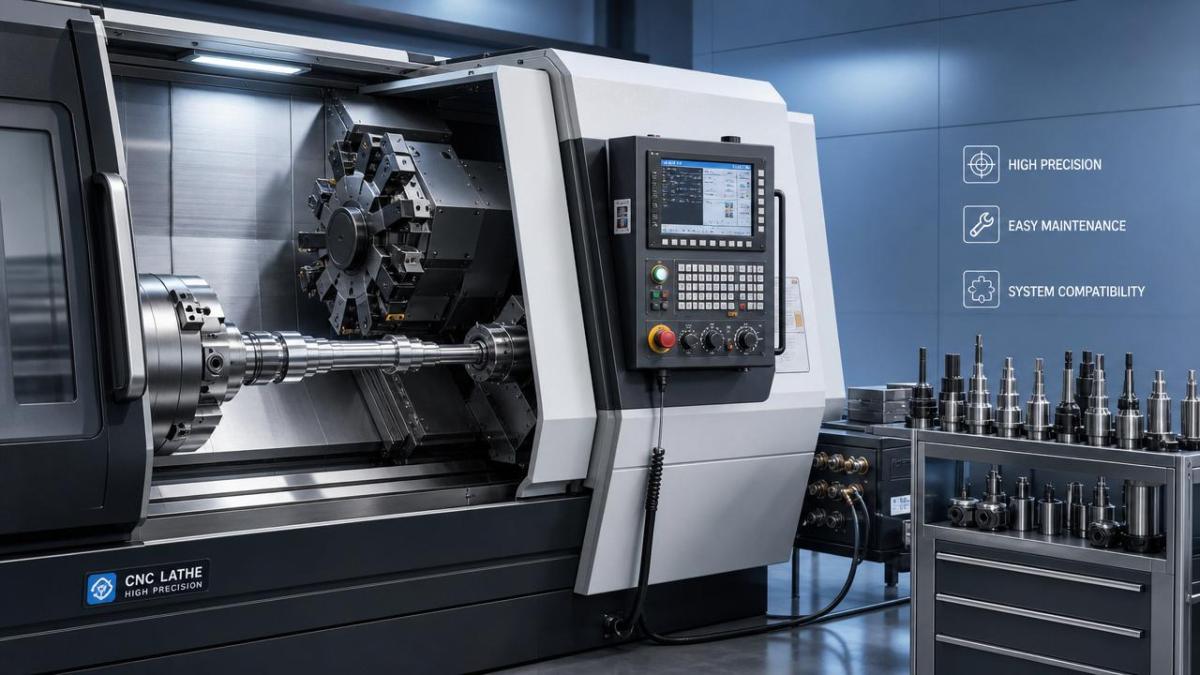
Error 1: Treating quoted precision as guaranteed production accuracy
A common sourcing error is assuming that brochure accuracy equals stable shop-floor performance. Procurement teams may compare an industrial lathe by positioning figures without asking how the machine behaves after thermal buildup, under varying material loads, or during longer production cycles. Real lifetime cost depends on process stability, not just initial test values. If the machine drifts during extended runs, scrap, rework, inspection load, and operator intervention all increase.
Error 2: Ignoring maintenance architecture and service access
Another costly mistake is focusing on preventive maintenance intervals without examining maintenance practicality. An industrial lathe may look efficient on paper but be difficult to access for routine service, lubrication checks, sensor replacement, or alignment verification. If service tasks take longer, maintenance is delayed, and unplanned downtime becomes more likely. Buyers should look beyond maintenance schedules and ask how the machine is serviced in actual plant conditions.
Error 3: Underestimating automation and data integration needs
As more factories move toward robotic loading, pallet logic, and remote monitoring, an industrial lathe that lacks standard interface readiness may quickly become a bottleneck. Procurement teams often believe they can “add automation later,” but later upgrades are often more expensive than buying the right platform early. Missing I/O flexibility, weak controller openness, or poor communication support can limit future expansion and reduce the machine’s strategic value.
Error 4: Choosing a machine that fits one part family too tightly
In a market shaped by shorter order cycles and shifting customer demand, over-specialization can raise lifetime cost. An industrial lathe configured too narrowly for one shaft, disc, or flange program may deliver good early output but poor long-term flexibility. If the production mix changes, setup loss and adaptation cost increase. Procurement should consider not only today’s parts but also the likely evolution of tolerances, materials, and batch sizes.
Why these errors affect procurement, production, and finance differently
The same industrial lathe buying error creates different consequences across the organization. For procurement, the risk is often supplier dependence, hidden implementation cost, and difficult contract enforcement. For production teams, the risk is low utilization, unstable cycle time, and operator frustration. For finance, the risk appears as poor asset payback, unpredictable maintenance spending, and reduced output per square meter of factory space.
This is why cross-functional evaluation is becoming a stronger trend in machine tool purchasing. More companies now involve process engineering, maintenance, quality, and automation staff before final approval. That is not bureaucracy for its own sake. It reflects a more realistic understanding that an industrial lathe affects multiple cost centers at once.
The strongest drivers behind better industrial lathe sourcing
Several forces are pushing buyers toward more disciplined decision models. Rising energy awareness encourages evaluation of power efficiency, coolant strategy, and compressed air use. Labor shortages increase the value of easy programming, repeatable setup logic, and quick troubleshooting. Smart factory investment raises demand for connected controls and machine monitoring support. At the same time, customers in sectors such as aerospace, automotive, and electronics are asking suppliers for more traceability and more stable output, which puts pressure on the machine platform itself.
There is also a financial driver. Many companies now review equipment through utilization and cost-per-part logic instead of simple depreciation logic. Under that framework, the right industrial lathe is the one that protects throughput, preserves flexibility, and minimizes interruption. A lower purchase price helps only if the machine performs reliably in the actual production environment.
How procurement teams should judge an industrial lathe in the current environment
A stronger evaluation model starts with a broader set of questions. Instead of asking only whether the industrial lathe can machine the target part, buyers should ask whether it can do so consistently under realistic operating conditions, with the available workforce, with the planned tooling strategy, and with future automation needs in mind. That means testing not only peak performance but also production practicality.
Useful buying signals include the supplier’s local service capacity, documented installation support, operator training quality, control standardization, spare parts stocking policy, and experience in similar applications. Procurement should also ask for evidence of long-run stability, not only sample parts produced under controlled demonstration conditions. If possible, reference checks from comparable users remain one of the most valuable decision tools.
A practical judgment framework
When comparing industrial lathe options, it helps to score machines across five dimensions: process stability, maintenance simplicity, integration readiness, application flexibility, and supplier support. This approach aligns better with current manufacturing trends than a price-first shortlist. It also reduces the chance that procurement approves a machine that looks efficient in acquisition but expensive in operation.
What to monitor before the next purchase cycle
Going forward, buyers should watch several signals that will shape industrial lathe value. One is whether future production will require more unattended operation. Another is whether part variation is increasing, which raises the importance of setup reduction and programming efficiency. A third is whether factory systems will require more machine data for scheduling, quality analysis, or predictive maintenance. If these needs are growing, machine selection should prioritize upgrade capacity rather than only current output.
It is also worth tracking supplier resilience. In a global market, machine builders and component suppliers differ widely in their ability to maintain service continuity, especially when logistics are disrupted. For any industrial lathe purchase with a long operational horizon, support resilience is not a secondary issue. It is part of cost control.
Final judgment for buyers focused on long-term value
The main trend is clear: industrial lathe buying is moving from specification comparison to system-level judgment. The most expensive mistakes are no longer always visible in the quotation stage. They appear later through downtime, poor flexibility, difficult integration, rising maintenance effort, and unstable output. For procurement teams, the goal is not simply to buy a capable machine, but to buy an industrial lathe that remains productive, serviceable, and adaptable as manufacturing conditions evolve.
If a company wants to better judge how these trends affect its own sourcing decisions, it should confirm a few critical questions before the next order: Will this industrial lathe fit future automation plans? Can local teams maintain it efficiently? Does the supplier support long-term tooling and spare parts needs? Will the machine remain useful if part mix changes? Those answers usually reveal more about lifetime cost than the headline purchase price ever can.
PREVIOUS ARTICLE
NEXT ARTICLE
Recommended for You
 CNC Milling Capacity Gaps Can Hurt Small Batch ProfitabilityManufacturing Market Research Center
 Industrial Robotics Payback Is Changing in Mid-Size PlantsManufacturing Market Research Center
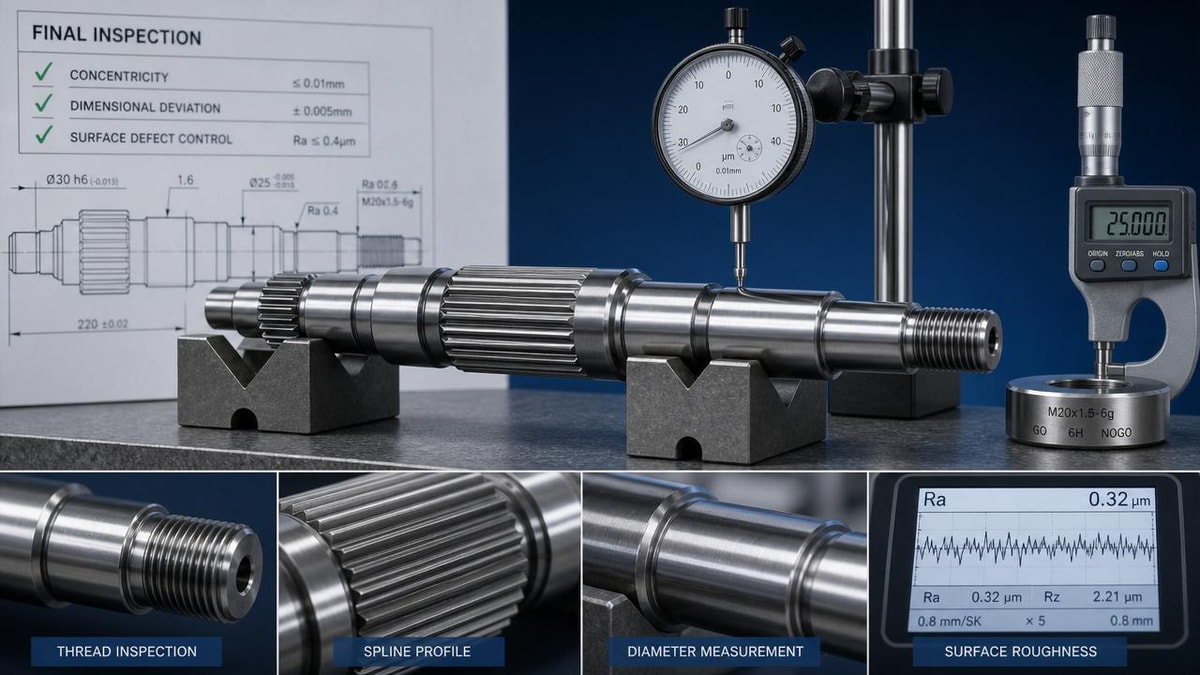
 Shaft Parts Machining Problems That Show Up at Final InspectionCNC Machining Technology Center
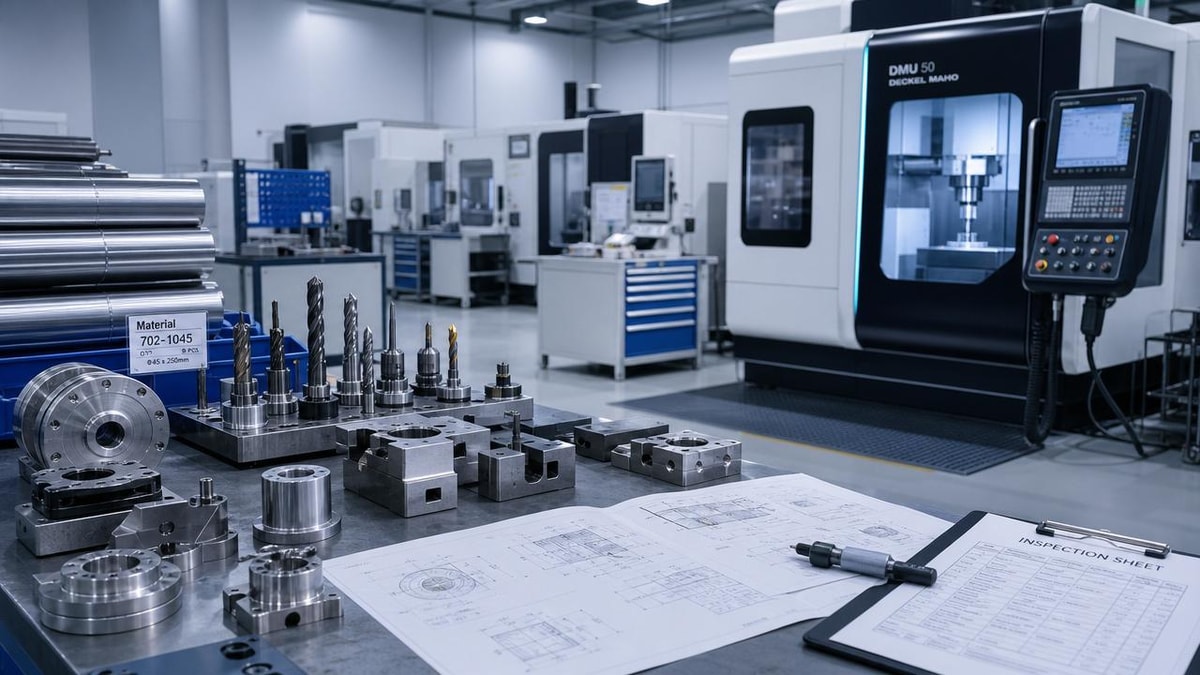
 Production Process Delays Usually Start Before Machining BeginsCNC Machining Technology Center
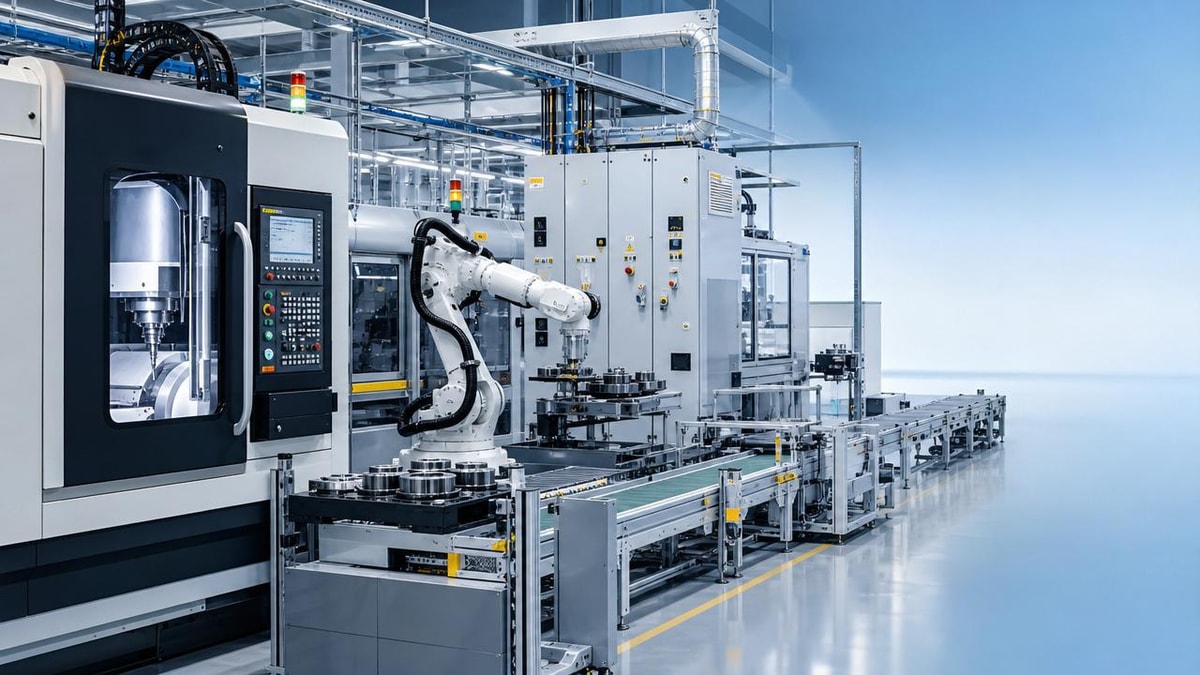
 Industrial Automation Projects Often Miss This Integration StepCNC Machining Technology Center
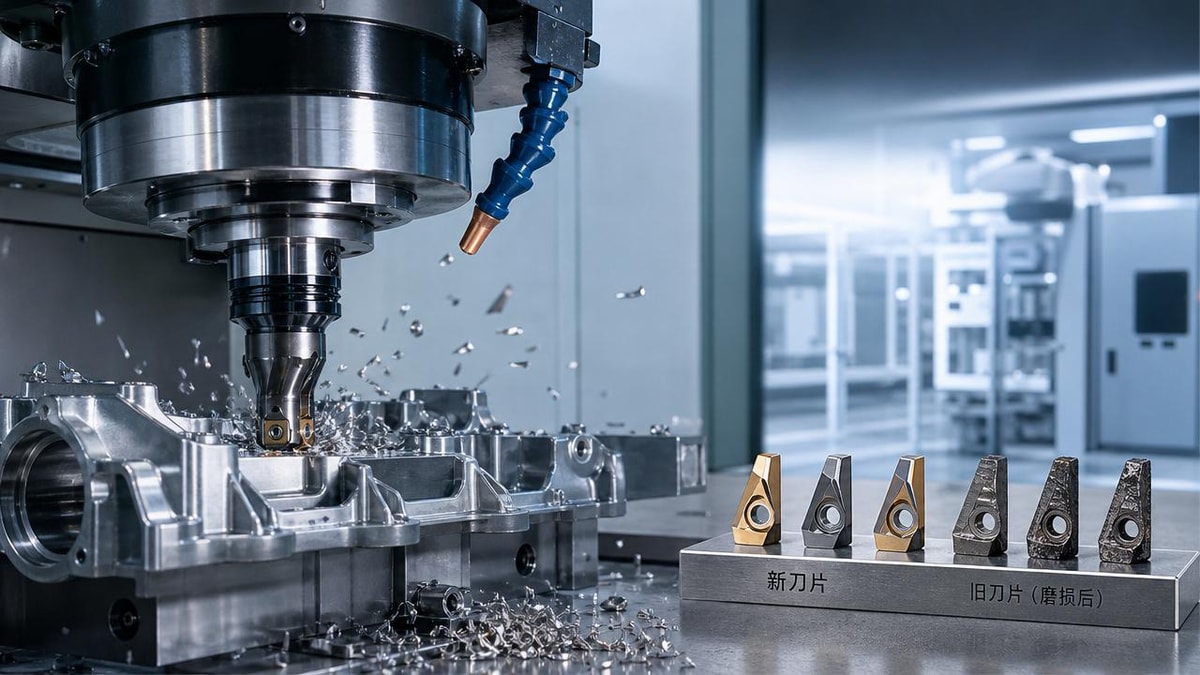
 CNC Metal Cutting Tool Wear Is Costing More Than You ThinkCNC Machining Technology Center

Aris Katos
Future of Carbide Coatings
15+ years in precision manufacturing systems. Specialized in high-speed milling and aerospace grade alloy processing.
▶
Industrial Lathe Buying Errors That Raise Lifetime CostGlobal Machine Tool Trade Research Center▶
What to check before ordering CNC production equipmentGlobal Machine Tool Trade Research Center▶
What Buyers Miss When Comparing CNC Production EquipmentGlobal Machine Tool Trade Research Center▶
Japan’s METI Launches Green Machine Tool Subsidy 2.0 for Chinese CNC ImportsGlobal Machine Tool Trade Research Center▶
2026 Foshan Tanzhou Auto Expo: EV Parts Sourcing FocusGlobal Machine Tool Trade Research Center
Mastering 5-Axis Workholding Strategies
Join our technical panel on Nov 15th to learn about reducing vibrations in thin-wall components.

Providing you with integrated sanding solutions
Before-sales and after-sales services
Comprehensive technical support