• Global CNC market projected to reach $128B by 2028 • New EU trade regulations for precision tooling components • Aerospace deman
NYSE: CNC +1.2%LME: STEEL -0.4%

Regional CNC Demand Trends Worth Tracking in 2026
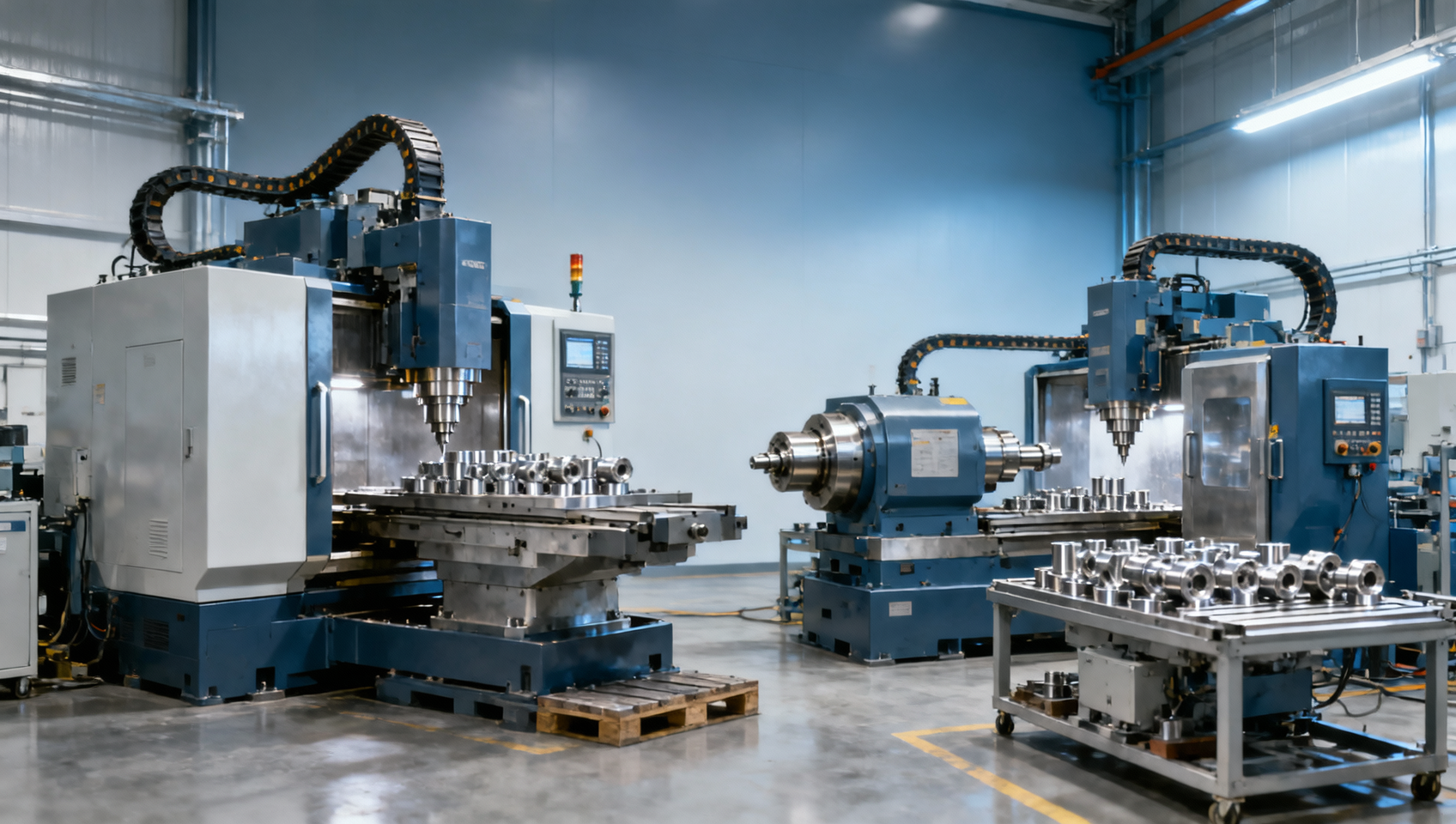
As Global Manufacturing enters a new phase of Industrial Automation, regional shifts in the Machine Tool Market are reshaping demand for industrial CNC, CNC milling, automated lathe systems, and CNC metalworking solutions. This article highlights the 2026 trends worth tracking across the Manufacturing Industry, helping buyers, operators, and analysts better understand evolving production process needs and automated production strategies.
Which regional CNC demand shifts will matter most in 2026?
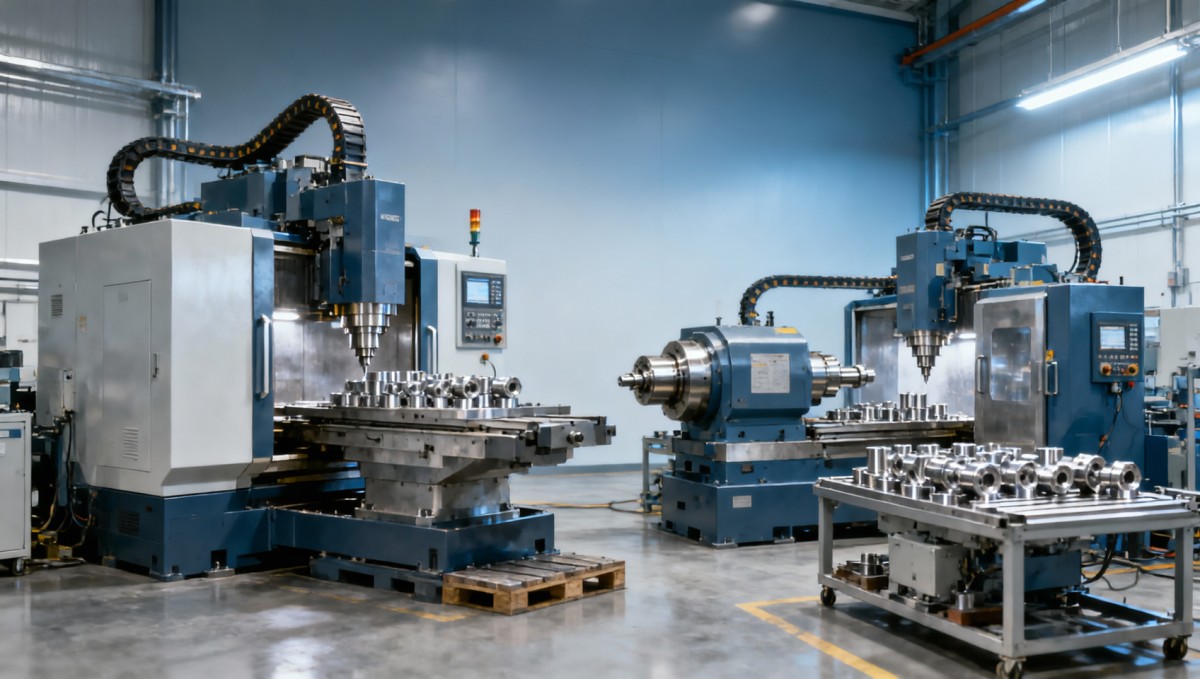
Regional CNC demand in 2026 will not move in one direction. It will split by production maturity, labor structure, energy cost, local supply chain depth, and industrial policy. For information researchers and business evaluators, this means the same CNC machine category can face very different buying logic in East Asia, Europe, North America, Southeast Asia, and emerging manufacturing hubs.
In mature industrial regions, buyers are no longer focused only on basic machine availability. They are evaluating spindle uptime, multi-axis flexibility, software integration, and total cost over 5–8 years. In developing production regions, the demand pattern is more mixed: 3-axis and 4-axis machining centers still grow, but automation-ready layouts and retrofit compatibility are becoming more important within 12–24 month planning cycles.
For operators and procurement teams, the key signal is simple: demand is shifting from standalone machine purchases to production-cell decisions. A CNC lathe, vertical machining center, tool presetter, fixture package, and automated loading system are increasingly assessed as one manufacturing solution rather than separate assets.
This matters across automotive manufacturing, aerospace parts, electronics housings, energy equipment, and general metalworking. Production planning now depends on cycle stability, labor efficiency, and digital traceability as much as on cutting speed. Regional demand trends therefore reveal not only where orders may rise, but also what type of CNC machine tool specification will be favored.
Why demand is fragmenting instead of moving uniformly
The machine tool market is being shaped by several forces at once. Labor shortages push automation in some countries, while energy cost pressure favors efficient machines in others. In parallel, supply chain localization encourages manufacturers to place machining capacity closer to end-use assembly. As a result, 2 factories making similar parts may choose very different CNC systems based on regional operating conditions.
A useful way to read 2026 CNC demand is to separate it into three broad layers: replacement demand, expansion demand, and capability-upgrade demand. Replacement demand is common in mature markets with aging installed bases. Expansion demand often appears in industrializing regions where local machining capacity is still building. Capability-upgrade demand is strongest where higher precision, digital monitoring, or multi-process integration is needed.
- Replacement demand often focuses on 6–10 year old machines with high maintenance frequency or weak software compatibility.
- Expansion demand usually prioritizes scalable layouts, standard tooling interfaces, and manageable operator training time within 2–6 weeks.
- Capability-upgrade demand is tied to tighter tolerances, mixed-batch production, and automated inspection requirements.
How do major regions differ in CNC machine tool demand?
For procurement planning, the best approach is not to ask which region is “growing fastest” in general terms. It is better to ask what each region is buying, why that equipment is preferred, and which application scenarios are creating the pull. The table below summarizes practical CNC demand patterns relevant to sourcing, market analysis, and channel planning.
This comparison shows why regional CNC demand trends should be read through application needs rather than broad market headlines. A supplier focused on aerospace components will interpret Europe and North America differently from a buyer serving electronics housings in East Asia or export-oriented job shops in Southeast Asia.
For market researchers, one practical conclusion stands out: demand is becoming more specification-led. Machine buyers are checking spindle range, axis configuration, tooling ecosystem, automation interfaces, and service response windows before discussing final price. In many B2B projects, technical fit now filters the vendor shortlist before commercial negotiation begins.
What this means for industrial CNC suppliers and buyers
A machine supplier serving multiple regions should not present the same value proposition everywhere. In one region, the deciding issue may be rapid spare parts support within 24–72 hours. In another, it may be whether the CNC milling system can be integrated into an existing MES or robotic loading workflow. A regional demand shift is therefore also a product positioning shift.
Buyers should also avoid using old procurement assumptions. A low entry price can be misleading if local training is weak, fixture adaptation is difficult, or preventive maintenance intervals are too short. For many operations, machine availability over 3 shifts is more valuable than a lower initial quote that creates unplanned downtime later.
Which application scenarios are driving CNC demand by sector?
Regional CNC demand in 2026 is closely linked to end-use sectors. Automotive manufacturing continues to support demand for CNC lathes, machining centers, and automated transfer-compatible systems. Aerospace and energy equipment push interest in rigidity, repeatability, and traceable machining processes. Electronics production remains a strong driver for compact, stable, and high-speed CNC metalworking solutions.
Operators care about different things than sourcing teams. On the shop floor, stable cycle time, manageable setup, and predictable tool wear matter most. Procurement teams usually focus on price, lead time, and warranty terms. In practice, successful buying decisions align both views, because a machine that looks attractive in a quotation but performs poorly in mixed-batch production can quickly become costly.
Across many industries, four practical demand scenarios are becoming more visible: high-volume repetitive components, medium-mix subcontract machining, precision parts with tighter tolerance control, and automation-linked flexible manufacturing. Each scenario favors a different machine tool configuration and investment logic.
Scenario-based demand signals to watch
- High-volume automotive and component lines usually prioritize loading automation, stable spindle utilization, and cycle consistency over 8–16 hour operating windows.
- Aerospace and energy applications often require stronger process documentation, multi-axis capability, and reliable machining of complex structural parts or shafts.
- Electronics and precision enclosures favor machines with compact footprints, cleaner chip management, and repeatable results in small to medium batch sizes.
- General subcontractors increasingly value machines that can switch jobs quickly, support common tool holders, and reduce setup losses between batches.
Application fit is often more important than peak specification
A common mistake in CNC procurement is choosing based on maximum spindle power or top advertised speed alone. In reality, production efficiency depends on matching the machine to the part family, fixture method, batch size, and operator skill level. For example, a 3-axis machine with solid fixturing and good tool management may outperform a more complex platform in routine general machining.
This is why demand trends should be read together with process needs. If a region is expanding battery equipment, EV parts, precision housings, or export-oriented industrial assemblies, the related machine demand may lean toward repeatable medium-precision production rather than extremely high-end multi-axis investment. The application decides the equipment logic.
What should procurement teams compare before selecting CNC equipment in 2026?
Procurement in the machine tool market is becoming more cross-functional. A sourcing team can no longer finalize a CNC machine order based only on quotation price and nominal delivery. Operators, process engineers, maintenance staff, and finance reviewers should all contribute. In many projects, the best decision comes from comparing 5 key dimensions: process fit, automation readiness, serviceability, total cost, and compliance requirements.
The table below provides a practical selection framework for buyers comparing industrial CNC options across regions and application scenarios. It is designed for procurement personnel, operating users, and commercial evaluators who need a structured way to reduce risk before purchase approval.
This framework helps teams move from generic machine comparison to risk-based decision making. It also reflects a broader 2026 trend: buyers increasingly want a complete CNC solution, including tooling logic, commissioning support, operator training, and realistic uptime planning.
A practical 4-step procurement workflow
- Define the part family and production target. Confirm batch size, tolerance needs, and daily or weekly output before requesting machine proposals.
- Check process compatibility. Review spindle type, tooling interface, work envelope, fixture constraints, and automation connection points.
- Evaluate lifecycle support. Compare training time, spare parts routes, maintenance intervals, and commissioning support windows.
- Verify commercial feasibility. Assess total project cost, delivery schedule, acceptance criteria, and expansion options within the next 12–24 months.
When buyers skip one of these 4 steps, the risk usually appears later as delayed ramp-up, excessive tooling changes, poor operator adaptation, or weak return on investment. In a regional demand cycle where supply options are broad, disciplined selection becomes a competitive advantage.
What risks, misconceptions, and compliance checks should buyers not ignore?
One common misconception is that regional CNC demand growth automatically means every machine category will perform well. In reality, some segments benefit while others become more price-sensitive. For example, demand may rise for automation-compatible CNC milling systems while conventional standalone equipment faces tighter comparison pressure. Buyers should separate market growth from specification growth.
Another recurring issue is underestimating commissioning and training. Even when a machine is delivered on time, stable production may still require 3 stages: installation, parameter optimization, and operator familiarization. Depending on process complexity, that stabilization period can take several days or several weeks. Purchase teams that only track shipping lead time often overlook this operational reality.
Compliance also matters more in cross-border machine tool sourcing. Requirements vary by destination and application, but buyers should usually review electrical compatibility, machine safety documentation, technical manuals, and any traceability or acceptance records needed by the factory or end customer. These are not side issues. They directly affect installation approval and production start.
FAQ for researchers, operators, and procurement teams
How should a buyer judge whether a region’s CNC demand trend is relevant to their factory?
Start with the production scenario, not the headline trend. Compare your part type, required tolerance, annual volume, labor availability, and automation roadmap with the region’s demand pattern. If your factory runs medium-mix metalworking with labor pressure, then reshoring-driven automation trends may be highly relevant. If you focus on cost-controlled subcontracting, emerging-market demand for modular CNC systems may be a better reference.
What delivery cycle is common for CNC machine projects?
Delivery depends on configuration, automation scope, and local service preparation. Standard machine supply may fit shorter lead windows, while integrated production cells usually need longer coordination for fixtures, tooling, loading systems, and acceptance planning. Buyers should ask not only for machine shipment timing, but also for commissioning schedule, training days, and spare parts preparation before project approval.
Is a higher-axis machine always the better investment?
No. More axes increase capability, but they also affect programming, fixturing strategy, maintenance complexity, and operator skill requirements. If most jobs are repeatable and geometrically simple, a stable 3-axis or 4-axis platform may deliver better economics. Multi-axis investment makes more sense when part complexity, setup reduction, or precision access requirements clearly justify it.
What are the most overlooked cost items in CNC procurement?
Tooling packages, fixtures, software adaptation, preventive maintenance parts, and operator training are often underestimated. Energy use and floor layout changes can also affect total project cost. A useful procurement habit is to compare at least 3 layers of cost: acquisition, commissioning, and 3–5 year operation. That produces a much more realistic investment picture than unit price alone.
Why work with a platform focused on global CNC and precision manufacturing?
Regional CNC demand trends are only useful when they can be translated into actionable sourcing and production decisions. That is where a specialized industry platform creates value. Instead of treating CNC machine tools as generic equipment, we follow the links between market movement, precision manufacturing technology, international trade dynamics, and practical production requirements across automotive, aerospace, energy equipment, electronics, and general machining.
For information researchers, we help clarify where demand is moving and which machine categories are gaining practical relevance. For operators and technical users, we connect machine selection with process stability, tooling logic, and automation readiness. For procurement and business evaluation teams, we support structured comparison on delivery, configuration, support capability, and commercial feasibility.
You can contact us for parameter confirmation, CNC machine selection support, application matching, estimated delivery cycle discussion, automation-compatible configuration review, certification-related questions, sample part evaluation, and quotation communication. If you are comparing CNC milling systems, automated lathes, machining centers, or flexible production solutions for 2026 planning, a focused discussion can reduce selection risk and speed up internal decision making.
If your team is preparing a regional sourcing plan or evaluating a new machining investment, share your part type, material range, batch profile, target output, and project timeline. We can help narrow the specification path, identify likely regional supply advantages, and frame the next conversation around realistic production and procurement priorities.
NEXT ARTICLE
Recommended for You
![]() China Releases First Eastern Sea Seabed Elemental MapGlobal Machine Tool Trade Research Center
China Releases First Eastern Sea Seabed Elemental MapGlobal Machine Tool Trade Research Center![]() AIMM National Standard Advances for CNC Smart Factory CertificationManufacturing Policy Research Center
AIMM National Standard Advances for CNC Smart Factory CertificationManufacturing Policy Research Center![]() eVTOL Mass Production Drives CNC Export GrowthGlobal Machine Tool Trade Research Center
eVTOL Mass Production Drives CNC Export GrowthGlobal Machine Tool Trade Research Center![]() China Launches World's Largest Agri-Meteorological Observation NetworkManufacturing Market Research Center
China Launches World's Largest Agri-Meteorological Observation NetworkManufacturing Market Research Center![]() Robotics ToB Scaling Hits Data Bottleneck in CNC AI InspectionCNC Machining Technology Center
Robotics ToB Scaling Hits Data Bottleneck in CNC AI InspectionCNC Machining Technology Center![]() SAMR to Complete 1,800+ Standards Revisions in 2026Manufacturing Policy Research Center
SAMR to Complete 1,800+ Standards Revisions in 2026Manufacturing Policy Research Center


Aris Katos
Future of Carbide Coatings
15+ years in precision manufacturing systems. Specialized in high-speed milling and aerospace grade alloy processing.
▶
Regional CNC Demand Trends Worth Tracking in 2026Global Machine Tool Trade Research Center▶
Pakistan Launches CNC Localization Tender for CPEC II Smart Manufacturing ParkGlobal Machine Tool Trade Research Center▶
5 Axis Machining Services in USA for Low-Volume Complex PartsGlobal Machine Tool Trade Research Center▶
Industrial CNC Import Trends Are Changing in Southeast AsiaGlobal Machine Tool Trade Research Center▶
Manufacturing Industry Orders Are Recovering UnevenlyGlobal Machine Tool Trade Research Center
Mastering 5-Axis Workholding Strategies
Join our technical panel on Nov 15th to learn about reducing vibrations in thin-wall components.

Providing you with integrated sanding solutions
Before-sales and after-sales services
Comprehensive technical support