• Global CNC market projected to reach $128B by 2028 • New EU trade regulations for precision tooling components • Aerospace deman
NYSE: CNC +1.2%LME: STEEL -0.4%

Manufacturing Industry Orders Are Recovering Unevenly
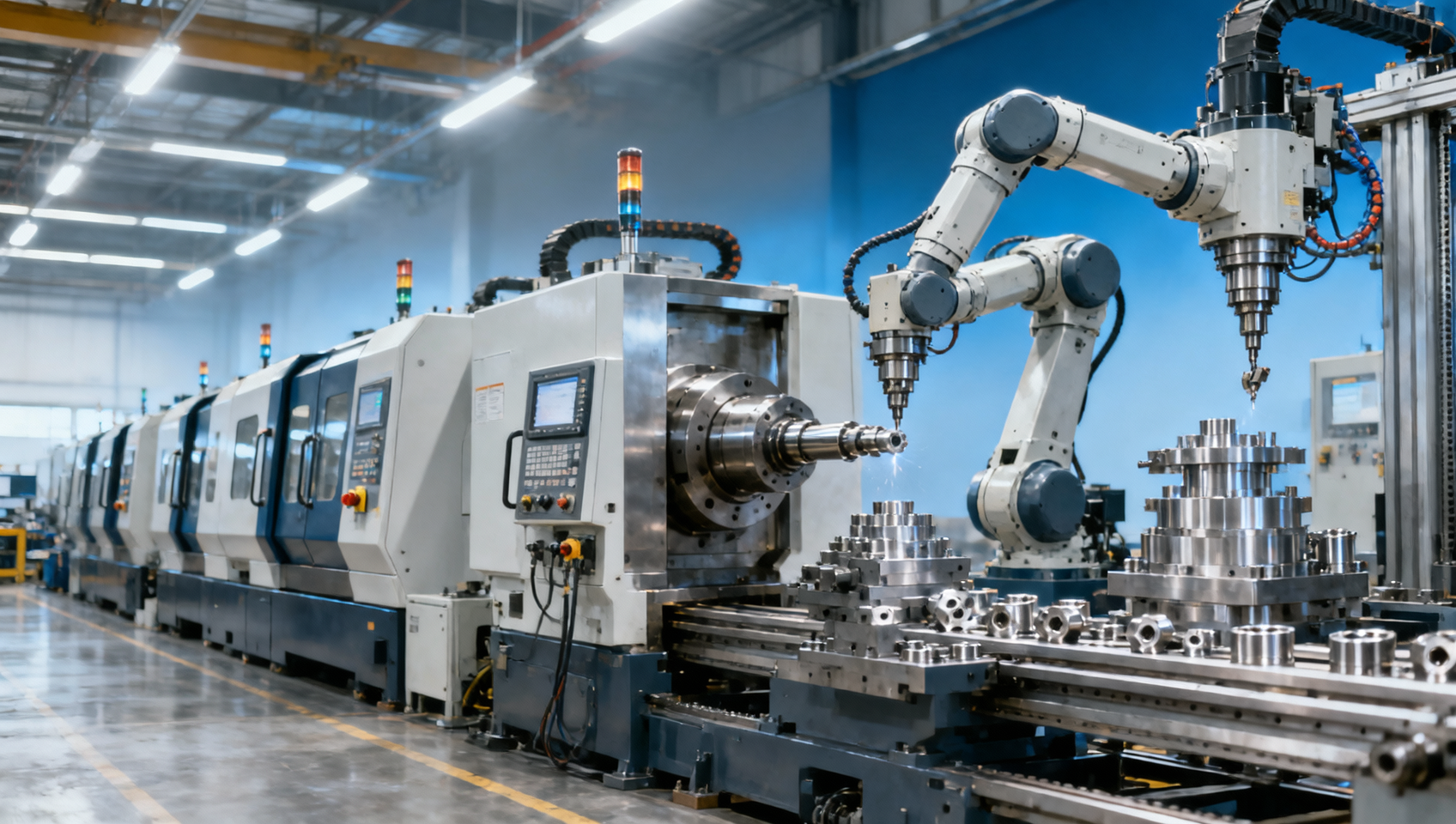
As the Manufacturing Industry shows uneven signs of recovery, demand across the Machine Tool Market is shifting toward metal machining, industrial CNC, and automated production solutions. From CNC milling and CNC cutting to automated lathe systems and Industrial Automation, buyers and manufacturers are reassessing capacity, cost, and resilience in Global Manufacturing. This article explores where orders are returning, which sectors remain cautious, and what these changes mean for procurement, production process planning, and future investment.
Why are manufacturing orders recovering unevenly across the machine tool market?
The current rebound in manufacturing is real, but it is not broad-based. In many regions, replacement demand has returned faster than greenfield investment. That means companies are approving CNC machine upgrades, tooling changes, and automation retrofits in 3–6 month planning cycles, while delaying full factory expansion. For information researchers and decision-makers, this uneven pattern matters because order recovery is not simply a volume story; it is a sector-by-sector shift in where capital is being allocated.
Automotive, energy equipment, and selected aerospace supply chains are showing more stable demand for machining centers, CNC lathes, and multi-axis systems. These sectors still require precision parts, repeatable tolerances, and shorter setup time for mixed production. By contrast, some export-dependent consumer segments remain cautious, especially where inventory normalization and price pressure are still unresolved. In practical terms, machine tool orders are recovering first where productivity gains can be measured within 12–24 months.
Industrial buyers are also changing what they mean by recovery. A return of orders does not always mean a return to pre-cycle procurement behavior. Many purchasing teams now ask for clearer evidence on spindle utilization, tooling compatibility, automation readiness, and maintenance intervals. Operators are involved earlier in specification reviews because labor availability, programming complexity, and training time often determine whether a machine delivers real output gains in the first 30–90 days after installation.
From a global manufacturing perspective, order flow is also influenced by localization. Companies in China, Germany, Japan, and South Korea continue to shape the machine tool ecosystem through strong supply networks, but buyers are spreading sourcing risk across more than one region. Lead time, service response, and component availability are now weighed almost as heavily as price. This is one reason why recovery looks uneven on the surface: the market is rewarding resilient supply capability, not just installed capacity.
Three signals buyers are using to judge whether demand is truly returning
- Order visibility beyond one quarter: many procurement teams look for at least 2 consecutive quarters of stable demand before approving larger automation budgets.
- Part mix stability: if product variants remain highly volatile, firms often prefer flexible CNC cells over single-purpose production lines.
- Payback clarity: projects linked to cycle time reduction, scrap control, or labor substitution are moving faster than image-driven smart factory investments.
These signals help explain why metal machining and industrial CNC are drawing attention even when broader manufacturing sentiment remains mixed. Machine tools are being purchased less as static equipment and more as productivity assets that must fit changing demand, variable batch sizes, and tighter cost control.
Which sectors are ordering again, and which ones remain cautious?
Not all downstream industries are recovering at the same pace. Sectors with strict precision requirements and long product validation cycles often return to ordering earlier because their production cannot easily be substituted. Aerospace structural parts, automotive transmission components, energy equipment housings, and electronics fixtures still depend on high-accuracy CNC machining and stable process capability. In these areas, even moderate demand growth can trigger orders for machining centers, automated lathe systems, and fixture upgrades.
More cautious sectors tend to share three traits: uncertain end-market demand, aggressive cost compression, and high sensitivity to export swings. When production plans are revised every 4–8 weeks, buyers hesitate to commit to large capital expenditure. Instead, they may extend the life of existing machines, outsource overflow capacity, or choose lower-risk upgrades such as tool management systems, probing packages, or robot loading on existing CNC equipment.
For operators and plant managers, the practical issue is not only whether new orders exist, but whether the work is suitable for current equipment. A factory may see more demand, yet still struggle if incoming parts require tighter tolerances, higher surface finish stability, or more frequent changeovers. That is why many manufacturers are prioritizing equipment that can handle small-batch to medium-batch production with fast setup and reliable repeatability.
The table below summarizes how typical demand patterns differ across major application areas in the machine tool market. The purpose is not to claim a universal ranking, but to help procurement teams compare order logic, technical demands, and investment timing in a structured way.
The most important takeaway is that buyers should avoid reading the market as either “up” or “down.” Recovery is tied to application logic. If the project involves complex shaft components, precision discs, or structural parts with documented tolerance needs, investment decisions are moving faster. If demand is uncertain and specifications are still changing, caution remains rational.
What this means for procurement timing
In stronger sectors, quotation activity often converts to technical review within 2–4 weeks, followed by budget approval and delivery discussion. In cautious sectors, quotation rounds may repeat several times because the buyer is still comparing outsourced machining, equipment retrofit, and new machine purchase. Understanding this timeline helps suppliers and buyers align expectations earlier.
For decision-makers, the key is to separate short-term order noise from durable process demand. When precision, traceability, and automation readiness are becoming more important, machine tool investment can still make sense even in an uneven recovery environment.
How should buyers evaluate CNC equipment when recovery is uncertain?
When demand is uneven, buyers should not start with machine price alone. A better approach is to review 5 core factors: part geometry, material range, batch pattern, tolerance target, and labor model. For example, a plant processing mixed steel and aluminum parts in batches of 20–200 pieces needs different flexibility than a facility producing one family of components in long runs. The machine tool market currently rewards equipment that protects utilization under changing demand, not just maximum output under ideal conditions.
Operators and process engineers should also be included early. If a machine has advanced functions but requires long programming time, difficult fixture changes, or specialized maintenance skills that are not available on site, the investment may underperform. In many factories, actual bottlenecks are not spindle speed or axis count, but setup discipline, tool life consistency, and feeder or loading stability during multi-shift operation.
A practical procurement review usually covers 4 stages: process definition, technical matching, commercial comparison, and implementation planning. Skipping any of these stages creates hidden risk. For instance, if a supplier quote does not clearly define probing, chip management, coolant requirements, or controller compatibility, the real cost of deployment may rise after the purchase order is issued.
The table below helps compare typical equipment options used in metal machining and industrial automation projects. It is especially useful for procurement teams deciding between flexibility, output, and investment control.
This comparison shows why procurement cannot be reduced to a single specification sheet. In an uneven recovery, the best machine is usually the one that preserves process flexibility while keeping implementation risk within a manageable 60–120 day ramp-up window.
A practical checklist before issuing RFQ
- Confirm part family and annual volume range, including low, base, and peak scenarios.
- Define target tolerances, surface finish needs, and inspection method before comparing quotes.
- Check operator skill level, programming resources, and maintenance support for the first 6 months.
- Ask for detailed scope: machine, controller, tooling interface, automation option, installation, and training.
- Review delivery window, commissioning sequence, and spare parts availability by region.
Using this checklist helps buyers compare offers on operational value rather than headline price. That approach is especially important when the broader manufacturing industry has not yet returned to uniform growth.
What cost, lead time, and implementation risks should companies watch?
In the current machine tool market, the biggest budgeting mistake is underestimating total implementation cost. A CNC machine purchase often includes more than the base unit. Tool holders, cutting tools, fixtures, probing, coolant management, chip handling, software options, transport, installation, and operator training can materially affect project economics. For many factories, the difference between a smooth launch and a delayed launch is not equipment quality alone, but whether the full production system was planned from the start.
Lead times also vary more than many buyers expect. Standard configurations may move in 6–12 weeks in favorable supply conditions, while customized automation cells or larger machining systems can require 12–24 weeks or longer depending on control systems, castings, and integration scope. This matters because procurement teams are increasingly asked to synchronize machine arrival with customer project milestones, utility preparation, and operator allocation.
Another common risk is treating machine capacity as the same thing as line capacity. A new industrial CNC unit may achieve the quoted cycle time during testing, yet actual output can still fall short due to fixture instability, part loading delays, tool breakage frequency, or inspection bottlenecks. This is why operators, maintenance staff, and quality engineers should all participate in pre-acceptance planning. In most plants, line readiness depends on 6 interconnected items, not one machine alone.
Cost alternatives should also be considered honestly. In uncertain demand conditions, some projects are better served by retrofitting existing machines, adding automation to a proven line, or outsourcing peak loads to specialized machining suppliers. These options are not always inferior. They simply fit different production risk profiles and capital constraints.
Where hidden cost usually appears
- Training time: advanced systems may require 1–3 weeks of operator familiarization before stable output is reached.
- Tooling mismatch: insufficient attention to holders, inserts, or balancing can reduce expected productivity.
- Utility adaptation: compressed air, coolant treatment, power conditions, and floor layout may need adjustment.
- Quality verification: inspection fixtures, first article validation, and process documentation are often omitted from early budgets.
Implementation rhythm that reduces disruption
A disciplined rollout often follows 4 steps: process confirmation, factory readiness, machine installation, and ramp-up validation. Each step should have clear acceptance criteria. For example, before installation, the buyer should confirm power supply stability, foundation conditions where relevant, and in-plant logistics for unloading and positioning. During ramp-up, typical checks include dimensional stability, cycle repeatability, operator handover, and spare parts stocking.
This kind of staged implementation is especially useful when orders are returning unevenly. It allows a manufacturer to add capacity without creating uncontrolled disruption across the wider production process.
What standards, process controls, and future trends matter now?
As recovery spreads selectively, buyers are placing more emphasis on process control and compliance readiness. Even when a project does not require a highly specialized certification path, companies still expect documented inspection logic, traceable production records, and stable quality control procedures. In the machine tool industry, this usually means attention to controller data handling, calibration routines, maintenance intervals, and compatibility with customer-specific inspection requirements.
For sectors such as automotive, aerospace, and energy equipment, standardization affects procurement from the beginning. Buyers frequently ask whether a machine or production cell can support documented process validation, repeat measurement routines, and integration with existing digital manufacturing workflows. General industrial practice often includes preventive maintenance reviews every month, deeper inspection every quarter, and annual accuracy checks depending on workload intensity and part criticality.
The larger trend is clear: the market is moving toward higher precision, greater automation, and tighter digital integration. Industrial robots, flexible production lines, and smart factory systems are no longer optional topics only for flagship plants. Even mid-sized manufacturers now evaluate whether new CNC equipment can support remote diagnostics, production data collection, and modular automation upgrades over a 2–5 year horizon.
At the same time, future investment should remain grounded. Not every factory needs a fully automated line immediately. In many cases, a better strategy is phased modernization: first stabilize the machining process, then improve changeover control, then add robot loading or digital monitoring. This sequence helps protect capital while still preparing the operation for broader industrial automation adoption.
FAQ: the questions buyers and plant teams ask most often
How should we choose between a standard CNC machine and an automated cell?
Start with batch pattern and labor availability. If part families are stable and multi-shift operation is expected, an automated cell may justify the added complexity. If products change frequently or annual demand is still uncertain, a standard CNC machine with automation-ready interfaces can be the safer first step.
What is a reasonable delivery expectation in the current market?
For common configurations, 6–12 weeks can be a normal planning range under stable supply conditions. Customized systems, larger cast structures, or integrated robot cells may extend to 12–24 weeks or more. Buyers should confirm what is included in that window: production, shipment, installation, and commissioning are not always counted the same way.
What do operators care about that procurement teams often miss?
Ease of setup, controller usability, tool access, chip evacuation, and maintenance accessibility are often decisive. A machine that looks attractive in quotation form may create downtime if daily operation is cumbersome. Early operator input reduces this risk.
Are retrofits still worth considering when orders are recovering?
Yes, especially when the base machine remains mechanically sound and the main need is improved control, probing, or loading efficiency. Retrofits can be useful for 12–18 month capacity bridging, though they should be evaluated against long-term maintenance and process stability requirements.
Why work with us when evaluating CNC machining and precision manufacturing opportunities?
Uneven order recovery makes fast but informed decisions more important. Our platform focuses on the global CNC machining and precision manufacturing industry, covering machine tool market developments, industrial automation trends, technology updates, and international trade movement. That means we can help you evaluate not just a machine category, but the production logic behind it: where demand is returning, which applications justify investment, and how sourcing choices affect delivery and resilience.
For information researchers, we can help clarify market direction, application differences, and terminology around CNC milling, CNC cutting, automated lathe systems, and flexible production lines. For operators and plant teams, we can support discussions around process suitability, setup concerns, and implementation priorities. For procurement staff and business leaders, we can focus on supplier comparison, lead time planning, total cost evaluation, and phased investment options.
If you are reviewing a project now, you can contact us to discuss specific topics such as parameter confirmation, equipment selection, expected delivery windows, customization scope, automation matching, common compliance expectations, sample or trial part discussion, and quotation communication. Clear early input usually reduces rework later, especially when market demand is returning in some sectors faster than others.
Whether you are comparing CNC machine tool options, reassessing production process capacity, or planning a more resilient global manufacturing supply strategy for the next 2–4 quarters, we can help you turn fragmented market signals into a clearer procurement and investment path.
PREVIOUS ARTICLE
Recommended for You
 Heavy-duty Machining Center for mold making: Why coolant filtration standards evolve faster than OEM manualsMachine Tool Industry Editorial Team
 Quick-change Fixture Design for CNC turning: Why clamping force consistency drops after 200 cyclesCNC Machining Technology Center
 5 Axis Machining for impeller manufacturing: Why toolpath smoothing affects surface fatigue lifeCNC Machining Technology Center
 Lean Production Process implementation: Where value stream mapping fails to expose hidden machine downtimeManufacturing Market Research Center
 Modular Tooling System for flexible manufacturing: Why interface repeatability degrades faster than expectedMachine Tool Industry Editorial Team
 Industrial Automation control system for CNC machines: When cybersecurity updates disrupt scheduled maintenanceMachine Tool Industry Editorial Team


Aris Katos
Future of Carbide Coatings
15+ years in precision manufacturing systems. Specialized in high-speed milling and aerospace grade alloy processing.
▶
Industrial CNC Import Trends Are Changing in Southeast AsiaGlobal Machine Tool Trade Research Center▶
Manufacturing Industry Orders Are Recovering UnevenlyGlobal Machine Tool Trade Research Center▶
What is changing first in Global Manufacturing this year?Global Machine Tool Trade Research Center▶
Industrial CNC demand in Southeast Asia is not moving evenlyGlobal Machine Tool Trade Research Center▶
How regional market insights reveal unexpected demand for compact vertical lathes in GermanyGlobal Machine Tool Trade Research Center
Mastering 5-Axis Workholding Strategies
Join our technical panel on Nov 15th to learn about reducing vibrations in thin-wall components.

Providing you with integrated sanding solutions
Before-sales and after-sales services
Comprehensive technical support