• Global CNC market projected to reach $128B by 2028 • New EU trade regulations for precision tooling components • Aerospace deman
NYSE: CNC +1.2%LME: STEEL -0.4%

Industrial CNC Import Trends Are Changing in Southeast Asia
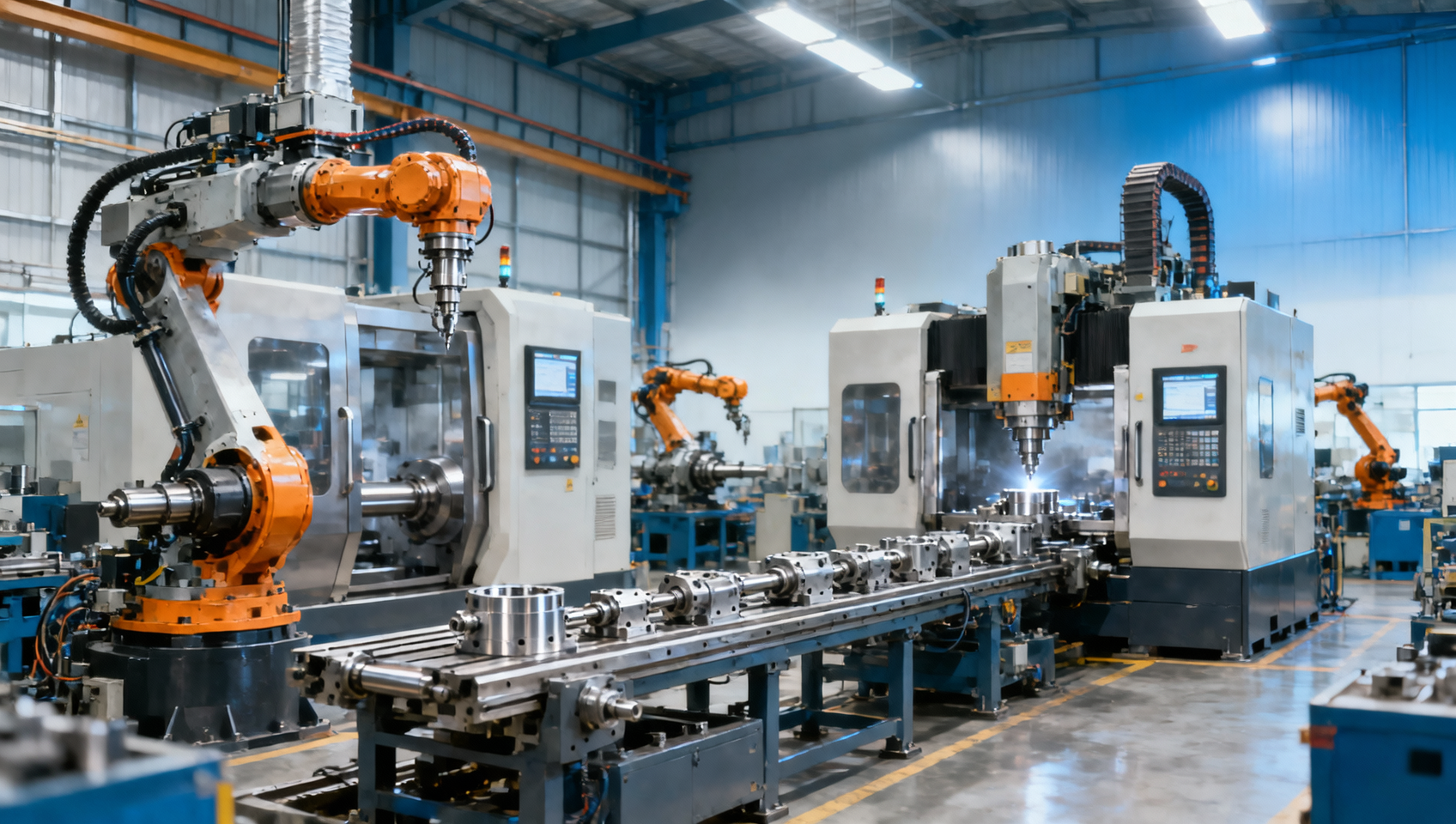
Southeast Asia is rapidly reshaping the industrial CNC landscape as manufacturers upgrade metal machining capacity, expand automated production, and rethink sourcing strategies. From CNC milling and CNC cutting to industrial lathe and automated production line investments, shifting import trends are influencing the Machine Tool Market, Global Manufacturing networks, and the broader Manufacturing Industry.
Why Southeast Asia Is Becoming a Key CNC Import Growth Zone
Industrial CNC import trends in Southeast Asia are changing because the region is no longer treated only as a low-cost assembly base. It is becoming a more complex manufacturing hub for automotive parts, electronics housings, energy components, and general industrial equipment. As a result, buyers are importing not just standard machine tools, but also higher-spec CNC machining centers, CNC lathes, multi-axis systems, and integrated automated production line solutions.
Several countries in the region are moving through a similar industrial cycle. First comes capacity expansion for basic machining. Then buyers demand tighter tolerance, shorter lead time, and more stable repeatability. After that, procurement shifts toward automation, digital monitoring, and production flexibility. In practical terms, this means import demand is moving from 3-axis entry-level equipment to 4-axis, 5-axis, and hybrid line configurations within a 2- to 5-year investment window.
For information researchers and enterprise decision-makers, the important point is not simply that imports are increasing. The more relevant question is what kinds of CNC machines are being prioritized. In many Southeast Asian markets, imported equipment is increasingly selected for spindle stability, controller compatibility, tool magazine capacity, and service responsiveness within 24-72 hours rather than for purchase price alone.
This trend is also tied to global manufacturing diversification. Buyers who previously sourced heavily from one country are now balancing supplier portfolios across China, Japan, South Korea, Germany, and other industrial equipment exporters. That change affects lead times, spare parts planning, payment structure, training support, and long-term operating cost across the Machine Tool Market.
- Automotive and motorcycle production is driving demand for CNC milling, turning, drilling, and fixture systems for medium-volume and large-volume parts.
- Electronics and electrical equipment makers are adding compact machining centers and precision cutting systems for aluminum, copper, and engineered materials.
- Energy and industrial equipment factories are upgrading to heavier-duty industrial lathe and machining platforms for shafts, flanges, housings, and structural parts.
- Export-oriented manufacturers are prioritizing machine reliability, traceability, and process consistency to meet customer audits and delivery schedules.
What Import Patterns Are Actually Changing in the Machine Tool Market?
The change is not only about higher import volume. The more meaningful shift is the structure of imported equipment. Many factories previously purchased standalone machines to solve one immediate production bottleneck. Now they are more likely to evaluate complete process chains that include feeding, machining, inspection, tool management, and sometimes robotic unloading. This is especially visible where labor availability fluctuates or where factories need stable night-shift output.
Another major change is the move from broad specification buying to application-based buying. Procurement teams are asking more precise questions: Is the machine intended for aluminum parts or hardened steel? Will production run in small batches of 50-200 pieces or repeat orders of 5,000-20,000 pieces? Is the target tolerance in the ±0.02 mm range or closer to ±0.005 mm? The answers directly affect spindle type, guideway design, tool count, coolant method, and automation level.
Buyers are also placing greater emphasis on lifecycle support. In the past, importers might compare two machines mainly by initial quotation. Today, many experienced purchasers consider 5 core cost blocks: machine price, shipping and import cost, installation and training, spare parts availability, and downtime risk. This broader view is pushing some buyers toward suppliers with stronger technical communication and regional service readiness, even when the list price is not the lowest.
The table below summarizes how industrial CNC import behavior is changing in Southeast Asia and what that means for different buyer groups.
For operators, the consequence is a wider skills requirement. For procurement teams, it means longer evaluation cycles, often 2-6 weeks depending on project complexity. For decision-makers, it means the correct CNC import strategy is increasingly linked to production planning, not just equipment acquisition.
Which machine categories are seeing stronger interest?
Demand is strongest where process upgrades directly improve throughput or reduce labor dependency. Vertical machining centers remain common, but interest is increasing for dual-spindle turning, multi-axis machining, automated CNC cutting systems, and compact flexible cells. These are attractive in facilities where floor space is limited and product variety is growing.
In industries processing shafts, bushings, valve components, and rotational parts, imported industrial lathe systems are being evaluated for rigidity, bar-feeding compatibility, and continuous running stability. In electronics and precision fabrication, buyers are focusing more on thermal stability, surface finish consistency, and reduced setup time between part families.
How Should Buyers Compare CNC Equipment for Different Production Scenarios?
The right CNC import decision depends on production scenario. A supplier that is suitable for a general machining workshop may not be the right fit for an export-driven parts plant that runs 16-20 hours per day. Likewise, a machine designed for medium carbon steel is not automatically ideal for aluminum die-cast parts, stainless components, or hardened alloys. Buyers need a scenario-based comparison framework.
A practical way to evaluate options is to start with 4 questions. What part family will be machined? What is the planned batch size? What tolerance and surface finish are required? What level of operator skill is available on site? These 4 questions often narrow the machine shortlist faster than a long catalog review.
The following table can help procurement personnel, users, and plant managers compare common CNC equipment types used in Southeast Asian manufacturing projects.
This comparison shows why the lowest quotation can be misleading. For example, a low-cost 3-axis machine may appear attractive, but if it increases setup frequency and fixture changes, actual output per shift may be lower than a slightly higher-priced alternative. In a factory running two shifts, that gap can matter more than the initial equipment discount.
Scenario-based buying logic for four user groups
Information researchers usually need a broad view of supplier capability, regional import trends, and technology direction. They should prioritize machine category mapping, origin options, and application fit before discussing price. This makes later sourcing more efficient.
Operators care more about programming difficulty, maintenance accessibility, and training time. In many projects, a realistic on-site training cycle is 3-7 days for basic operation, with additional time required for advanced programming or robotic integration.
Procurement teams must compare commercial terms and technical risk together. Spare parts lead time, warranty scope, installation obligations, and commissioning support are often as important as the machine itself.
Enterprise decision-makers need to balance capacity planning, return horizon, and supply resilience. If product demand is uncertain, modular expansion may be safer than a fully automated line. If orders are stable for 12-24 months, a more integrated solution may reduce unit manufacturing cost faster.
What Should Procurement Teams Check Before Importing CNC Machines?
CNC procurement in Southeast Asia is often delayed not by machine availability, but by unclear technical input. A supplier cannot recommend the right machining center or industrial lathe if the buyer does not define material, part drawing, tolerance target, planned output, utility conditions, and preferred controller environment. Clear preparation reduces both selection error and quotation revision time.
Most buyers should evaluate at least 6 key areas before confirming import orders. These include process compatibility, machine configuration, installation condition, compliance needs, service responsiveness, and total cost of ownership. Missing even one of these can create expensive problems after arrival, especially when the equipment is integrated into a production line.
A practical 6-point CNC import checklist
- Confirm part information, including material type, part size range, tolerance band, and surface requirements. A change from aluminum to stainless steel can significantly alter spindle and tooling requirements.
- Define output expectations by shift, per day, or per month. A line planned for 300 parts per shift needs a different automation strategy from one running 30 prototype parts.
- Check site conditions such as power supply, compressed air, coolant system, floor loading, and available installation space. These are common causes of commissioning delay.
- Review controller preference, software compatibility, and possible communication interfaces for factory systems. Digital integration is becoming more relevant in smart manufacturing projects.
- Clarify delivery scope, including tooling, fixture, training, spare parts starter pack, and commissioning support. Two quotations may look similar but include very different service content.
- Ask for a realistic timeline covering manufacturing, export packing, shipping, customs handling, and installation. Depending on route and complexity, a full cycle may range from 4-12 weeks or longer.
The next table can be used as a structured procurement evaluation sheet when comparing imported CNC options for different manufacturing needs.
A disciplined procurement process is especially important when buyers are comparing suppliers from multiple countries. Differences in service model, documentation quality, communication speed, and optional configuration can be larger than they first appear in a simple quotation sheet.
Standards and compliance points buyers should not ignore
While exact import requirements vary by destination, buyers should generally review electrical compatibility, machine safety provisions, operator protection, manuals in usable language, and documentation for customs and plant acceptance. In projects involving automated production line integration, safety interlock logic and emergency stop design deserve early attention rather than last-minute checking.
Where export-oriented factories serve audited customers, documented inspection procedures, maintenance records, and installation validation can become part of customer review. This is one reason why better documentation support can be as valuable as a lower machine price.
Common Risks, Misjudgments, and Cost Traps in CNC Import Projects
One of the most common mistakes is buying capacity without buying process stability. A machine may have acceptable spindle power and travel range, yet still fail to deliver target output because tool management, chip removal, fixture design, or operator workflow was not considered. This issue is common when a factory upgrades too quickly from manual or semi-manual machining to CNC without matching process preparation.
Another misjudgment is overestimating how fast a new imported machine can reach stable production. A realistic implementation usually has 3 stages: installation and utility connection, trial cutting and parameter adjustment, then operator training and batch validation. Even for a standard machine, this can take several days to 2 weeks depending on part complexity and team readiness.
Cost traps often appear outside the machine quotation. These include local unloading, foundation work, customs delay, power modification, tooling purchase, fixture design, software post-processing, and spare consumables. A buyer focused only on CIF or FOB pricing may later find that the actual project budget is 15%-30% higher than expected once the line is ready for production.
There is also a strategic risk in choosing over-complex equipment for unstable demand. A 5-axis or highly automated system can be the right choice for complex precision manufacturing, but if order volume is uncertain and the product mix changes every few weeks, a modular machining cell may provide better financial flexibility.
Typical warning signs before purchase
- The supplier receives no drawing, no material information, and no cycle target, yet offers a fixed solution immediately.
- The quotation does not clearly list included tools, fixture scope, training duration, or commissioning support.
- Lead time sounds unusually short without explanation of production status, packing, shipping route, or installation plan.
- The machine looks technically advanced, but local users have limited ability to maintain or program it.
For many Southeast Asian factories, the most effective strategy is to align CNC import planning with actual production maturity. Start with the process, then validate the machine, then build operator and maintenance capability. This sequence lowers risk far more effectively than chasing the cheapest offer.
FAQ: What Do Buyers and Users Most Often Ask About CNC Imports?
How do I choose between a standard CNC machine and an automated production line?
If your production involves frequent part changes, smaller batches, or uncertain order forecasts, a standard CNC machine or flexible cell is often the safer starting point. If your output is stable, labor is hard to scale, and cycle time consistency is critical across 2-3 shifts, an automated production line may create better long-term value. The decision should be based on batch pattern, labor structure, and expected payback horizon rather than on automation appeal alone.
What delivery cycle is typical for imported industrial CNC equipment?
A common project cycle can range from 4-12 weeks, but this varies by machine type, customization level, export documentation, and shipping route. A standard machine with limited options may move faster, while a custom automated production line can require a longer engineering and validation period. Buyers should ask for timeline breakdown by manufacturing, packing, shipment, customs, installation, and training.
What matters more: machine origin or machine configuration?
Both matter, but configuration fit usually has a more immediate effect on production results. A well-matched CNC lathe or machining center with the right spindle, guideway, control, tooling, and service support will often outperform a poorly matched machine from a more prestigious origin. Buyers should compare origin together with service structure, component ecosystem, documentation, and application fit.
What are the most overlooked costs in CNC import projects?
The most overlooked items are usually tooling, fixture design, operator training, local installation preparation, spare parts startup inventory, and process tuning time. In some projects, these indirect costs are large enough to change the payback calculation. That is why procurement teams should request a full-scope breakdown, not only machine price and freight terms.
Why Work With a Specialized CNC Industry Platform and What Can You Ask Us?
In a changing Machine Tool Market, buyers do not only need product listings. They need industry insight, application understanding, and trade clarity. A specialized CNC industry platform can help connect market analysis with real purchasing decisions by translating technical language into procurement logic and by identifying where different machine categories fit within actual production needs.
Our focus on global CNC machining and precision manufacturing allows us to support a wider range of industrial questions, from CNC milling and CNC cutting trends to industrial lathe applications, automation direction, and cross-border equipment sourcing considerations. This is useful for researchers comparing regions, operators preparing for process changes, procurement staff reviewing options, and executives evaluating factory investment priorities.
You can contact us for practical discussion on parameters, product selection, typical delivery cycles, machining application fit, automation planning, documentation expectations, and quotation comparison logic. If you are still early in the research phase, we can also help structure your supplier communication checklist so that your next round of evaluation becomes faster and more accurate.
If your team is reviewing imported CNC equipment for Southeast Asia, send the available part drawings, material details, production targets, preferred machine type, and project timeline. We can help you organize the key decision points around configuration matching, delivery planning, certification-related concerns, spare parts preparation, and solution direction before you move into formal sourcing or price negotiation.
PREVIOUS ARTICLE
NEXT ARTICLE
Recommended for You
 Global Manufacturing Lead Times Improve but Not EverywhereGlobal Machine Tool Trade Research Center
 Machine Tool Market Inventory Pressure Is Building AgainGlobal Machine Tool Trade Research Center
 Metal Lathe vs CNC Milling for Low Volume Round PartsCNC Machining Technology Center
 CNC Cutting Gas Choice Affects More Than Edge FinishCNC Machining Technology Center
 CNC Metalworking Shops Face New Pressure on TraceabilityManufacturing Policy Research Center
 Automated Lathe Cycle Time Gains Can Hide Quality LossesCNC Machining Technology Center

Aris Katos
Future of Carbide Coatings
15+ years in precision manufacturing systems. Specialized in high-speed milling and aerospace grade alloy processing.
▶
Industrial CNC Import Trends Are Changing in Southeast AsiaGlobal Machine Tool Trade Research Center▶
What is changing first in Global Manufacturing this year?Global Machine Tool Trade Research Center▶
How regional market insights reveal unexpected demand for compact vertical lathes in GermanyGlobal Machine Tool Trade Research Center▶
Industrial lathe demand shifted sharply in Southeast Asia—not toward price, but toward service-response SLAsGlobal Machine Tool Trade Research Center▶
That ‘CNC manufacturing factory’ label doesn’t guarantee local service—here’s how response time actually breaks down by regionGlobal Machine Tool Trade Research Center
Mastering 5-Axis Workholding Strategies
Join our technical panel on Nov 15th to learn about reducing vibrations in thin-wall components.

Providing you with integrated sanding solutions
Before-sales and after-sales services
Comprehensive technical support