• Global CNC market projected to reach $128B by 2028 • New EU trade regulations for precision tooling components • Aerospace deman
NYSE: CNC +1.2%LME: STEEL -0.4%

Automated Production Line Costs: What Adds Up Fast
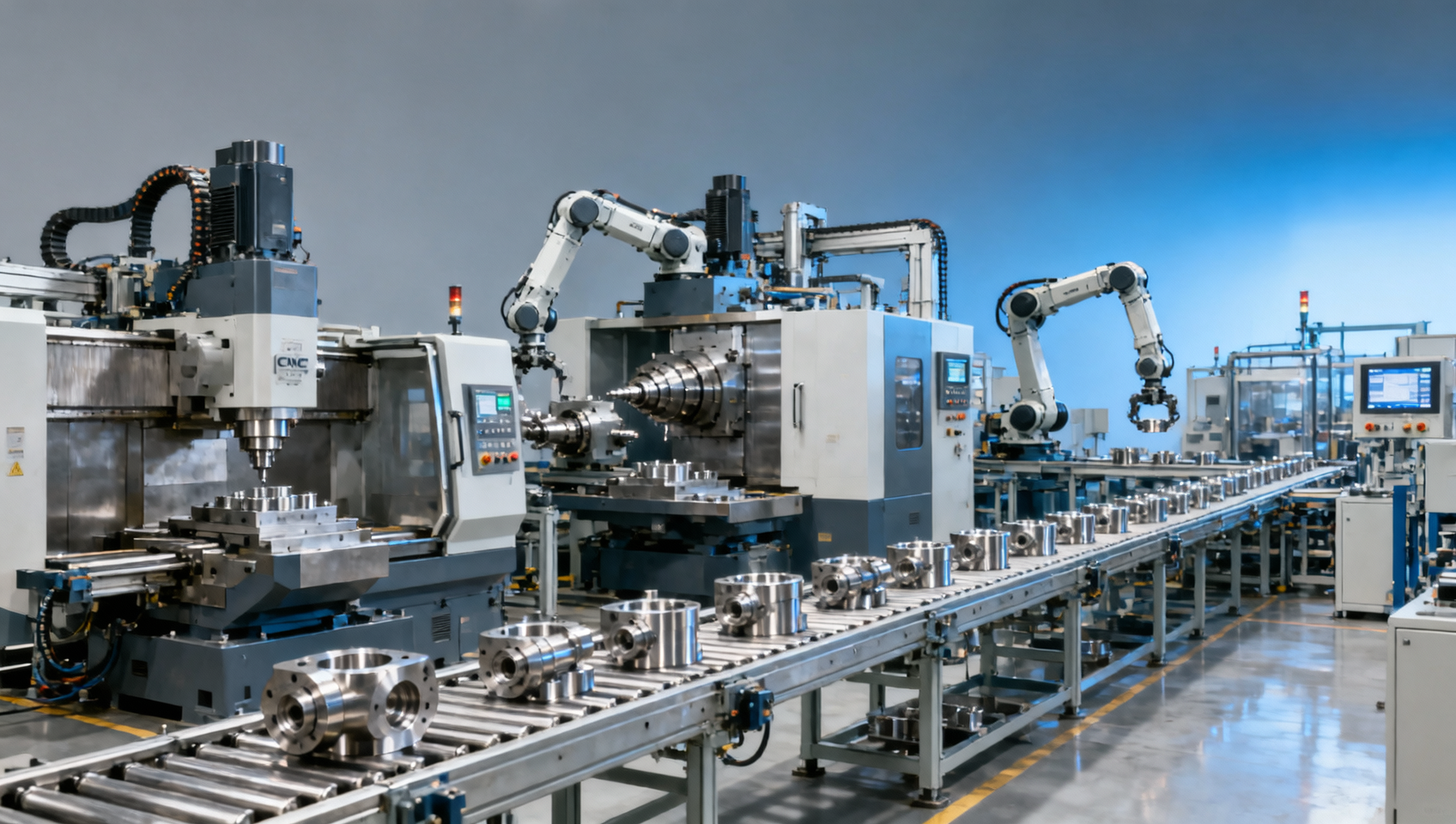
Automated Production Line costs can rise faster than many buyers expect, especially in metal machining and industrial CNC projects. From CNC cutting, CNC milling, and automated lathe systems to industrial robotics, software, tooling, and integration, every stage of the production process affects total investment. This article breaks down the key cost drivers to help operators, buyers, and decision-makers evaluate CNC production with greater clarity.
In CNC machining, the visible machine price is only one part of the budget. A production line that looks affordable at quotation stage can become 20% to 40% more expensive after fixtures, programming, guarding, chip handling, inspection, and commissioning are added. For procurement teams, operators, and business evaluators, understanding where costs accumulate is essential for comparing suppliers and avoiding under-scoped projects.
This matters across automotive parts, aerospace structures, energy components, and electronics housings, where automated production lines are expected to run with stable takt time, tight tolerances, and predictable output. In many cases, the true question is not only “How much does the line cost?” but also “What is included, what is missing, and what will increase operating cost over the next 3 to 5 years?”
Base Equipment Costs Are Only the Starting Point
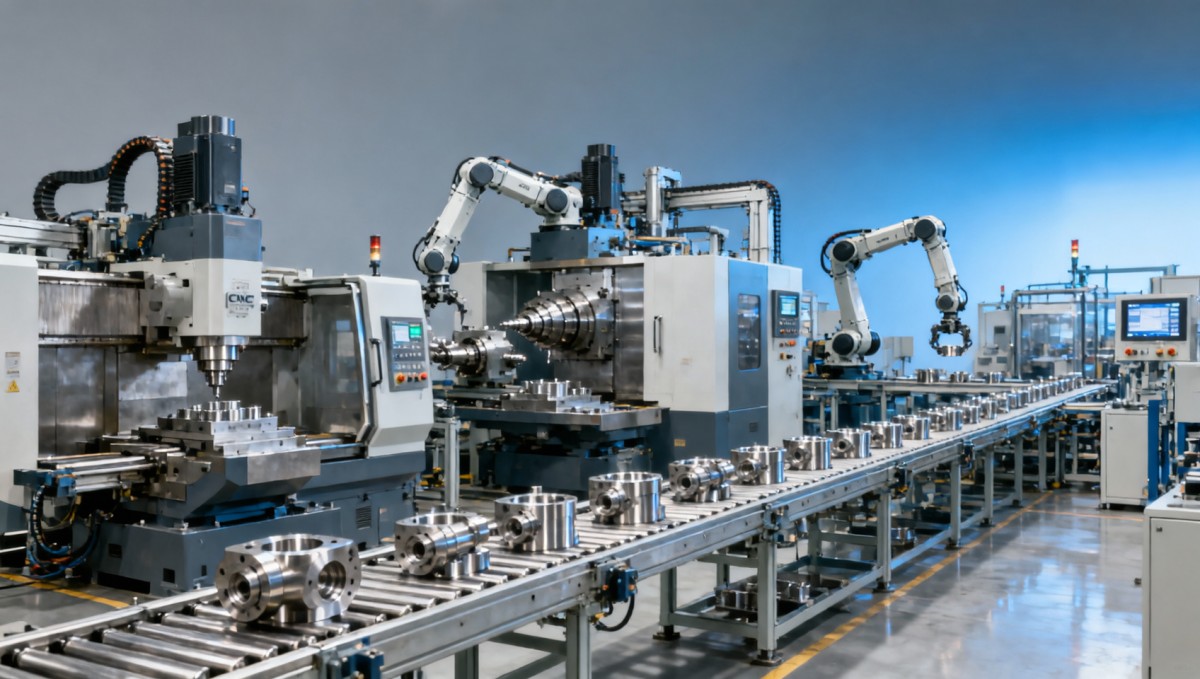
The first cost layer in an automated production line is the core equipment set: CNC lathes, machining centers, transfer systems, industrial robots, conveyors, and loading units. In metal machining, a single CNC machine may represent only 35% to 60% of total project value, depending on the level of automation. Once a buyer adds bar feeders, pallet changers, gantry loaders, or robotic tending, the capital budget rises quickly.
Machine configuration also changes the price curve. A 3-axis machining center is very different from a 5-axis system in both purchase price and downstream tooling complexity. Spindle power ranges such as 7.5 kW to 22 kW, tool magazine capacity from 24 to 120 tools, and work envelope size all affect not only hardware cost but also foundation, power supply, and maintenance planning.
For production buyers, another hidden point is that line balancing may require more than one machine type. A project for shaft parts might need CNC turning, drilling, deburring, washing, and final gauging. If one station has a cycle time of 90 seconds and another takes 55 seconds, extra buffering or parallel machines may be needed to maintain output. That changes the investment model from a single-equipment purchase to a multi-node system design.
Imported components can further increase the cost. Servo systems, CNC controls, linear guides, spindle units, and robot controllers from different regions often have different lead times, spare parts costs, and after-sales response conditions. In some projects, choosing a premium control platform may raise initial cost by 8% to 15%, but it can reduce downtime and simplify integration over the long term.
Typical Equipment Cost Layers in CNC Automation
The table below shows how cost categories usually expand beyond the machine itself in a standard automated machining project. Actual values vary by region, precision requirement, and output volume, but the structure is consistent across many CNC production lines.
The main takeaway is simple: if a quotation focuses only on machine count and spindle specifications, it is incomplete. Buyers should ask for a line-by-line scope that includes every mechanical, electrical, and software element needed to achieve stable production at the target takt time.
Checklist for Early Budget Screening
- Confirm whether the quotation includes loading, unloading, guarding, chip removal, and coolant management.
- Check if the stated output is based on 1 shift, 2 shifts, or 24/7 operation.
- Ask whether trial parts, process verification, and acceptance testing are included before shipment.
- Review utility requirements such as compressed air, floor load, voltage, and installation space.
Integration, Software, and Engineering Often Add Up Fast
In automated production lines, integration is one of the fastest-growing cost drivers. The more machines, robots, and inspection points involved, the more engineering hours are needed. Mechanical design, electrical schematics, PLC programming, robot path teaching, HMI design, and network setup can account for 15% to 30% of total investment, especially when custom workflows are required.
Software costs are also frequently underestimated. A CNC line may need machine communication protocols, production data collection, recipe management, tool life monitoring, alarm logging, and traceability functions. If the line must connect with ERP, MES, or a factory dashboard, integration time can increase by 2 to 6 weeks depending on interface complexity and cybersecurity requirements.
Engineering changes after design freeze are another major issue. A buyer may initially request simple robotic loading, then later add in-line marking, camera inspection, or automated sorting by quality grade. Each late-stage change can affect enclosure design, cycle time, software logic, and cable routing. Small changes on paper can create expensive rework on the shop floor.
For operators and manufacturing managers, the impact is practical. Poor integration can lead to nuisance alarms, unstable handshakes, awkward maintenance access, or line stoppage when one station fails. An automated line is only as productive as its weakest control sequence, so engineering quality should be evaluated with the same seriousness as machine specifications.
Where Integration Costs Usually Come From
- Process engineering: defining cycle time, routing logic, buffering, and part orientation.
- Control engineering: PLC, CNC interface, robot communication, and alarm architecture.
- Digital functions: tool monitoring, production reports, remote diagnostics, and recipe control.
- Validation work: dry run, FAT, SAT, capability checks, and operator training.
A strong integrator will document these layers clearly before fabrication begins. If engineering work is quoted as a single vague line item, it becomes difficult to compare proposals or control change orders later in the project.
Signs of an Under-Scoped Automation Proposal
Buyers should be cautious when a supplier promises a short delivery time such as 6 to 8 weeks for a custom multi-station CNC automation line without specifying FAT criteria or software scope. In many real projects, engineering, assembly, debugging, and on-site commissioning together take 10 to 20 weeks. A lower initial quote may simply move costs into later revisions, delayed acceptance, or additional service fees.
Tooling, Fixtures, and Quality Control Shape the Real Production Budget
In CNC production, tooling and fixturing are recurring budget multipliers. A production line for castings, forgings, or precision billets may require multiple fixture families, soft jaws, hydraulic clamping, datum verification, and gauge pins. These items are not optional accessories; they directly determine repeatability, setup time, and scrap risk. In some machining programs, tooling and fixtures add 10% to 20% to initial cost and continue to generate replacement expense over time.
Cutting tools behave like operating assets rather than one-time purchases. Tool life can vary significantly based on material hardness, coolant strategy, chip evacuation, and spindle load. For example, the same insert may last 120 minutes on one steel grade but only 45 to 60 minutes on another. If a line runs 16 to 20 hours per day, tool consumption becomes a measurable part of monthly production cost.
Quality control adds another layer. Many buyers budget for machining but forget in-line measurement, post-process inspection, SPC support, and calibration planning. If tolerance targets are within ±0.01 mm to ±0.02 mm, the line may require probing, air gauging, vision systems, or CMM verification. These devices increase capital cost, but they can prevent expensive batch defects and customer returns.
The right question is not whether quality systems add cost, but whether poor quality will cost more. In high-volume machining, one hour of undetected dimensional drift can affect dozens or hundreds of parts. For procurement teams, this means tooling and inspection should be assessed as part of the production system, not treated as secondary add-ons.
Cost Comparison: Basic vs Managed Production Support
The table below compares two common purchasing approaches. The cheaper option often appears attractive at first, but the more complete configuration usually provides better cost control over a 12- to 36-month operating window.
For businesses running medium to high volume, the managed approach often reduces unplanned stoppage, improves consistency, and shortens root-cause analysis time. That does not mean every project needs premium inspection, but it does mean the production budget should reflect tolerance, output target, and customer quality expectations.
Practical Buying Advice for Tooling and Quality
- Request expected tool life ranges by material and operation, not just a list of tool types.
- Ask if spare fixtures are included for preventive maintenance or line-side swap.
- Define inspection frequency, gauge responsibility, and calibration intervals before PO approval.
- Match inspection investment to tolerance class and customer traceability requirements.
Operating Costs, Downtime, and Service Support Determine Long-Term Value
A production line that looks competitive on initial purchase can become expensive in daily use. Energy consumption, coolant use, lubrication, consumables, spare parts, and maintenance labor all affect cost per part. In a multi-shift CNC line, even a 3% to 5% drop in availability can significantly change annual output and unit economics.
Downtime is especially costly in linked automation. If one robot gripper fails or one conveyor sensor becomes unstable, upstream and downstream stations may stop together. Mean time to repair matters more in a connected line than in a stand-alone machine environment. That is why service response terms such as remote support within 4 hours or on-site support within 24 to 72 hours should be discussed early.
Training is another budget line that many teams underestimate. Operators, maintenance technicians, and process engineers need different levels of knowledge. A line may be mechanically installed in 2 weeks, but stable operation often requires 1 to 3 months of process tuning, alarm familiarization, preventive maintenance routines, and production data review. Without this learning period, utilization targets can be unrealistic.
Buyers should also consider spare part strategy. Keeping critical items such as sensors, drives, grippers, coolant pumps, and spindle-related components on site can reduce downtime exposure. The required spare depth depends on output risk, but for lines supporting high-value contracts, it is common to classify parts into immediate-use, fast-replenishment, and order-on-demand groups.
What to Review in a Life-Cycle Cost Discussion
- Target OEE or line availability assumptions for 1 shift, 2 shifts, and 24/7 use.
- Preventive maintenance frequency, such as weekly checks, monthly inspections, and annual overhaul items.
- Local stock and delivery time for critical spare parts, often 24 hours, 7 days, or 4 to 8 weeks.
- Training scope for operators, programmers, electricians, and maintenance teams.
A lower-priced system without clear support conditions can create larger business risk than a more expensive line with defined service structure. For commercial evaluators, life-cycle cost should include output stability, reject control, and recovery speed after faults, not only the capital purchase number.
Common Long-Term Cost Mistakes
Typical mistakes include buying custom components with long replenishment cycles, ignoring chip and coolant management in abrasive materials, and failing to schedule preventive replacement of wear items. In CNC automation, serviceability and standardization often save more money over 36 months than a small discount at purchase stage.
How Buyers Can Control Automated Production Line Costs Before Signing
Cost control starts with a better specification. When RFQs are vague, suppliers interpret scope differently, making quotations difficult to compare. A practical RFQ should define part type, material, annual volume, takt time target, shift model, tolerance range, inspection expectations, and automation boundary. Even 6 to 10 clear technical inputs can eliminate major hidden cost surprises later.
It is equally important to separate must-have functions from optional upgrades. Some projects truly need full traceability, robotic vision guidance, and flexible changeover for multiple SKUs. Others only need stable automated loading and basic process monitoring. If buyers classify functions into essential, recommended, and future-phase items, they can manage budget without blocking later expansion.
Acceptance planning should be documented before the order is placed. This includes FAT criteria, sample parts, capability thresholds, cycle time conditions, and operator handover scope. A line that “runs” during demonstration is not the same as a line that meets qualified production standards. Clear acceptance terms reduce disputes and protect both supplier and buyer.
Finally, procurement teams should compare proposals on total project logic rather than on the lowest headline price. A slightly higher quote may already include software interfaces, safety compliance, spare tools, and commissioning support. A cheaper one may leave these items open, causing real project cost to rise after contract award.
Procurement Comparison Framework
The following framework can help cross-functional teams compare automated production line proposals more objectively during sourcing and technical review.
This type of matrix is useful for procurement, operations, and finance teams because it connects technical details with commercial impact. It also helps identify whether a supplier is offering a machine package or a true production solution.
FAQ for Cost Evaluation
How long does a typical CNC automated line project take?
For a standard custom line, a common planning range is 10 to 20 weeks for design, manufacturing, and factory testing, plus installation and commissioning time. Projects with robotics, in-line gauging, or factory software connection may require longer, especially if customer approvals happen in multiple stages.
Which cost items are most often missed by first-time buyers?
The most commonly missed items are fixtures, cutting tool replenishment, software interfaces, safety guarding, chip handling, and on-site debugging support. These can materially change the total budget even when the machine quotation seems competitive.
When is a higher initial investment justified?
A higher upfront budget is often justified when output volume is high, tolerance is tight, downtime is expensive, or customer traceability rules are strict. In such cases, better controls, inspection, and serviceability can lower total cost over 2 to 5 years.
Automated production line costs rise quickly because the real investment extends far beyond the machine body. CNC equipment, robotics, integration, software, tooling, quality control, maintenance, and support all shape the final number and the long-term return. For research teams, operators, buyers, and commercial decision-makers, the most effective approach is to evaluate complete production capability rather than headline equipment price alone.
If you are planning a CNC machining or precision manufacturing project, a detailed scope review can prevent expensive surprises and improve supplier comparison. Contact us to discuss your application, get a tailored production line assessment, or learn more about practical automation solutions for metal machining, precision parts, and smart factory deployment.
PREVIOUS ARTICLE
Recommended for You
![]() China Releases First Eastern Sea Seabed Elemental MapGlobal Machine Tool Trade Research Center
China Releases First Eastern Sea Seabed Elemental MapGlobal Machine Tool Trade Research Center![]() AIMM National Standard Advances for CNC Smart Factory CertificationManufacturing Policy Research Center
AIMM National Standard Advances for CNC Smart Factory CertificationManufacturing Policy Research Center![]() eVTOL Mass Production Drives CNC Export GrowthGlobal Machine Tool Trade Research Center
eVTOL Mass Production Drives CNC Export GrowthGlobal Machine Tool Trade Research Center![]() China Launches World's Largest Agri-Meteorological Observation NetworkManufacturing Market Research Center
China Launches World's Largest Agri-Meteorological Observation NetworkManufacturing Market Research Center![]() Robotics ToB Scaling Hits Data Bottleneck in CNC AI InspectionCNC Machining Technology Center
Robotics ToB Scaling Hits Data Bottleneck in CNC AI InspectionCNC Machining Technology Center![]() SAMR to Complete 1,800+ Standards Revisions in 2026Manufacturing Policy Research Center
SAMR to Complete 1,800+ Standards Revisions in 2026Manufacturing Policy Research Center


Aris Katos
Future of Carbide Coatings
15+ years in precision manufacturing systems. Specialized in high-speed milling and aerospace grade alloy processing.
▶
When Does an Automated Lathe Save More LaborMachine Tool Industry Editorial Team▶
What Makes Automated Production Pay Off FasterMachine Tool Industry Editorial Team▶
How to Build an Automated Production Line Step by StepMachine Tool Industry Editorial Team▶
Automated Production Line Costs: What Adds Up FastMachine Tool Industry Editorial Team▶
OPC AI Maintenance Cuts CNC Downtime 42% in SuzhouMachine Tool Industry Editorial Team
Mastering 5-Axis Workholding Strategies
Join our technical panel on Nov 15th to learn about reducing vibrations in thin-wall components.

Providing you with integrated sanding solutions
Before-sales and after-sales services
Comprehensive technical support