• Global CNC market projected to reach $128B by 2028 • New EU trade regulations for precision tooling components • Aerospace deman
NYSE: CNC +1.2%LME: STEEL -0.4%

How to Build an Automated Production Line Step by Step
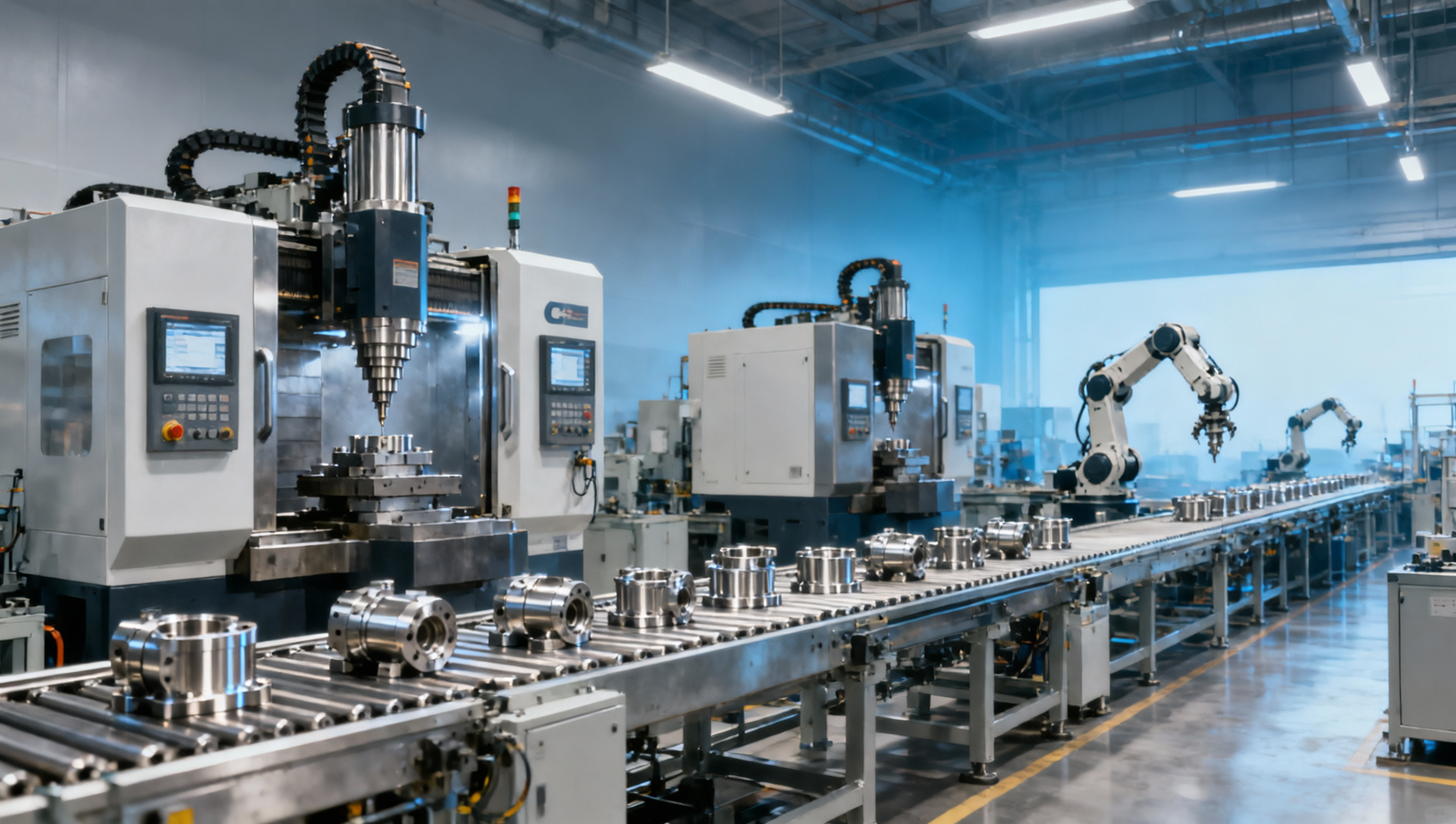
Building an Automated Production Line requires more than adding machines—it demands a clear strategy for industrial CNC selection, CNC Programming, workflow design, and Industrial Automation integration. From metal machining and CNC milling to automated lathe systems and Industrial Robotics, each step affects efficiency, quality, and scalability. This guide explains how manufacturers can plan a smarter CNC production process that fits today’s Global Manufacturing and Machine Tool Market demands.
What should be defined before building an automated production line?
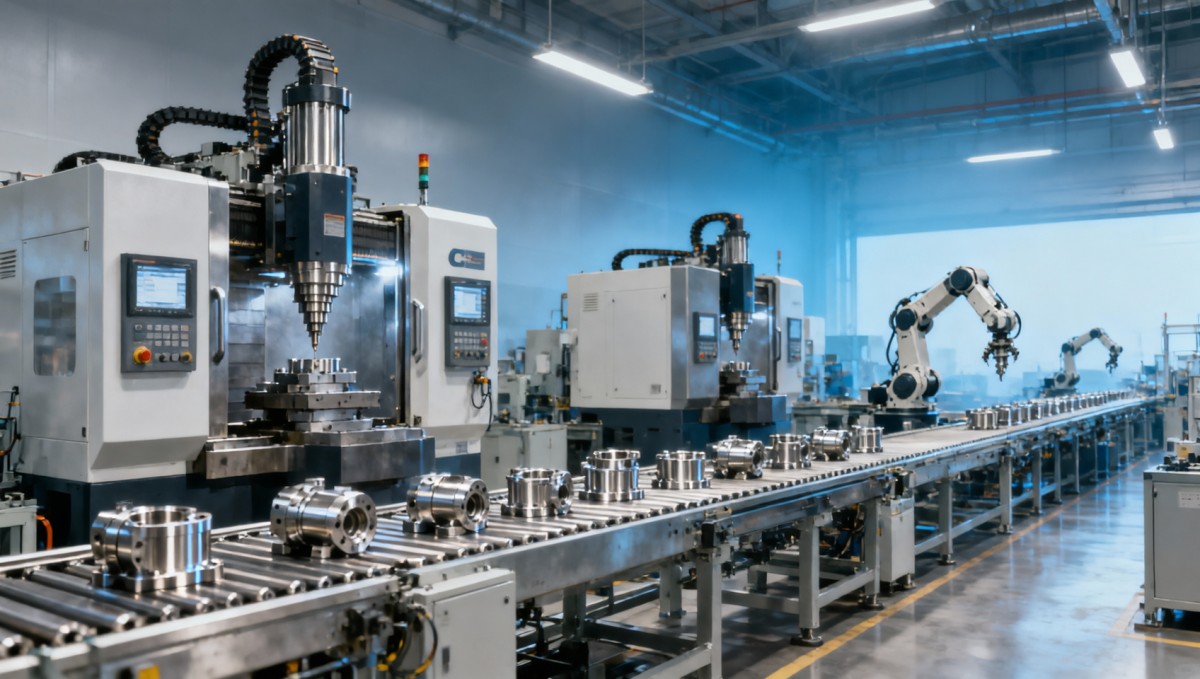
A successful automated production line starts with process definition, not equipment purchasing. Many factories rush into buying CNC lathes, machining centers, robots, or conveyors before confirming part families, target cycle time, and quality thresholds. In precision manufacturing, this often creates bottlenecks between machining, inspection, loading, and unloading. A practical first step is to map the line around 3 core elements: product mix, throughput target, and process stability.
For information researchers and business evaluators, the key question is whether the planned line is intended for small-batch flexible manufacturing, medium-volume repeat orders, or large-volume dedicated production. These 3 scenarios drive very different CNC production process decisions. A flexible line may prioritize quick changeover within 10–30 minutes, while a dedicated line may focus on repeatability across 16–24 hours of continuous operation.
Operators and users should also define the real production constraints early. Are parts mostly shaft components, precision discs, housings, or mixed structural parts? Does the workflow require turning, CNC milling, drilling, tapping, deburring, washing, assembly, and final inspection? If a line includes 5–8 connected stations, even one unstable process can reduce the overall utilization rate of the entire system.
Procurement teams should avoid evaluating machines as isolated assets. In industrial automation, the line must be judged as one integrated system that combines machine tools, tooling, fixtures, feeders, robot interfaces, software communication, safety protection, and service support. This is especially important in the global CNC machine tool market, where equipment from different countries may vary in controller logic, spare part lead time, and compatibility.
A practical planning sequence for the first 4 stages
- Define the product range, annual output, and tolerance requirements such as surface finish, dimensional accuracy, and traceability needs.
- Break the manufacturing route into machining, transfer, inspection, buffering, and packaging nodes to locate true bottlenecks.
- Choose the automation level: semi-automatic loading, robot-assisted cells, or a fully linked automated production line with centralized control.
- Confirm implementation boundaries, including floor space, power supply, compressed air, digital interfaces, and training requirements.
This staged method reduces the common risk of overdesign. In many projects, a 4-step review completed over 2–4 weeks can reveal whether a company really needs a full flexible production line or only a CNC machine with automatic bar feeder, pallet changer, and in-process gauging. That distinction has a major impact on budget, staffing, and project payback.
How do you select CNC machines and automation modules step by step?
Machine selection should follow the process route rather than brand preference alone. For shaft parts, CNC lathes with automatic loading may be the core. For housings and structural parts, vertical or horizontal machining centers often become the production backbone. For mixed parts with multiple faces and tighter tolerances, 4-axis or 5-axis systems can reduce setups, but they also raise programming complexity, fixture cost, and maintenance requirements.
Industrial robotics should be chosen according to payload, reach, gripper design, and takt matching. A robot that moves parts in 8 seconds is not automatically suitable if machine door opening, chuck actuation, and part orientation require another 12–18 seconds. In automated lathe systems and CNC milling cells, real efficiency depends on synchronized motion, not on a single fast component.
CNC Programming is another selection factor that buyers often underestimate. If the line must switch among 6–12 part numbers each month, program management, tool offset control, and version traceability matter as much as spindle speed or tool magazine size. For users and operators, easier HMI logic and standardized alarm handling can reduce training time from several weeks to a shorter and more manageable ramp-up period.
The table below compares common automated production line building blocks used in metal machining. It helps procurement teams evaluate whether the line should prioritize flexibility, output, or process concentration.
This comparison shows that the right solution depends on part geometry, batch pattern, and digital integration needs. In global manufacturing, companies often gain better results when they match automation modules to process behavior first, then compare supplier origin, service response time, and spare parts support as secondary filters.
Which 5 selection dimensions matter most?
- Process capability: tolerance band, repeatability, and tool-path suitability for the target material and feature set.
- Automation compatibility: loader, robot, conveyor, vision, and gauge interface readiness.
- Changeover efficiency: fixture swap time, program recall, and recipe switching for multiple SKUs.
- Maintainability: access to lubrication points, wear parts, alarm logic, and standard spare part lists.
- Digital integration: data collection, MES or ERP connection, and production traceability requirements.
When these 5 dimensions are reviewed together, procurement decisions become more objective. This is especially useful for multinational sourcing, where machine tools from China, Germany, Japan, and South Korea may each offer strong value but differ in lead time, software architecture, and support ecosystem.
How should workflow design, quality control, and line balancing be planned?
Even high-end CNC machines cannot deliver full output if the workflow is poorly balanced. In automated production lines, the slowest station sets the pace. If one machining center runs a 180-second cycle while the robot transfer loop and gauging station need 40 seconds each, buffer design becomes critical. Without buffer capacity, short interruptions at one node can stop 3–4 downstream processes.
A stable CNC production process usually includes loading, machining, intermediate inspection, unloading, cleaning, final check, and packaging. Not every project needs all 7 nodes, but every project should identify where value is added and where time is consumed without improving part quality. For operators, this helps reduce manual intervention. For business evaluators, it clarifies where automation creates measurable returns.
Quality control should be integrated into the workflow, not added only at the end. In-process probing, tool break detection, and periodic sampling can help identify drift before scrap accumulates. In practical machining lines, checking key dimensions every 30–60 parts or at every tool-life threshold can be more effective than relying solely on end-of-line inspection, especially for precision discs and structural components.
The table below outlines a common workflow design framework for industrial automation projects in metal machining. It is useful when comparing line concepts during early technical and commercial review.
For most factories, the lesson is simple: line balancing is a system issue, not a machine issue. A well-planned workflow reduces hidden losses such as waiting time, repeated clamping, and manual quality recheck. That is why industrial robots, fixtures, and inspection tools must be reviewed together rather than purchased in separate departments.
How to reduce instability during commissioning
Focus on 4 commissioning checkpoints
During startup, most line failures come from interfaces rather than hardware defects. A practical commissioning plan should check robot-machine handshake, fixture clamping confirmation, tool offset transfer, and alarm escalation logic. These 4 checkpoints should be tested under dry run, first-piece trial, and continuous production simulation before formal acceptance.
Factories that skip this step often face unstable output in the first 7–15 days after installation. Early instability may include part misorientation, unplanned robot pauses, chip-related clamping issues, or incorrect recipe calls. A structured debug process keeps such issues from expanding into schedule delays and quality claims.
Operators should receive training at the same time as commissioning, not after it. For most CNC and automation projects, training should cover daily start-up, tool change logic, alarm response, and basic preventive inspection. A shorter and clearer training matrix usually works better than a generic manual that is too technical for shift-level use.
What should buyers evaluate for cost, lead time, compliance, and long-term value?
A low initial purchase price does not guarantee a lower total cost. In automated production lines, total ownership includes equipment acquisition, tooling, fixture engineering, robot integration, installation, training, spare parts, and downtime risk. Procurement teams should compare at least 3 cost layers: capital investment, operating cost, and support cost over the first 12–36 months of operation.
Lead time is equally important. A standard CNC machine may be available in a shorter window, but a linked line with robot integration, custom fixtures, and inspection stations usually requires additional engineering and FAT preparation. Depending on complexity, buyers should expect separate review points for layout confirmation, interface approval, pre-shipment test, and on-site acceptance rather than one simple delivery milestone.
Compliance should be discussed early, especially for cross-border projects. Requirements may include machine safety, electrical conformity, guarding, emergency stop logic, traceability, and documentation in the user’s operating language. Even when the exact project standard is not fixed at the start, suppliers should be able to explain which design and documentation elements can be prepared for regional compliance review.
The following table helps purchasing and commercial teams compare not just price, but complete project value in a machine tool and industrial automation environment.
This broader cost view is valuable because machine tools are long-life assets. The better question is not only “What is the machine price?” but also “What output, flexibility, and support will this automated production line deliver over the next 1–3 years?” That perspective often leads to stronger purchasing decisions and lower operational risk.
Common procurement mistakes to avoid
- Selecting by spindle or robot specification alone without reviewing the full machining and transfer cycle.
- Ignoring fixture design and tool management, even though both strongly affect scrap rate and changeover time.
- Underestimating programming and commissioning workload for multi-model or multi-station lines.
- Comparing suppliers on quotation totals only, without aligning scope, training, FAT content, and after-sales support.
Avoiding these mistakes is particularly important in the machine tool market, where technical offers can look similar on paper but differ significantly in process depth, integration maturity, and implementation support.
FAQ: what do manufacturers ask most when planning automation?
How do I know whether I need a flexible line or a dedicated line?
If part types change frequently, batch sizes fluctuate, or customers request short lead times across multiple SKUs, a flexible CNC production process is usually more suitable. If the product family is stable and annual demand is concentrated on a narrow part range, a dedicated automated production line may offer better output and simpler control. The decision usually depends on part variety, changeover frequency, and whether the business prioritizes adaptability or maximum takt performance.
What is the typical implementation sequence for an automated production line?
A common sequence includes 6 stages: requirement definition, technical proposal, layout and interface confirmation, equipment build and programming, FAT and shipment, then on-site installation and SAT. Simple robot-assisted CNC cells may move faster, while integrated lines with inspection, washing, and traceability systems require more coordination. Buyers should ask for milestone visibility instead of focusing only on the final ship date.
What should operators pay attention to after installation?
Operators should track daily start-up checks, clamping condition, coolant status, chip evacuation, and alarm history. In the first few weeks, the most important task is to identify repeated micro-stoppages rather than only reacting to major faults. If the same alarm appears each shift or tool life varies too widely, the line may need adjustment in programming, fixture condition, or transfer timing.
Which documents should procurement and business teams request from suppliers?
Request a process description, layout, utility requirement list, cycle-time logic, scope boundary, training content, FAT plan, recommended spare parts, and compliance-related documentation. For international projects, it is also wise to confirm language support, remote service path, and critical component sourcing. These documents make quotation comparison more transparent and reduce project ambiguity during contract review.
Why work with a platform focused on CNC machining and precision manufacturing?
When companies build an automated production line, they do not only need equipment data. They need market insight, technical interpretation, and sourcing judgment across CNC machines, machine tools, automation modules, and global manufacturing trends. A specialized platform in CNC machining and precision manufacturing helps bridge these decisions by connecting process knowledge with procurement logic and industry movement.
This matters because the machine tool industry is evolving toward higher precision, greater automation, and deeper digital integration. Buyers and researchers often need to compare production concepts across countries, understand the implications of flexible production lines, and evaluate whether a solution matches automotive, aerospace, energy equipment, or electronics production needs. Access to focused industry analysis shortens the time needed for technical and commercial screening.
If you are planning a new CNC production process or upgrading a current metal machining line, you can consult on specific topics such as CNC machine selection, automated lathe system configuration, robot integration logic, fixture planning, compliance preparation, and realistic delivery milestones. This is especially useful when your team must balance budget limits, tight deadlines, and mixed production requirements.
You can also discuss parameter confirmation, product selection, line layout direction, sample part evaluation, quotation scope, and customization options for different batch sizes. For procurement personnel, this supports clearer supplier comparison. For operators and technical teams, it helps turn automation plans into workable production solutions instead of isolated equipment purchases.
What you can contact us about
- Confirming whether your parts are better suited to CNC lathes, machining centers, multi-axis systems, or mixed automated cells.
- Reviewing delivery timelines, engineering scope, and implementation risks for a planned automated production line.
- Comparing flexible line versus dedicated line options for different output targets and changeover needs.
- Discussing compliance expectations, documentation needs, and support requirements for international sourcing.
- Requesting quotation communication, sample review direction, and customization suggestions based on your production scenario.
A step-by-step automation project becomes much easier when technical planning, sourcing analysis, and workflow design move together. If your team is assessing CNC machines, industrial robotics, or an integrated automated production line, start with the process requirements and bring the commercial discussion in early. That approach leads to better equipment decisions, more stable commissioning, and stronger long-term manufacturing value.
PREVIOUS ARTICLE
NEXT ARTICLE
Recommended for You
![]() China Releases First Eastern Sea Seabed Elemental MapGlobal Machine Tool Trade Research Center
China Releases First Eastern Sea Seabed Elemental MapGlobal Machine Tool Trade Research Center![]() AIMM National Standard Advances for CNC Smart Factory CertificationManufacturing Policy Research Center
AIMM National Standard Advances for CNC Smart Factory CertificationManufacturing Policy Research Center![]() eVTOL Mass Production Drives CNC Export GrowthGlobal Machine Tool Trade Research Center
eVTOL Mass Production Drives CNC Export GrowthGlobal Machine Tool Trade Research Center![]() China Launches World's Largest Agri-Meteorological Observation NetworkManufacturing Market Research Center
China Launches World's Largest Agri-Meteorological Observation NetworkManufacturing Market Research Center![]() Robotics ToB Scaling Hits Data Bottleneck in CNC AI InspectionCNC Machining Technology Center
Robotics ToB Scaling Hits Data Bottleneck in CNC AI InspectionCNC Machining Technology Center![]() SAMR to Complete 1,800+ Standards Revisions in 2026Manufacturing Policy Research Center
SAMR to Complete 1,800+ Standards Revisions in 2026Manufacturing Policy Research Center


Aris Katos
Future of Carbide Coatings
15+ years in precision manufacturing systems. Specialized in high-speed milling and aerospace grade alloy processing.
▶
When Does an Automated Lathe Save More LaborMachine Tool Industry Editorial Team▶
What Makes Automated Production Pay Off FasterMachine Tool Industry Editorial Team▶
How to Build an Automated Production Line Step by StepMachine Tool Industry Editorial Team▶
Automated Production Line Costs: What Adds Up FastMachine Tool Industry Editorial Team▶
OPC AI Maintenance Cuts CNC Downtime 42% in SuzhouMachine Tool Industry Editorial Team
Mastering 5-Axis Workholding Strategies
Join our technical panel on Nov 15th to learn about reducing vibrations in thin-wall components.

Providing you with integrated sanding solutions
Before-sales and after-sales services
Comprehensive technical support