• Global CNC market projected to reach $128B by 2028 • New EU trade regulations for precision tooling components • Aerospace deman
NYSE: CNC +1.2%LME: STEEL -0.4%

When Does an Automated Lathe Save More Labor
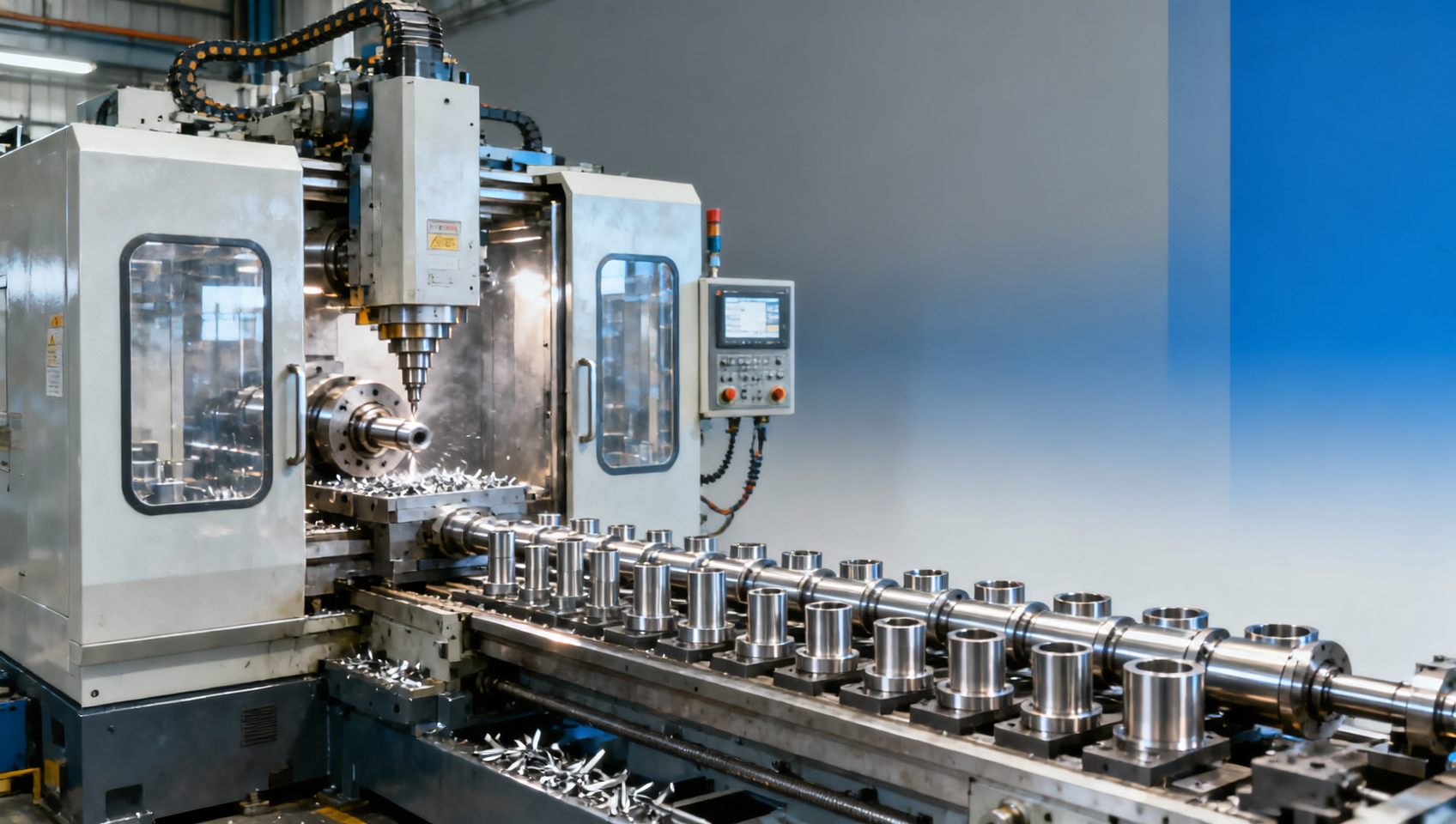
An automated lathe saves more labor when production volume is high enough, part geometry is repeatable enough, and delivery pressure is strong enough that manual loading, tool adjustment, and operator-dependent variation become the real bottlenecks. In practical CNC machining, the biggest labor savings usually appear not from replacing one person with one machine, but from reducing handling time, stabilizing cycle time, cutting rework, and allowing fewer operators to oversee more output across an automated production line.
For buyers, operators, and business evaluators, the key question is not simply whether an automated lathe is “more advanced” than a manual or basic CNC lathe. The real question is when automation produces measurable returns in labor efficiency, quality consistency, and production capacity. The answer depends on part volume, takt time, uptime requirements, staffing pressure, and how much of the production process can be standardized.
When does an automated lathe actually save more labor?
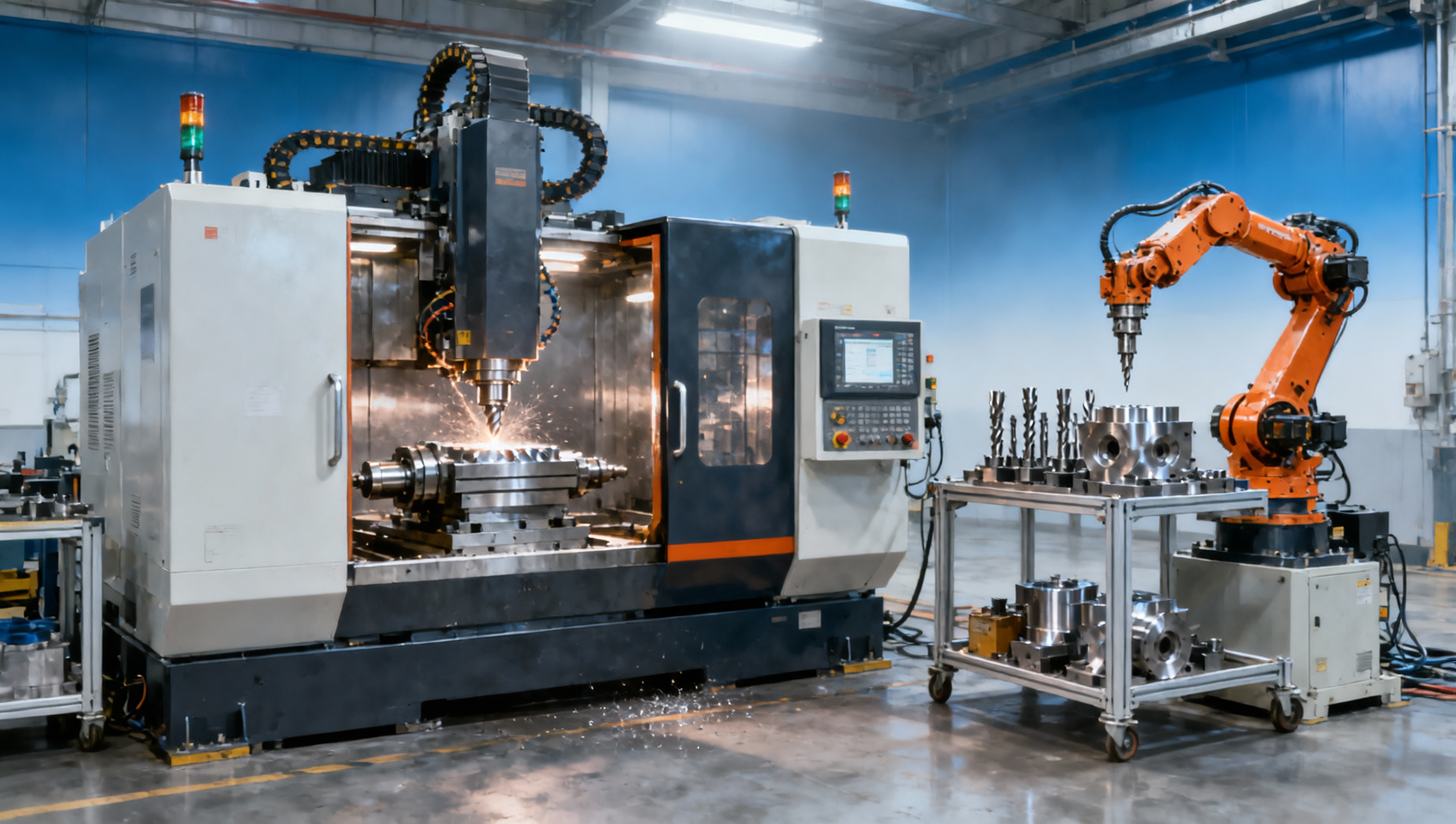
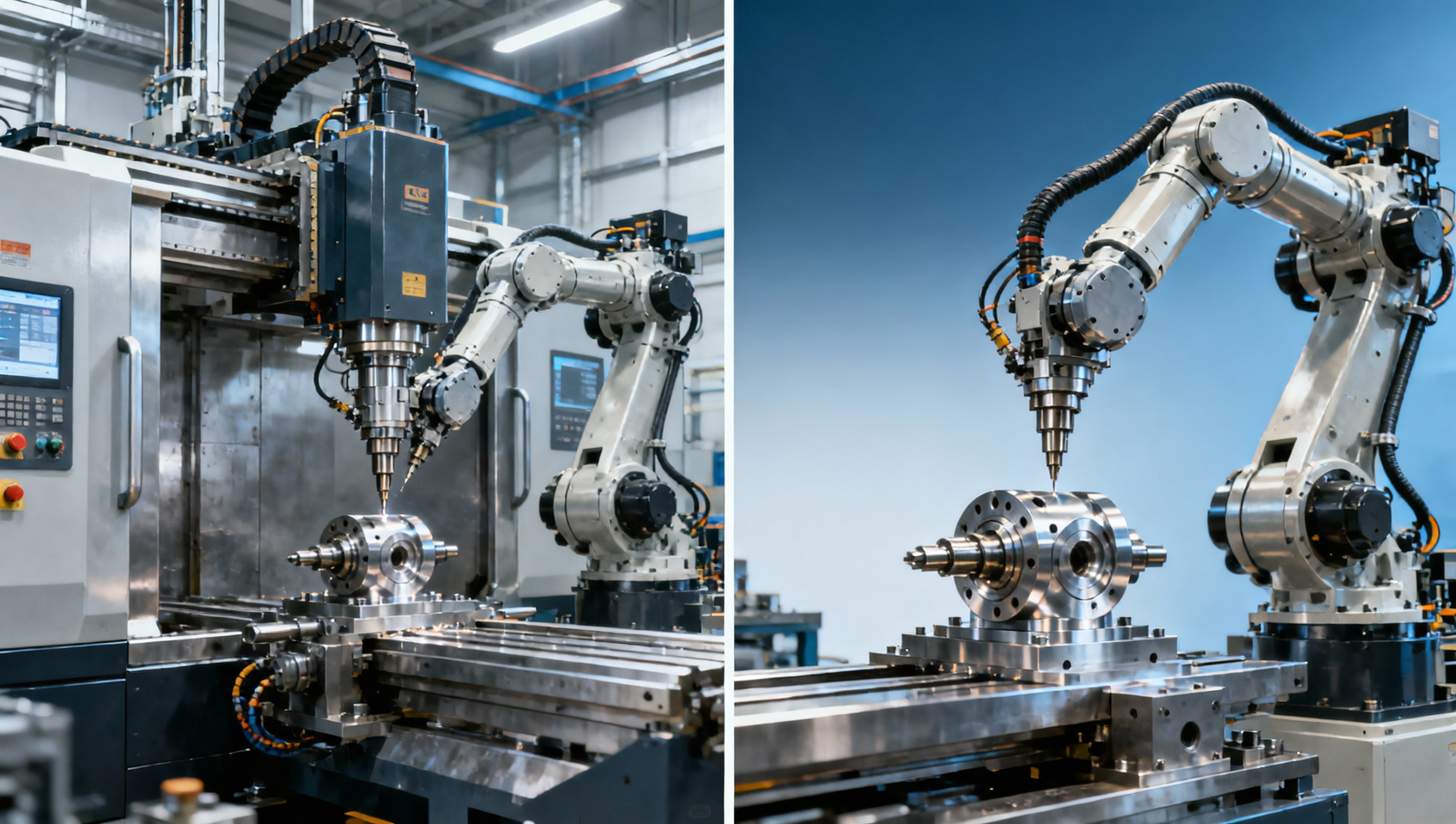
The clearest labor-saving point appears when repetitive work dominates the job. If operators spend a large share of each shift on loading blanks, unloading finished parts, checking dimensions, clearing chips, and restarting the next cycle, automation can remove a large amount of non-cutting labor. In that situation, an automated lathe or CNC industrial lathe integrated with bar feeders, robotic loading, gantry systems, or conveyors can allow one operator to supervise several machines instead of standing at one machine continuously.
In most factories, labor savings become more convincing under these conditions:
- Medium- to high-volume production: repeat orders justify setup effort and automation investment.
- Stable part families: shaft parts, bushings, sleeves, pins, fittings, and other turned components with limited variation.
- Short cycle-time targets: when idle handling time matters almost as much as cutting time.
- Labor shortages or high labor cost: when skilled machine operators are difficult to recruit or retain.
- Quality consistency requirements: when manual intervention causes variation, scrap, or inspection overload.
- Multi-shift operation: automation brings more value when machines run beyond one daytime shift.
By contrast, labor savings are often weaker when orders are highly mixed, batch sizes are very small, setups change constantly, or the part requires frequent human judgment. In those cases, an automated production line may add complexity without reducing enough manual work to pay back quickly.
What labor is automation really removing?
Many decision-makers focus only on direct headcount reduction, but that is too narrow. An automated lathe usually saves labor in four different ways.
First, it reduces machine attendance. A manual or lightly automated lathe may require a dedicated operator for loading, unloading, measurement, and restart. With automation, one person can often manage multiple CNC lathes, especially in repeat production.
Second, it reduces auxiliary labor. Automation lowers the time spent moving workpieces, sorting batches, waiting for the next operation, and coordinating with nearby stations. In a better-designed production process, material flow becomes more predictable.
Third, it reduces quality-related labor. Stable clamping, repeatable tool paths, and controlled machining parameters reduce scrap, rework, and inspection frequency. This may not show up as “machine labor” at first, but it matters to total labor cost.
Fourth, it improves labor utilization. Instead of assigning skilled people to repetitive handling, they can focus on setup optimization, preventive maintenance, process tuning, and first-article verification. That is often more valuable than simple operator replacement.
For manufacturers of precision components, especially shaft parts and rotational parts, this broader definition of labor saving is the right one. The best automated lathe installations improve output per person, not just machine count per person.
What production scenarios justify the investment fastest?
The fastest payback usually comes from parts with predictable machining logic and steady order flow. Common examples include:
- Automotive turned parts produced in repeated batches
- Hydraulic fittings and valve bodies with standardized dimensions
- Motor shafts, transmission shafts, and similar precision shaft components
- Electronic hardware parts requiring tight repeatability
- Energy equipment parts where stable cycle planning is important
These applications benefit because the production process is easier to standardize. Tooling, fixtures, offset strategies, inspection points, and loading methods can be fixed with less variation. Once the process is stable, automation scales well.
Another strong case is when an industrial lathe is already cutting efficiently but total output is limited by handling time. If spindle utilization is low because the operator is busy loading the next part, measuring the previous one, or moving bins, then automation addresses a real bottleneck. This is especially true in CNC machine tool environments where cutting time is already optimized but total cycle time is still too high.
Factories under delivery pressure also gain faster value. When customer deadlines require consistent throughput, automated lathes help maintain a smoother takt and reduce dependence on operator pace differences between shifts.
When is an automated lathe not the best labor-saving choice?
Automation is not automatically the best answer for every workshop. In some cases, improving setup discipline, tooling strategy, or workholding can deliver better returns first.
An automated lathe may be a weaker choice when:
- Batch sizes are extremely small: if every order is different, programming and changeover may consume the expected labor savings.
- Part geometry changes frequently: unstable tooling and fixturing reduce automation efficiency.
- Material behavior is inconsistent: if chips, burrs, or deformation require frequent manual intervention.
- Upstream and downstream processes are not synchronized: one automated machine cannot fix a disorganized production line.
- Maintenance support is weak: automation without stable maintenance can create new downtime risk.
For procurement and business evaluation teams, this is an important point: the decision should not be based on equipment specification alone. The surrounding process must be ready. If material supply, tooling life management, inspection flow, and operator training are not aligned, the promised labor reduction may not appear in real production.
How should buyers evaluate labor-saving potential before purchasing?
A practical evaluation starts with current-state measurement, not equipment brochures. Before selecting an automated CNC lathe or industrial lathe system, teams should collect a few basic numbers from the existing process:
- Actual cutting time per part
- Loading and unloading time per part
- Inspection time per batch or per piece
- Operator-to-machine ratio
- Shift utilization and idle time
- Scrap and rework rate
- Changeover frequency and setup duration
These metrics reveal whether labor is truly consumed by machining or by supporting activities around machining. In many shops, the biggest opportunity is not faster cutting but less waiting and less handling.
Buyers should also ask these business questions:
- Can one operator realistically oversee two, three, or more machines after automation?
- Will the machine run enough hours per day to justify the added system cost?
- Are the target parts stable for at least the next 2 to 3 years?
- Is there enough repeat demand to standardize tooling and fixtures?
- What happens to throughput if one operator is absent on a manual process today?
If the answers show high dependence on repetitive manual actions and stable demand, labor-saving potential is usually real.
What features matter most if labor reduction is the priority?
Not every automated lathe delivers the same operational value. If labor savings are the main objective, decision-makers should focus less on extreme specifications and more on features that reduce human intervention in daily production.
Important features often include:
- Automatic loading systems: bar feeders, robotic arms, gantry loaders, or palletized handling
- Reliable chip management: poor chip evacuation quickly destroys unattended efficiency
- Tool life monitoring: reduces unplanned stoppages and operator checks
- Stable workholding: repeatable clamping is essential for consistent unmanned cycles
- Easy setup interface: shortens changeovers and reduces dependence on highly specialized staff
- Process monitoring and alarms: helps one operator supervise multiple machines safely
- Integration capability: supports connection to an automated production line or MES environment
For operations teams, user-friendliness matters more than marketing language. If setup is too complex or fault recovery is difficult, the machine may still require heavy operator attention, reducing the expected labor advantage.
How do operators and production teams benefit beyond headcount reduction?
From a shop-floor perspective, a well-implemented automated lathe can make the job more manageable, not just leaner. Operators spend less time on repetitive lifting, manual part transfer, and constant restart actions. This can improve safety, reduce fatigue, and lower the chance of errors during long shifts.
Production teams also gain more predictable scheduling. Because CNC machining conditions are standardized, output planning becomes easier. Supervisors can estimate capacity with more confidence, and quality teams see fewer fluctuations caused by individual operator technique.
In industries that require precision machining, this consistency is often as valuable as labor reduction itself. A stable process reduces internal friction between production, quality, and delivery teams.
What is the clearest decision rule?
A simple rule works well: an automated lathe saves more labor when the part is repeatable, the order volume is consistent, and manual handling time is a meaningful share of total cycle time. If those three conditions are present, automation usually improves labor efficiency, output stability, and process control at the same time.
If production is unstable, changeovers dominate, or the machine still needs frequent human correction, the better first step may be process improvement rather than full automation. In other words, the best investment is not always the most automated machine, but the machine and production process combination that removes the most recurring manual effort.
For CNC machine tool buyers, operators, and evaluators, the key is to judge automation as a production-system decision, not just an equipment purchase. When matched to the right parts and the right production line conditions, an automated lathe can deliver substantial labor savings and stronger long-term manufacturing performance.
PREVIOUS ARTICLE
NEXT ARTICLE
Recommended for You
 How to Choose the Right Metal Machining ProcessCNC Machining Technology Center
 Metal Machining vs CNC Metalworking: What MattersCNC Machining Technology Center
 What Drives Cost in Industrial CNC ProjectsManufacturing Market Research Center
 Is Industrial CNC Worth Upgrading in 2026Machine Tool Industry Editorial Team
 How CNC Industrial Systems Improve Shop EfficiencyMachine Tool Industry Editorial Team
 CNC Industrial Setup Mistakes to Avoid FirstCNC Machining Technology Center

Aris Katos
Future of Carbide Coatings
15+ years in precision manufacturing systems. Specialized in high-speed milling and aerospace grade alloy processing.
▶
When Does an Automated Lathe Save More LaborMachine Tool Industry Editorial Team▶
What Makes Automated Production Pay Off FasterMachine Tool Industry Editorial Team▶
OPC AI Maintenance Cuts CNC Downtime 42% in SuzhouMachine Tool Industry Editorial Team▶
Industrial Painting Robots: Where Finish Quality Usually DropsMachine Tool Industry Editorial Team▶
What Slows Down an Automation Line in Textile Production?Machine Tool Industry Editorial Team
Mastering 5-Axis Workholding Strategies
Join our technical panel on Nov 15th to learn about reducing vibrations in thin-wall components.

Providing you with integrated sanding solutions
Before-sales and after-sales services
Comprehensive technical support