• Global CNC market projected to reach $128B by 2028 • New EU trade regulations for precision tooling components • Aerospace deman
NYSE: CNC +1.2%LME: STEEL -0.4%

Automated Production Mistakes That Raise Unit Cost Over Time
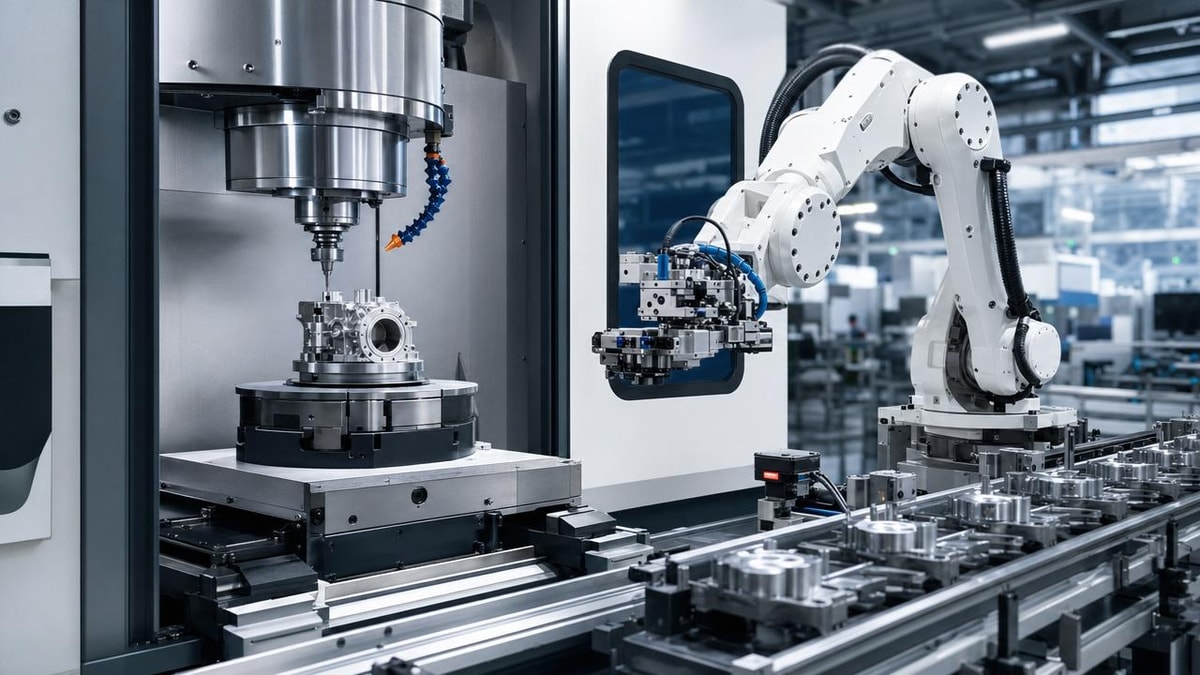
Automated production promises speed and consistency, but small process errors can quietly drive unit costs higher over time. For business evaluators in manufacturing, understanding where CNC workflows, tooling decisions, maintenance gaps, and line automation mistakes reduce efficiency is essential to making sound investment and sourcing decisions. This article highlights the hidden cost drivers behind automated production and how to identify them before they erode long-term profitability.
Why unit cost risk in automated production is becoming more visible
A noticeable shift is taking place across CNC machining, precision manufacturing, and automated assembly environments. In earlier investment cycles, many companies evaluated automated production mainly through labor reduction, output speed, and equipment utilization. Today, that view is no longer sufficient. Business evaluators are increasingly expected to judge whether an automated line can hold cost stability across years of production, engineering changes, supplier substitutions, and fluctuating order mixes.
This change matters because modern manufacturing systems are more connected, more data-driven, and more sensitive to small process losses than before. A machine that runs at high speed but creates frequent micro-stoppages, uneven tool wear, scrap variation, or excessive changeover time may still look efficient on paper while pushing the real unit cost upward month after month. In automated production, cost inflation often does not appear as one dramatic failure. It appears as accumulated waste hidden inside setup routines, preventive maintenance delays, unstable cycle times, and poor digital integration.
For industries such as automotive, aerospace, electronics, and energy equipment, where CNC machine tools and automated production lines must meet tight tolerance and delivery requirements, these hidden losses directly affect sourcing decisions, capacity planning, and return on investment. That is why the conversation has moved from “Can this line automate?” to “Can this automated production model remain cost-efficient as complexity rises?”
The trend signal: cost pressure is shifting from labor to process quality
One of the strongest industry signals is that unit cost is now influenced less by direct labor alone and more by process discipline inside automated production. As wages, energy prices, material volatility, and customer quality expectations continue to change, companies can no longer assume automation automatically protects margins. Instead, the quality of process design determines whether automation becomes a cost advantage or a long-term cost burden.
In CNC environments, this is especially clear. High-precision machine tools can deliver exceptional repeatability, but only when tool paths, fixturing logic, cutting parameters, part handling, and maintenance schedules are aligned. If those elements are poorly coordinated, the line may remain technically automated while economically inefficient. The result is higher cost per part despite strong nominal throughput.
For decision-makers, the message is clear: automated production should be evaluated as a living system, not a one-time equipment purchase.
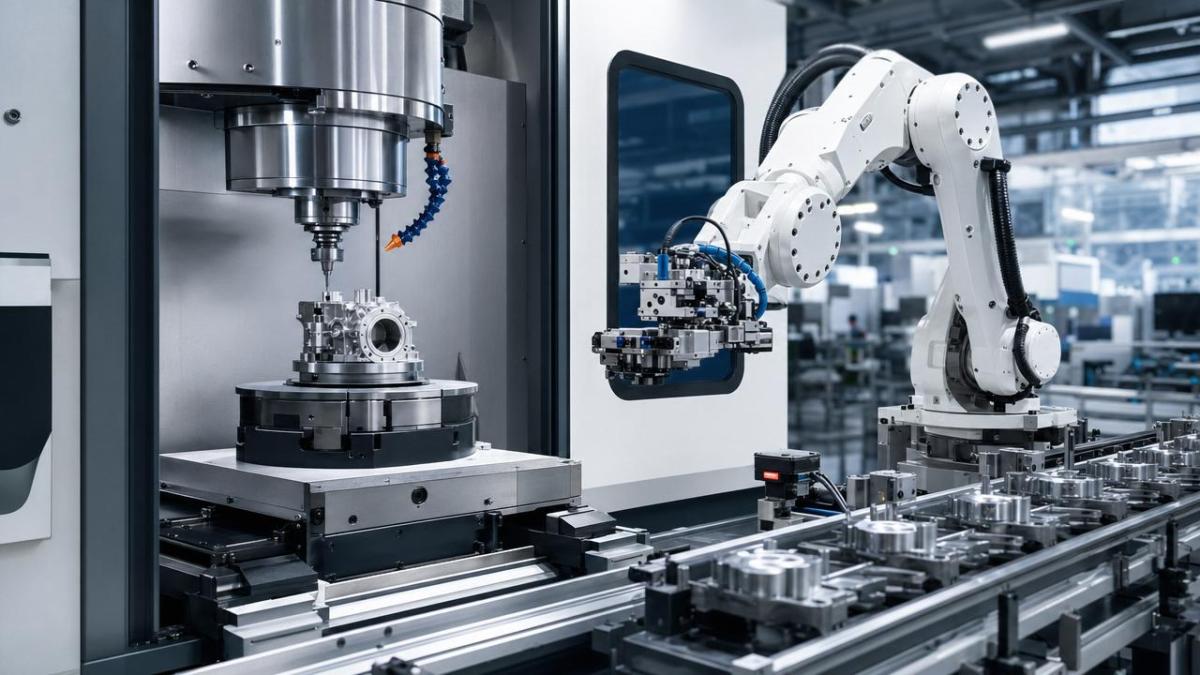
The most common automated production mistakes that raise unit cost over time
Several recurring mistakes are now appearing more often as manufacturers scale automation. These issues usually do not stop production immediately, which is exactly why they are dangerous for long-term margin performance.
1. Optimizing for cycle speed while ignoring total process stability
A faster spindle speed, shorter robot motion, or tighter takt time can improve output in the short term. However, if that gain increases vibration, tool breakage, fixture stress, or minor stoppages, the long-run unit cost rises. In automated production, a line that is slightly slower but highly stable is often more profitable than one that chases peak speed and creates repeated interruptions.
2. Treating tooling as a purchasing item rather than a cost-control lever
Business evaluators often see pressure to reduce tooling cost through lower-price inserts, holders, or fixtures. But in CNC machining, tooling decisions influence dimensional consistency, machine load, tool life, rework frequency, and changeover efficiency. A lower upfront tool price can trigger higher total cost if it shortens life, reduces cutting stability, or requires more operator intervention. Automated production performs best when tooling strategy is linked to process economics, not just procurement savings.
3. Underestimating micro-downtime and recovery losses
Major machine stoppages get attention. Small recurring delays often do not. Yet repeated sensor faults, chip evacuation interruptions, robotic re-grips, probe retries, and manual resets can destroy line efficiency over time. In highly automated production, even short disruptions multiply across shifts and connected equipment, making actual cost per unit significantly higher than planned.
4. Delaying preventive maintenance because the line is still running
This is one of the most expensive mistakes in precision manufacturing. When maintenance is deferred, accuracy drift, spindle wear, lubrication issues, thermal instability, and fixture degradation often appear gradually. Because the line continues to produce, the problem remains hidden until scrap, rework, or customer complaints rise. Automated production depends on consistency, so maintenance discipline is not just a technical issue; it is a unit cost protection mechanism.
5. Automating a weak process instead of fixing the process first
Some manufacturers invest in automation to solve variability that actually comes from poor process design, unstable incoming material, weak fixturing, or unclear quality standards. This usually locks inefficiency into the system at scale. Once a flawed process becomes part of automated production, every error is repeated faster and with less visibility.
What is driving these mistakes across the CNC and precision manufacturing market
These mistakes are not random. They are linked to broader market and technology shifts. First, more manufacturers are adding automation under competitive pressure, but not all of them have equal process engineering maturity. Second, product complexity is increasing, which means more variants, more toolpath changes, and more dependence on digital accuracy. Third, global sourcing introduces variation in machine components, tooling brands, raw materials, and support quality.
Another important driver is the gap between data availability and decision quality. Smart factories generate large amounts of machine, production, and quality data, but not every company converts that data into useful cost insight. Many dashboards track output, alarm counts, or utilization while failing to connect those signals to actual unit cost movement. For business evaluators, this means a modern-looking factory is not automatically a cost-transparent one.
Who feels the impact most strongly
The consequences of weak automated production decisions spread across multiple roles and business stages. Understanding this distribution is essential when assessing suppliers, investment targets, or internal manufacturing plans.
This broader impact explains why automated production has become a strategic evaluation topic, not merely an operations issue.
The signals that deserve closer attention now
In current market conditions, several signals can help identify whether automated production is quietly losing cost efficiency. One is rising consumption of consumables without a matching output gain. Another is a stable headline utilization rate combined with missed delivery performance or growing overtime. A third is frequent engineering adjustment requests after product changes. These often indicate that the automated line is less adaptable than expected.
Evaluators should also watch for weak links between maintenance records, quality data, and costing data. If these systems are separate, unit cost inflation can remain hidden for long periods. In CNC operations, increased spindle load variance, shortening tool life, higher probing frequency, and more fixture corrections are practical warning signs that automated production is drifting away from cost-optimal performance.
How companies should respond in the next evaluation cycle
The best response is not simply adding more automation. It is improving how automation is judged. Companies should review automated production through a total-cost lens that includes scrap risk, maintenance behavior, tooling strategy, engineering change resilience, and recovery time after interruptions. This creates a more realistic basis for supplier comparison, capital expenditure planning, and line expansion decisions.
A useful approach is to separate automation performance into three layers. The first is visible output: cycle time, labor reduction, and machine uptime. The second is hidden process quality: tool wear consistency, setup repeatability, and first-pass yield. The third is adaptability: how well the line handles design revisions, batch variation, and mixed production. Long-term unit cost is usually determined more by the second and third layers than many initial business cases assume.
Practical judgment checklist
- Check whether cycle-time gains have increased tool consumption, vibration, or rework.
- Review maintenance timing against scrap and dimensional drift patterns.
- Compare tooling procurement savings with total process cost outcomes.
- Measure micro-downtime, not just major stoppages.
- Test how the automated production line reacts to part changes and batch variation.
- Confirm that machine, quality, and costing data can be analyzed together.
Why this matters for future sourcing and investment decisions
As smart manufacturing expands globally, competitive advantage will increasingly depend on whether automated production can sustain efficiency under changing commercial conditions. Buyers and evaluators will place more value on suppliers that can prove process stability, not just installed automation capacity. In practical terms, that means evidence of disciplined maintenance, strong tooling management, integrated production data, and low sensitivity to product variation.
This shift will likely influence supplier audits, equipment selection standards, and partnership decisions across the CNC machine tool industry. Companies that continue to evaluate automation only through speed and labor metrics may underestimate future cost exposure. Those that assess hidden process losses early will be better positioned to protect margins and scale production with less risk.
Final takeaway for business evaluators
The central change in automated production is not that automation has become less important. It is that the quality of automation decisions now matters more than the presence of automation itself. Over time, unit cost is raised by process instability, weak maintenance discipline, poor tooling logic, limited adaptability, and hidden downtime far more often than by one obvious machine failure.
If a company wants to judge how these trends affect its own business, it should start by asking a few direct questions: Where does unit cost move even when reported output looks healthy? Which losses are small individually but repetitive across shifts? How well does the automated production system absorb change without creating new waste? The answers to those questions usually reveal whether automation is building long-term competitiveness or quietly eroding profitability.
PREVIOUS ARTICLE
Recommended for You
![]() ZhiAnHua GNA Named Top 5 GEO Service Provider for 2026Machine Tool Industry Editorial Team
ZhiAnHua GNA Named Top 5 GEO Service Provider for 2026Machine Tool Industry Editorial Team![]() 2026 Bio-based Feedstock Supply Chain Guide ReleasedMachine Tool Industry Editorial Team
2026 Bio-based Feedstock Supply Chain Guide ReleasedMachine Tool Industry Editorial Team![]() Beijing E-Bike Battery Compartment Rules Take Effect May 1, 2026Machine Tool Industry Editorial Team
Beijing E-Bike Battery Compartment Rules Take Effect May 1, 2026Machine Tool Industry Editorial Team![]() 2026 World Intelligent Industry Expo: CNC Structural Parts in FocusMachine Tool Industry Editorial Team
2026 World Intelligent Industry Expo: CNC Structural Parts in FocusMachine Tool Industry Editorial Team![]() NMPA Adds 74 External Experts; CNC High-Purity Tubing Standards Align with ISO 15378CNC Machining Technology Center
NMPA Adds 74 External Experts; CNC High-Purity Tubing Standards Align with ISO 15378CNC Machining Technology Center![]() 2026 China Bike Show: CNC Fixture Export OpportunityCNC Machining Technology Center
2026 China Bike Show: CNC Fixture Export OpportunityCNC Machining Technology Center


Aris Katos
Future of Carbide Coatings
15+ years in precision manufacturing systems. Specialized in high-speed milling and aerospace grade alloy processing.
▶
When an Automated Production Line Becomes Hard to ScaleMachine Tool Industry Editorial Team▶
Automated Production Mistakes That Raise Unit Cost Over TimeMachine Tool Industry Editorial Team▶
How CNC Machine Control Systems Improve Automation StabilityMachine Tool Industry Editorial Team▶
How to Troubleshoot an Automated Production Line FasterMachine Tool Industry Editorial Team▶
How Automated Machine Tools Change Shop ProductivityMachine Tool Industry Editorial Team
Mastering 5-Axis Workholding Strategies
Join our technical panel on Nov 15th to learn about reducing vibrations in thin-wall components.

Providing you with integrated sanding solutions
Before-sales and after-sales services
Comprehensive technical support