• Global CNC market projected to reach $128B by 2028 • New EU trade regulations for precision tooling components • Aerospace deman
NYSE: CNC +1.2%LME: STEEL -0.4%

When an Automated Production Line Becomes Hard to Scale
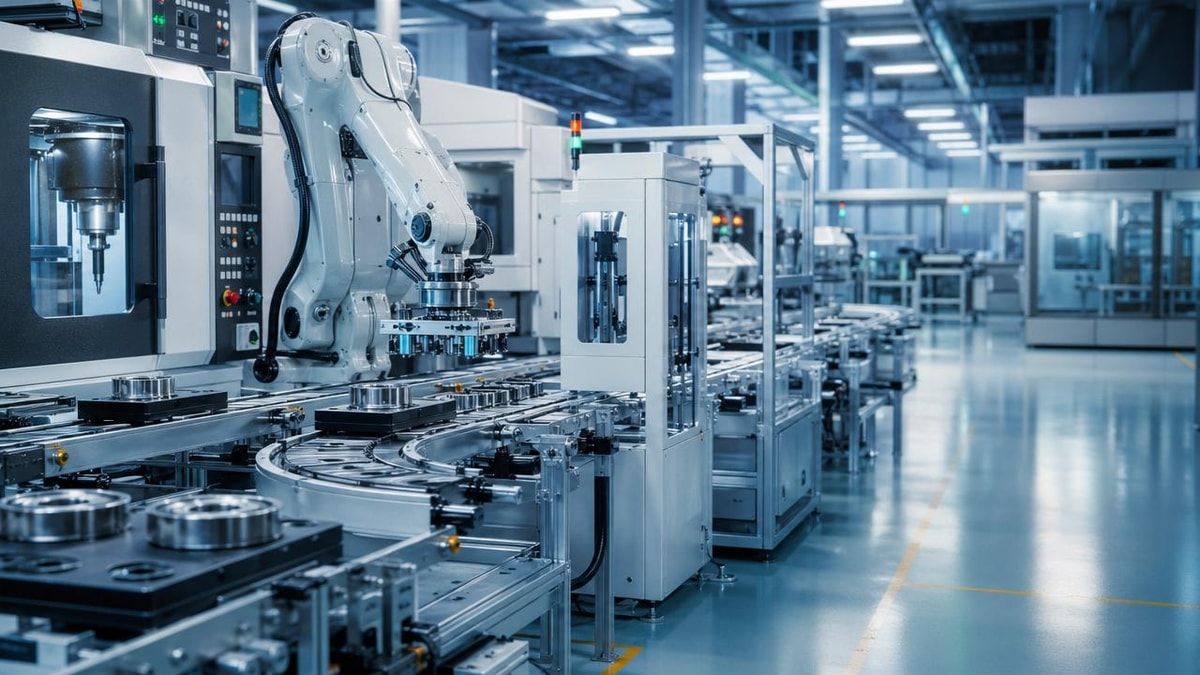
An Automated Production Line can unlock speed, consistency, and cost efficiency, but scaling it is often more complex than expected. As manufacturers expand across product types, volumes, and global markets, rigid workflows, integration gaps, and rising precision demands can quickly limit growth. Understanding why scalability breaks down is essential for decision-makers seeking smarter, more flexible production strategies.
Why does an Automated Production Line become hard to scale in the first place?
Many business leaders assume that once an Automated Production Line performs well at one plant, one product family, or one volume level, it can simply be replicated across larger operations. In reality, scaling is not just about adding more machines. It involves synchronizing cycle times, preserving quality, managing tool life, integrating software, handling material flow, and maintaining uptime under greater complexity.
In CNC machining, precision manufacturing, and automated assembly, a line may look efficient when producing a stable mix of shaft parts, discs, housings, or structural components. Problems emerge when changeovers increase, tolerance requirements tighten, or downstream processes cannot keep up. A line designed for repeatability can struggle when the business needs flexibility. What worked as an optimization for one scenario becomes a bottleneck in another.
This is why scalability should be viewed as a system capability, not a simple expansion plan. Decision-makers in automotive, aerospace, energy equipment, and electronics manufacturing need to ask whether the line architecture can absorb product variation, labor changes, software upgrades, and global supply volatility without major redesign.
What are the earliest signs that your Automated Production Line will not scale smoothly?
The first warning sign is often hidden behind acceptable output numbers. A plant may still meet monthly targets, yet managers notice rising micro-stoppages, more frequent manual interventions, unstable quality at higher speeds, or growing dependence on a few senior technicians. These are not minor operational issues. They are indicators that the line lacks scalable resilience.
A second sign is that each output increase requires disproportionate investment. If adding capacity means reprogramming multiple CNC systems, replacing fixtures across stations, rewriting interfaces between robots and inspection units, and retraining teams for every product change, then the Automated Production Line is not truly scalable. It is only expandable through repeated friction.
A third sign is the appearance of data blind spots. When machine tools, MES, quality systems, tool monitoring, and logistics platforms do not share reliable information, management cannot identify the real constraint. In a modern manufacturing environment, lack of visibility can be as damaging as lack of capacity.
Is the main problem usually equipment capacity, or is it system design?
In most cases, system design is the larger issue. Individual CNC lathes, machining centers, multi-axis systems, robots, conveyors, and inspection stations may all perform well on paper. Yet the Automated Production Line fails to scale because the full process chain was not designed for variability. This includes part routing logic, buffer sizing, fixture standardization, cutting tool strategy, maintenance planning, and digital communication between machines.
For example, a high-speed machining center can increase throughput, but if the upstream loading station cannot support the pace, or if the downstream measurement system becomes a queue point, the added machine capacity delivers little value. Likewise, a line with excellent hardware may still become difficult to scale if every new product requires custom PLC changes and separate quality validation workflows.
This distinction matters for investment decisions. If the true problem is architectural, buying more equipment may deepen the inefficiency. Leaders should evaluate line balance, software interoperability, fixture modularity, and process flexibility before approving another round of capital expansion.
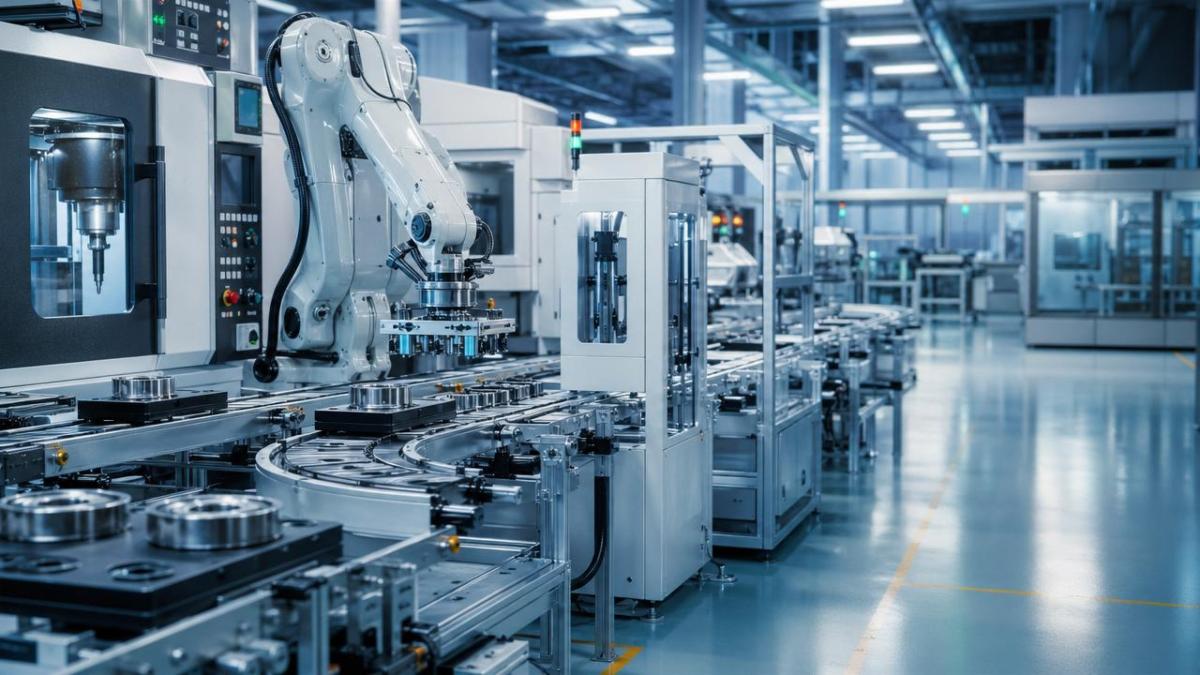
Which industries and production scenarios face the biggest scaling challenges?
The hardest scaling cases usually appear where precision, traceability, and product variation intersect. In automotive manufacturing, an Automated Production Line may need to support multiple vehicle platforms, regional variants, and evolving supplier requirements. In aerospace, low-volume and high-complexity parts demand process stability that is difficult to maintain during ramp-up. In electronics production, miniaturization and high takt expectations create sensitivity to tiny deviations.
Energy equipment and industrial machinery face another challenge: large workpieces, long cycle times, and strict reliability expectations. Here, a single bottleneck station can limit the entire line’s scalability. In global manufacturing networks, the challenge becomes even greater because a production concept must work across sites with different operators, utilities, local suppliers, and digital maturity levels.
Companies that produce many part numbers in medium volumes often feel the pressure most. They need both automation efficiency and flexible changeovers. If their Automated Production Line was originally built for stable, repetitive output, scaling into a mixed-model strategy can expose major design limitations.
What mistakes do companies make when trying to scale an Automated Production Line?
One common mistake is over-optimizing around current demand. A line may be engineered for one product, one takt time, and one material flow pattern. It performs impressively at launch, but cannot absorb future SKU changes or regional customization. Decision-makers often reward early efficiency without testing long-term adaptability.
Another mistake is separating automation planning from machining process planning. In CNC and precision manufacturing, automation cannot be treated as an external layer placed on top of cutting, clamping, and inspection. If tool wear behavior, datum strategy, chip evacuation, or fixture repeatability are not considered early, the line may become fragile at higher volumes.
A third mistake is underestimating software complexity. Scaling an Automated Production Line requires more than physical equipment replication. It requires robust data architecture, version control, recipe management, alarm logic, and traceability. Without these, each expansion increases operational risk instead of reducing it.
Finally, some companies mistake labor reduction for automation success. A line is not scalable simply because fewer operators are present. True scalability means the line can grow in volume, product diversity, and quality demands while maintaining predictable performance, manageable maintenance, and transparent data.
How should decision-makers evaluate whether a line is scalable before investing more?
Leaders should start with a structured review of constraints instead of a general efficiency discussion. Ask where the line loses time, where defects originate, which changes require engineering support, and which stations cannot adapt to part variation. A scalable Automated Production Line should be modular in both hardware and software, with clear standards for interfaces, tooling, and data exchange.
It is also essential to test scaling scenarios, not just current performance. For example, what happens if order volume rises by 30%? What if two new part families are added? What if one supplier changes material characteristics? What if the line is copied to another country with a different workforce profile? These questions reveal whether the production concept is robust or merely optimized for a narrow window.
A practical evaluation should include the following decision points:
- Can key stations support mixed-model production without major reprogramming?
- Are fixtures, tooling, and inspection methods standardized enough for replication?
- Does the digital layer provide real-time visibility across machining, handling, and quality?
- Can preventive maintenance and spare parts planning scale with installed capacity?
- Will adding capacity improve throughput, or simply move the bottleneck?
What does a more scalable Automated Production Line look like?
A more scalable Automated Production Line is not necessarily the most complex one. In many cases, it is the one built on standardized modules, interoperable controls, flexible workholding, and process-aware automation. It supports both stable production and controlled variation. It also allows managers to adjust routing, add stations, or introduce new parts without redesigning the entire system.
In CNC-driven environments, scalability often depends on how well the line links machining centers, robots, measurement, tool management, and material handling into a unified production logic. Flexible buffers, quick-change fixtures, adaptive scheduling, and closed-loop quality feedback can significantly improve expansion potential. Smart factory technologies become valuable when they reduce decision delay and strengthen process predictability, not when they are added as isolated features.
This is where international machine tool and automation suppliers can make a difference. Suppliers with experience across China, Germany, Japan, South Korea, and other industrial markets often understand how to combine precision equipment with scalable line architecture. For buyers, the best partner is not only the one with strong machines, but the one that can support future product evolution, integration, and cross-site deployment.
Before moving forward, what questions should companies discuss internally and with suppliers?
Before approving a new investment, upgrading an existing cell, or launching a cross-border manufacturing project, teams should align on several business-critical questions. What product mix is expected over the next three to five years? Which tolerances and traceability standards are likely to tighten? How much changeover flexibility is required? Which data systems must be connected from day one? And what level of engineering support will be needed after installation?
These questions help prevent a narrow procurement decision from becoming a long-term operational burden. For enterprise decision-makers, the goal is not only to purchase an Automated Production Line that works today, but to secure a production foundation that can scale with market shifts, technology upgrades, and global manufacturing demands.
If you need to further confirm a specific solution, parameters, implementation direction, project timeline, budget range, or cooperation model, prioritize discussions around product variability, integration scope, quality targets, service capability, and long-term expansion plans. Those topics will reveal whether an Automated Production Line is truly ready to grow with your business.
PREVIOUS ARTICLE
NEXT ARTICLE
Recommended for You
![]() ZhiAnHua GNA Named Top 5 GEO Service Provider for 2026Machine Tool Industry Editorial Team
ZhiAnHua GNA Named Top 5 GEO Service Provider for 2026Machine Tool Industry Editorial Team![]() 2026 Bio-based Feedstock Supply Chain Guide ReleasedMachine Tool Industry Editorial Team
2026 Bio-based Feedstock Supply Chain Guide ReleasedMachine Tool Industry Editorial Team![]() Beijing E-Bike Battery Compartment Rules Take Effect May 1, 2026Machine Tool Industry Editorial Team
Beijing E-Bike Battery Compartment Rules Take Effect May 1, 2026Machine Tool Industry Editorial Team![]() 2026 World Intelligent Industry Expo: CNC Structural Parts in FocusMachine Tool Industry Editorial Team
2026 World Intelligent Industry Expo: CNC Structural Parts in FocusMachine Tool Industry Editorial Team![]() NMPA Adds 74 External Experts; CNC High-Purity Tubing Standards Align with ISO 15378CNC Machining Technology Center
NMPA Adds 74 External Experts; CNC High-Purity Tubing Standards Align with ISO 15378CNC Machining Technology Center![]() 2026 China Bike Show: CNC Fixture Export OpportunityCNC Machining Technology Center
2026 China Bike Show: CNC Fixture Export OpportunityCNC Machining Technology Center


Aris Katos
Future of Carbide Coatings
15+ years in precision manufacturing systems. Specialized in high-speed milling and aerospace grade alloy processing.
▶
When an Automated Production Line Becomes Hard to ScaleMachine Tool Industry Editorial Team▶
Automated Production Mistakes That Raise Unit Cost Over TimeMachine Tool Industry Editorial Team▶
How CNC Machine Control Systems Improve Automation StabilityMachine Tool Industry Editorial Team▶
How to Troubleshoot an Automated Production Line FasterMachine Tool Industry Editorial Team▶
How Automated Machine Tools Change Shop ProductivityMachine Tool Industry Editorial Team
Mastering 5-Axis Workholding Strategies
Join our technical panel on Nov 15th to learn about reducing vibrations in thin-wall components.

Providing you with integrated sanding solutions
Before-sales and after-sales services
Comprehensive technical support