• Global CNC market projected to reach $128B by 2028 • New EU trade regulations for precision tooling components • Aerospace deman
NYSE: CNC +1.2%LME: STEEL -0.4%

How CNC Machine Control Systems Improve Automation Stability
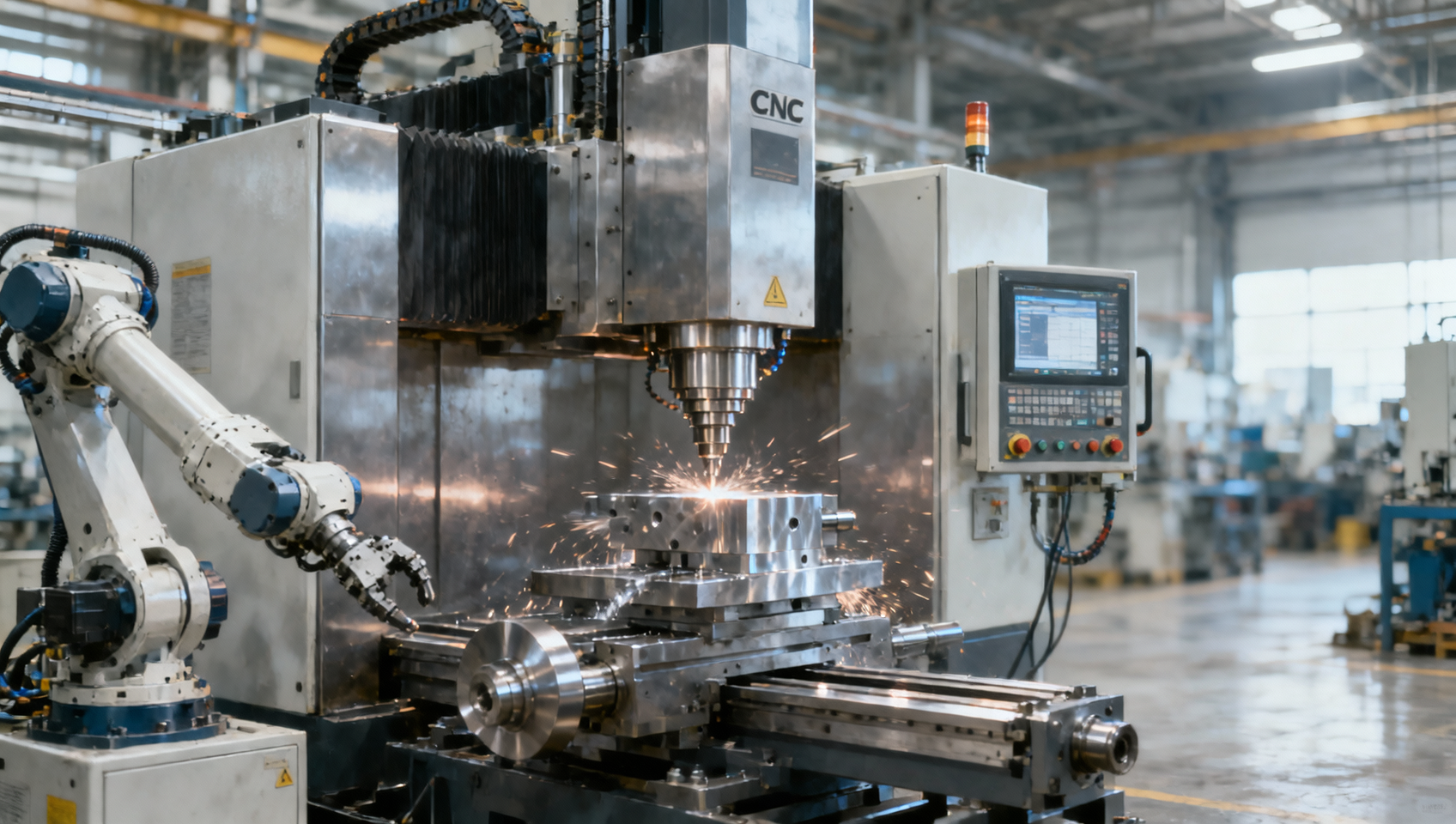
From high precision CNC manufacturing to automated machine tool integration, stable control systems are the backbone of modern production. They help CNC machine tool manufacturer networks and buyers improve accuracy, reduce downtime, and support Digital Manufacturing Technology for smart factory environments. This article explores how advanced Industrial Automation control system for CNC machines strengthens automation stability across aerospace, automotive, electronics, and energy equipment applications.
For operators, stability means fewer alarms, more repeatable cutting quality, and less unplanned intervention during long production cycles. For procurement teams, it means lower lifecycle cost, better compatibility with automation equipment, and more predictable service requirements over 3–5 years of use.
For decision-makers in machine shops, OEM plants, and precision component factories, the control system is no longer just a software layer. It is a critical production asset that affects spindle utilization, part consistency, operator efficiency, and the ability to scale from standalone CNC machines to connected production cells.
Why Control System Stability Matters in CNC Automation
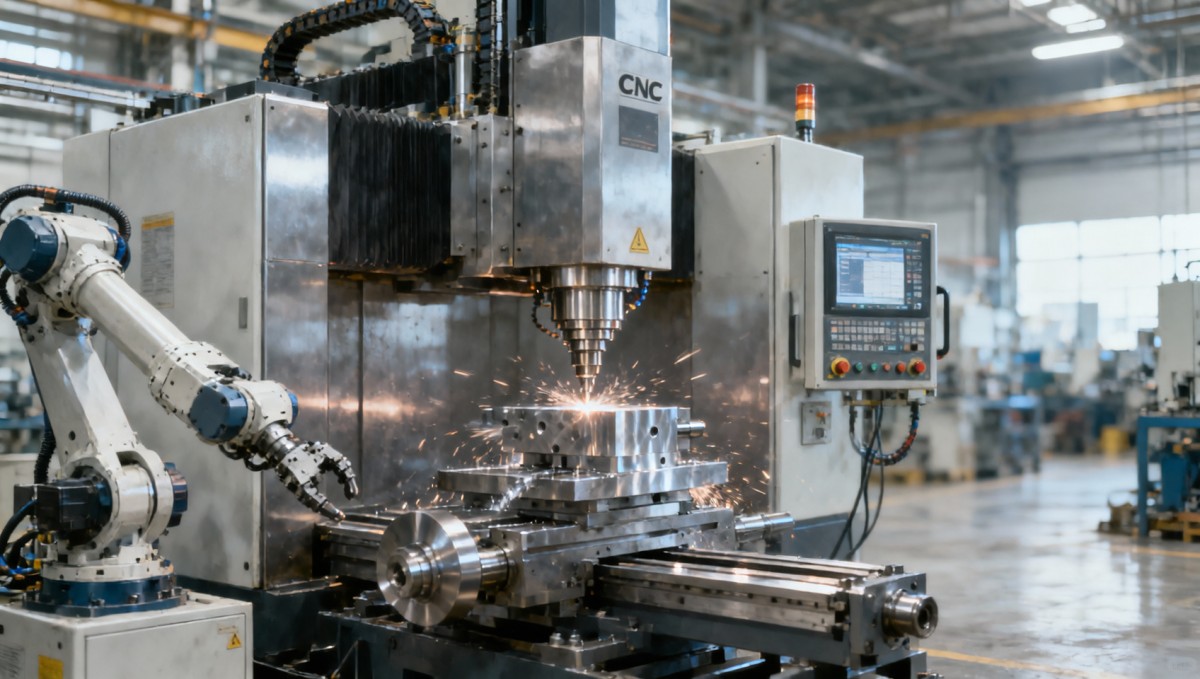
Automation stability in CNC machining refers to the ability of a machine tool to maintain repeatable performance across hours, shifts, and batch changes without frequent interruptions. In practical terms, that includes axis synchronization, feed consistency, servo response, tool path accuracy, and stable communication with sensors, robots, and auxiliary equipment.
In a typical automated line, even a small control deviation can trigger cascading losses. A position error of only a few microns in finishing work, or a timing mismatch of 0.2–0.5 seconds in loading and unloading, can reduce takt stability, increase scrap rate, and create bottlenecks in downstream inspection or assembly.
This becomes even more important in aerospace and electronics production, where part complexity, tolerance demands, and traceability requirements are higher than in basic machining. A stable CNC machine control system supports continuous machining under variable loads, frequent program changes, and mixed-batch production without excessive manual correction.
Key stability risks in automated machining environments
Many production issues are not caused by the machine structure alone. They often come from signal delays, poor parameter tuning, inconsistent feedback loops, or weak integration between the CNC controller and external automation devices. These problems usually appear after 8–12 hours of continuous operation, when thermal drift and communication load begin to affect response quality.
- Servo instability during high-speed interpolation on 3-axis to 5-axis machining tasks
- Communication interruptions between CNC, PLC, robot, and automatic tool monitoring units
- Parameter mismatch after software upgrades, retrofit work, or new fixture integration
- Thermal compensation failure during long-run production of precision shafts or discs
When these issues are not addressed at the control level, manufacturers may increase inspection frequency or reduce cycle speed as a temporary fix. That often protects short-term output, but it lowers automation efficiency and weakens return on investment.
How stable control improves production results
A well-designed CNC control system improves automation stability by combining motion control, feedback processing, fault diagnosis, and adaptive logic in one coordinated framework. This reduces variation between the first part and the 500th part, especially in unattended or low-labor production shifts.
In many shops, stable control architecture helps reduce alarm frequency, shorten restart time to under 10 minutes for common recoverable stops, and improve machine utilization by 5%–15% depending on production mix. The exact gain depends on part complexity, operator skill, and the level of automation surrounding the machine.
Core Functions That Strengthen CNC Automation Stability
Not all CNC machine control systems deliver the same level of stability. Some are designed mainly for standalone machining, while others are optimized for networked production lines, robotic handling, and real-time monitoring. Buyers should evaluate functional depth, not only screen interface or programming convenience.
The table below outlines the control functions that most directly affect automation stability in precision manufacturing environments.
Among these functions, closed-loop feedback and reliable communication are often the most critical in automated cells. A machine may cut accurately on a trial run, but without stable interface control it can still lose productivity when connected to pallet changers, robots, or in-line gauging stations.
Motion control and servo tuning
Servo tuning affects acceleration, deceleration, overshoot, and axis matching. In multi-axis machining, poor tuning can create visible surface marks, unstable cornering, or chatter when feed rates exceed typical ranges such as 8–20 m/min. Advanced controllers provide better tuning tools, adaptive gain functions, and more stable response under changing cutting loads.
Common tuning priorities
- Balance response speed and vibration suppression for different part materials
- Match axis acceleration behavior during circular interpolation and contour finishing
- Verify spindle and feed synchronization in tapping, threading, and synchronized turning tasks
Diagnostic and recovery capability
Stable automation is not only about avoiding faults. It is also about recovering quickly when faults occur. Good CNC machine control systems provide alarm history, parameter backup, remote diagnostics, and guided recovery logic. In many factories, reducing fault tracing time from 30–60 minutes to 10–15 minutes has a larger production impact than a minor cycle-time reduction.
This is especially valuable in international manufacturing operations where service teams may support multiple sites across China, Germany, Japan, South Korea, and other industrial regions. Better diagnostics reduce dependency on local tribal knowledge and help standardize maintenance routines.
How Different Industries Use Stable CNC Control Systems
The value of a stable Industrial Automation control system for CNC machines varies by sector, but the principle is the same: consistent control improves throughput, quality, and production predictability. What changes is the priority set for tolerance, cycle time, traceability, and integration level.
The following comparison shows how automation stability requirements differ across major CNC machine tool applications.
For automotive production, the main target is output stability across repeated cycles. A control system that can maintain consistent response over thousands of parts helps avoid cumulative variation. In aerospace, the focus shifts toward precision preservation during long machining times, especially when a single part may require 4–12 hours of continuous cutting.
Application-specific considerations
Electronics manufacturers usually value rapid changeover and fine finishing behavior. Here, stable control supports quick fixture swaps, shorter program verification time, and low vibration at high spindle speed. Energy equipment producers often prioritize axis load control, spindle protection, and robust fault handling because parts are larger, heavier, and more expensive to scrap.
For operators and process engineers, this means the “best” CNC control system depends on application fit. The same interface may perform very differently when moving from batch turning of shaft parts to multi-axis milling of complex structural components.
What buyers should ask before matching a system to an industry
- What tolerance range must remain stable over a full production run: ±0.01 mm, ±0.005 mm, or tighter?
- Will the machine operate as a standalone unit, a robot-fed cell, or a flexible production line?
- How many program changeovers happen per week, and how much downtime does each one currently create?
- Does the plant need remote support, centralized monitoring, or data export to MES and quality systems?
These questions help narrow control system requirements early, before investment decisions are shaped only by machine price or familiar brand preference.
Selection Criteria for Buyers, Engineers, and Decision-Makers
Choosing a CNC machine control system should involve both technical and operational evaluation. In many procurement projects, the biggest mistake is focusing on nominal machine specifications while underestimating integration difficulty, training time, and service access after installation.
A practical selection process usually includes 4 stages: application review, compatibility check, test cutting or simulation, and lifecycle support assessment. This approach is more reliable than comparing brochure features alone.
Recommended evaluation framework
The table below summarizes criteria that purchasing teams and factory managers can use when comparing CNC machine tool control solutions for stable automation deployment.
This kind of matrix is especially useful when several departments share the decision. Production engineers may prioritize interpolation quality and tuning depth, while procurement may focus on spare parts, training cost, and delivery time of 4–10 weeks for key components or upgrades.
Common procurement mistakes
- Buying for peak speed instead of stable output over long production periods
- Ignoring future integration needs such as robotic tending or digital production monitoring
- Underestimating training requirements for programmers, setters, and maintenance staff
- Failing to confirm local or regional support response time, especially for multi-site operations
A lower initial purchase price can become expensive if downtime increases or if every software change requires outside service support. For many B2B buyers, the better question is not “Which controller costs less?” but “Which control system keeps the line stable with the least intervention over the next 24–36 months?”
Implementation, Maintenance, and Long-Term Stability Planning
Even the most capable CNC machine control system will not deliver stable automation without disciplined implementation. Stability depends on commissioning quality, parameter management, preventive maintenance, and ongoing coordination between machine tool builders, component suppliers, and factory users.
A standard rollout for a new automated CNC cell often takes 3 major phases: pre-installation planning, on-site commissioning, and post-start optimization. Depending on machine complexity, this may range from 2–4 weeks for a relatively simple robotic tending cell to 6–12 weeks for a more integrated flexible production unit.
A practical implementation checklist
- Confirm control architecture, communication protocol, and I/O mapping before hardware arrival.
- Back up standard parameters and establish version control for control logic and machining programs.
- Run dry-cycle tests for 50–100 repetitions before full cutting validation in automated mode.
- Verify alarm handling, restart logic, and manual override procedures for night-shift operation.
- Schedule thermal stability verification after several hours of continuous cutting, not only at startup.
These steps reduce the risk of unstable startup behavior, especially in plants introducing Digital Manufacturing Technology for the first time. They also create a stronger data baseline for future troubleshooting and process improvement.
Maintenance priorities that support stable automation
Routine maintenance should go beyond lubrication and cleaning. For CNC control reliability, factories should periodically inspect connector integrity, encoder feedback quality, cabinet temperature, grounding condition, communication cable health, and battery-backed memory status where applicable. Monthly checks and quarterly reviews are common starting points in many precision machining facilities.
In mixed-brand environments, parameter documentation is equally important. A missing backup or undocumented change can turn a minor software issue into hours of lost production. Maintenance teams should standardize at least 6 basic records: control version, servo settings, I/O map, alarm history, backup date, and service contact path.
FAQ: How long does it take to see stability gains?
If the machine platform is already sound, stability gains can appear within 2–6 weeks after proper tuning, communication optimization, and operator training. In larger automation projects, measurable improvements in alarm frequency and utilization may take 2–3 months because data must be collected across several production cycles.
FAQ: Is an advanced control system only suitable for large factories?
No. Small and medium-sized machine shops can benefit when they run high-mix parts, need stable night shifts, or plan to add robots later. The key is to select functions that match current needs while keeping room for future automation, rather than paying for every available option on day one.
FAQ: What should operators monitor daily?
Operators should watch for rising alarm frequency, unusual feed behavior, axis lag warnings, inconsistent surface finish, and startup delays. These are often early signals of control-related instability. Logging these events by shift can help engineering teams identify whether the issue is mechanical, electrical, or parameter-based.
Stable CNC automation is built on more than machine power or cutting speed. It depends on a control system that can coordinate motion, feedback, thermal behavior, diagnostics, and external automation with repeatable accuracy. For manufacturers in automotive, aerospace, electronics, and energy equipment, that stability directly supports quality, uptime, and scalable smart production.
If you are evaluating CNC machine tool solutions, upgrading an existing line, or planning a more connected production environment, a structured review of the control system should be part of the decision from the beginning. Contact us to discuss your application, get a tailored solution, or learn more about CNC automation stability strategies for your production goals.
PREVIOUS ARTICLE
NEXT ARTICLE
Recommended for You
 How to Choose a Heavy-Duty Machining Center for Mold MakingMachine Tool Industry Editorial Team
 How Quick-Change Fixture Design Cuts CNC Turning Setup TimeCNC Machining Technology Center
 Why 5 Axis Machining Is Ideal for Impeller ManufacturingCNC Machining Technology Center
 How to Start Lean Production Without Disrupting OutputManufacturing Market Research Center
 When a Modular Tooling System Improves Flexible ManufacturingMachine Tool Industry Editorial Team
 How CNC Machine Control Systems Improve Automation StabilityMachine Tool Industry Editorial Team

Aris Katos
Future of Carbide Coatings
15+ years in precision manufacturing systems. Specialized in high-speed milling and aerospace grade alloy processing.
▶
How CNC Machine Control Systems Improve Automation StabilityMachine Tool Industry Editorial Team▶
How to Troubleshoot an Automated Production Line FasterMachine Tool Industry Editorial Team▶
How Automated Machine Tools Change Shop ProductivityMachine Tool Industry Editorial Team▶
EU CE新规生效: CNC Automation Lines Require EN ISO 13849-1:2023 from Q3 2026Machine Tool Industry Editorial Team▶
What Automated CNC Manufacturing Changes on the Shop FloorMachine Tool Industry Editorial Team
Mastering 5-Axis Workholding Strategies
Join our technical panel on Nov 15th to learn about reducing vibrations in thin-wall components.

Providing you with integrated sanding solutions
Before-sales and after-sales services
Comprehensive technical support