• Global CNC market projected to reach $128B by 2028 • New EU trade regulations for precision tooling components • Aerospace deman
NYSE: CNC +1.2%LME: STEEL -0.4%

How Automated Machine Tools Change Shop Productivity
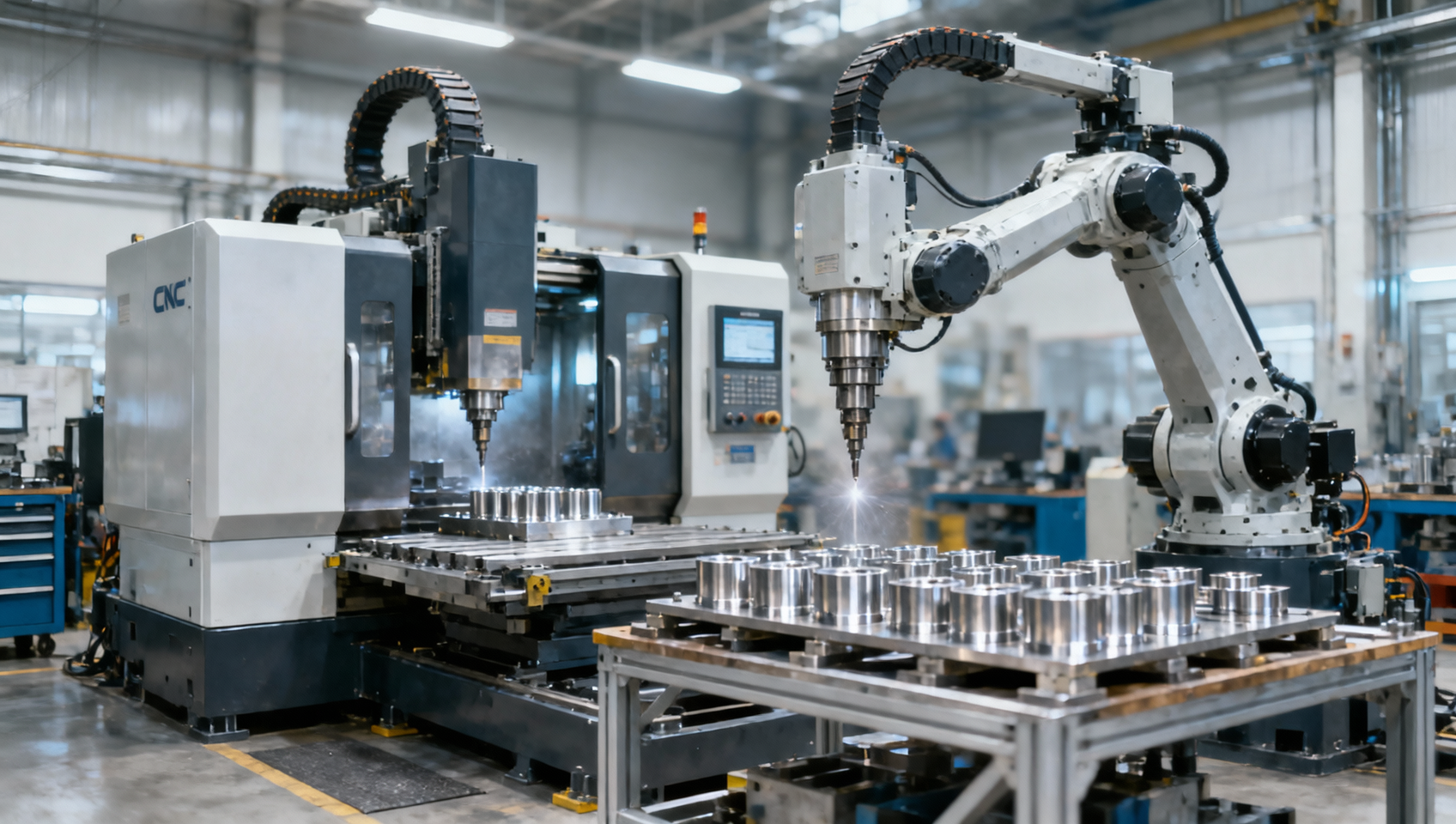
Automated machine tool solutions are reshaping modern workshops by combining high precision CNC manufacturing with faster cycle times, lower labor dependency, and smarter process control. From multi-axis CNC manufacturing and compact machine tool systems to energy-saving machine tool technologies, today’s CNC machine tool manufacturer innovations help buyers, operators, and decision-makers improve productivity, reduce downtime, and build more cost-effective CNC manufacturing operations.
Why do automated machine tools raise shop productivity so quickly?
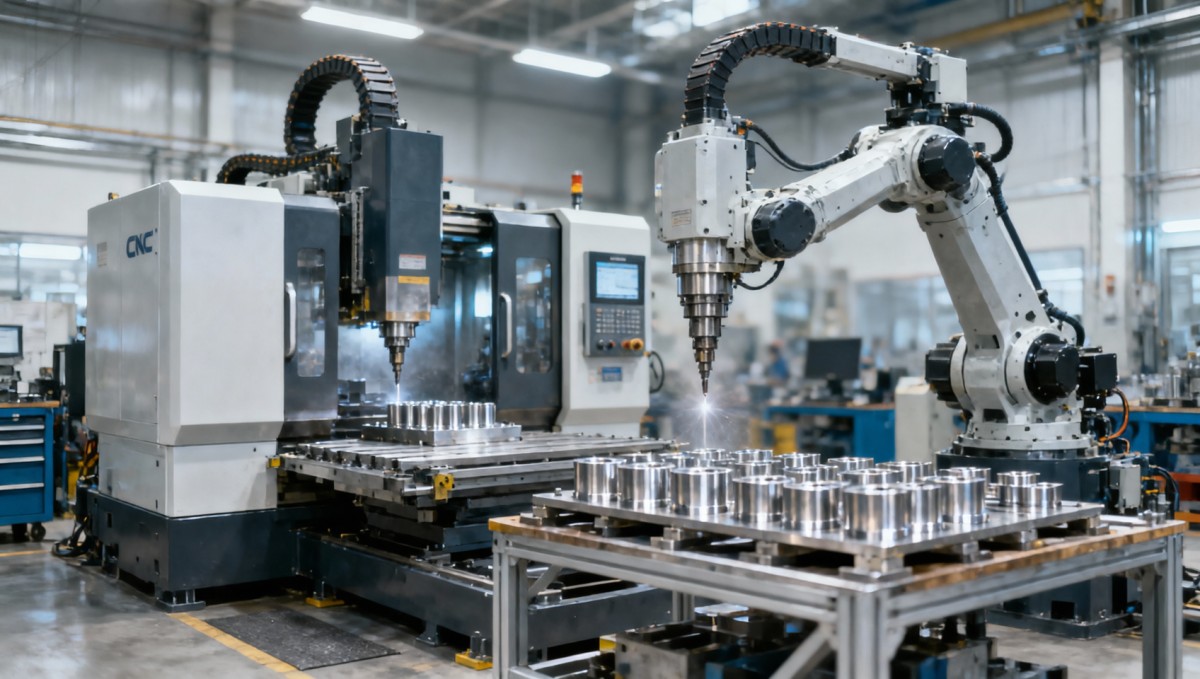
In modern manufacturing, productivity is no longer defined only by spindle speed or cutting power. It is shaped by the full production chain: setup time, part repeatability, operator intervention, tool life, maintenance response, and the ability to keep output stable across 1 shift, 2 shifts, or 24/7 production. Automated machine tools improve these variables together, which is why they often create a larger impact than manual process improvements alone.
For information researchers, the biggest question is usually whether automation truly changes output or simply shifts cost. For operators, the concern is daily usability, alarm recovery, and programming difficulty. For procurement teams, the focus is total cost over 3–5 years. For business decision-makers, the real issue is whether a CNC machine tool investment can increase throughput without creating bottlenecks in staffing, quality control, or material flow.
Automated machine tools answer these concerns by reducing non-cutting time and standardizing process consistency. In many CNC machining environments, the actual cutting cycle may represent only part of the job. The remaining time can be lost in loading, unloading, re-clamping, offset correction, tool replacement, and part inspection. When automation addresses even 3–4 of these stages, the productivity gain is often more meaningful than a small increase in cutting speed.
This matters across automotive manufacturing, aerospace components, electronics housings, and energy equipment parts. In these sectors, shops often deal with medium-batch to large-batch production, tolerance-sensitive parts, and tight delivery windows of 2–6 weeks. A machine that runs consistently for long periods with fewer manual interruptions supports both output volume and delivery reliability.
What changes inside the workshop when automation is added?
The first visible change is process rhythm. Instead of depending on the pace of one skilled operator, the workshop begins to work around programmed sequences, fixed tooling logic, and planned intervention points. That shift reduces production variability between shifts and helps supervisors identify which step causes lost time. In many factories, just making downtime measurable is a major productivity improvement.
The second change is labor allocation. A trained operator may monitor 2–4 automated stations instead of staying tied to one conventional setup. This does not eliminate the need for skilled personnel; it changes where their value is highest. More time can be spent on first-piece verification, tool condition review, fixture optimization, and process correction rather than repetitive manual handling.
The third change is production predictability. Automated machine tools often work best when they are connected to standard work instructions, tool libraries, preset fixtures, and maintenance intervals such as daily checks, weekly lubrication review, and monthly calibration verification. These routines reduce random disruption and support more accurate scheduling for purchasing and operations planning.
- Less idle time between cycles, especially in loading, part positioning, and offset recovery.
- More stable dimensional control for repeat jobs and tolerance-sensitive components.
- Better production planning because output per shift becomes easier to estimate.
- Lower dependence on one operator’s manual technique for quality consistency.
Which automation setups fit different CNC manufacturing scenarios?
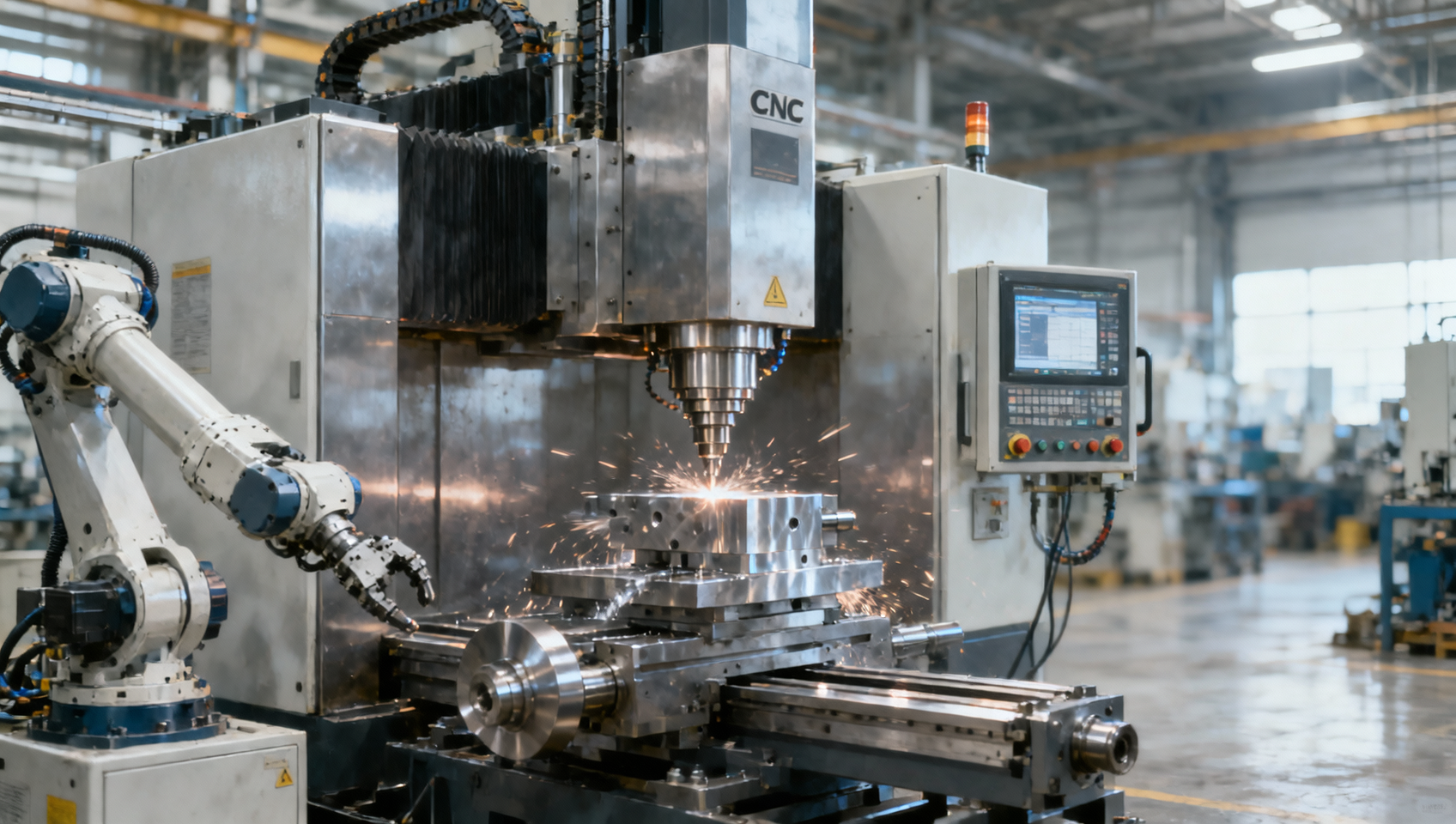
Not every workshop needs the same level of automation. A compact machine tool with automatic tool change may be enough for smaller subcontractors producing several part families in low-to-medium volumes. A larger machining center with robotic loading, pallet change, and in-process probing may be better for shops running repeat orders across multiple shifts. The right choice depends on batch size, part geometry, floor space, tolerance targets, and changeover frequency.
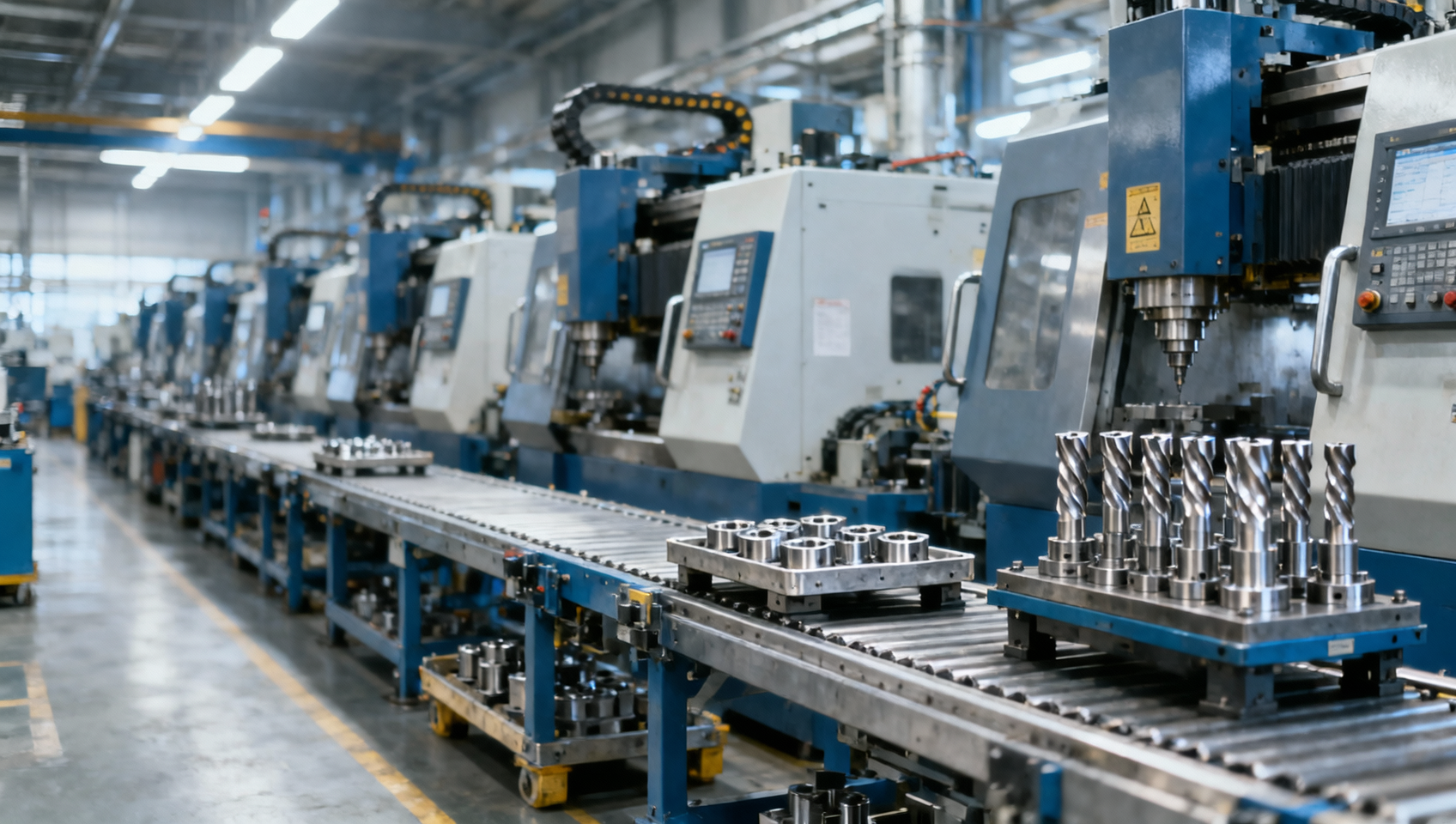
For shaft parts, discs, housings, and structural components, common automated CNC machine tool configurations include CNC lathes with bar feeders, vertical machining centers with pallet systems, horizontal machining centers for multi-face machining, and multi-axis CNC manufacturing cells for complex parts. Each option changes productivity in a different way. Some reduce setup time. Others reduce secondary operations or improve unattended run time.
Workshops in automotive and electronics often prioritize short cycle times, high repeatability, and easy fixture change. Aerospace and energy equipment shops may value process traceability, high rigidity, and multi-axis capability because component geometry is more complex and material removal is more demanding. In both cases, automation should support the actual production bottleneck rather than simply add technical complexity.
The table below compares common automated machine tool setups and their typical fit in production planning.
This comparison shows that “more automation” is not always the same as “better ROI.” A shop producing 20–50 part numbers each month may benefit more from flexible setup reduction than from maximum unattended hours. By contrast, a facility with stable repeat orders may achieve better returns from robotic part handling and standardized tooling.
How should shops match automation to workload?
A practical approach is to classify jobs into 3 groups: frequent repeat parts, variable low-volume parts, and high-precision complex parts. Repeat parts benefit most from feeder systems, fixture standardization, and cycle automation. Variable low-volume parts often need quick changeover and easier programming. Complex parts usually justify higher investment in multi-axis machining, probing, and digital process verification.
Shops should also review part loading limits, typical workpiece size, spindle power range, and tool magazine capacity. For example, if the product mix frequently changes but most jobs still use 20–40 tools, then a machine with a flexible tool magazine and repeatable presetting may create more value than one designed mainly for very long unattended runs.
Another often overlooked factor is operator transition time. A technically advanced automated machine tool is only productive when operators can recover alarms, change fixtures, verify offsets, and restart work without excessive waiting. In many procurement decisions, ease of operation over the first 30–90 days matters as much as the machine’s peak specification.
What technical indicators matter most before buying an automated machine tool?
Procurement teams often start with spindle speed and travel range, but these are only part of the evaluation. A reliable automated machine tool should be assessed through 5 core dimensions: machining capability, automation compatibility, process stability, maintainability, and digital integration. Looking at these together gives a more accurate picture of long-term shop productivity than focusing on a single performance figure.
Machining capability includes axis configuration, rigidity, repeatability, and whether the machine can support common materials used in the target industry. Automation compatibility covers interfaces for feeders, robots, pallet changers, probing systems, and chip removal. Process stability involves thermal behavior, tool monitoring, and repeat setup accuracy across multiple production cycles. Maintainability includes access to service points, spare part planning, and troubleshooting logic. Digital integration includes compatibility with MES, ERP, or shop-floor monitoring systems.
For buyers comparing several CNC machine tool manufacturer options, it is useful to convert these concerns into a structured checklist. This reduces the risk of choosing a machine that looks strong on paper but creates hidden losses during installation, operator training, or routine maintenance over the first 6–12 months.
The following table summarizes practical evaluation points for automated CNC manufacturing projects.
A structured evaluation helps prevent mismatches. For example, if a buyer needs compact machine tool deployment in a space-limited workshop, layout and maintenance access can be just as important as axis travel. If the target is energy-saving machine tool performance, utility consumption and standby behavior should be reviewed during quoting, not after installation.
A 5-point checklist before final approval
Use this review framework before purchase order release
- Confirm part range: material, size envelope, tolerance band, and monthly volume.
- Verify automation scope: loading only, pallet transfer, probing, or full cell integration.
- Review service readiness: spare parts, remote support, and response expectations within 24–72 hours.
- Check implementation steps: installation, trial cutting, operator training, and acceptance criteria.
- Compare total operating cost over a 3–5 year period, not only initial purchase price.
This checklist is especially useful when multiple stakeholders are involved. Engineers may prioritize capability, finance teams may focus on capital cost, and operators may care most about control usability. A shared review method reduces internal conflict and supports faster final decisions.
How should companies compare cost, ROI, and implementation risk?
The biggest mistake in automated machine tool purchasing is treating the machine price as the full project cost. In reality, the investment often includes tooling, fixtures, loading systems, software interfaces, installation utilities, operator training, test cutting, and process tuning. In many cases, implementation success depends more on these surrounding elements than on the machine body itself.
A practical ROI review should include at least 4 cost layers: capital equipment, production support hardware, training and commissioning, and ongoing operating cost. It should also estimate value from reduced setup hours, fewer manual interventions, more stable part quality, and higher machine utilization. Even when exact output gain is not known in advance, decision-makers can compare scenarios based on current shift structure and batch repeat frequency.
Implementation risk also deserves close attention. A highly automated CNC manufacturing system may look attractive, but if the shop lacks fixture discipline, tool life monitoring, or stable part programs, the launch period can stretch from 2 weeks to 8 weeks or more. That delay affects cash flow, delivery schedules, and operator confidence.
The table below helps procurement teams compare visible and hidden cost factors before committing to an automated machine tool solution.
For many companies, the best option is not the cheapest machine or the most advanced one, but the solution with the lowest execution risk relative to target output. This is especially true when delivery commitments are tight and production cannot tolerate long debugging cycles.
Where do productivity projects usually fail?
Most failures come from misalignment between machine capability and shop-floor readiness. Common issues include insufficient fixture repeatability, weak tool presetting practices, lack of standardized part programs, and unclear maintenance ownership. These gaps reduce the value of even a good CNC machine tool manufacturer solution.
Another failure point is underestimating operator learning time. Even with user-friendly controls, a new automated process may require 1–3 weeks for basic familiarity and longer for stable multi-shift execution. Companies that plan this ramp-up period clearly tend to realize productivity gains faster and with fewer disruptions.
- Do not evaluate automation only on cycle time; include setup, changeover, and recovery time.
- Do not ignore utility and floor-space requirements, especially for compact but integrated machine tool cells.
- Do not launch without agreed acceptance standards for part quality, output rate, and support responsibilities.
What should buyers and operators ask before moving forward?
Good purchasing decisions come from good questions. Before selecting an automated machine tool, buyers should understand what the workshop is trying to improve first: output volume, labor efficiency, part accuracy, shift flexibility, or energy-saving machine tool performance. Different priorities lead to different machine configurations. A mismatch at this stage usually creates avoidable rework later.
Operators should ask how the machine handles setup, alarms, tool wear, and restart procedures. Procurement should ask what is included in the standard package and what requires optional budgeting. Decision-makers should ask how quickly the line can reach stable production, what support is available during commissioning, and how the system may scale if volumes increase within 6–18 months.
This is also the stage to review general compliance and process requirements. Depending on the project, buyers may need to align with common safety practices, electrical requirements, traceability expectations, or documentation standards used in automotive, aerospace, electronics, or export-oriented manufacturing. Even when specific certifications vary by region, documentation quality and process clarity remain essential.
Below are common questions that help narrow down the right CNC manufacturing solution.
How do I know if automation is suitable for my current job mix?
Start by checking order repeatability, batch size, and setup frequency. If the same parts return every week or every month, or if multiple jobs share similar fixturing and tool sets, automation usually has a stronger business case. If every job is unique and setup changes dominate the schedule, flexible quick-change solutions may be better than heavy full-cell automation.
What delivery timeline is reasonable for an automated machine tool project?
A practical timeline often includes 3 stages: technical confirmation, manufacturing or sourcing, and commissioning. Depending on machine complexity and customization level, buyers commonly review delivery windows in weeks rather than days. Installation and process validation should also be planned separately, especially if robotic loading, probing, or special fixtures are included.
What are the most overlooked procurement details?
Three items are frequently missed: peripheral compatibility, training scope, and spare part planning. A machine may meet cutting requirements but still need additional investment in tool holders, chips management, automation guarding, or software communication. Clarifying these details before contract finalization prevents budget surprises and startup delays.
Can small and mid-sized workshops benefit from automated CNC manufacturing?
Yes, especially when labor availability is tight or consistency is difficult to maintain across shifts. Smaller shops do not always need large automated production lines. In many cases, a compact machine tool with standardized fixturing, automatic tool change, and simple part handling can provide a practical step toward higher output without overloading the budget or the operator team.
Why choose a specialized partner for CNC machine tool planning and sourcing?
Automated machine tool investment is not just about selecting hardware. It requires understanding global CNC machining trends, precision manufacturing requirements, process matching, and international supply conditions. A specialized industry platform can help buyers compare options more efficiently, understand technology direction, and evaluate which machine tool solutions are realistic for their production goals.
Because the machine tool industry spans CNC lathes, machining centers, multi-axis systems, cutting tools, fixtures, and automated assembly solutions, buyers often need more than a price list. They need support in parameter confirmation, scenario matching, supplier comparison, and delivery planning. This is especially important when procurement teams, operators, and management each define value in different ways.
We focus on the global CNC machining and precision manufacturing sector, covering technology insights, market developments, and international trade information that help manufacturing professionals make informed decisions. Whether your project involves a first automation upgrade or a broader smart factory transition, clearer technical communication reduces purchasing risk and shortens the path to stable production.
If you are evaluating automated machine tools, you can contact us to discuss specific needs such as part parameters, suitable machine configuration, common delivery timelines, automation options, application scenarios, and budget-sensitive alternatives. You can also ask about tooling support, fixture planning, documentation requirements, sample-based assessment, and quotation comparison for different CNC manufacturing routes.
- Request help confirming whether your part family is better suited to CNC lathe automation, machining center automation, or multi-axis CNC manufacturing.
- Ask for guidance on selecting compact machine tool layouts, energy-saving machine tool priorities, or scalable automation configurations.
- Discuss lead time expectations, implementation steps, training needs, and practical procurement checkpoints before supplier negotiation.
When the goal is real productivity improvement, the most valuable conversation usually begins with your parts, your process, and your delivery pressure. That makes it easier to turn automation from a concept into a measurable production advantage.
Recommended for You
 How to Choose a Heavy-Duty Machining Center for Mold MakingMachine Tool Industry Editorial Team
 How Quick-Change Fixture Design Cuts CNC Turning Setup TimeCNC Machining Technology Center
 Why 5 Axis Machining Is Ideal for Impeller ManufacturingCNC Machining Technology Center
 How to Start Lean Production Without Disrupting OutputManufacturing Market Research Center
 When a Modular Tooling System Improves Flexible ManufacturingMachine Tool Industry Editorial Team
 How CNC Machine Control Systems Improve Automation StabilityMachine Tool Industry Editorial Team

Aris Katos
Future of Carbide Coatings
15+ years in precision manufacturing systems. Specialized in high-speed milling and aerospace grade alloy processing.
▶
How CNC Machine Control Systems Improve Automation StabilityMachine Tool Industry Editorial Team▶
How to Troubleshoot an Automated Production Line FasterMachine Tool Industry Editorial Team▶
How Automated Machine Tools Change Shop ProductivityMachine Tool Industry Editorial Team▶
EU CE新规生效: CNC Automation Lines Require EN ISO 13849-1:2023 from Q3 2026Machine Tool Industry Editorial Team▶
What Automated CNC Manufacturing Changes on the Shop FloorMachine Tool Industry Editorial Team
Mastering 5-Axis Workholding Strategies
Join our technical panel on Nov 15th to learn about reducing vibrations in thin-wall components.

Providing you with integrated sanding solutions
Before-sales and after-sales services
Comprehensive technical support