• Global CNC market projected to reach $128B by 2028 • New EU trade regulations for precision tooling components • Aerospace deman
NYSE: CNC +1.2%LME: STEEL -0.4%

How an Automated Production Line cuts labor and delays
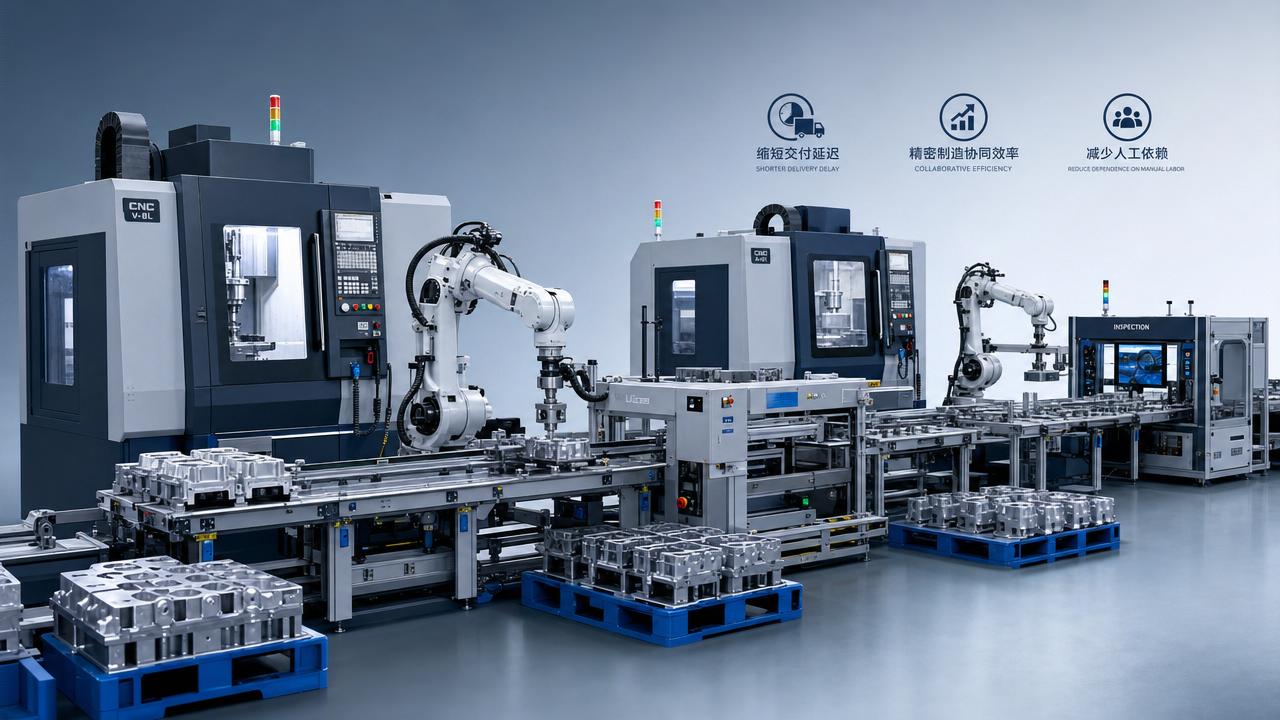
An Automated Production Line helps reduce labor dependency, shorten lead times, and stabilize complex manufacturing schedules. In CNC machining and precision manufacturing, it supports repeatable quality, scalable output, and reliable delivery.
As global manufacturing shifts toward digital integration, an Automated Production Line has become a practical strategy for controlling cost, capacity, and production risk across mixed industrial environments.
Automated Production Line fundamentals in modern manufacturing
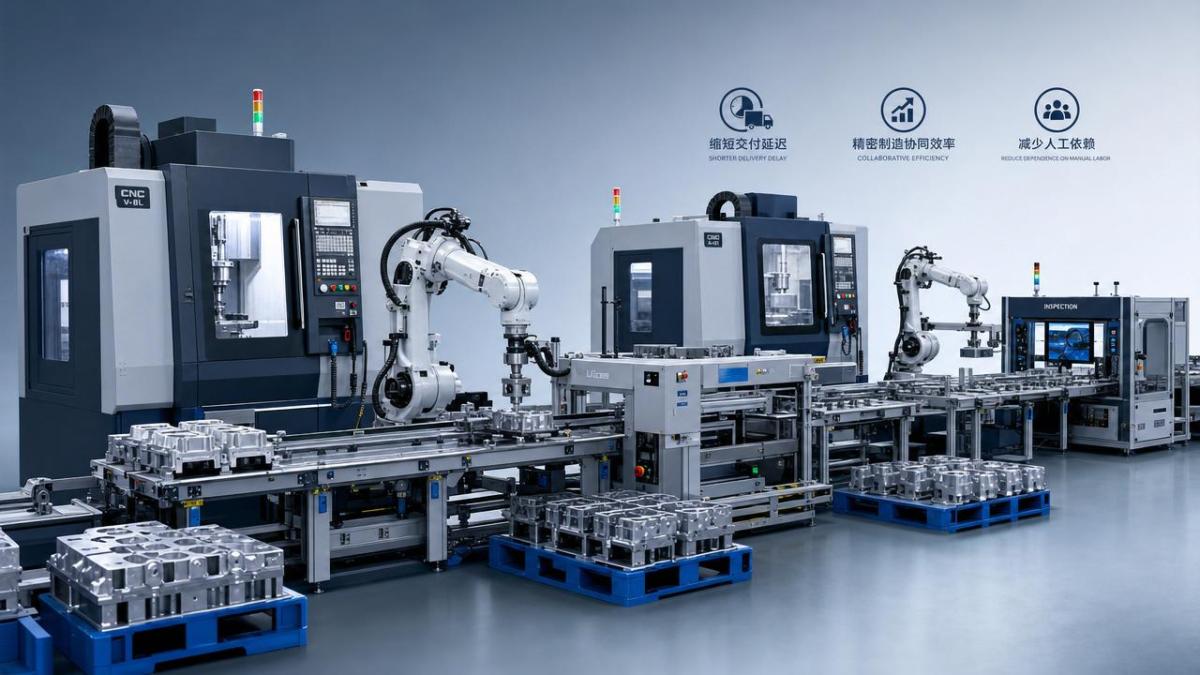
An Automated Production Line is a connected system of machines, handling devices, sensors, controls, and software. It moves parts through production steps with minimal manual intervention.
In CNC machining, this often includes loading robots, conveyors, pallet systems, CNC lathes, machining centers, inspection stations, and automated unloading or sorting modules.
The goal is not only faster production. The deeper value is process stability, predictable cycle time, reduced waiting, and tighter coordination between machining, inspection, and assembly.
For precision manufacturing, an Automated Production Line also improves traceability. Data from each station can be recorded, compared, and used to correct deviations before delays become expensive.
Core elements usually included
- CNC lathes, machining centers, or multi-axis machine tools
- Robotic loading and unloading systems
- Pallet changers, conveyors, or AGV transfer units
- Fixtures, tool monitoring, and tool life management
- In-line gauging, vision inspection, or CMM integration
- MES, PLC, and production scheduling software
Why labor shortages and delays keep pushing automation forward
Across industries, production systems face the same pressures: fewer skilled operators, shorter delivery windows, more product variants, and stricter quality requirements.
These pressures are especially visible in CNC operations. Manual loading, tool changes, inspection routing, and shift handoffs often create hidden downtime.
An Automated Production Line addresses these weak points by linking machines and workflows. Instead of isolated equipment, the line behaves like one coordinated production asset.
Current industry signals
How an Automated Production Line cuts labor dependency
The most immediate benefit is lower dependence on repetitive manual tasks. Operators no longer spend most of their time loading parts, moving trays, or waiting for cycle completion.
Instead, labor shifts toward programming, process verification, preventive maintenance, and quality supervision. This improves labor productivity without reducing process control.
An Automated Production Line also reduces the risk of absenteeism, uneven operator skill, and manual handling mistakes. These issues often trigger hidden scrap and delayed delivery.
Key labor-saving mechanisms
- Automatic loading and unloading reduce idle machine time
- Standardized handling lowers training dependency
- In-line inspection reduces manual measurement loops
- Centralized dashboards support fewer interventions per shift
- Automatic alarms speed response to abnormal conditions
This matters in both high-volume and mid-volume production. Even flexible lines for mixed parts can deliver major labor savings when scheduling and fixtures are properly designed.
How an Automated Production Line reduces delays across the workflow
Production delays rarely come from one large failure. They usually come from many small interruptions that accumulate across setup, transport, inspection, material flow, and machine waiting time.
An Automated Production Line reduces these interruptions by synchronizing upstream and downstream operations. Parts arrive in sequence, tools are monitored, and stations communicate status in real time.
When a bottleneck appears, the system can trigger alerts, reroute capacity, or pause noncritical tasks. This is far more effective than discovering delays after queues have already built up.
Delay reduction points
- Shorter changeovers through fixture standardization and preset tooling
- Lower transport delay through conveyors, pallets, or robotic transfer
- Fewer quality escapes through in-process checking
- Less unplanned stoppage through condition monitoring
- Better schedule visibility through integrated production software
In precision manufacturing, even minutes matter. Reliable flow between machining, deburring, washing, gauging, and assembly can protect promised lead times and reduce expedite costs.
Business value for CNC machining and precision manufacturing
The value of an Automated Production Line extends beyond labor savings. It influences cost structure, customer confidence, equipment utilization, and the ability to scale without operational chaos.
For machine tool intensive production, better spindle utilization is critical. A line that keeps CNC assets cutting consistently generates stronger returns than a larger fleet with unstable loading patterns.
Quality performance also improves. Repeatable part orientation, controlled clamping, and fixed transfer logic reduce variation between batches and between shifts.
Typical applications across industrial segments
An Automated Production Line is not limited to one sector. It is widely used wherever repeatability, precision, and schedule discipline are important.
Representative use cases
- Automotive: shaft parts, brake components, housings, and transmission elements
- Aerospace: structural parts, precision fittings, and complex alloy machining
- Energy equipment: valves, pump parts, flanges, and turbine-related components
- Electronics: heat sinks, connectors, frames, and precision fixtures
- General industry: discs, sleeves, brackets, and batch-machined metal parts
The strongest results usually appear where part families share similar processes. There, an Automated Production Line can combine flexibility with standardized flow and measurable output gains.
Implementation priorities and practical considerations
Successful automation depends on process design, not only equipment selection. A weak process will not become efficient just because robotic handling is added.
Before deployment, cycle time balance, workpiece variation, tooling strategy, fixture repeatability, and inspection logic should be mapped in detail.
Practical implementation checklist
- Identify manual tasks that create the most waiting or inconsistency
- Group parts by geometry, routing, and setup similarity
- Define target cycle time and acceptable buffer levels
- Integrate quality checks without overloading the line pace
- Plan preventive maintenance and spare parts from the start
- Connect production data to scheduling and reporting systems
It is also important to stage implementation. Pilot cells, modular stations, and phased software integration often reduce risk while proving measurable returns.
A practical next step for stronger delivery performance
An Automated Production Line is increasingly a strategic requirement, not only a technology upgrade. It helps control labor exposure, improve CNC utilization, and reduce delays across complex production chains.
A useful next step is to review one recurring bottleneck area, such as part loading, in-process inspection, or inter-station transfer. Quantify delay causes before selecting automation scope.
When process data, machine capability, and workflow design align, an Automated Production Line can deliver durable gains in efficiency, precision, and on-time production performance.
PREVIOUS ARTICLE
NEXT ARTICLE
Recommended for You
![]() ISO/TR 24122:2026 CNC Machine Carbon Footprint Guide PublishedManufacturing Policy Research Center
ISO/TR 24122:2026 CNC Machine Carbon Footprint Guide PublishedManufacturing Policy Research Center![]() Shenwei CNC Dual-Spindle Transfer Machine Passes TÜV Rheinland Production-Line Integration CertificationMachine Tool Industry Editorial Team
Shenwei CNC Dual-Spindle Transfer Machine Passes TÜV Rheinland Production-Line Integration CertificationMachine Tool Industry Editorial Team![]() China's CNC Machine Tool Penetration Rate Exceeds 51%Manufacturing Market Research Center
China's CNC Machine Tool Penetration Rate Exceeds 51%Manufacturing Market Research Center![]() VDMA-TÜV South Germany Releases 2026 CNC Green Procurement GuideManufacturing Policy Research Center
VDMA-TÜV South Germany Releases 2026 CNC Green Procurement GuideManufacturing Policy Research Center![]() Brazil INMETRO Enforcement: 37 CNC Lathes Rejected Over IoT ModuleManufacturing Policy Research Center
Brazil INMETRO Enforcement: 37 CNC Lathes Rejected Over IoT ModuleManufacturing Policy Research Center![]() Red Sea Crisis Escalates: Maersk Suspends CNC Equipment Bookings on Asia-Europe RoutesGlobal Machine Tool Trade Research Center
Red Sea Crisis Escalates: Maersk Suspends CNC Equipment Bookings on Asia-Europe RoutesGlobal Machine Tool Trade Research Center


Aris Katos
Future of Carbide Coatings
15+ years in precision manufacturing systems. Specialized in high-speed milling and aerospace grade alloy processing.
▶
How an Automated Production Line cuts labor and delaysMachine Tool Industry Editorial Team▶
What makes an Automated Production Line fail early?Machine Tool Industry Editorial Team▶
When an Automated Production Line becomes hard to maintainMachine Tool Industry Editorial Team▶
Why Industrial Robotics payback is shorter than many expectMachine Tool Industry Editorial Team▶
When an Automated Production Line becomes hard to maintainMachine Tool Industry Editorial Team
Mastering 5-Axis Workholding Strategies
Join our technical panel on Nov 15th to learn about reducing vibrations in thin-wall components.

Providing you with integrated sanding solutions
Before-sales and after-sales services
Comprehensive technical support