• Global CNC market projected to reach $128B by 2028 • New EU trade regulations for precision tooling components • Aerospace deman
NYSE: CNC +1.2%LME: STEEL -0.4%

Industrial Painting Robots: Where Finish Quality Usually Drops
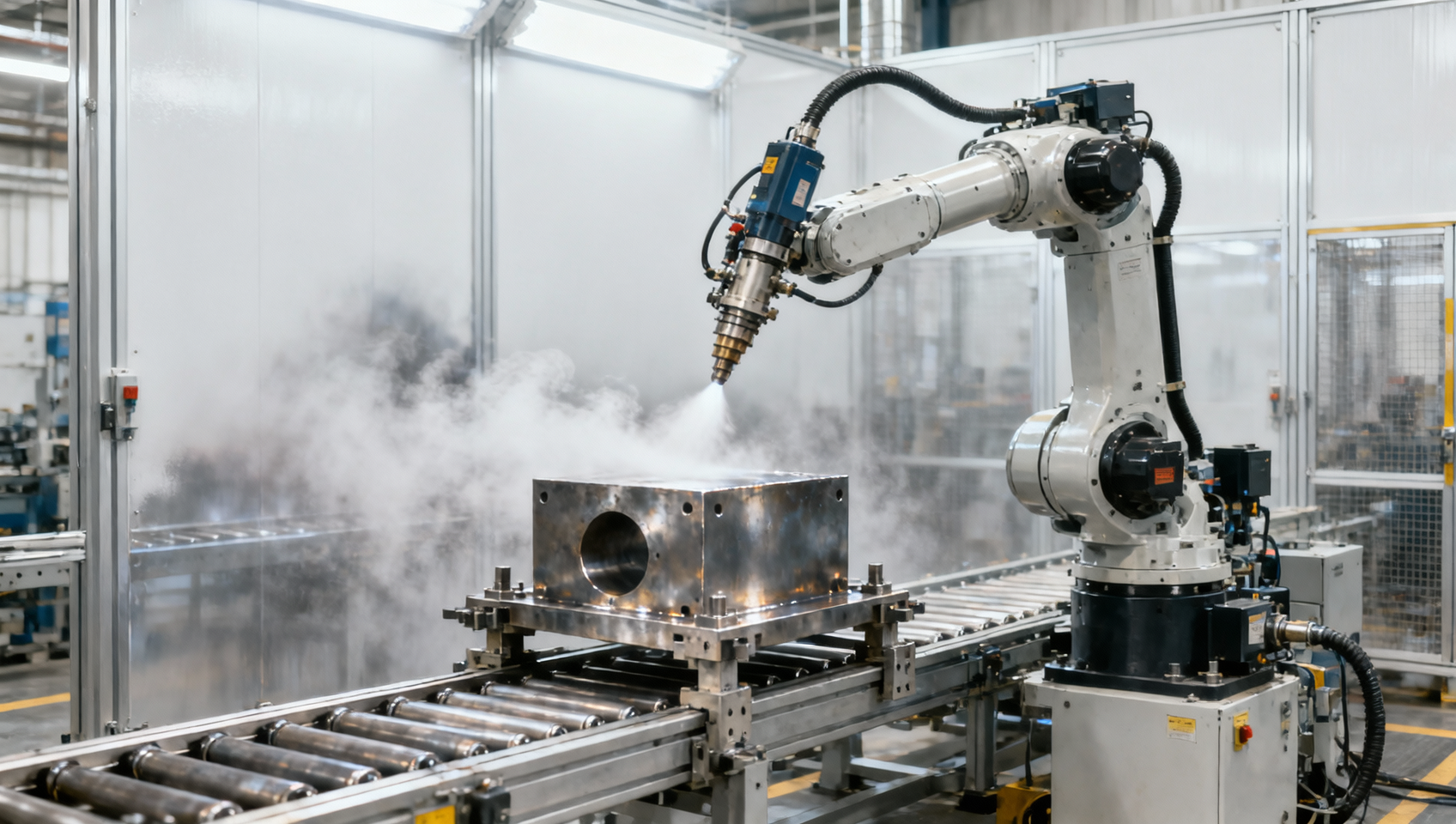
In industrial painting applications, finish quality usually drops for reasons that have little to do with robot repeatability alone. In most factories, the real causes are unstable surface preparation, poor spray path programming, mismatched atomization settings, and weak process control across the full line. For operators, engineers, buyers, and plant leaders evaluating industrial painting robots, the key question is not whether robots can paint well, but under what conditions they can deliver consistent coating quality, high transfer efficiency, and fewer rework losses. If your production line is showing defects such as uneven film build, orange peel, overspray, missed edges, or inconsistent gloss, the solution usually lies in process discipline rather than replacing the robot itself.
That matters even more as manufacturers push Industrial Automation deeper into production, link painting cells with CNC machining and automated handling, and pursue a more Eco-friendly Production Process. A robot can repeat a bad path perfectly every cycle. So the real performance difference comes from how well the painting process is engineered, monitored, and maintained.
Where finish quality usually drops first in an industrial painting robot cell
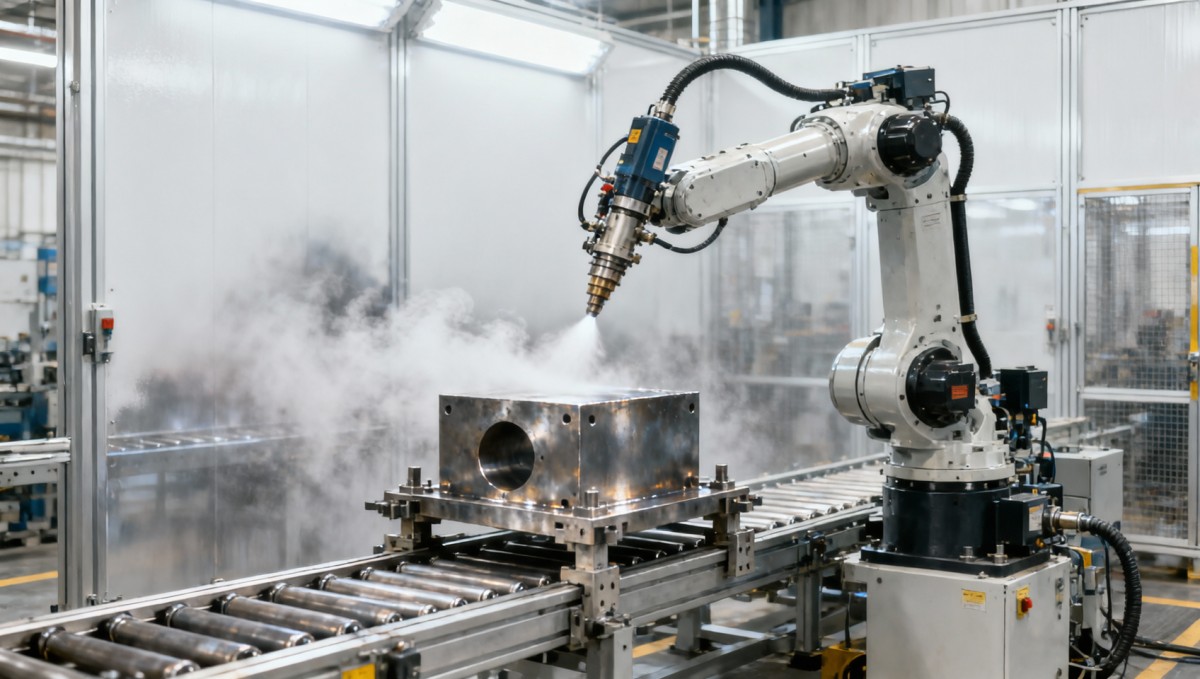
The biggest misconception in automated painting is that coating quality depends mainly on the robot brand or arm accuracy. In reality, finish quality usually drops at the interfaces between steps. These weak points appear before paint leaves the nozzle, while it is being applied, and after it lands on the part.
The most common failure points include:
- Inconsistent surface preparation: oil residue, dust, oxidation, burrs, moisture, and poor pretreatment reduce adhesion and visual consistency.
- Unstable part presentation: if fixtures, conveyors, or part orientation vary, robot paths no longer match real geometry.
- Poor path planning: wrong gun distance, spray angle, overlap, or speed leads to thin spots, runs, and uneven coverage.
- Improper atomization settings: paint flow, air pressure, bell speed, and viscosity drift can quickly degrade appearance.
- Weak environmental control: booth airflow, temperature, and humidity strongly affect film formation and defect rates.
- Insufficient maintenance: clogged nozzles, worn seals, dirty lines, and calibration drift often show up as finish defects before they trigger alarms.
For search users trying to understand where defects begin, this is the central answer: paint robots do not remove process variation. They expose it. In a manual line, skilled painters may compensate for variation by instinct. In an automated line, every upstream inconsistency becomes visible in the final finish.
Why surface preparation causes more defects than robot motion
If the substrate is not clean and consistent, even the best robotic coating program cannot produce a stable finish. This is often the most overlooked issue by companies focused on automation hardware investment.
Typical preparation-related problems include:
- Residual cutting fluid or machining oil on metal parts
- Dust from grinding, polishing, or upstream CNC operations
- Uneven blasting or mechanical pretreatment
- Poor phosphate, anodizing, or chemical pretreatment consistency
- Part temperature variation before coating
- Moisture contamination in compressed air or on surfaces
In sectors such as automotive, aerospace components, energy equipment, and electronics enclosures, upstream precision manufacturing does not automatically guarantee paint-ready surfaces. Parts leaving CNC lathes or machining centers may still carry micro-contaminants that directly affect wetting, adhesion, and appearance. That is why painting quality should be managed as a cross-process issue, not as an isolated robot-cell problem.
For decision-makers, this has a practical meaning: if you are seeing recurring coating defects, do not start with robot replacement quotes. Start with an audit of cleaning, pretreatment, fixturing, and environmental stability.
How poor path planning creates uneven film thickness and visible defects
Once the surface is ready, the next major quality drop usually comes from robot path programming. Robotic painting is not just about making the arm move around the part. It is about controlling deposition physics.
The most frequent path-planning mistakes are:
- Incorrect gun-to-part distance: too close can cause runs and heavy edges; too far increases dry spray and poor transfer efficiency.
- Wrong spray angle: if the gun is not kept normal to the surface where needed, film thickness and gloss can vary.
- Inconsistent travel speed: slowing at corners or accelerating on flats without compensation changes coating build.
- Poor pass overlap: too little overlap leaves striping; too much creates excess thickness and solvent trapping.
- Weak edge and recess strategy: holes, corners, internal surfaces, and complex geometries often need dedicated passes.
This is especially important in precision manufacturing environments where coated parts may include complex housings, covers, machine structures, shafts, or multi-face components. A generic paint path copied across part families often looks efficient in programming, but it creates hidden quality costs in production.
A better approach is to validate paths using test panels, film-thickness mapping, and defect reviews before full-scale deployment. The goal is not just complete coverage, but stable coverage at production speed.
Which process settings operators should monitor every shift
For operators and production teams, consistent finish quality depends on disciplined monitoring. Many painting defects are not sudden failures. They are gradual drifts that become visible only after batches accumulate.
The key variables to check routinely include:
- Paint viscosity and mix ratio
- Fluid delivery pressure and atomizing air stability
- Electrostatic settings, if used
- Rotary bell speed or spray gun nozzle condition
- Booth temperature, humidity, and airflow balance
- Conveyor speed and part spacing
- Robot calibration and TCP consistency
- Filter cleanliness and compressed air quality
Operators often ask why a robot cell that performed well during commissioning starts producing inconsistent finish months later. In many cases, the answer is basic process drift: changed paint batch behavior, worn consumables, contamination buildup, or fixture movement. These issues are highly manageable when tracked with simple standard work, visual checks, and trend records.
For plants pursuing Industrial Automation at scale, the most effective systems combine robotic application with data-driven process monitoring. Even basic SPC-style tracking of film thickness, defect rates, and environmental conditions can significantly reduce rework.
What buyers and managers should evaluate before investing in an industrial painting robot
Procurement teams and business leaders often compare industrial painting robots based on payload, reach, programming interface, and purchase price. Those factors matter, but they do not tell you whether the cell will achieve the finish quality your customers expect.
Before investment, evaluate these questions:
- Is the part mix stable or highly variable? High-mix production may require more flexible programming, vision, or quick-change fixtures.
- Is pretreatment already under control? If not, automation may scale defects faster.
- Do you have coating process expertise in-house? Robot integration without paint-process knowledge creates disappointing results.
- What quality metrics matter most? Appearance, adhesion, film thickness, transfer efficiency, throughput, and VOC reduction may require different priorities.
- How will success be measured? Rework reduction, labor savings, material efficiency, and line uptime should all be quantified in advance.
From an ROI perspective, the strongest business case usually comes not from labor replacement alone, but from a combination of improved consistency, less paint waste, lower defect cost, and more predictable throughput. This is also where an Eco-friendly Production Process becomes practical rather than theoretical: better transfer efficiency and lower rework mean lower material use, less energy waste, and fewer emissions per qualified part.
How to troubleshoot recurring finish problems in a robotic paint line
When defects keep returning, companies often jump between causes without a clear method. A structured troubleshooting sequence is more effective.
- Classify the defect clearly: identify whether it is a coverage issue, appearance issue, adhesion problem, contamination defect, or curing problem.
- Check whether the defect follows the part, the program, or the shift: this helps separate substrate variation from robot motion or operational inconsistency.
- Measure film thickness across critical zones: visible appearance alone does not reveal the full deposition pattern.
- Review recent changes: paint supplier batch, line speed, fixture updates, nozzle replacement, environmental conditions, or maintenance activity.
- Inspect spray equipment physically: worn components often create defects that software changes cannot fix.
- Run controlled trials: adjust one variable at a time rather than changing path, pressure, and viscosity together.
This approach helps both technical teams and managers avoid unnecessary spending. Many finish quality issues can be corrected through process refinement, staff training, and better line discipline long before a major capital upgrade is needed.
When the problem is actually the robot, not the process
Although process control is usually the main issue, there are cases where the robot or integration setup is genuinely responsible. These include:
- Robot calibration loss affecting path accuracy
- Tool center point errors after gun changes or maintenance
- Excessive vibration from mounting or cell structure
- Poor synchronization with conveyors or part tracking systems
- Inadequate reach or axis motion for complex geometries
- Outdated controller capabilities limiting smooth spray path execution
Even then, the right response is careful diagnosis rather than assumption. In many projects, the robot is blamed because it is the most visible automated asset on the line. But the root cause still sits in fixturing, process parameters, or environmental conditions.
What good finish quality looks like in a modern automated painting system
A strong industrial painting robot system is not defined only by automation level. It is defined by repeatable quality. In practice, that means:
- Stable and verified surface preparation
- Repeatable part positioning and fixture control
- Well-engineered spray paths for each geometry family
- Controlled paint properties and atomization conditions
- Booth environment managed within tight limits
- Routine maintenance and operator checks
- Quality data linked back to process variables
For manufacturers integrating robotics into broader smart factory and precision manufacturing strategies, this full-process view is what turns automation into measurable value. It supports better finish consistency, stronger customer acceptance, lower total coating cost, and smoother scale-up across global production lines.
In short, finish quality in industrial painting robots usually drops where process control is weakest: surface prep, path planning, atomization stability, fixturing, and environmental management. The robot is rarely the first thing to blame. For operators, buyers, and manufacturing leaders, the most effective decision is to evaluate the entire coating system as one connected process. Companies that do this well achieve not only better appearance and fewer defects, but also stronger production efficiency and a more sustainable, Eco-friendly Production Process.
PREVIOUS ARTICLE
NEXT ARTICLE
Recommended for You
![]() Iranian LNG Vessels Breach U.S. Strait Blockade; Shanghai Crude Surges 4%Manufacturing Market Research Center
Iranian LNG Vessels Breach U.S. Strait Blockade; Shanghai Crude Surges 4%Manufacturing Market Research Center![]() Pakistan Launches CNC Localization Tender for CPEC II Smart Manufacturing ParkGlobal Machine Tool Trade Research Center
Pakistan Launches CNC Localization Tender for CPEC II Smart Manufacturing ParkGlobal Machine Tool Trade Research Center![]() NVIDIA Joins $1T Club; AI-Driven CNC Digital Twin Gains Global TractionCNC Machining Technology Center
NVIDIA Joins $1T Club; AI-Driven CNC Digital Twin Gains Global TractionCNC Machining Technology Center![]() World's First 5-Axis Middle-Grade Wire EDM Machine Enters Mass ProductionMachine Tool Industry Editorial Team
World's First 5-Axis Middle-Grade Wire EDM Machine Enters Mass ProductionMachine Tool Industry Editorial Team![]() China’s CNC Machine Tool Export Prices Up 11.3% in Q1 2026Global Machine Tool Trade Research Center
China’s CNC Machine Tool Export Prices Up 11.3% in Q1 2026Global Machine Tool Trade Research Center![]() Saudi Energy Security Boosts CNC Import Efficiency in Middle EastGlobal Machine Tool Trade Research Center
Saudi Energy Security Boosts CNC Import Efficiency in Middle EastGlobal Machine Tool Trade Research Center


Aris Katos
Future of Carbide Coatings
15+ years in precision manufacturing systems. Specialized in high-speed milling and aerospace grade alloy processing.
▶
OPC AI Maintenance Cuts CNC Downtime 42% in SuzhouMachine Tool Industry Editorial Team▶
Industrial Painting Robots: Where Finish Quality Usually DropsMachine Tool Industry Editorial Team▶
What Slows Down an Automation Line in Textile Production?Machine Tool Industry Editorial Team▶
Automated Production Lines in Auto Manufacturing: Key BottlenecksMachine Tool Industry Editorial Team▶
Industrial Automation control system for CNC machines: When cybersecurity updates disrupt scheduled maintenanceMachine Tool Industry Editorial Team
Mastering 5-Axis Workholding Strategies
Join our technical panel on Nov 15th to learn about reducing vibrations in thin-wall components.

Providing you with integrated sanding solutions
Before-sales and after-sales services
Comprehensive technical support