• Global CNC market projected to reach $128B by 2028 • New EU trade regulations for precision tooling components • Aerospace deman
NYSE: CNC +1.2%LME: STEEL -0.4%

Automated Production Lines in Auto Manufacturing: Key Bottlenecks
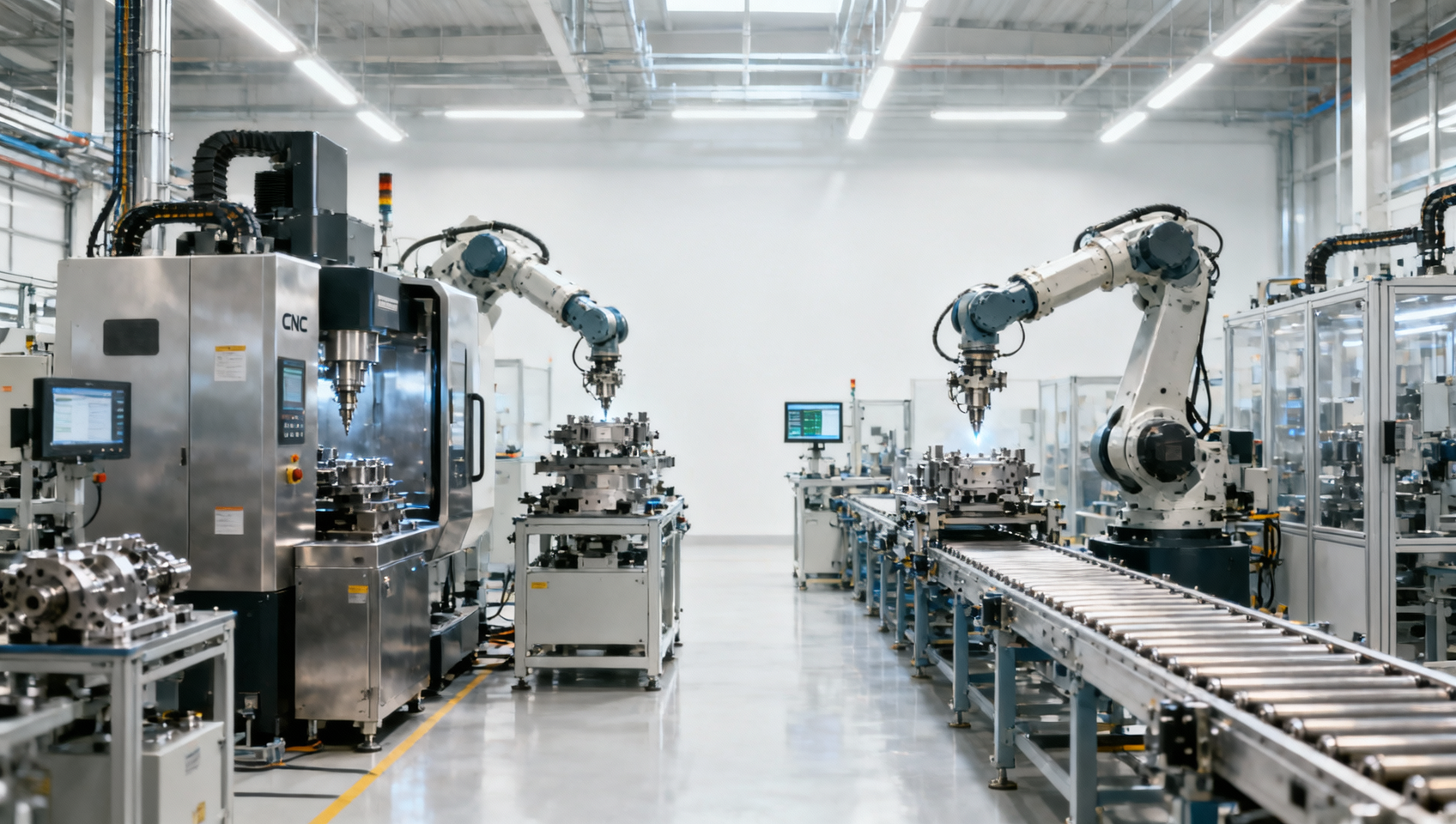
Automated Production Line for automotive manufacturing is transforming factories, but hidden bottlenecks still limit output, quality, and ROI. From Industrial Automation integration for production line to smarter maintenance, machining coordination, and workforce efficiency, understanding these constraints is critical for operators, buyers, and decision-makers seeking more reliable, scalable, and cost-effective manufacturing performance.
In automotive manufacturing, automated production lines connect CNC machining, material handling, robot welding, assembly, inspection, and data systems into one continuous flow. On paper, this should reduce takt time, stabilize part quality, and improve labor utilization. In practice, many factories still face uneven cycle times, downtime between stations, inconsistent data exchange, and delayed maintenance response that erode the expected return on capital investment.
For information researchers, the main question is where these constraints typically appear. For operators, the concern is how bottlenecks affect daily throughput and troubleshooting. For procurement teams, the issue is how to compare solutions beyond the machine price. For business leaders, the focus is scalability, production resilience, and payback over 3–5 years. The following analysis examines the key bottlenecks and the practical strategies used to reduce them in modern auto production environments.
Where Bottlenecks Form in Automated Auto Manufacturing Lines
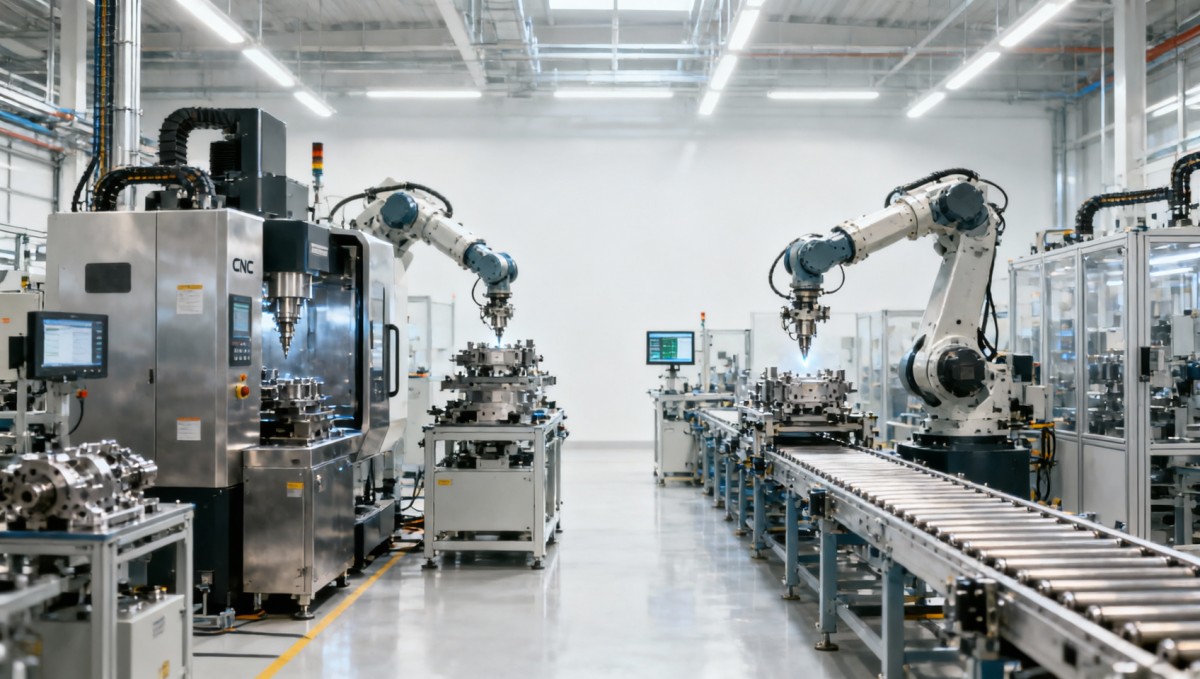
A typical automated production line in auto manufacturing includes multiple linked processes: raw material input, CNC machining, transfer, robotic handling, assembly, in-line measurement, and final quality checks. A bottleneck forms when one station consistently operates slower than the takt target or creates unplanned stops. Even if 9 stations run at 95% efficiency, one station at 78% can define the output of the whole line.
In body, powertrain, and chassis component production, the most common bottlenecks appear in three areas: machining cycle mismatch, robotic transfer delays, and inspection backlog. For example, if one machining center needs 85 seconds per part while upstream and downstream stations run at 60–65 seconds, buffers fill quickly and idle time spreads across the line. This imbalance is common when legacy CNC equipment is integrated with newer automation cells.
Another issue is process dependency. In a fully connected line, a failure in one sensor, fixture, spindle, or robot gripper may stop several downstream operations within 2–5 minutes. The more tightly synchronized the line is, the higher the output potential, but also the greater the sensitivity to small faults. This is why highly automated factories still need carefully designed decoupling zones and temporary buffers.
Decision-makers should also distinguish between visible and hidden bottlenecks. Visible bottlenecks include frequent alarms, machine stoppage, or excessive queue accumulation. Hidden bottlenecks include slow tool changes, micro-stops under 60 seconds, inaccurate fixture positioning, delayed recipe switching, and operator-dependent restart procedures. These smaller losses often reduce overall equipment effectiveness more than major failures over a 12-hour shift.
Typical bottleneck categories
- Cycle time imbalance between CNC machining, robot loading, and final assembly stations.
- Unplanned downtime caused by spindle wear, tool breakage, gripper misalignment, or sensor faults.
- Material flow interruptions due to poor buffer design, AGV delay, or pallet tracking errors.
- Quality-related holds triggered by measurement drift, fixture variation, or inconsistent upstream parts.
- Software and communication delays between PLC, MES, CNC controller, and vision systems.
The table below summarizes how different bottlenecks affect production performance in a typical automotive automated production line.
The key takeaway is that the biggest bottleneck is not always the largest machine. In many plants, the limiting point is a connection issue between systems, a fixture repeatability problem within ±0.02 mm to ±0.05 mm, or a 10-second delay repeated hundreds of times per shift. Accurate identification must come before any equipment upgrade or procurement decision.
Integration Gaps Between CNC Machines, Robots, and Control Systems
Industrial automation integration for production line performance is often constrained less by hardware capability and more by communication quality. Automotive factories commonly use equipment from different suppliers: CNC lathes, machining centers, robots, conveyors, vision systems, and MES platforms may all speak different protocol layers. When data mapping is incomplete, signal timing is unstable, or alarm logic is inconsistent, the line becomes difficult to synchronize.
A common example is part handoff between a machining center and a robot cell. If chuck open confirmation, part presence detection, and robot approach clearance are not aligned within a stable sequence, the cell may lose 3–6 seconds every cycle. That may seem minor, but across 800 cycles per day, it can translate into 40–80 minutes of lost capacity. In high-volume auto component production, that gap has a direct effect on unit cost.
Integration bottlenecks also affect traceability. Many buyers assume that installing more sensors automatically improves visibility. In reality, unless the line records spindle load, tool life, part ID, fixture status, and inspection results in a unified logic structure, data remains fragmented. Operators then spend extra time tracing faults manually, and decision-makers receive reports too late to prevent recurring losses.
For procurement teams, this means evaluating automation projects on interface architecture, not just machine specifications. A 4-axis or 5-axis machine with strong accuracy may still underperform in an automated production line if the loader, fixture system, and central control layer are poorly coordinated. The real benchmark is how well the entire line recovers from changeovers, alarms, and mixed-model production demands.
What to check during integration planning
- Confirm signal timing for load, unload, clamp, release, tool call, and cycle complete status.
- Define a single alarm priority structure so maintenance teams can identify root causes within 3–10 minutes.
- Standardize part traceability fields across PLC, CNC, robot, and MES layers.
- Reserve communication capacity for future expansion, including additional robots, in-line gauging, or AGV links.
- Test changeover logic for at least 2–3 part families before final acceptance.
Integration risks often underestimated
One frequent mistake is treating integration as an after-installation task. In reality, interface definition should begin during line design. Another is overlooking restart logic after a fault. A line that restarts in 90 seconds instead of 12 minutes can recover significant capacity over a week. These factors matter as much as nominal spindle speed, robot reach, or advertised output rate.
Plants moving toward smart manufacturing should also consider digital diagnostics. Remote monitoring, condition alerts, and event log analysis can shorten response cycles, but only if signal quality is reliable. Poor data structure leads to false alarms, alarm fatigue, and low user trust. A stable automated production line depends on clear data governance as much as physical machine performance.
Maintenance, Tooling, and Quality Control as Throughput Constraints
In automotive manufacturing, maintenance is not only a service function; it is a production capacity lever. CNC machines, spindles, linear guides, hydraulic fixtures, and robot end effectors all degrade gradually. If preventive maintenance intervals are based only on calendar time instead of real usage, equipment may be over-serviced or under-serviced. Both create cost and output losses. High-volume lines typically benefit from inspection cycles tied to spindle hours, tool count, or part quantity.
Tooling is another hidden bottleneck. When inserts, drills, or reamers approach wear limits, cycle time may remain unchanged while dimensional variation increases. That leads to more rechecks, line holds, or downstream assembly problems. In precision automotive component manufacturing, a small bore tolerance drift or surface finish issue can block batches of parts even when machine uptime appears acceptable.
Quality control stations can also constrain output when inspection strategy is poorly matched to takt time. If a CMM program takes 180 seconds while the line produces one part every 55 seconds, inspection becomes a queue point unless sampling, in-line gauging, or parallel measurement paths are introduced. This is especially relevant for engine, transmission, e-axle, braking, and structural parts that require repeatable geometric control.
Operators and supervisors should watch for combined symptoms: rising tool consumption, more frequent offset corrections, longer first-pass approval time, and higher minor-stop frequency. These indicators often appear 1–2 weeks before a serious throughput drop. Factories that connect tool life management with production planning usually reduce sudden stoppages more effectively than those relying on reactive maintenance alone.
Maintenance and quality checkpoints
The following table helps compare key checkpoints that directly affect automated production line stability in automotive plants.
The practical conclusion is that maintenance, tooling, and quality should be managed as one system. A line cannot sustain a 60-second takt if tool wear forces frequent offset changes, fixture repeatability drifts, and inspection takes triple the production rhythm. Stable throughput depends on coordinated control of machine health, tooling life, and measurement strategy.
Workforce Efficiency, Changeovers, and Daily Execution Gaps
Even highly automated automotive lines still rely on people for setup confirmation, tooling replacement, fault reset, quality review, and production scheduling. One major bottleneck appears when the line requires advanced automation but the operational routines remain manual or inconsistent. This is especially common in plants that have added new CNC machines or robotic cells faster than they have standardized training and maintenance procedures.
Changeovers are a critical example. In mixed-model production, changing fixtures, part programs, tool offsets, and traceability settings may take 10–45 minutes depending on the part family and automation depth. If work instructions are unclear or approvals rely on a single experienced technician, a planned short stop can become a major production disruption. This also raises procurement risk because the line may look efficient during acceptance testing but perform poorly in daily mixed production.
Workforce efficiency is not only about headcount. It is about response time, problem isolation, and skill coverage across shifts. A factory running 2 shifts may tolerate a few expert-dependent tasks. A 24/7 operation cannot. If night shift teams need 20 minutes to clear faults that day shift solves in 5 minutes, the annual capacity gap becomes significant. Standard work, visual diagnostics, and modular training reduce this variation.
Managers should also evaluate how operators interact with machine interfaces. When HMI screens are overloaded with non-priority alarms, or when restart steps require 8–12 confirmations, recovery time increases. In many cases, line output can improve without buying new equipment simply by simplifying reset logic, standardizing escalation paths, and organizing spare parts and tooling closer to the bottleneck stations.
Execution improvements with high ROI
- Reduce changeover tasks by separating internal and external setup steps before the line stops.
- Create a 3-level fault response plan: operator action, maintenance action, and engineering escalation.
- Use shift-based skill matrices so every critical station has at least 2 trained backups.
- Review top 10 micro-stops weekly and remove recurring manual reset causes.
- Track mean time to repair and mean time to restart separately to identify training gaps.
Common operational misconceptions
One misconception is that more automation automatically reduces labor risk. In reality, higher automation changes labor requirements rather than removing them. Plants need fewer repetitive tasks but more diagnostic, programming, and cross-functional coordination skills. Another misconception is that changeover loss is unavoidable. In many automotive component lines, structured setup reduction can cut changeover time by 20%–50% without major hardware investment.
For buyers and decision-makers, this means equipment selection should include training burden, spare part access, interface clarity, and service support responsiveness. A system with slightly lower nominal speed may deliver better annual output if it is easier to maintain, faster to reset, and simpler to change over between product variants.
How Buyers and Plant Leaders Should Evaluate Solutions
When automotive manufacturers invest in CNC machines, precision machine tools, robotic automation, or complete automated production lines, the evaluation should focus on line performance rather than isolated equipment parameters. Procurement decisions should weigh throughput stability, integration complexity, maintenance burden, digital readiness, and future model expansion. A lower purchase price can become expensive if commissioning takes 4 extra weeks or if spare part lead times regularly exceed 10 days.
A good supplier discussion should cover practical questions: What is the target takt range? How is buffer capacity sized? Can the line support 2 or 3 product variants? What is the expected tool management method? How long does a standard changeover take? What remote diagnostic support is available? These questions reveal whether the solution is engineered for real automotive production or only for showroom performance.
The table below provides a concise procurement framework for comparing automated production line solutions in automotive manufacturing.
For most plants, the best path is not the most complex automation package, but the one matched to production volume, part complexity, labor skill level, and digital maturity. A line producing large batches of standardized parts may prioritize cycle speed and tool automation. A plant handling frequent model changes may place more value on flexible fixturing, fast changeovers, and easier programming.
FAQ for procurement and plant planning
How long does it usually take to stabilize a new automated production line?
A standard ramp-up may take 4–12 weeks depending on line complexity, part variety, and software integration depth. Mechanical installation may finish quickly, but stable cycle performance often requires additional tuning of robot timing, tool life rules, inspection logic, and operator routines.
Which KPI should be checked first when output is lower than expected?
Start with actual bottleneck cycle time, not average line speed. Then review micro-stop frequency, changeover duration, first-pass yield, and restart time after alarms. These four indicators usually reveal whether the issue is mechanical, procedural, or integration-related.
What type of automotive plants benefit most from flexible automation?
Plants producing multiple part families, EV components, or frequent engineering revisions gain the most. Flexible automation is especially useful when product changeovers happen weekly or monthly rather than once per quarter, and when part geometry requires multiple CNC and inspection steps.
Automated production lines in auto manufacturing deliver clear advantages only when bottlenecks are addressed at the system level. The most important constraints usually come from cycle imbalance, weak integration between CNC machines and automation systems, maintenance and tooling gaps, inspection overload, and uneven execution across shifts. Each of these issues can reduce output, quality consistency, and investment return even when the installed equipment is technically advanced.
For operators, the priority is faster fault isolation and more stable daily routines. For procurement teams, the priority is evaluating integration quality, serviceability, and long-term operating cost. For decision-makers, the focus should be scalable line architecture, digital visibility, and reliable throughput under real production conditions. If you are planning, upgrading, or comparing automated production line solutions for automotive manufacturing, now is the right time to review bottlenecks before they become expensive capacity limits.
Contact us to discuss your production goals, request a tailored solution review, or learn more about CNC machining, precision machine tools, and industrial automation strategies for more resilient and cost-effective automotive manufacturing.
Recommended for You
 What Slows Down an Automation Line in Textile Production?Machine Tool Industry Editorial Team
 High Temperature Alloy Cutting Tools Wear Out for Hidden ReasonsCNC Machining Technology Center
 Automated Production Lines in Auto Manufacturing: Key BottlenecksMachine Tool Industry Editorial Team
 What Makes a 5 Axis Machining Center Fit Aerospace Parts?Machine Tool Industry Editorial Team
 Medical Equipment Machining Centers Need Accuracy Beyond SpecsMachine Tool Industry Editorial Team
 How to Compare CNC Tooling System Suppliers in GermanyGlobal Machine Tool Trade Research Center

Aris Katos
Future of Carbide Coatings
15+ years in precision manufacturing systems. Specialized in high-speed milling and aerospace grade alloy processing.
▶
What Slows Down an Automation Line in Textile Production?Machine Tool Industry Editorial Team▶
Automated Production Lines in Auto Manufacturing: Key BottlenecksMachine Tool Industry Editorial Team▶
Industrial Automation control system for CNC machines: When cybersecurity updates disrupt scheduled maintenanceMachine Tool Industry Editorial Team▶
Automated Production Line troubleshooting: Why intermittent faults resist standard diagnostic treesMachine Tool Industry Editorial Team▶
Automated machine tool: When integrated vision systems introduce new validation headachesMachine Tool Industry Editorial Team
Mastering 5-Axis Workholding Strategies
Join our technical panel on Nov 15th to learn about reducing vibrations in thin-wall components.

Providing you with integrated sanding solutions
Before-sales and after-sales services
Comprehensive technical support