• Global CNC market projected to reach $128B by 2028 • New EU trade regulations for precision tooling components • Aerospace deman
NYSE: CNC +1.2%LME: STEEL -0.4%

Industrial Robotics can boost output, but where is the risk?
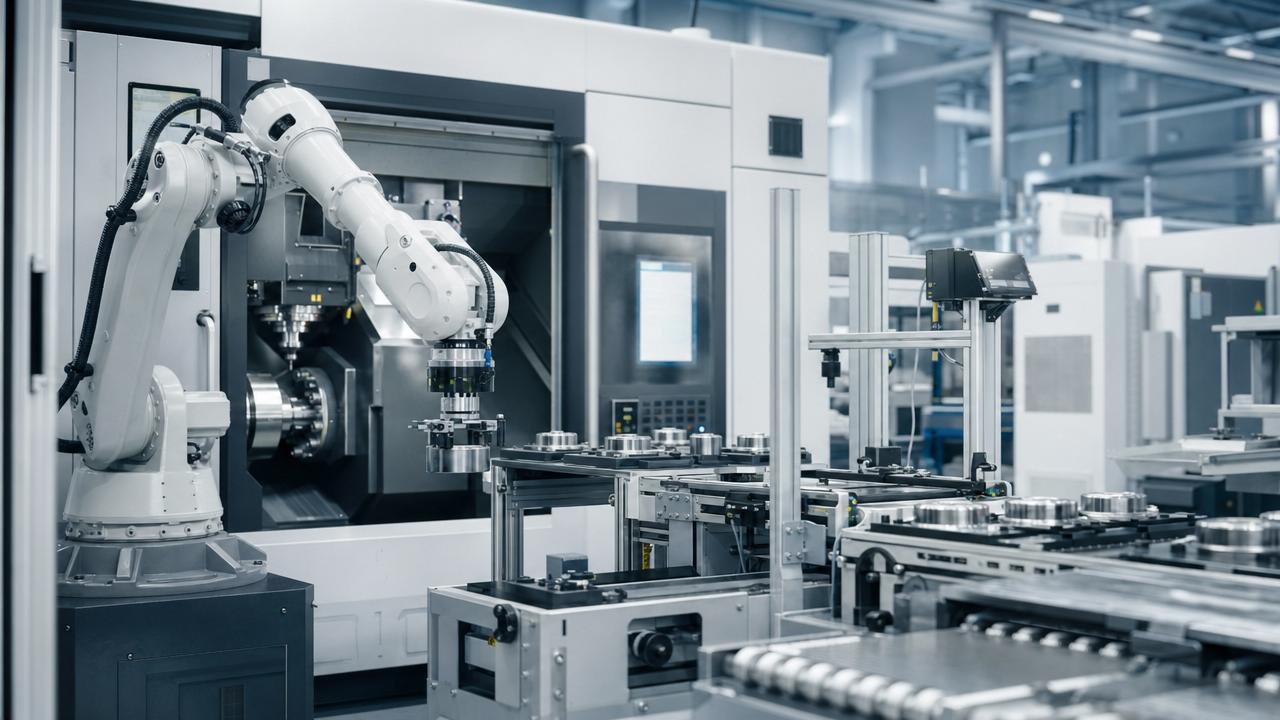
Industrial Robotics can raise throughput, stabilize quality, and support flexible production in modern manufacturing. Yet higher output does not remove risk. It often shifts risk into integration, capital planning, data security, maintenance, and process control.
In the CNC machine tool industry and across broader industrial sectors, Industrial Robotics now shapes machining cells, assembly lines, inspection stations, and material handling systems. The key decision is not whether automation can improve output. It is where Industrial Robotics fits, where risk concentrates, and how each production scenario changes the return profile.
When Industrial Robotics delivers the most value
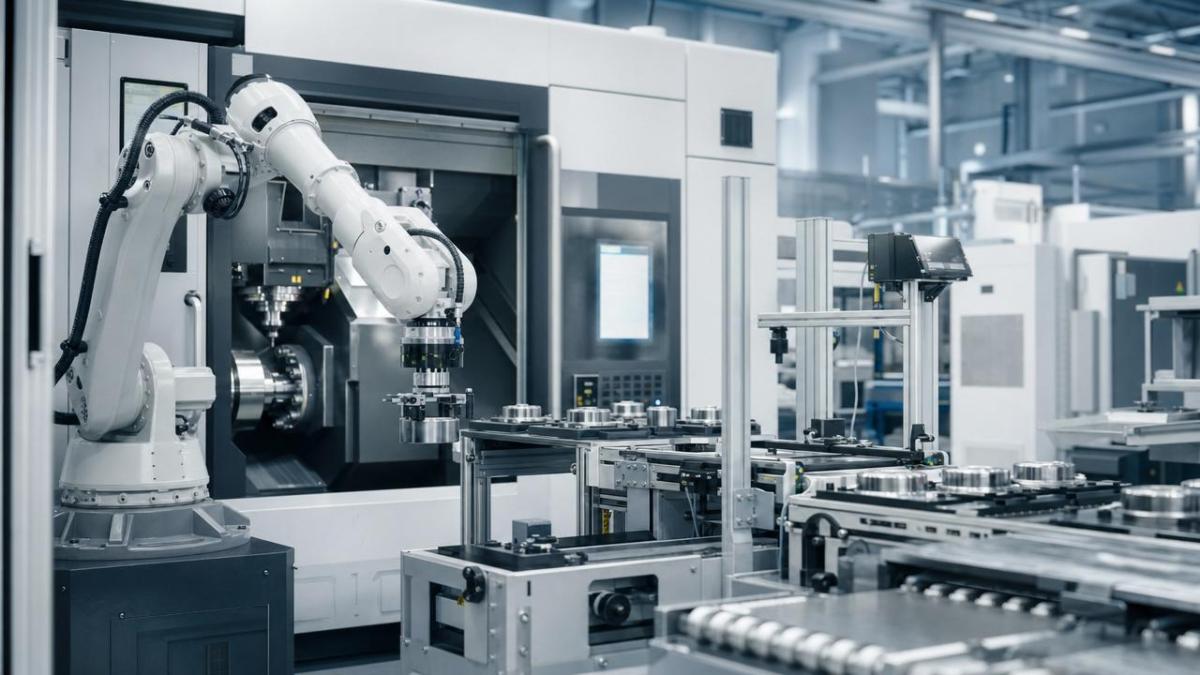
Industrial Robotics creates the strongest value in environments with repetitive motion, tight tolerances, labor variability, and pressure for short lead times. In these settings, robots reduce cycle inconsistency and keep upstream and downstream processes synchronized.
For CNC machining, a robot may load raw material, unload finished parts, transfer workpieces, support deburring, or feed inspection systems. For mixed manufacturing, Industrial Robotics can also connect welding, packaging, palletizing, and final assembly.
The business gain depends on the production pattern. A high-volume line seeks speed and uptime. A high-mix workshop seeks changeover flexibility. A precision part environment seeks stable repeatability. Each scenario changes the risk map.
Scenario one: high-volume CNC production with stable part families
This is often the easiest place to justify Industrial Robotics. Stable geometry, predictable takt time, and long production runs support fast payback. Robotic loading and unloading can cut idle spindle time and extend unattended shifts.
The main risk here is overestimating line simplicity. Even stable part families may have tolerance drift, chip accumulation, fixture wear, or tool-life variation. If the robot works faster than the machining process can recover, bottlenecks move rather than disappear.
A strong evaluation should examine spindle utilization, fixture repeatability, part orientation reliability, and alarm recovery time. If these foundations are weak, Industrial Robotics may magnify downtime instead of output.
Scenario two: high-mix, low-volume manufacturing with frequent changeovers
In flexible manufacturing, Industrial Robotics can still add value, but the decision is more complex. The promise is quick switching between part types, reduced manual handling, and more predictable scheduling across multiple machine tools.
The risk is integration complexity. Grippers, fixtures, vision systems, and programs must support part variation without creating long setup windows. If every product change requires specialist intervention, flexibility falls below expectations.
This scenario rewards modular tooling, offline programming, digital part libraries, and standardized interfaces. Industrial Robotics works best when variation is designed into the system, not managed as an exception.
Scenario three: precision-critical sectors where defects are costly
Aerospace, energy equipment, electronics, and safety-critical components demand traceability and consistent handling. Here, Industrial Robotics helps by reducing human contact, controlling placement accuracy, and linking machining to inspection.
However, risk becomes more expensive. A minor calibration error, poor end-effector design, or unstable vision reference can create hidden quality issues. These defects may escape early detection and multiply downstream costs.
The right judgment point is not only robot repeatability. It is system-level process capability. That includes thermal stability, fixture design, metrology integration, data capture, and closed-loop correction between machines and robots.
Scenario four: smart factory expansion across connected production lines
When Industrial Robotics is deployed inside a smart factory program, the value extends beyond one cell. Robots can feed MES platforms, connect with CNC controls, coordinate AGVs, and support real-time production visibility.
Yet this is where cybersecurity and interoperability risks rise sharply. Networked robots, controllers, cameras, and gateways increase the attack surface. Legacy machine tools may also create protocol mismatches and weak data integrity.
In this scenario, Industrial Robotics should be assessed alongside access control, segmentation, backup strategy, patch management, and vendor support lifecycle. Output gains can disappear quickly after one disruptive digital failure.
How risk changes across Industrial Robotics application scenarios
What different production environments need from Industrial Robotics
The same robot platform does not solve every production problem. Industrial Robotics must be matched to process rhythm, part variability, quality risk, and digital maturity. A scenario-based fit matters more than headline automation level.
- Stable volume needs uptime, preventive maintenance, and simple fault recovery.
- Variable mix needs adaptive gripping, fast reprogramming, and standardized workholding.
- Precision applications need in-line inspection, traceability, and calibration discipline.
- Connected factories need secure architecture, protocol compatibility, and lifecycle support.
For the CNC machine tool sector, Industrial Robotics often succeeds when mechanical precision, tooling strategy, and automation logic are planned together. Treating robotics as a separate add-on usually increases cost and delays value capture.
Practical fit recommendations before expanding Industrial Robotics
- Map the real bottleneck first. Automating a non-bottleneck process rarely transforms plant performance.
- Measure part family stability. Product variation often drives hidden engineering cost.
- Review tool wear, fixture health, and chip control before robot deployment.
- Define failure recovery logic, not only nominal cycle time.
- Check data security if robots connect to CNC systems, MES, or remote service platforms.
- Use phased rollout. A pilot cell exposes integration issues earlier and cheaper.
A phased strategy is especially useful in global manufacturing networks. Plants may differ in operator skills, machine age, software standards, and maintenance culture. Industrial Robotics should be scaled only after local constraints are visible.
Common misjudgments when evaluating Industrial Robotics risk
Assuming labor savings equal total return
Labor reduction is only one variable. Integration cost, programming effort, spare parts, operator training, and unplanned downtime can reshape the investment case.
Focusing on robot speed instead of process stability
A fast robot cannot fix unstable upstream machining, weak fixturing, or poor part presentation. Industrial Robotics amplifies both strengths and weaknesses.
Ignoring cyber and data governance exposure
Connected robots can improve transparency, but they also introduce access risk. Weak password policy or unsupported devices can threaten production continuity.
Underestimating maintenance maturity
Industrial Robotics requires disciplined lubrication, calibration checks, backup routines, and alarm analysis. Without these habits, output gains may fade after initial launch.
The next step: evaluate Industrial Robotics by scenario, not by trend
Industrial Robotics is no longer a future concept. It is already reshaping CNC machining, precision manufacturing, and multi-process production around the world. Still, the best results come from scenario-specific evaluation, not from automation enthusiasm alone.
Start with one production scenario. Identify the process constraint, quality exposure, digital connection level, and changeover profile. Then compare output opportunity against operational, financial, and cybersecurity risk.
When Industrial Robotics is matched to the right environment, it can unlock durable capacity and better control. When matched poorly, it can create expensive complexity. Clear scenario judgment is what turns automation into profitable industrial progress.
PREVIOUS ARTICLE
Recommended for You
![]() Vietnam Suspends CNC Equipment Import Licenses Amid New Tech RulesManufacturing Policy Research Center
Vietnam Suspends CNC Equipment Import Licenses Amid New Tech RulesManufacturing Policy Research Center![]() First Global CNC Machine Carbon Footprint Guide ReleasedManufacturing Policy Research Center
First Global CNC Machine Carbon Footprint Guide ReleasedManufacturing Policy Research Center![]() Japan METI Launches CNC Green Upgrade SubsidyManufacturing Market Research Center
Japan METI Launches CNC Green Upgrade SubsidyManufacturing Market Research Center![]() Brazil INMETRO Mandates IoT Modules for CNC Lathes from July 2026Manufacturing Policy Research Center
Brazil INMETRO Mandates IoT Modules for CNC Lathes from July 2026Manufacturing Policy Research Center![]() EU Launches Anti-Subsidy Investigation on Chinese Laser Cutting Heads and High-Power Fiber LasersManufacturing Policy Research Center
EU Launches Anti-Subsidy Investigation on Chinese Laser Cutting Heads and High-Power Fiber LasersManufacturing Policy Research Center![]() Red Sea Crisis Deepens: Suez Canal CNC Ship Delays Hit 11.4 DaysGlobal Machine Tool Trade Research Center
Red Sea Crisis Deepens: Suez Canal CNC Ship Delays Hit 11.4 DaysGlobal Machine Tool Trade Research Center


Aris Katos
Future of Carbide Coatings
15+ years in precision manufacturing systems. Specialized in high-speed milling and aerospace grade alloy processing.
▶
How to judge if an Automated Production Line fits your plantMachine Tool Industry Editorial Team▶
Industrial Robotics can raise output, but where is the risk?Machine Tool Industry Editorial Team▶
How to judge if an Automated Production Line will pay offMachine Tool Industry Editorial Team▶
How Industrial Robotics is changing factory ROI in 2026Machine Tool Industry Editorial Team▶
Hainan Sanya AI Tech Conference Launches, Embodied AI Production Lines Accelerate Global DeploymentMachine Tool Industry Editorial Team
Mastering 5-Axis Workholding Strategies
Join our technical panel on Nov 15th to learn about reducing vibrations in thin-wall components.

Providing you with integrated sanding solutions
Before-sales and after-sales services
Comprehensive technical support