• Global CNC market projected to reach $128B by 2028 • New EU trade regulations for precision tooling components • Aerospace deman
NYSE: CNC +1.2%LME: STEEL -0.4%

Is automated production worth adding to a mixed workshop
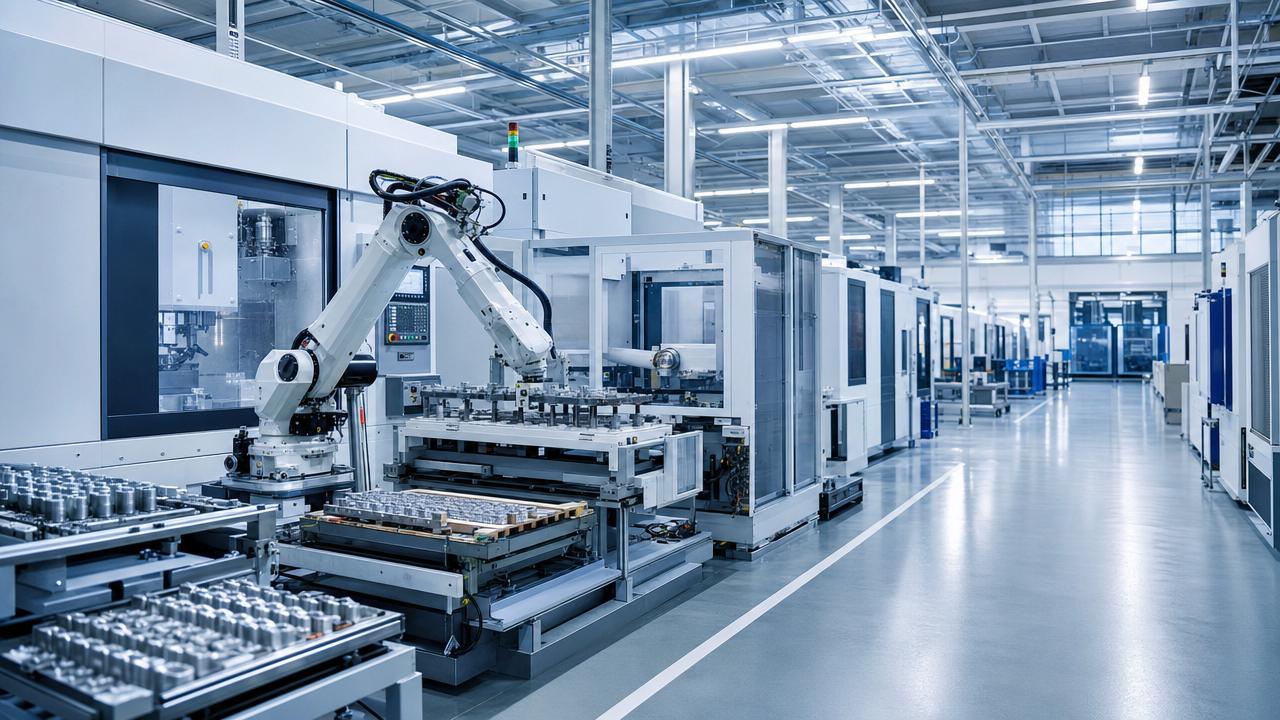
For business evaluators in mixed workshops, the short answer is this: automated production is worth adding when it removes repeatable bottlenecks, raises quality consistency, and improves cost per part without damaging the workshop’s ability to handle varied jobs. In other words, automation is usually not an all-or-nothing decision. In a mixed workshop, the best results often come from selective automation aimed at the right processes, not from trying to automate every machine or every order type.
The core search intent behind “Is automated production worth adding to a mixed workshop” is practical and commercial. Readers are not looking for a general definition of automation. They want to know whether the investment will pay back under real operating conditions: low-to-medium batch sizes, changing part families, multiple machine types, and frequent scheduling adjustments. They also want to understand where automation fits, where it does not, and how to evaluate the risk before spending capital.
For business evaluators, the real concern is balancing three pressures at once: efficiency, flexibility, and financial return. A mixed workshop may handle custom jobs in the morning, repeat parts in the afternoon, and urgent rework by evening. That makes automated production more difficult to justify than in a high-volume dedicated line. Yet labor shortages, quality demands, and lead time pressure are making manual-only production harder to sustain. The question is no longer whether automation is valuable in theory, but whether it is valuable in your specific production mix.
When automated production makes business sense in a mixed workshop
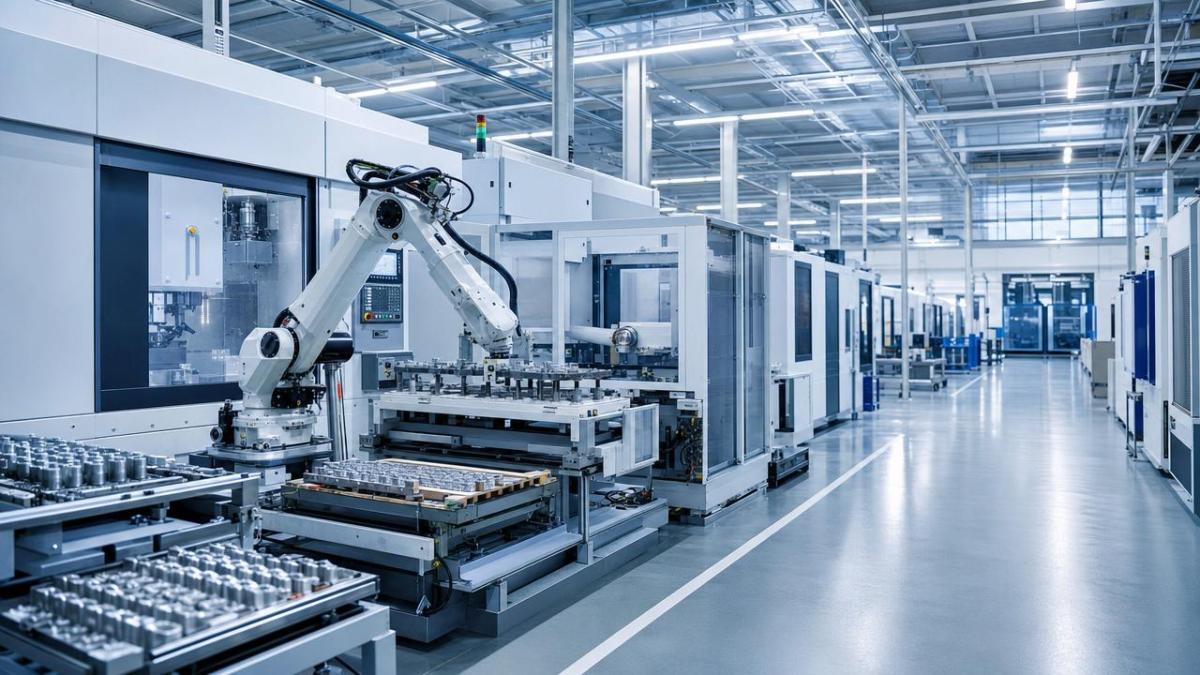
Automated production is most valuable in a mixed workshop when there is enough repeatability hidden inside the complexity. Many workshops appear highly variable at first glance, but a closer review often shows stable patterns: recurring customer orders, repeated setups on similar CNC machines, standard material handling routes, and bottlenecks around loading, inspection, deburring, or pallet changes. These are often the first places where automation creates measurable returns.
For example, if a workshop runs a mix of shaft parts, disc parts, and structural components across CNC lathes and machining centers, the entire process may not be suitable for full automation. However, automated production can still add value by automating machine tending, pallet exchange, part transfer, in-process measurement, or tool management. These targeted upgrades can increase spindle utilization, reduce idle time, and improve output without forcing the whole workshop into a rigid production model.
From a business standpoint, automation usually makes sense under five conditions. First, labor availability is unstable or labor cost is rising faster than productivity. Second, there are repeat jobs with enough volume or frequency to justify standardization. Third, production losses from manual loading, inconsistent setup, or operator-dependent quality are significant. Fourth, delivery performance matters enough that shorter lead times create commercial value. Fifth, management is willing to redesign workflow instead of simply buying equipment and expecting instant results.
If these conditions exist, automated production can support both higher throughput and more predictable scheduling. In many workshops, the biggest gain is not just “more parts per hour.” It is the reduction of uncertainty. Better machine uptime, fewer interruptions, lower scrap rates, and more stable cycle times make planning easier. For business evaluators, that stability has direct financial value because it improves quoting accuracy, capacity planning, and customer confidence.
Why mixed workshops hesitate—and why the hesitation is often justified
Not every mixed workshop should rush into automation. The hesitation is rational because automated production can fail when process variation is too high, job routing changes constantly, or internal discipline is weak. If part programs are inconsistent, tooling is poorly standardized, fixture design changes every week, and production data is unreliable, adding robots or automated cells may simply automate confusion.
Mixed workshops are different from dedicated mass-production plants. They often manage short runs, engineering changes, urgent insert orders, and customer-specific tolerances. In such environments, flexibility is a competitive advantage. A poorly chosen automation project can reduce that advantage by locking the workshop into narrow part types or creating changeover complexity that offsets the expected productivity gains.
Another common concern is underutilization. If an automated cell is designed for one family of parts but actual order flow changes, the asset may sit idle. That is why business evaluators should be cautious about large, highly specialized systems unless demand visibility is strong. The financial risk does not come only from purchase price. It also comes from integration costs, training time, maintenance requirements, software compatibility, and the possibility that production teams bypass the system when urgent work appears.
This does not mean automation should be rejected. It means the threshold for good decision-making is higher. In mixed workshops, the winning approach is usually flexible automation, modular automation, or phased automation rather than fully fixed line automation. The more variable the workshop, the more important it is to protect adaptability.
What business evaluators should measure before approving the investment
The strongest automation decisions are based on data, not optimism. Before deciding whether automated production is worth adding, business evaluators should review the workshop through four lenses: demand profile, process stability, economic return, and organizational readiness.
Start with demand profile. Review the last 12 to 24 months of orders and identify repeat part families, average batch sizes, rerun frequency, margin levels, and customer lead time requirements. A mixed workshop may have hundreds of part numbers, but only a smaller portion usually accounts for most machine hours or profit. Those high-impact categories are often the best candidates for automation. If order patterns are completely unpredictable and repeatability is low, returns will be harder to capture.
Next, assess process stability. Look at setup time, cycle time variation, scrap rates, tool life predictability, machine downtime, and scheduling disruptions. Automated production works best when the process being automated is already reasonably controlled. If machines stop often due to poor programming, unstable fixtures, or inconsistent materials, the first investment may need to be process discipline rather than hardware.
Then evaluate economic return in realistic terms. Do not focus only on labor replacement. That is one of the most common evaluation mistakes. The value of automation may include extended unattended running, higher spindle utilization, lower rework, fewer missed deliveries, reduced overtime, lower dependence on hard-to-hire operators, and better use of floor space. Some workshops discover that the biggest return comes from using existing CNC assets more effectively rather than cutting headcount.
Finally, test organizational readiness. Automated production requires maintenance support, programming capability, standardized work, and operator acceptance. If the production team sees automation as disruptive or management does not support process redesign, implementation risk rises sharply. A workshop can buy advanced equipment and still fail to improve results if workflows, responsibilities, and data systems remain unchanged.
Where automation usually delivers the fastest return
In mixed workshops, the fastest payback often comes from selective automation around machines rather than complete line transformation. CNC machine tending is one of the most practical entry points because loading and unloading are repetitive, labor-intensive, and closely tied to machine utilization. Even when part types vary, machine tending systems can often be configured to handle multiple families with the right grippers, fixtures, and setup logic.
Pallet systems are another strong option. They reduce setup delays, support better scheduling, and allow jobs to be prepared offline. For workshops using machining centers, pallet automation often improves throughput without sacrificing flexibility, especially when combined with standardized fixturing. This is particularly valuable where order variety is moderate but machine idle time is high.
Automated inspection and in-process measurement can also create strong returns. In a mixed workshop, inconsistent quality can be expensive because it affects not only scrap but also delivery reliability and customer trust. By catching drift earlier and reducing dependence on manual checks, automated quality control can protect margins even when production volumes are not extremely high.
Material handling, tool monitoring, and digital production tracking are also worth attention. Not all automation has to be robotic. Sometimes the most valuable upgrade is software-led automation that improves visibility, scheduling, or tool availability. For business evaluators, this matters because lower-capex digital automation can produce meaningful gains while reducing implementation risk.
How to calculate whether automated production is worth it
A useful evaluation framework is to compare the current state and future state across capacity, cost, quality, and commercial impact. Start with baseline numbers: machine utilization, labor hours per part, setup time, scrap rate, on-time delivery, overtime cost, and contribution margin for target part families. Without this baseline, projected ROI will be unreliable.
Next, estimate the operational effect of automation. How many more spindle hours can be unlocked? How much operator time can be reallocated? Will the system support lights-out or extended-hour production? What reduction in setup or handling time is realistic? How much quality variation can be removed? Conservative estimates are better than aggressive ones because implementation rarely goes exactly as planned.
After that, include all cost components. These should cover not only the equipment itself but also integration, fixtures, software, training, maintenance, safety upgrades, floor preparation, and production disruption during commissioning. Many automation projects appear attractive until these hidden costs are added. A credible business case should also include ramp-up time and a lower productivity period during early adoption.
Then evaluate strategic value. Some benefits may not appear immediately in simple labor calculations. If automated production allows the workshop to accept more repeat work, improve quote competitiveness, reduce reliance on scarce skilled labor, or support customer audits for higher-quality manufacturing, those factors should be included in the decision. In sectors such as automotive, aerospace, energy equipment, and electronics, process consistency can directly influence market access.
As a rule, business evaluators should avoid approving automation simply because competitors are doing it. The correct question is not “Is automation modern?” but “Will this specific automation improve the economics and operating resilience of this specific workshop?” If the answer is yes based on measurable assumptions, the investment is worth serious consideration.
Best-fit scenarios and poor-fit scenarios
Automated production is a strong fit when a mixed workshop has recurring medium-volume orders, stable part families, high machine-hour value, frequent loading delays, and enough engineering discipline to standardize tooling and fixturing. It is also a good fit when customer expectations for traceability, consistency, and lead time are increasing faster than manual processes can respond.
It is a weaker fit when order flow is dominated by true one-off jobs, fixture requirements change constantly, process engineering is immature, and machine schedules are rebuilt every day with little predictability. In that situation, forcing automation too early can create cost without solving the underlying problem. The workshop may be better served first by improving planning, standard work, digital job tracking, and setup reduction methods.
There is also a middle ground, and this is where many mixed workshops operate. In these cases, automation should be introduced by product family, by shift, or by bottleneck process rather than across the entire operation. A phased model protects capital, creates learning, and generates internal proof before larger rollout. For business evaluators, this phased path often offers the best balance between opportunity and risk.
A practical decision path for mixed workshops
If you are evaluating whether to add automated production, begin with a workshop segmentation exercise. Separate jobs into repeatable, semi-repeatable, and highly variable categories. Measure which category consumes the most machine time and which produces the highest margins. This quickly shows whether there is enough stable workload to support automation.
Second, identify one or two bottlenecks where automation would directly improve throughput or consistency. Good candidates are machine tending, pallet handling, inspection, or internal transfer between process steps. Avoid trying to solve everything at once. A tightly scoped first project is easier to evaluate and more likely to succeed.
Third, design the business case around real operational goals. These may include increasing output without adding headcount, reducing overtime, shortening lead times for repeat orders, or stabilizing quality on critical components. When the investment is tied to business outcomes rather than technology enthusiasm, internal approval becomes stronger and post-project measurement becomes clearer.
Fourth, choose flexible architecture where possible. Modular cells, reprogrammable robots, standardized fixtures, and scalable software reduce the chance that the investment becomes obsolete when the product mix changes. Flexibility has monetary value in mixed workshops, so it should be treated as part of ROI, not as a secondary feature.
Finally, define success metrics before implementation begins. These should include utilization, labor redeployment, scrap reduction, delivery performance, and payback period. A workshop that measures these well can adjust quickly and expand automation with confidence if the first phase performs as expected.
Conclusion: automated production is worth it—if the workshop automates selectively and strategically
For a mixed workshop, automated production is often worth adding, but usually not as a blanket transformation. The most successful investments focus on repeatable bottlenecks, protect flexibility, and are supported by standardized processes and realistic ROI analysis. For business evaluators, the right conclusion is rarely a simple yes or no. It is a conditional yes based on part mix, process stability, and commercial objectives.
If your workshop has recurring demand, labor pressure, quality variability, or underused CNC capacity, automation can be a strong strategic move. If your operation is still highly unstable, the first priority may be process control and production discipline. In both cases, the best decision comes from matching automated production to the real economics of the workshop, not to generic industry trends. That is what turns automation from a capital expense into a competitive advantage.
PREVIOUS ARTICLE
Recommended for You
![]() Five Ministries Launch Joint Enforcement on EV Battery RecyclingManufacturing Policy Research Center
Five Ministries Launch Joint Enforcement on EV Battery RecyclingManufacturing Policy Research Center![]() Top 10 Future Industries Roadmap 2026 ReleasedManufacturing Market Research Center
Top 10 Future Industries Roadmap 2026 ReleasedManufacturing Market Research Center![]() Global Methanol-Electric Ecosystem Alliance LaunchedManufacturing Market Research Center
Global Methanol-Electric Ecosystem Alliance LaunchedManufacturing Market Research Center![]() ISO 23218-3:2026 Enters Force: CNC Digital Twin Interoperability Standard Goes GlobalCNC Machining Technology Center
ISO 23218-3:2026 Enters Force: CNC Digital Twin Interoperability Standard Goes GlobalCNC Machining Technology Center![]() ANVISA New Rule: Portuguese Biocompatibility Labels for Medical CNC EquipmentManufacturing Policy Research Center
ANVISA New Rule: Portuguese Biocompatibility Labels for Medical CNC EquipmentManufacturing Policy Research Center![]() KATS Updates KC Certification: CNC Cybersecurity Modules Must Comply with IEC 62443-4-2Manufacturing Policy Research Center
KATS Updates KC Certification: CNC Cybersecurity Modules Must Comply with IEC 62443-4-2Manufacturing Policy Research Center


Aris Katos
Future of Carbide Coatings
15+ years in precision manufacturing systems. Specialized in high-speed milling and aerospace grade alloy processing.
▶
What makes an Automated Production Line harder to scale than expectedMachine Tool Industry Editorial Team▶
Is automated production worth it for short and variable runsMachine Tool Industry Editorial Team▶
What changes first when an industrial CNC line is overloadedMachine Tool Industry Editorial Team▶
Automated Production Line upgrades that reduce rework firstMachine Tool Industry Editorial Team▶
Is automated production worth adding to a mixed workshopMachine Tool Industry Editorial Team
Mastering 5-Axis Workholding Strategies
Join our technical panel on Nov 15th to learn about reducing vibrations in thin-wall components.

Providing you with integrated sanding solutions
Before-sales and after-sales services
Comprehensive technical support