• Global CNC market projected to reach $128B by 2028 • New EU trade regulations for precision tooling components • Aerospace deman
NYSE: CNC +1.2%LME: STEEL -0.4%

What changes first when an industrial CNC line is overloaded
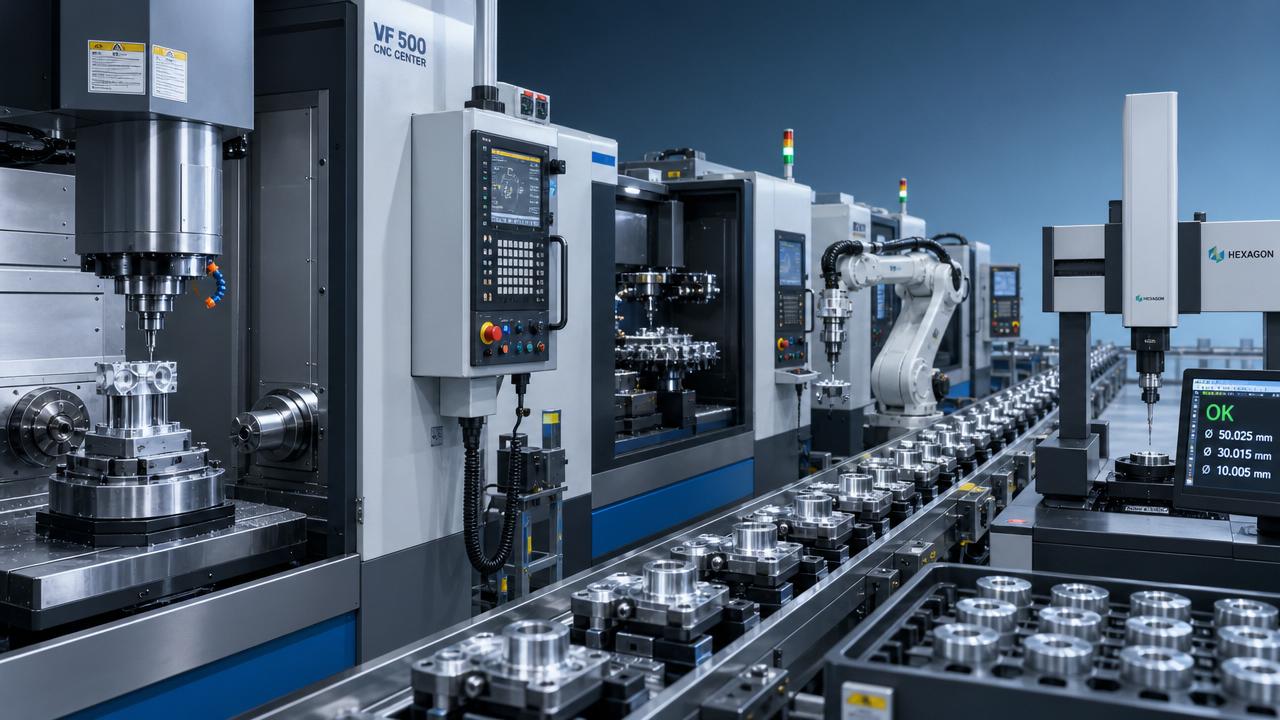
What changes first when an industrial CNC line is overloaded
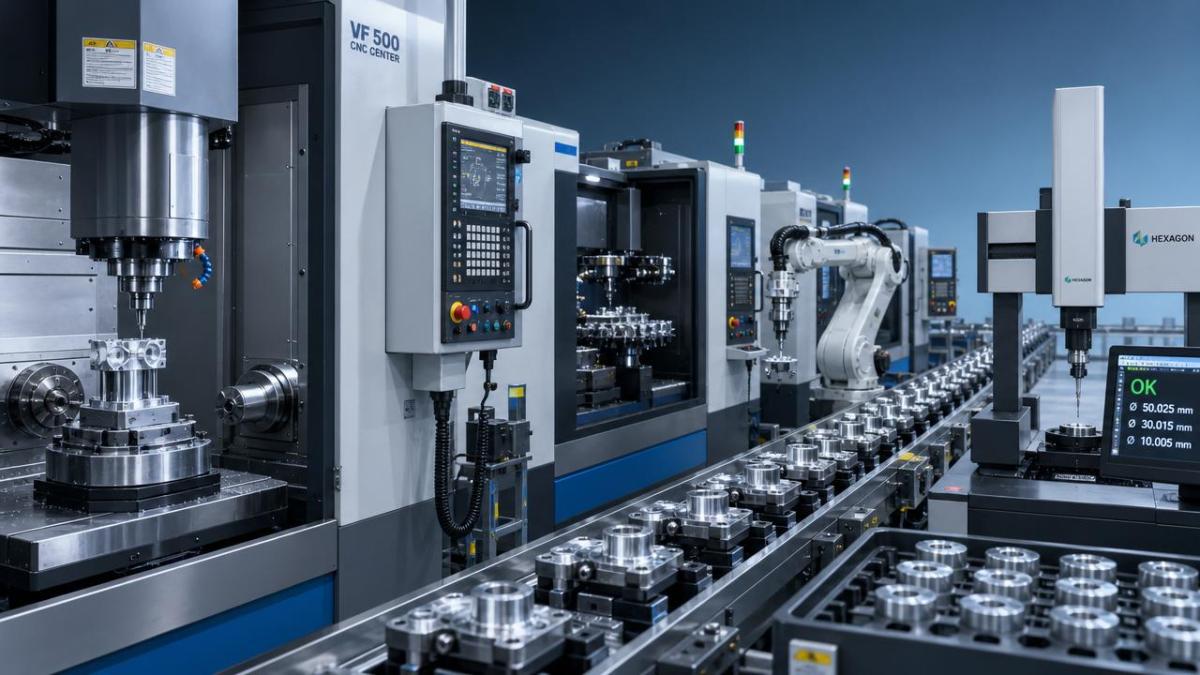
When an industrial CNC line is overloaded, the first visible change is usually not a dramatic machine stop. It is more often a slow shift in rhythm: longer cycle times, more frequent tool changes, unstable part quality, and delayed responses on the shop floor. In an industrial CNC environment, these early signals often appear hours or days before output drops enough to trigger alarms in production reports. Catching them early helps protect throughput, scrap rates, maintenance budgets, and delivery reliability.
This matters across the broader manufacturing sector because industrial CNC lines support automotive parts, aerospace components, energy equipment, electronics housings, shafts, discs, and precision structural parts. As automation and smart manufacturing expand, overload no longer affects a single machine alone. It can spread through fixtures, tooling, material flow, inspection capacity, robot handoff timing, and even ERP or MES scheduling assumptions. A practical way to control that risk is to use a clear, repeatable set of checks instead of relying on isolated symptoms.
Why a structured review is necessary
An overloaded industrial CNC line can still appear busy, productive, and technically “running.” That is exactly why overload is often missed in its early phase. Teams may see high spindle utilization and assume the line is healthy, while hidden losses build in micro-stoppages, rework, queue growth, and rushed operator interventions. A structured review creates a common way to separate healthy high utilization from damaging overload.
It also improves decision quality. Without a checklist, cycle time issues may be blamed on operators, quality drift may be blamed on material variation, and delivery delays may be blamed on planning. In reality, industrial CNC overload usually affects several connected variables at once. Reviewing them in order makes root causes easier to isolate and correct before they become expensive.
Core points to check first on an industrial CNC line
Use the following checks to identify what changes first when load exceeds the stable operating window of an industrial CNC system.
- Compare actual cycle time against standard cycle time by part family, shift, and machine. Small increases repeated across multiple stations are often the earliest overload signal.
- Track spindle load trends, feed hold events, and short pauses between operations. Rising machine hesitation often appears before an obvious breakdown or alarm condition.
- Review tool life consumption versus historical baseline. If inserts, drills, or end mills are being changed earlier, the industrial CNC line may be running beyond stable cutting conditions.
- Check dimensional variation across the first, middle, and last parts in a batch. Overload often shows up as gradual quality drift rather than immediate out-of-tolerance scrap.
- Measure queue buildup before and after bottleneck machines. Growing work-in-process means line balance is weakening even if total machine runtime still looks acceptable.
- Observe operator intervention frequency, including manual offset changes, extra deburring, chip clearing, and sensor resets. More touchpoints usually mean process stability is falling.
- Examine fixture clamping repeatability and part seating issues. Under overload, faster handling and accumulated contamination can reduce positioning consistency and affect accuracy.
- Review coolant condition, flow rate, and temperature stability. Industrial CNC performance often degrades when thermal control and chip evacuation no longer match production intensity.
- Check downstream inspection timing and backlog. If CMM, gauging, or visual checks fall behind, the line may continue producing defects faster than they are detected.
- Compare planned utilization with actual recoverable capacity, including setup time, maintenance windows, and changeovers. A line becomes overloaded when planning ignores real losses.
What usually changes first in practice
1. Cycle time stretches before output collapses
The first measurable change in an industrial CNC line is often a small cycle time increase. This may come from slower handling, conservative operator adjustments, chip removal delays, or automatic retries in probing and clamping. A few extra seconds per part can look harmless, but across a high-volume line it quickly removes available capacity and creates hidden backlog.
2. Tool wear accelerates and becomes less predictable
As machines are pushed harder, tools often wear faster and less uniformly. This is especially common in multi-axis machining, hard materials, deep cavity work, and long unattended runs. The result is not only higher tooling cost, but also more offset corrections, more frequent stoppages, and a greater chance of sudden quality loss.
3. Quality drift appears before scrap spikes
In many industrial CNC applications, overload first appears as widening process variation. Surface finish becomes less consistent, hole size shifts toward tolerance limits, or positional accuracy starts moving trendwise. If inspection frequency is too low, this drift may go unnoticed until a full batch requires sorting or rework.
4. Human response time becomes part of the constraint
Even highly automated lines depend on fast human decisions when abnormalities appear. Under overload, operators and technicians spend more time reacting to minor issues, which delays planned checks, tool changes, and preventive maintenance. The industrial CNC line then loses resilience because response capacity is already consumed.
How overload looks in different operating scenarios
High-mix, low-volume production
In a high-mix industrial CNC environment, overload often starts in setup and changeover rather than pure machining time. Frequent program swaps, fixture changes, and first-article approval delays consume capacity faster than planners expect. The key checks are setup duration, first-pass approval time, and tool preset readiness.
Here, line overload may be mistaken for scheduling complexity. The difference is whether delays remain isolated to changeovers or begin affecting stable runs of otherwise repeatable parts.
High-volume dedicated production
In dedicated lines, overload usually appears as small repeated losses: seconds added to loading, more frequent chip evacuation pauses, rising tool consumption, or inspection queues. Because takt expectations are strict, even minor instability causes downstream starvation or upstream accumulation very quickly.
The most useful checks are actual versus designed takt, mean time between interventions, and the ratio of runtime to truly good parts produced.
Precision parts with tight tolerances
For aerospace, energy, medical-adjacent, or advanced electronics components, overload often reveals itself through thermal effects and quality drift before any throughput issue becomes visible. Machines may still complete every cycle, but capability weakens as temperature, vibration, and tool edge condition move away from the validated process window.
Critical checks include coolant stability, spindle warm-up consistency, in-process gauging trends, and environmental variation around the industrial CNC cell.
Automated cells with robots and conveyors
In automated industrial CNC cells, overload often starts at the handoff points. Robot wait states, sensor confirmation delays, pallet transfer timing, and buffer logic become the first weak links. The machine itself may not be the initial bottleneck; the transfer system may be.
The priority here is to compare machine cycle time against total cell cycle time. If the gap keeps widening, overload is spreading through automation support functions rather than cutting alone.
Commonly overlooked warnings and risk points
One common mistake is treating high utilization as proof of efficiency. In industrial CNC operations, sustained operation near theoretical maximum often reduces actual good output because maintenance, verification, and recovery time disappear.
Another overlooked issue is inspection lag. If metrology cannot keep pace, the line may look productive while defects accumulate invisibly in work-in-process. This risk is especially serious for complex machined parts with expensive material value.
A third risk is assuming tool wear is only a tooling problem. In reality, abnormal wear can point to overload in feeds, chip evacuation, coolant delivery, fixture condition, or machine dynamic behavior. Replacing tools alone will not solve the underlying issue.
A further warning sign is the rise of informal workarounds. Extra manual cleaning, undocumented offset changes, temporary bypasses, and operator-created sequencing rules all suggest the industrial CNC line is no longer running within a stable standard process.
Practical steps to regain control
- Define overload using measurable triggers such as cycle time deviation, tool life drop, queue length, intervention count, and first-pass yield trend.
- Review bottleneck stations daily and separate cutting loss from handling, waiting, inspection, and recovery loss inside the same industrial CNC process.
- Protect preventive maintenance windows and calibration checks even during delivery pressure, because skipping them usually accelerates overload-related instability.
- Adjust scheduling to real available capacity, including setup time, quality confirmation, and tool management, instead of relying on ideal machine-hour assumptions.
- Use short feedback loops between machining, quality, maintenance, and automation support so that early overload signals are corrected before they spread.
FAQ about industrial CNC overload signals
Is machine downtime the best indicator of overload?
No. In most industrial CNC settings, overload begins while machines are still running. Cycle creep, tool wear, quality drift, and rising intervention frequency are earlier and more useful indicators.
Can a line be overloaded even if output targets are still met?
Yes. Short-term targets can be met by consuming maintenance margin, operator attention, and quality risk. That does not mean the industrial CNC line is operating sustainably.
What data should be checked first?
Start with actual cycle time, tool life, first-pass yield, queue length, intervention count, and inspection backlog. Together, these show whether overload is isolated or system-wide.
Summary and next action
What changes first when an industrial CNC line is overloaded is usually not dramatic failure, but subtle instability: cycle time expansion, earlier tool wear, quality drift, and slower response to small disturbances. These signals matter because they appear before output loss becomes obvious and before corrective action becomes expensive.
The most effective next step is to build a simple overload review around the checks above and apply it consistently by machine, part family, and shift. In the industrial CNC sector, better decisions often come not from more data, but from noticing the right changes early enough to act on them.
PREVIOUS ARTICLE
Recommended for You
![]() Five Ministries Launch Joint Enforcement on EV Battery RecyclingManufacturing Policy Research Center
Five Ministries Launch Joint Enforcement on EV Battery RecyclingManufacturing Policy Research Center![]() Top 10 Future Industries Roadmap 2026 ReleasedManufacturing Market Research Center
Top 10 Future Industries Roadmap 2026 ReleasedManufacturing Market Research Center![]() Global Methanol-Electric Ecosystem Alliance LaunchedManufacturing Market Research Center
Global Methanol-Electric Ecosystem Alliance LaunchedManufacturing Market Research Center![]() ISO 23218-3:2026 Enters Force: CNC Digital Twin Interoperability Standard Goes GlobalCNC Machining Technology Center
ISO 23218-3:2026 Enters Force: CNC Digital Twin Interoperability Standard Goes GlobalCNC Machining Technology Center![]() ANVISA New Rule: Portuguese Biocompatibility Labels for Medical CNC EquipmentManufacturing Policy Research Center
ANVISA New Rule: Portuguese Biocompatibility Labels for Medical CNC EquipmentManufacturing Policy Research Center![]() KATS Updates KC Certification: CNC Cybersecurity Modules Must Comply with IEC 62443-4-2Manufacturing Policy Research Center
KATS Updates KC Certification: CNC Cybersecurity Modules Must Comply with IEC 62443-4-2Manufacturing Policy Research Center


Aris Katos
Future of Carbide Coatings
15+ years in precision manufacturing systems. Specialized in high-speed milling and aerospace grade alloy processing.
▶
What makes an Automated Production Line harder to scale than expectedMachine Tool Industry Editorial Team▶
Is automated production worth it for short and variable runsMachine Tool Industry Editorial Team▶
What changes first when an industrial CNC line is overloadedMachine Tool Industry Editorial Team▶
Automated Production Line upgrades that reduce rework firstMachine Tool Industry Editorial Team▶
Is automated production worth adding to a mixed workshopMachine Tool Industry Editorial Team
Mastering 5-Axis Workholding Strategies
Join our technical panel on Nov 15th to learn about reducing vibrations in thin-wall components.

Providing you with integrated sanding solutions
Before-sales and after-sales services
Comprehensive technical support