• Global CNC market projected to reach $128B by 2028 • New EU trade regulations for precision tooling components • Aerospace deman
NYSE: CNC +1.2%LME: STEEL -0.4%

What makes an Automated Production Line harder to scale than expected
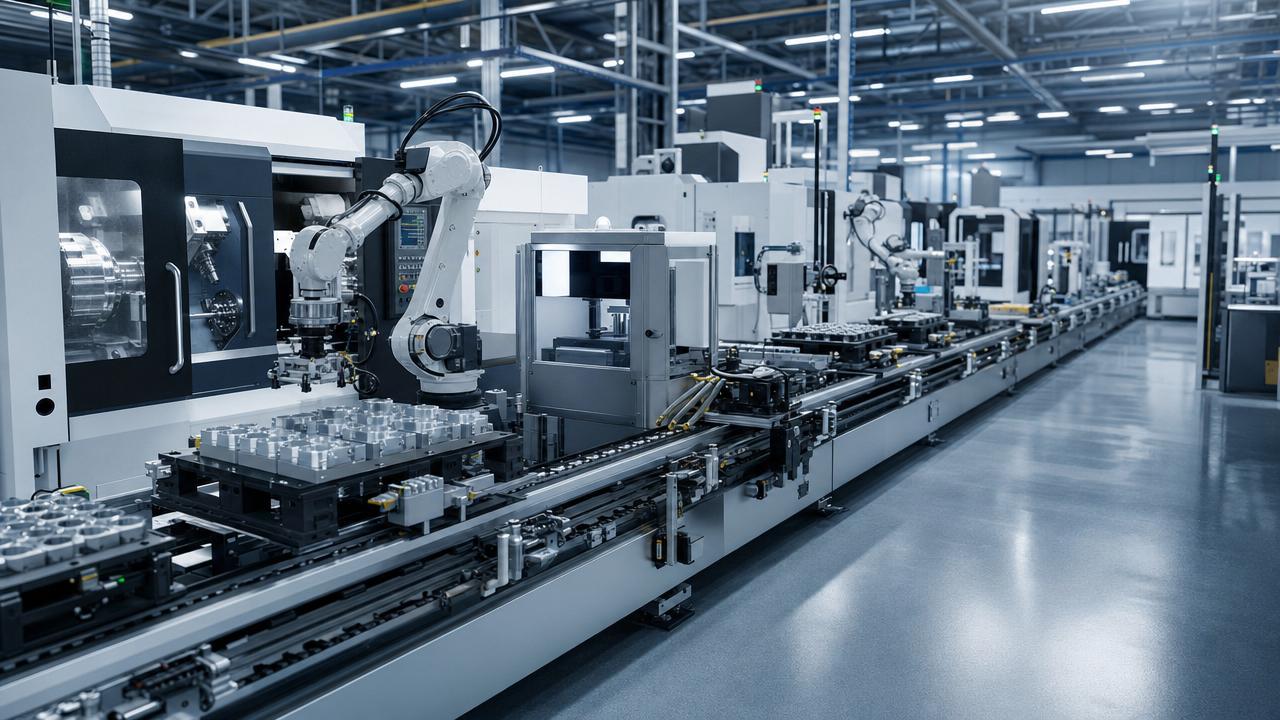
Scaling an Automated Production Line often appears to be a simple matter of adding machines, increasing takt speed, or extending shifts. In practice, growth is usually constrained by far more than floor space or machine count. In CNC machining, precision assembly, and integrated manufacturing environments, expansion exposes hidden dependencies in process flow, maintenance discipline, tooling life, software architecture, material handling, and operator capability. When these dependencies are underestimated, an Automated Production Line becomes harder to scale than expected, even when demand is strong and capital investment is available.
This challenge is especially visible across modern manufacturing sectors such as automotive parts, aerospace components, electronics, and energy equipment, where quality tolerance, traceability, and throughput must improve at the same time. A scalable Automated Production Line is not only a set of connected assets; it is a tightly coordinated production system that must remain stable under higher volume, greater product mix, and stricter data requirements. Understanding the real barriers behind scale is essential for controlling cost, protecting output quality, and building a production model that can grow sustainably.
Definition and operating logic of an Automated Production Line
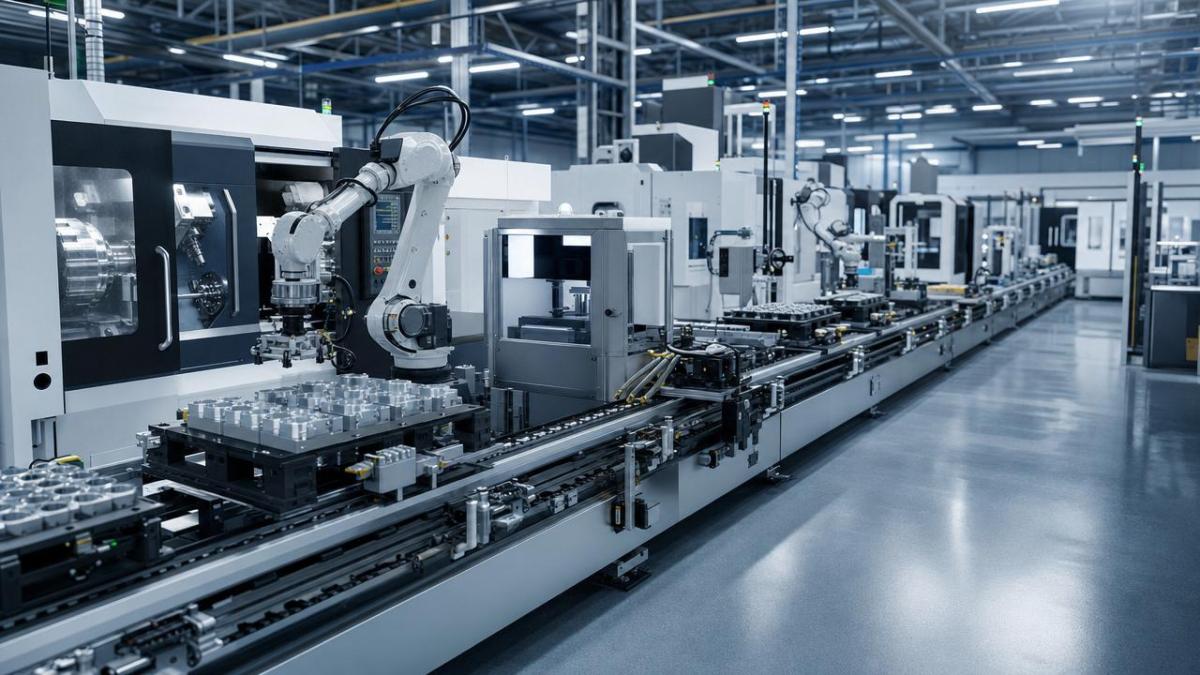
An Automated Production Line is a coordinated manufacturing system in which machines, handling devices, tooling, controls, inspection stations, and software operate as a linked sequence to produce parts or assemblies with limited manual intervention. In the CNC machine tool industry, this may include lathes, machining centers, robotic loaders, conveyors, pallet systems, in-line gauging, tool monitoring, and manufacturing execution software.
At a small or pilot scale, the line may perform well because variability is still manageable. Material batches are easier to supervise, maintenance can be handled informally, and experienced technicians can solve interruptions quickly. However, scale changes the operating logic. A line that runs steadily at one output level may become unstable when cycle-time balance tightens, data traffic increases, or upstream and downstream equipment begin to amplify minor delays.
This is why many expansion plans underestimate the difference between automation and scalable automation. The first proves that the process can run automatically. The second proves that the process can run automatically, repeatedly, and economically under heavier production pressure.
Why scaling becomes more difficult as production expands
The main reason an Automated Production Line becomes harder to scale is that every added unit of capacity increases system interaction, not just output. A single CNC machine can often be optimized in isolation. A connected line cannot. Once processes are linked, one small weakness can affect the entire chain, reducing the value of new equipment investment.
Several scaling barriers appear repeatedly across precision manufacturing environments:
- Cycle-time imbalance: One station running slightly slower than planned can create queue buildup, starvation, or stop-and-go operation.
- Process variation: Tool wear, fixture shift, thermal drift, and raw material differences become more visible at higher volume.
- Maintenance load: More machines increase preventive maintenance complexity and unplanned downtime risk.
- Data fragmentation: PLCs, CNC controls, robots, MES, and quality systems may not share clean, usable data.
- Material flow stress: AGVs, conveyors, pallets, bins, and staging areas often become bottlenecks before machining capacity does.
- Skill dependence: Automated systems still require trained people for setup, recovery, diagnostics, and process improvement.
As output rises, tolerance for delay shrinks. A five-minute interruption that seemed minor in a low-volume setup can become a major daily capacity loss in a high-throughput Automated Production Line. This is one reason scaling plans based only on nominal machine hours often fail to match real production results.
Current industry signals shaping Automated Production Line expansion
Across the global machine tool and precision manufacturing sector, investment in automation continues to rise, but so does the complexity of deployment. Higher labor costs, shorter product life cycles, and stronger traceability demands are pushing factories toward smarter and more flexible systems. At the same time, many facilities are trying to scale legacy equipment together with new digital platforms, which creates integration challenges.
These signals explain why expansion decisions in CNC machining and automated manufacturing now require broader system thinking. Capacity is no longer a simple count of spindles or robots. It depends on how well the entire Automated Production Line absorbs variation while maintaining quality and flow.
Business value at risk when scale is poorly managed
When scaling problems are not addressed early, the business impact reaches beyond output loss. Poorly managed expansion can increase scrap, rework, overtime, spare-parts usage, and production scheduling instability. It can also weaken delivery performance, which matters in sectors where late supply disrupts final assembly or customer contracts.
A stable Automated Production Line supports several forms of business value:
- More predictable unit cost as volume grows
- Better utilization of CNC machines, robots, and fixtures
- Lower quality escapes through integrated inspection and traceability
- Shorter response time to market demand shifts
- Stronger confidence in future automation investment decisions
By contrast, an unstable line can consume engineering time without delivering true capacity. This is why scaling should be evaluated as a profitability issue, not only an engineering project. If each expansion stage introduces disproportionate downtime or complexity, the return on automation declines rapidly.
Typical scaling pressure points across manufacturing scenarios
Different industries experience scaling pressure in different ways, but certain patterns are consistent. The table below highlights common scenarios in which an Automated Production Line can become difficult to expand.
In each case, the technical issue is only part of the problem. The broader challenge is coordinating machines, operators, quality data, logistics, and planning rules so the Automated Production Line performs reliably under changing demand.
Practical methods to improve scalability before expansion
A more scalable Automated Production Line is usually designed through disciplined preparation rather than reactive correction. Before adding new equipment or extending capacity, it is useful to test whether the current line is stable enough to absorb growth.
1. Map the real bottleneck, not the assumed one
Nominal cycle time rarely tells the full story. Review downtime patterns, waiting time, tool-change frequency, inspection delays, and material replenishment intervals. The true constraint may sit outside the main machining process.
2. Build process stability before adding speed
If variation is already high, more volume will magnify defects and interruptions. Focus first on fixture repeatability, tool-life control, program consistency, preventive maintenance, and standardized recovery procedures.
3. Treat data integration as production infrastructure
A scalable line needs usable data from CNC systems, robots, sensors, quality stations, and planning software. Without a common structure for alarms, cycle reporting, and traceability, diagnosing scale-related losses becomes slow and expensive.
4. Design for maintainability and recovery
As the Automated Production Line expands, failure recovery time matters almost as much as failure frequency. Spare parts access, modular station design, clear diagnostics, and documented restart logic can protect uptime.
5. Validate labor capability alongside automation capability
Even highly automated systems depend on people who can set up, troubleshoot, inspect, and improve them. Training should cover process understanding, not only equipment operation.
Implementation priorities for the next scaling stage
Before the next investment decision, it is practical to review the Automated Production Line using a structured checklist. Confirm whether the line has stable first-pass yield, measurable bottleneck data, clear downtime categories, reliable tooling strategy, and interoperable production information. Expansion should then be staged in phases, with each phase validated against throughput, quality, and recovery targets rather than equipment installation alone.
In modern CNC and precision manufacturing, the ability to scale is a competitive capability in its own right. The most effective Automated Production Line is not the one with the most machines, but the one that sustains flow, accuracy, and control as demand increases. A careful review of process balance, data architecture, material movement, and operational discipline can turn expansion from a risky cost center into a durable growth platform.
The next step is to assess current line stability with real production data, identify the limiting interaction points, and prioritize upgrades that improve system coordination before adding raw capacity. That approach creates a stronger foundation for any future Automated Production Line expansion.
PREVIOUS ARTICLE
NEXT ARTICLE
Recommended for You
![]() Five Ministries Launch Joint Enforcement on EV Battery RecyclingManufacturing Policy Research Center
Five Ministries Launch Joint Enforcement on EV Battery RecyclingManufacturing Policy Research Center![]() Top 10 Future Industries Roadmap 2026 ReleasedManufacturing Market Research Center
Top 10 Future Industries Roadmap 2026 ReleasedManufacturing Market Research Center![]() Global Methanol-Electric Ecosystem Alliance LaunchedManufacturing Market Research Center
Global Methanol-Electric Ecosystem Alliance LaunchedManufacturing Market Research Center![]() ISO 23218-3:2026 Enters Force: CNC Digital Twin Interoperability Standard Goes GlobalCNC Machining Technology Center
ISO 23218-3:2026 Enters Force: CNC Digital Twin Interoperability Standard Goes GlobalCNC Machining Technology Center![]() ANVISA New Rule: Portuguese Biocompatibility Labels for Medical CNC EquipmentManufacturing Policy Research Center
ANVISA New Rule: Portuguese Biocompatibility Labels for Medical CNC EquipmentManufacturing Policy Research Center![]() KATS Updates KC Certification: CNC Cybersecurity Modules Must Comply with IEC 62443-4-2Manufacturing Policy Research Center
KATS Updates KC Certification: CNC Cybersecurity Modules Must Comply with IEC 62443-4-2Manufacturing Policy Research Center


Aris Katos
Future of Carbide Coatings
15+ years in precision manufacturing systems. Specialized in high-speed milling and aerospace grade alloy processing.
▶
What makes an Automated Production Line harder to scale than expectedMachine Tool Industry Editorial Team▶
Is automated production worth it for short and variable runsMachine Tool Industry Editorial Team▶
What changes first when an industrial CNC line is overloadedMachine Tool Industry Editorial Team▶
Automated Production Line upgrades that reduce rework firstMachine Tool Industry Editorial Team▶
Is automated production worth adding to a mixed workshopMachine Tool Industry Editorial Team
Mastering 5-Axis Workholding Strategies
Join our technical panel on Nov 15th to learn about reducing vibrations in thin-wall components.

Providing you with integrated sanding solutions
Before-sales and after-sales services
Comprehensive technical support