• Global CNC market projected to reach $128B by 2028 • New EU trade regulations for precision tooling components • Aerospace deman
NYSE: CNC +1.2%LME: STEEL -0.4%

Is automated production worth it for short and variable runs
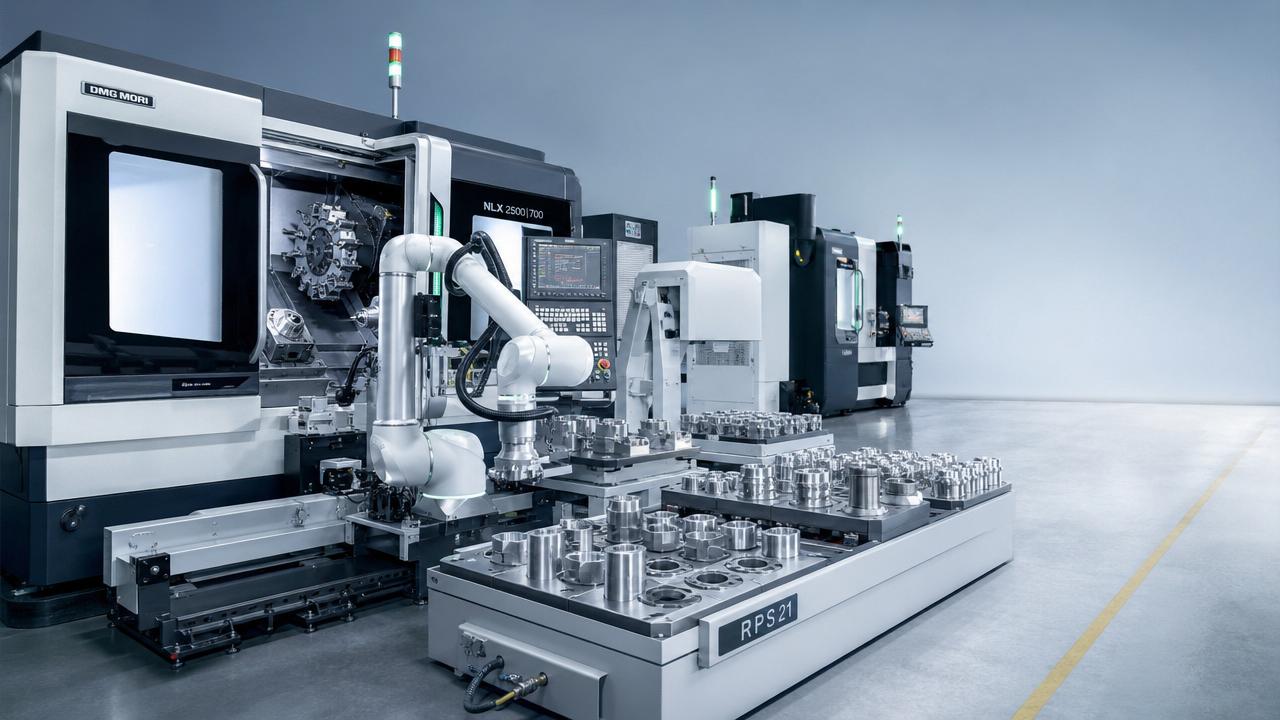
For manufacturers handling short and variable runs, the value of automated production is no longer measured by volume alone. Faster changeovers, consistent quality, labor flexibility, and real-time process control are making automation a strategic advantage even in mixed production environments. For business decision-makers, the key question is not simply whether to automate, but how to align investment with product complexity, capacity goals, and long-term competitiveness.
Why automated production is gaining ground beyond high-volume manufacturing
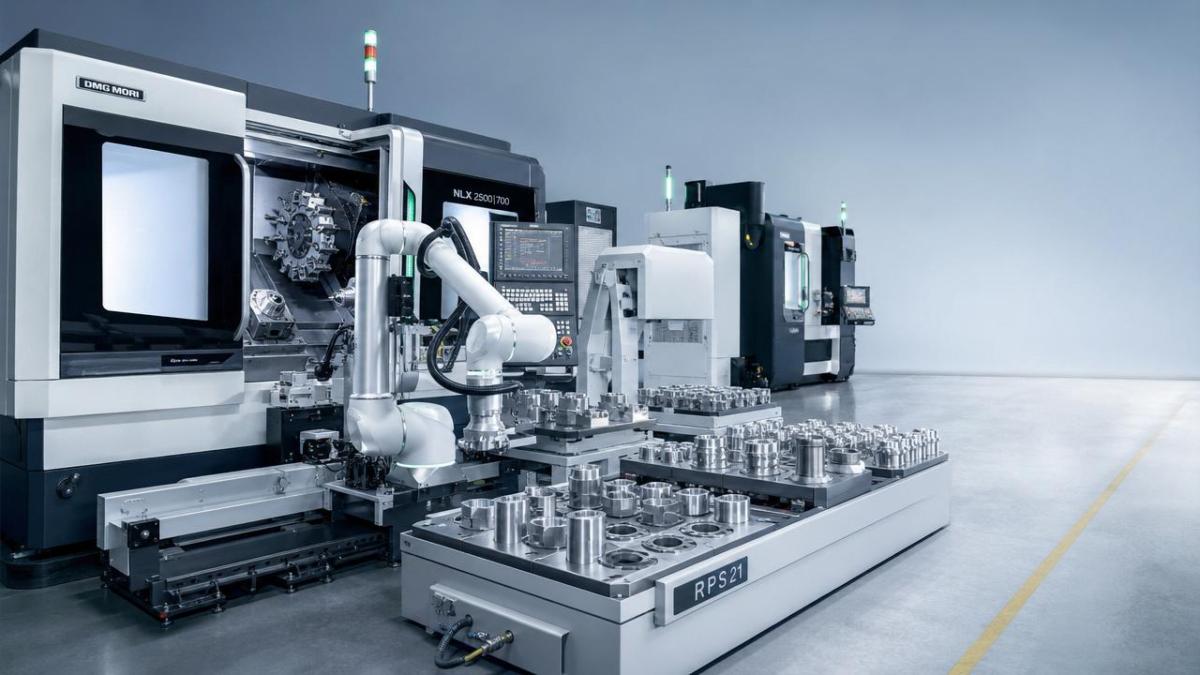
For years, automated production was closely associated with long production runs, predictable demand, and standardized parts. That assumption is changing across the CNC machine tool industry and the wider manufacturing sector. In automotive components, aerospace subassemblies, energy equipment, electronics housings, and precision metal parts, production schedules are becoming more fragmented. Product variants are increasing, order quantities are shrinking, and delivery windows are tightening. Under these conditions, automated production is being evaluated not as a luxury for mass output, but as a tool for resilience, repeatability, and operating speed.
This shift is especially visible in CNC machining, where machine utilization often suffers from manual loading, inconsistent setups, operator shortages, and variation between batches. When short and variable runs dominate the order mix, every minute of setup, every scrap part, and every unplanned stop affects profitability. Automated production, supported by robots, pallet systems, tool monitoring, digital scheduling, and flexible fixturing, can reduce these hidden losses even when annual volumes are modest.
The real debate is not whether automated production works in theory, but whether the production environment has enough repeatable process elements to justify investment. In many cases, the answer is yes, especially when complexity, quality demands, and labor constraints are rising at the same time.
The strongest trend signals now point to flexible automation, not rigid lines
A clear trend across global precision manufacturing is the move from fixed, single-purpose automation toward modular automated production. Instead of designing an entire line around one stable part family, many facilities are introducing automation in layers: robot loading on CNC lathes, pallet pools for machining centers, automatic tool presetting, in-process gauging, and software that connects planning with machine status. This approach lowers risk while improving throughput.
Another signal is the growing importance of digital integration. Automated production is no longer just a mechanical upgrade. It increasingly depends on machine connectivity, tooling data, process traceability, and production feedback. When batch sizes are small, the ability to switch quickly and verify quality in real time becomes more valuable than pure speed. As a result, the most competitive factories are not always the ones with the most robots, but the ones that combine automation with decision-ready data.
This trend matters because short-run production rewards flexibility. If an automated production system can support multiple fixtures, unattended machining windows, and reliable part identification, it may outperform manual methods even when the schedule changes every day.
What is driving the move toward automated production in short and variable runs
Several forces are pushing automated production into areas once considered unsuitable for automation. These drivers are operational, financial, and strategic rather than purely technological.
In the CNC machine tool sector, these drivers are amplified by the cost of idle equipment. A high-performance machining center or multi-axis turning system only delivers value when cutting time is maximized. Automated production helps close the gap between installed machine capacity and actual productive output.
Where automated production creates value even when batch sizes stay small
The business case for automated production in short and variable runs often comes from indirect gains rather than headline labor savings alone. In mixed production, the most important advantages usually appear across several linked areas.
- Higher machine utilization through automatic loading, pallet exchange, and lights-out operation for repeatable jobs.
- More stable quality because part handling, cycle timing, and tool management become less dependent on individual variation.
- Faster and more predictable changeovers when fixtures, programs, and job data are standardized.
- Better labor allocation, allowing skilled personnel to focus on setup strategy, programming, quality control, and process improvement.
- Improved scheduling visibility through connected systems that show machine status, queue priority, and job completion progress.
These benefits matter across industries. In aerospace, automated production can support traceable, repeatable machining of complex low-volume parts. In energy equipment, it helps manage oversized or precision-critical components with fewer process disruptions. In electronics and industrial hardware, it improves consistency across frequent design updates. Even when no single product runs continuously, the production system itself becomes more stable.
The limits are real: automated production does not pay off in every short-run scenario
Despite the momentum behind automated production, not every operation is ready for it. If part variation is extreme, fixturing is unstable, engineering data is incomplete, or process capability is still inconsistent, automation may simply expose problems faster. In these conditions, the issue is not the technology but the lack of standardized foundations.
A common mistake is to evaluate automated production only by comparing headcount before and after installation. That method is too narrow for short and variable runs. A better assessment includes setup time, scrap reduction, overnight capacity, delivery performance, and the ability to absorb demand volatility without adding shifts. It is also important to consider whether the cell can be reconfigured for future parts. Flexible automation creates options; rigid automation can create stranded cost.
Another limit is organizational readiness. Successful automated production depends on programming discipline, tooling control, preventive maintenance, and accurate production data. Without those elements, return on investment becomes slower and less predictable.
What deserves the closest attention before making an automation decision
Before investing in automated production, several practical questions should be answered with evidence rather than assumptions.
- Process repeatability: Are cycle times, tool life, and part loading methods stable enough to automate?
- Part family potential: Can multiple components share fixtures, grippers, pallets, or machine platforms?
- Changeover discipline: Are setup instructions, offsets, and job data standardized and documented?
- Digital visibility: Can machine status, queue logic, and quality checkpoints be monitored in real time?
- Capacity objective: Is the goal labor relief, output growth, lead-time reduction, or quality stability?
- Scalability: Can the automated production cell expand as product mix and demand evolve?
These questions help separate attractive automation concepts from economically sound automated production strategies. In the CNC field, a small but well-integrated automation project often produces stronger results than a larger system chosen mainly for appearance or trend alignment.
A practical path forward: how to judge whether automated production is worth it
The most reliable way to evaluate automated production for short and variable runs is to start with a focused use case. Select a machine group with recurring setup patterns, measurable downtime, and clear quality requirements. Map the current process, identify where manual intervention limits throughput, and calculate the value of extra spindle hours, lower scrap, and more stable delivery. This creates a more realistic financial model than using labor reduction alone.
In many operations, automated production is worth it not because every job is large, but because variability itself has become expensive. When handled correctly, automation reduces the cost of unpredictability. It improves uptime, supports precision, and creates a stronger platform for future growth in an increasingly complex manufacturing environment.
The next step is to review one production area where recurring interruptions, high mix, or labor bottlenecks are already limiting results. If that area shows stable part families and clear process data, it may be the ideal starting point for automated production that is practical, flexible, and commercially justified.
Recommended for You
![]() Five Ministries Launch Joint Enforcement on EV Battery RecyclingManufacturing Policy Research Center
Five Ministries Launch Joint Enforcement on EV Battery RecyclingManufacturing Policy Research Center![]() Top 10 Future Industries Roadmap 2026 ReleasedManufacturing Market Research Center
Top 10 Future Industries Roadmap 2026 ReleasedManufacturing Market Research Center![]() Global Methanol-Electric Ecosystem Alliance LaunchedManufacturing Market Research Center
Global Methanol-Electric Ecosystem Alliance LaunchedManufacturing Market Research Center![]() ISO 23218-3:2026 Enters Force: CNC Digital Twin Interoperability Standard Goes GlobalCNC Machining Technology Center
ISO 23218-3:2026 Enters Force: CNC Digital Twin Interoperability Standard Goes GlobalCNC Machining Technology Center![]() ANVISA New Rule: Portuguese Biocompatibility Labels for Medical CNC EquipmentManufacturing Policy Research Center
ANVISA New Rule: Portuguese Biocompatibility Labels for Medical CNC EquipmentManufacturing Policy Research Center![]() KATS Updates KC Certification: CNC Cybersecurity Modules Must Comply with IEC 62443-4-2Manufacturing Policy Research Center
KATS Updates KC Certification: CNC Cybersecurity Modules Must Comply with IEC 62443-4-2Manufacturing Policy Research Center


Aris Katos
Future of Carbide Coatings
15+ years in precision manufacturing systems. Specialized in high-speed milling and aerospace grade alloy processing.
▶
What makes an Automated Production Line harder to scale than expectedMachine Tool Industry Editorial Team▶
Is automated production worth it for short and variable runsMachine Tool Industry Editorial Team▶
What changes first when an industrial CNC line is overloadedMachine Tool Industry Editorial Team▶
Automated Production Line upgrades that reduce rework firstMachine Tool Industry Editorial Team▶
Is automated production worth adding to a mixed workshopMachine Tool Industry Editorial Team
Mastering 5-Axis Workholding Strategies
Join our technical panel on Nov 15th to learn about reducing vibrations in thin-wall components.

Providing you with integrated sanding solutions
Before-sales and after-sales services
Comprehensive technical support