• Global CNC market projected to reach $128B by 2028 • New EU trade regulations for precision tooling components • Aerospace deman
NYSE: CNC +1.2%LME: STEEL -0.4%

Why Industrial Robotics is changing factory ROI
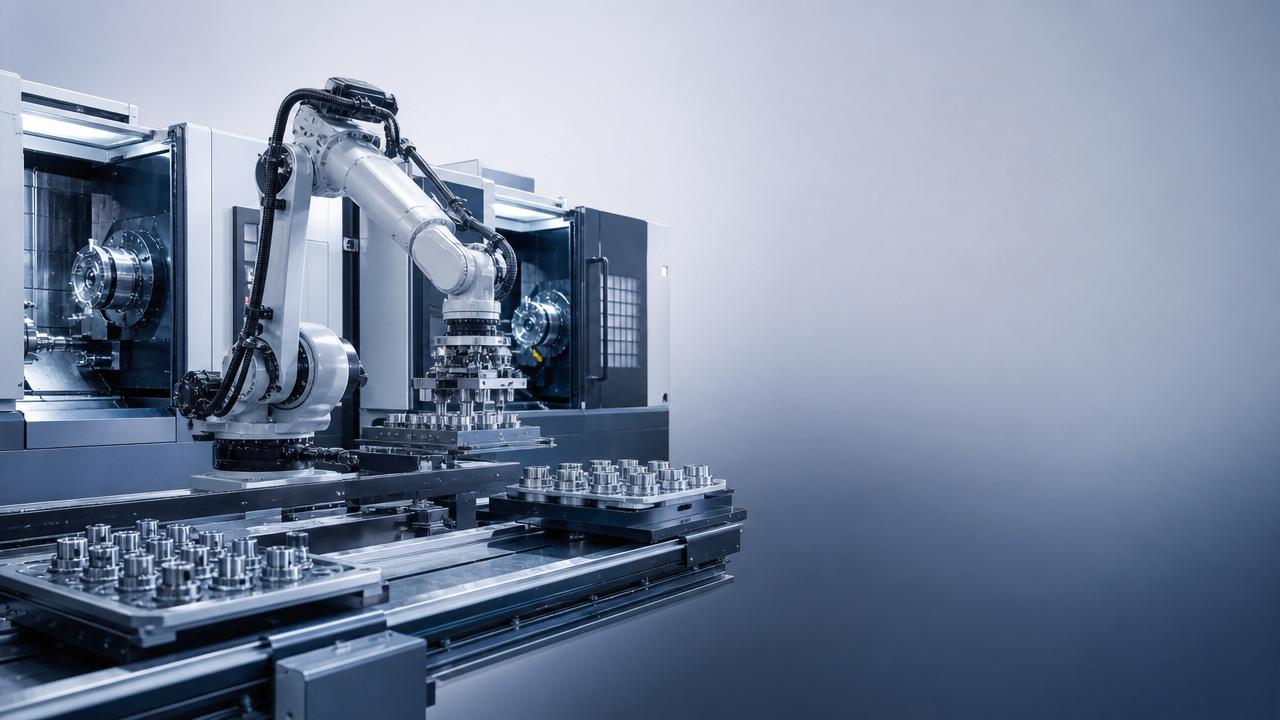
Industrial Robotics is reshaping how factories calculate value. What was once viewed as expensive automation is now a measurable driver of productivity, precision, and resilience.
In CNC machining, precision assembly, and mixed production environments, Industrial Robotics improves output without sacrificing consistency. It also supports smarter use of labor, machines, and floor space.
As global manufacturing moves toward digital integration, the real question is no longer whether robots matter. The practical question is how Industrial Robotics changes factory ROI in daily operations.
What does Industrial Robotics mean for factory ROI today?
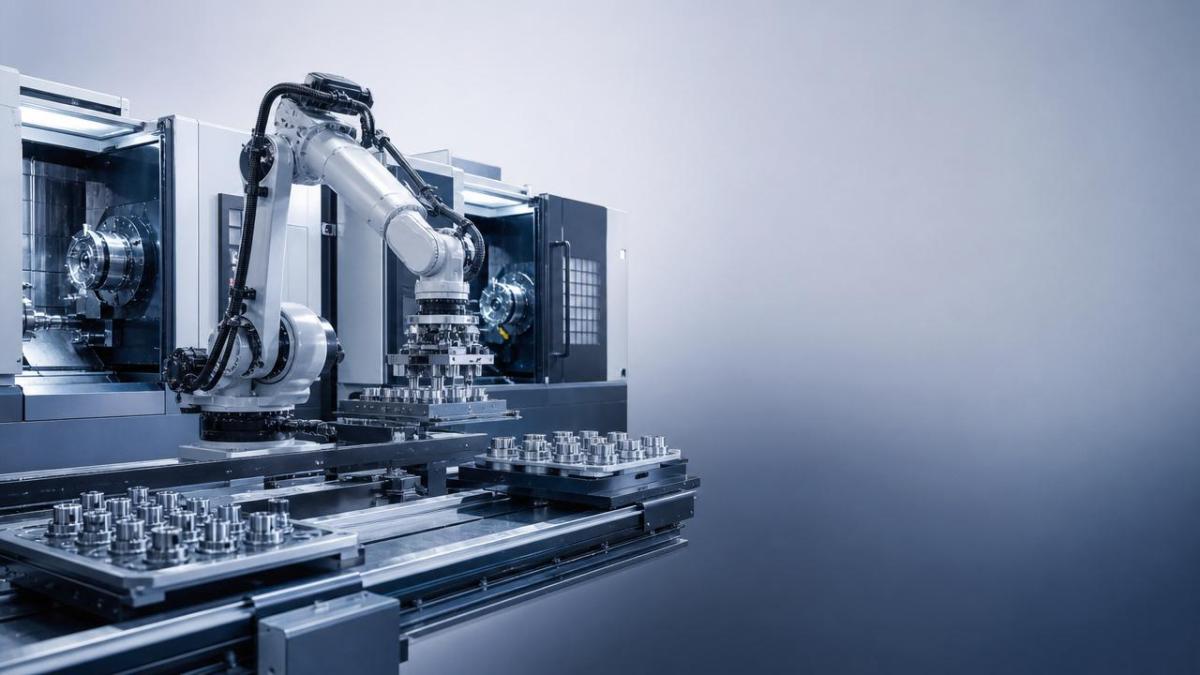
Factory ROI is no longer measured only by equipment payback. It now includes uptime, quality stability, changeover speed, data visibility, and the ability to respond to volatile demand.
Industrial Robotics affects all of these areas. Robots reduce idle time, improve repeatability, and support unattended production in machining, handling, welding, inspection, and packaging.
In CNC machine tool operations, robots often load and unload parts, transfer workpieces, and support pallet systems. This raises spindle utilization, which directly improves revenue from existing assets.
ROI also improves because robotic systems help standardize production. Less variation means fewer defects, less rework, and lower scrap costs across automotive, aerospace, electronics, and energy applications.
Another shift is strategic flexibility. Industrial Robotics allows production cells to run multiple part types with faster reconfiguration, helping factories adapt without major line redesign.
How does Industrial Robotics increase output without simply adding more machines?
Many facilities first think about expansion through new CNC machines. However, output bottlenecks often come from labor-dependent loading, slow transfer, manual inspection, or inconsistent material flow.
Industrial Robotics addresses these hidden constraints. A robot can keep machines fed continuously, reduce waiting time between cycles, and maintain a predictable rhythm across shifts.
This matters especially in high-mix, medium-volume production. Even strong machining capacity loses value if parts wait in queues or operators must divide attention across several machines.
Typical productivity gains come from several sources
- Shorter machine idle time between machining cycles
- Longer lights-out or low-supervision production hours
- Faster part handling and more stable takt time
- Lower interruption from manual fatigue or shift variability
- Better synchronization with conveyors, sensors, and MES systems
The result is not just more parts per day. Industrial Robotics often enables more sellable parts per machine hour, which is a stronger ROI indicator.
For precision manufacturing, this is critical. Every gain in spindle uptime or throughput improves the value generated by expensive machine tool investments.
Why does Industrial Robotics often improve quality and cost at the same time?
Quality and cost are often treated as trade-offs. In practice, Industrial Robotics can improve both because consistent motion reduces process variation.
Robotic handling protects delicate surfaces, maintains exact placement, and supports repeatable orientation for machining, welding, deburring, polishing, and inspection tasks.
In CNC production, poor loading consistency can create alignment issues, secondary defects, or downstream assembly problems. Robots reduce these avoidable quality losses.
Industrial Robotics also supports traceability. Integrated sensors and software can record cycle data, alarms, and handling status, making root-cause analysis much faster.
That improves ROI beyond labor savings. Fewer defects mean lower warranty exposure, better customer confidence, and more stable scheduling across the factory.
Where cost reductions usually appear
- Reduced scrap and rework
- Lower fixture damage from manual mishandling
- Less overtime pressure during peak demand
- More stable preventive maintenance scheduling
- Lower cost per finished part over time
Which applications see the strongest ROI from Industrial Robotics?
Not every process delivers the same payback speed. The strongest ROI often appears where tasks are repetitive, precision-sensitive, labor-intensive, or linked to machine waiting time.
In the broader manufacturing sector, Industrial Robotics performs well in machine tending, pick-and-place, palletizing, welding, assembly, inspection, and material transfer.
For the CNC machine tool industry, machine tending remains one of the clearest opportunities. A single robot can support several machines when workflow is planned correctly.
Multi-axis machining centers also benefit when robotic systems integrate with pallets, vision, or tool management. This reduces delays and supports flexible production scheduling.
What should be evaluated before investing in Industrial Robotics?
A common mistake is focusing only on robot price. Real ROI depends on process fit, integration quality, part flow, programming approach, safety design, and future scalability.
Industrial Robotics delivers the best return when linked to a clear production problem. That problem may be low utilization, quality instability, labor shortage, or inconsistent throughput.
Key evaluation questions
- Is the target process repetitive enough for automation?
- What is the current machine idle percentage?
- How many part variants must the robotic cell handle?
- Can upstream and downstream flow support the robot?
- How will maintenance, training, and programming be managed?
Integration with existing CNC machines matters greatly. Signal compatibility, fixture design, guarding, and communication with production software all affect startup success.
It is also wise to compare direct ROI and strategic ROI. Direct ROI includes labor and throughput. Strategic ROI includes flexibility, data visibility, and stronger delivery performance.
What risks and misconceptions can reduce Industrial Robotics ROI?
Industrial Robotics is not a guaranteed success without process discipline. Poor planning can create bottlenecks, underused cells, or complex systems that are difficult to maintain.
One misconception is that robots replace every manual task effectively. Some low-volume or highly variable jobs still need hybrid workflows rather than full automation.
Another mistake is underestimating changeover design. If end effectors, fixtures, or part presentation are poorly planned, flexibility drops and downtime increases.
Training is often overlooked. Even advanced Industrial Robotics systems need operators and technicians who understand recovery, routine maintenance, and basic optimization.
How should the next step with Industrial Robotics be planned?
The best starting point is a focused pilot. Choose one process with measurable waste, clear cycle data, and a realistic path to integration with current equipment.
In many factories, that first step is robotic machine tending around CNC lathes or machining centers. The workflow is visible, the bottlenecks are known, and gains can be tracked quickly.
Set baseline metrics before deployment. Measure cycle time, idle time, scrap rate, changeover time, labor allocation, and output per shift.
Then compare post-installation performance over several months. This produces a realistic ROI model and shows where Industrial Robotics can scale across other lines.
Industrial Robotics is changing factory ROI because it upgrades not only labor efficiency, but also machine value, process reliability, and production agility.
For precision manufacturing and the global CNC machine tool sector, the strongest results come from matching robotics to real constraints, then expanding with disciplined data and integration planning.
A careful pilot, a clear metric framework, and scalable cell design turn Industrial Robotics from a technology trend into a durable competitive advantage.
NEXT ARTICLE
Recommended for You
![]() Vietnam Suspends CNC Equipment Import Licenses Amid New Tech RulesManufacturing Policy Research Center
Vietnam Suspends CNC Equipment Import Licenses Amid New Tech RulesManufacturing Policy Research Center![]() First Global CNC Machine Carbon Footprint Guide ReleasedManufacturing Policy Research Center
First Global CNC Machine Carbon Footprint Guide ReleasedManufacturing Policy Research Center![]() Japan METI Launches CNC Green Upgrade SubsidyManufacturing Market Research Center
Japan METI Launches CNC Green Upgrade SubsidyManufacturing Market Research Center![]() Brazil INMETRO Mandates IoT Modules for CNC Lathes from July 2026Manufacturing Policy Research Center
Brazil INMETRO Mandates IoT Modules for CNC Lathes from July 2026Manufacturing Policy Research Center![]() EU Launches Anti-Subsidy Investigation on Chinese Laser Cutting Heads and High-Power Fiber LasersManufacturing Policy Research Center
EU Launches Anti-Subsidy Investigation on Chinese Laser Cutting Heads and High-Power Fiber LasersManufacturing Policy Research Center![]() Red Sea Crisis Deepens: Suez Canal CNC Ship Delays Hit 11.4 DaysGlobal Machine Tool Trade Research Center
Red Sea Crisis Deepens: Suez Canal CNC Ship Delays Hit 11.4 DaysGlobal Machine Tool Trade Research Center


Aris Katos
Future of Carbide Coatings
15+ years in precision manufacturing systems. Specialized in high-speed milling and aerospace grade alloy processing.
▶
How to judge if an Automated Production Line fits your plantMachine Tool Industry Editorial Team▶
Industrial Robotics can raise output, but where is the risk?Machine Tool Industry Editorial Team▶
How to judge if an Automated Production Line will pay offMachine Tool Industry Editorial Team▶
How Industrial Robotics is changing factory ROI in 2026Machine Tool Industry Editorial Team▶
Hainan Sanya AI Tech Conference Launches, Embodied AI Production Lines Accelerate Global DeploymentMachine Tool Industry Editorial Team
Mastering 5-Axis Workholding Strategies
Join our technical panel on Nov 15th to learn about reducing vibrations in thin-wall components.

Providing you with integrated sanding solutions
Before-sales and after-sales services
Comprehensive technical support