• Global CNC market projected to reach $128B by 2028 • New EU trade regulations for precision tooling components • Aerospace deman
NYSE: CNC +1.2%LME: STEEL -0.4%

Automated lathe problems that quietly reduce part consistency
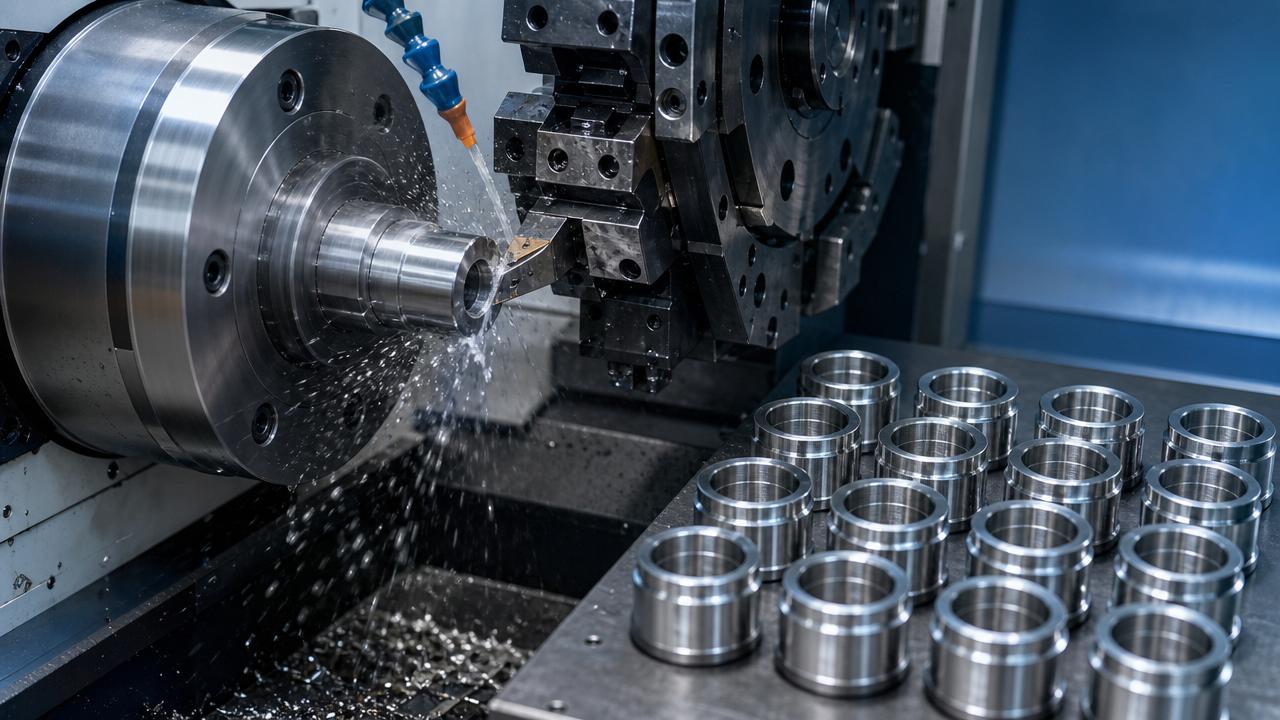
Even a well-programmed automated lathe can introduce small, overlooked issues that slowly erode part consistency, raise inspection failures, and create hidden safety risks. For stable CNC production, the problem is rarely a single dramatic breakdown. More often, an automated lathe begins to drift through minor variations in tool wear, thermal behavior, clamping force, lubrication, chip evacuation, or sensor reliability. These quiet changes can affect surface finish, dimensional repeatability, concentricity, and cycle stability long before alarms appear. In precision manufacturing, finding and correcting these weak signals early is essential for reducing scrap, protecting process capability, and keeping automated machining systems predictable at scale.
Understanding how an automated lathe loses consistency over time
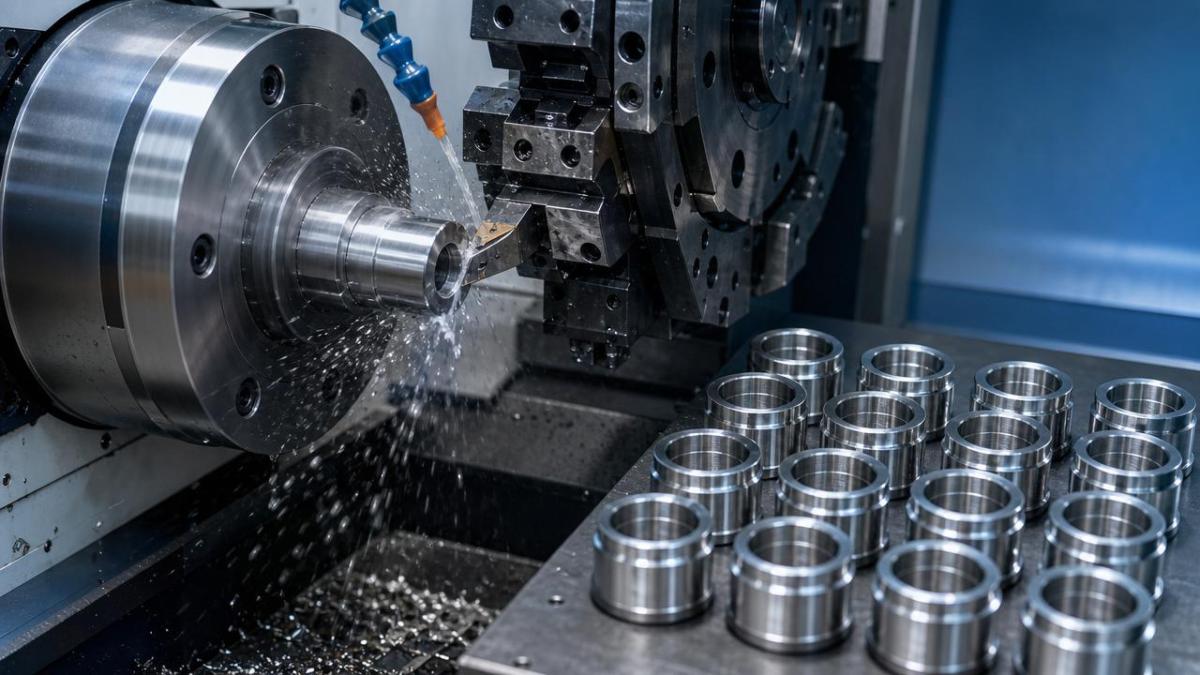
An automated lathe is designed to repeat the same cutting sequence with high speed and minimal operator intervention. In theory, automation improves repeatability. In practice, however, consistency depends on the entire process chain: machine structure, spindle condition, servo accuracy, tool life control, workholding, coolant delivery, material variation, program logic, and in-process feedback. When one element drifts slightly, the automated lathe may continue running while producing parts that remain within rough tolerance at first but slowly move toward the edge of specification.
This is why part inconsistency in an automated lathe environment is often difficult to detect at the beginning. A few microns of movement in the turret, a gradual decline in coolant concentration, or a small change in bar stock hardness may not stop production. Yet these changes stack together. The result is a process that looks efficient on the machine dashboard but performs poorly in final inspection, assembly fit, or downstream reliability.
In the broader machine tool industry, this issue matters because CNC lathes are used in automotive shafts, aerospace bushings, hydraulic fittings, electronic connectors, and energy equipment components where uniformity is not optional. A modern automated lathe must deliver not only throughput, but also sustained process discipline across long production runs.
Current warning signals seen across CNC turning operations
Across global precision manufacturing, several recurring warning signals show that an automated lathe may be reducing part consistency without obvious machine failure. These signals deserve routine review because they often appear before scrap rates rise sharply.
These patterns are increasingly important as smart factories push longer unattended cycles. The more an automated lathe runs without intervention, the more critical it becomes to detect slow process drift rather than only major equipment faults.
Small causes that quietly reduce repeatability in an automated lathe
The most damaging automated lathe problems are often ordinary and cumulative. Tool wear is the clearest example. If insert life is estimated too broadly, cutting forces rise gradually and dimensions shift before the tool reaches an obvious failure point. Likewise, a collet or chuck that still grips the part but no longer applies uniform force can create subtle runout variation, especially on slender parts or thin-walled components.
Thermal change is another frequent source of inconsistency. During startup, spindle and machine structure temperatures increase until equilibrium is reached. If the automated lathe begins precision production before thermal stabilization, early parts may differ from later ones. This effect becomes more severe when cycle time, ambient temperature, coolant temperature, and machine loading vary between shifts.
Chip management also deserves more attention than it typically receives. In automated turning, chips that do not break consistently can strike the workpiece, interfere with tool paths, or block coolant flow. A process may remain technically operational while producing random scratches and unstable finishes. The issue may appear to be a tooling problem when the true cause is chip morphology and evacuation.
Another quiet risk comes from automation interfaces. Bar feeders, part catchers, gantries, and conveyor timing can affect how material enters and leaves the cutting zone. A slight mismatch in feed alignment, transfer positioning, or part sensing may not trigger a stop, but it can create tiny orientation errors that show up as dimensional inconsistency or cosmetic defects.
Why these issues matter for quality, safety, and manufacturing cost
When an automated lathe produces inconsistent parts, the impact extends far beyond a few rejected components. First, process capability declines. Even if average dimensions remain acceptable, wider variation reduces confidence in Cp and Cpk performance, making production less predictable. Second, inspection costs rise because teams must sample more often, sort more carefully, and investigate more exceptions.
Safety risks also increase. Chip entanglement, overloaded tools, unstable clamping, and excessive vibration can create hazardous machine conditions, especially during unattended machining. In this sense, part inconsistency is not only a quality issue; it can be an early signal of mechanical stress or process behavior that may later become a maintenance or safety event.
The business effect is equally significant. Scrap material, emergency tool changes, unplanned downtime, delayed delivery, and customer complaints all trace back to variation that was not controlled in time. For industries relying on CNC turning for precision components, an automated lathe must be measured by repeatable output over time, not just by nominal cycle speed.
Typical consistency risk scenarios in automated turning production
Not every part reacts the same way to automated lathe drift. Some applications are more sensitive and require tighter monitoring discipline.
Practical steps to control automated lathe drift before it becomes costly
Improving automated lathe consistency starts with process visibility. Instead of reacting only to out-of-tolerance parts, track leading indicators such as spindle load trend, offset adjustment frequency, tool life variance, chuck pressure stability, coolant concentration, chip shape, and part temperature at measurement. These process signals often reveal the true source of variation earlier than final inspection data alone.
- Set tool change limits based on measured wear behavior, not only estimated cycle count.
- Confirm thermal stability with first-piece and warm-up verification routines.
- Audit workholding condition regularly, including collet wear, chuck repeatability, and clamping force consistency.
- Review chip control as a quality factor, not just a housekeeping issue.
- Validate automation handoff points such as bar feed position, transfer timing, and part-present sensing.
- Link in-process measurements with machine events so recurring drift patterns can be traced faster.
It is also useful to separate random variation from systematic variation. If the automated lathe shows a steady dimensional shift across a run, the cause is often thermal or wear-related. If defects appear irregularly, look first at clamping, chip interference, material batch variation, or automation timing. This distinction helps shorten troubleshooting time and improves corrective action quality.
Next-step actions for more stable automated lathe performance
A reliable automated lathe process does not depend on one-time setup accuracy alone. It depends on structured monitoring, disciplined maintenance, and regular review of weak process signals that quietly reduce consistency. Start by identifying the top three recurring variation patterns in current turning operations, then match each pattern to a probable source such as tooling, thermal growth, workholding, coolant, or automation transfer. From there, build a simple control plan with measurable thresholds, inspection timing, and response actions.
In modern CNC manufacturing, the strongest operations are not the ones that never see drift, but the ones that detect it early and correct it before quality loss spreads. When an automated lathe is managed with that mindset, production becomes more stable, scrap declines, and part consistency remains dependable across longer and more demanding runs.
PREVIOUS ARTICLE
Recommended for You
![]() Five Ministries Launch Joint Enforcement on EV Battery RecyclingManufacturing Policy Research Center
Five Ministries Launch Joint Enforcement on EV Battery RecyclingManufacturing Policy Research Center![]() Top 10 Future Industries Roadmap 2026 ReleasedManufacturing Market Research Center
Top 10 Future Industries Roadmap 2026 ReleasedManufacturing Market Research Center![]() Global Methanol-Electric Ecosystem Alliance LaunchedManufacturing Market Research Center
Global Methanol-Electric Ecosystem Alliance LaunchedManufacturing Market Research Center![]() ISO 23218-3:2026 Enters Force: CNC Digital Twin Interoperability Standard Goes GlobalCNC Machining Technology Center
ISO 23218-3:2026 Enters Force: CNC Digital Twin Interoperability Standard Goes GlobalCNC Machining Technology Center![]() ANVISA New Rule: Portuguese Biocompatibility Labels for Medical CNC EquipmentManufacturing Policy Research Center
ANVISA New Rule: Portuguese Biocompatibility Labels for Medical CNC EquipmentManufacturing Policy Research Center![]() KATS Updates KC Certification: CNC Cybersecurity Modules Must Comply with IEC 62443-4-2Manufacturing Policy Research Center
KATS Updates KC Certification: CNC Cybersecurity Modules Must Comply with IEC 62443-4-2Manufacturing Policy Research Center


Aris Katos
Future of Carbide Coatings
15+ years in precision manufacturing systems. Specialized in high-speed milling and aerospace grade alloy processing.
▶
Industrial lathe size selection errors that affect output laterMachine Tool Industry Editorial Team▶
Automated lathe problems that quietly reduce part consistencyMachine Tool Industry Editorial Team▶
Industrial lathe selection gets harder when part sizes varyMachine Tool Industry Editorial Team▶
Metal lathe wear signs that should not be ignoredMachine Tool Industry Editorial Team▶
Vertical lathe vs horizontal options for large diameter partsMachine Tool Industry Editorial Team
Mastering 5-Axis Workholding Strategies
Join our technical panel on Nov 15th to learn about reducing vibrations in thin-wall components.

Providing you with integrated sanding solutions
Before-sales and after-sales services
Comprehensive technical support