• Global CNC market projected to reach $128B by 2028 • New EU trade regulations for precision tooling components • Aerospace deman
NYSE: CNC +1.2%LME: STEEL -0.4%

Industrial lathe selection gets harder when part sizes vary
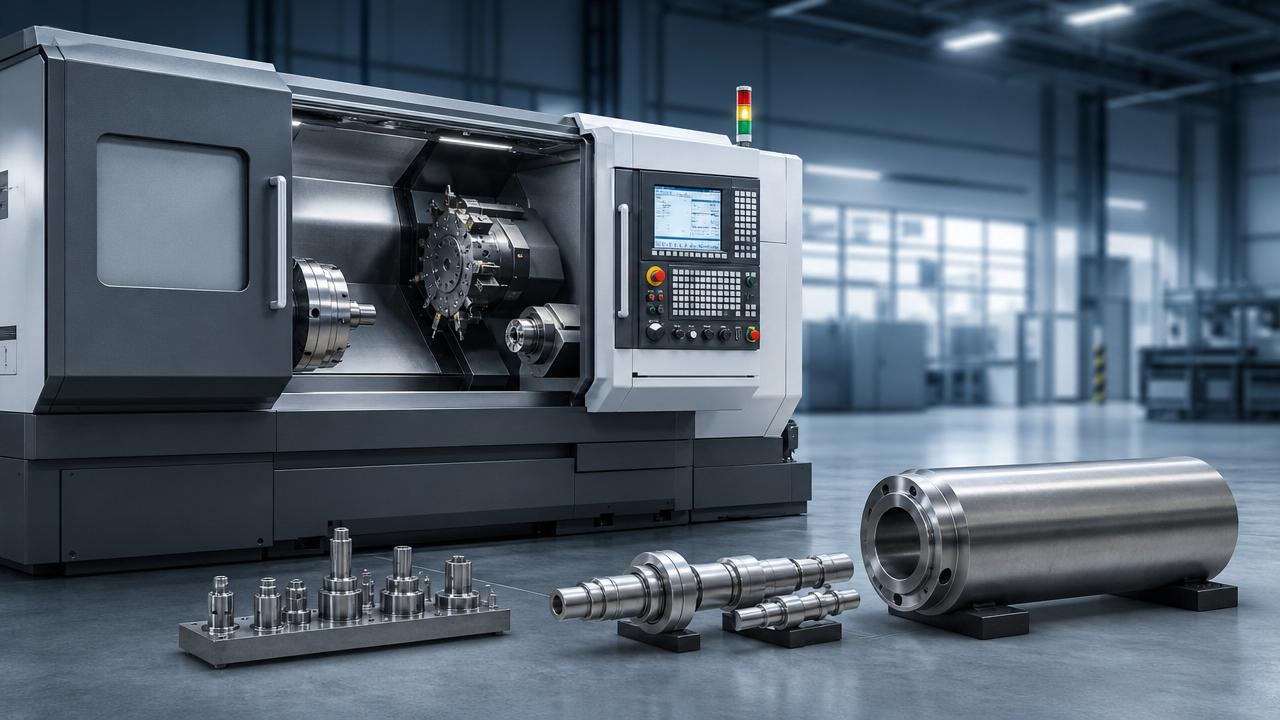
Choosing the right industrial lathe becomes far more complex when part sizes change from order to order. For procurement teams, the challenge is not only comparing capacity, precision, and automation, but also balancing flexibility with long-term cost control. This article explores what buyers should evaluate when selecting an industrial lathe for mixed-size production demands.
Why does part-size variation make industrial lathe selection so difficult?
An industrial lathe is usually evaluated by swing, turning length, spindle power, rigidity, and control system. Those basics are important, but they do not tell the full story when a factory processes both small precision parts and larger, heavier workpieces. In mixed-size production, procurement cannot simply buy the biggest machine available. An oversized industrial lathe may consume more floor space, more energy, and more setup time than necessary for smaller jobs. On the other hand, an undersized machine creates bottlenecks, subcontracting costs, and delivery risk.
The difficulty increases because size variation affects more than dimensions. Different part sizes often mean different clamping methods, cutting forces, spindle speed ranges, loading approaches, tool change requirements, and inspection routines. A machine that performs well on medium shafts may struggle with short thin-walled components or long large-diameter parts. For procurement personnel, this turns industrial lathe selection into a question of production versatility rather than only technical maximums.
Another reason buyers pay close attention to this issue is the wider manufacturing trend toward flexible production. Automotive suppliers, aerospace subcontractors, energy equipment manufacturers, and general engineering workshops increasingly handle shorter runs and more frequent part changes. In that environment, the best industrial lathe is often not the one with the highest headline specification, but the one that keeps utilization high across a varied order mix.
What should procurement teams review first before comparing machine models?
Before requesting quotations, procurement should work backward from the part portfolio. The first step is to classify parts by diameter, length, weight, material, tolerance, surface finish, and annual volume. This creates a realistic operating window for the future industrial lathe. Instead of asking, “What is the largest part we might one day run?” buyers should ask, “What percentage of current and forecast parts falls into each size band, and what revenue depends on them?”
The second step is to identify changeover frequency. If the plant changes from one part family to another several times per shift, quick setup becomes a major purchasing criterion. A flexible industrial lathe with programmable tailstock movement, hydraulic chucking, tool preset support, and stable repeatability may deliver more value than a heavier machine with limited changeover efficiency.
Third, procurement should confirm process routing. Will the industrial lathe perform roughing only, complete turning in one setup, or integrate drilling, milling, and threading? If part sizes vary widely, process consolidation can reduce handling and improve consistency. Machines with live tooling, Y-axis capability, sub-spindle options, or bar feeding support may reduce dependence on additional equipment.
Finally, review plant constraints early. Power supply, crane access, floor loading, chip management, coolant systems, and operator skill levels all affect whether a given industrial lathe is practical. Procurement decisions become stronger when machine selection is tied to real operating conditions rather than isolated brochure data.
Which technical specifications matter most when one industrial lathe must cover mixed-size jobs?
For variable-size work, procurement should focus on specification ranges, not just peak numbers. Swing over bed and maximum turning diameter are critical, but they should be matched with usable chuck size and actual tooling clearance. A machine may advertise a large turning envelope, yet practical access can be restricted once standard fixtures and tool holders are installed.
Spindle speed range is equally important. Small parts often require higher rotational speed for productivity and surface finish, while larger components demand torque and stability at lower speed. A well-balanced industrial lathe should offer enough spindle flexibility to avoid sacrificing either end of the production range. Buyers should also ask about spindle bore, because bar capacity and through-hole capability can influence automation and throughput.
Rigidity deserves careful attention. When a machine is expected to cut both compact precision parts and larger tough materials, bed construction, guideway type, turret strength, and tailstock support become essential. Weak rigidity can lead to chatter, tool wear, dimensional instability, and higher scrap rates. These hidden costs often outweigh any initial savings on purchase price.
Axis travel, tool station count, and control flexibility also matter. A more adaptable industrial lathe should support a broad range of tool layouts, simple program switching, and reliable offsets management. Procurement teams should not treat the CNC control as an afterthought. Operator familiarity, software support, remote diagnostics, and integration with shop-floor data systems all contribute to long-term value.
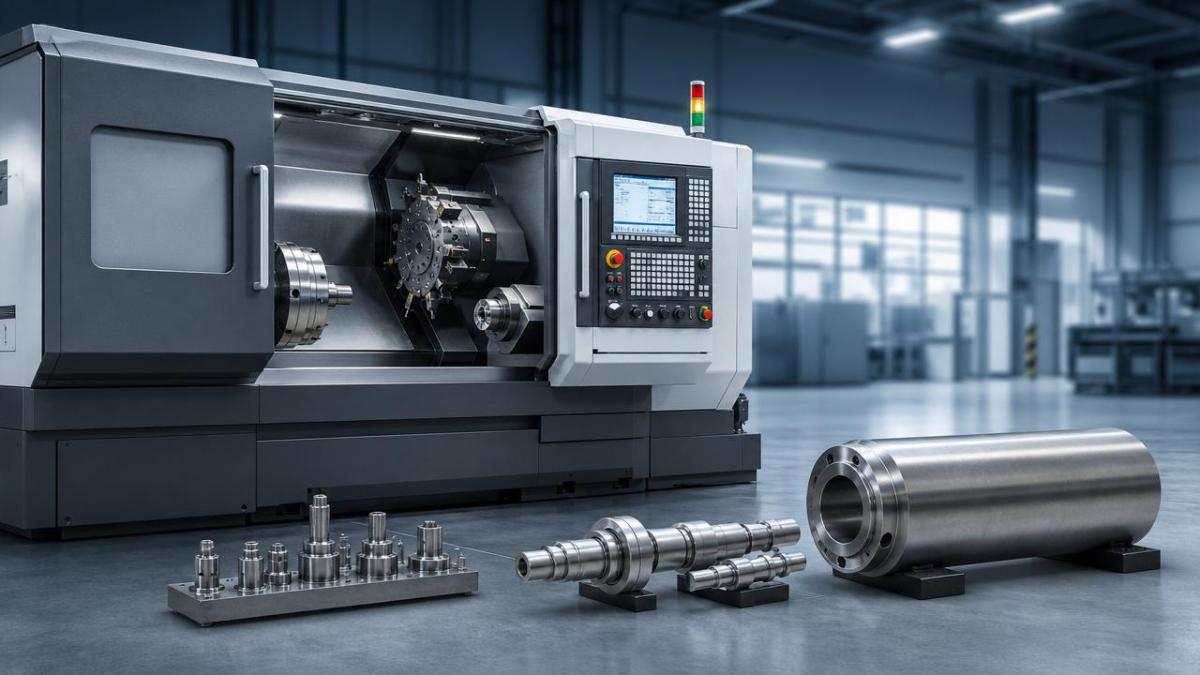
How can buyers compare machine options without getting lost in specifications?
The most practical method is to compare industrial lathe options against a structured decision matrix based on actual parts. Procurement should select a representative sample of small, medium, and large workpieces, then evaluate each machine against the same operating questions: Can it clamp the part safely? Can it meet cycle time targets? Can it achieve tolerances without extra finishing? How much setup intervention is required? Is automation realistic for this size mix?
A supplier should be able to discuss not only machine capacity, but also fixture recommendations, tool access, chip evacuation, loading solutions, and expected cycle stability. This kind of application-level discussion reveals whether the proposed industrial lathe is truly suitable for mixed-size production or merely acceptable on paper.
Is it better to buy one flexible industrial lathe or several specialized machines?
This is one of the most common procurement questions, and the answer depends on order structure. One flexible industrial lathe can be the right choice when production volume is moderate, part families share similar materials, and floor space or investment budget is limited. It simplifies maintenance, reduces the number of machine platforms to support, and can improve scheduling agility when urgent orders appear.
However, a single industrial lathe is not always the most economical answer. If the plant has frequent demand for both very small high-speed parts and large heavy-duty components, one machine may compromise both productivity and output quality. In that case, two specialized machines may deliver a lower cost per part even if capital spending is higher. Procurement should compare not only acquisition cost but also planned utilization, queue times, fixture duplication, labor flexibility, and lost opportunity from capacity constraints.
A practical middle path is to choose an industrial lathe with a strong mid-range capability and outsource extreme-size work until volume justifies expansion. This staged approach can protect cash flow while preserving responsiveness to customer demand. For many buyers in general manufacturing, that strategy is more realistic than trying to solve every future requirement with one oversized purchase.
What hidden cost factors do procurement teams often overlook?
The first overlooked factor is setup time. When part sizes vary, non-cutting time can quietly reduce machine profitability. A lower-priced industrial lathe that requires manual chuck swaps, frequent alignment checks, and repeated offset adjustments may cost far more over three to five years than a slightly more automated alternative.
The second is tooling and workholding complexity. Mixed-size production often requires multiple jaws, steady rests, collet systems, tailstock centers, and custom fixtures. Procurement should ask whether the industrial lathe supports standardized tooling interfaces that make future expansion easier. A machine that locks the buyer into expensive proprietary accessories can weaken long-term ROI.
Third, after-sales service and spare parts availability are critical in the CNC machine tool sector. A technically capable industrial lathe loses value quickly if response times are slow, local support is weak, or spare components have long lead times. Buyers in global manufacturing environments should also examine the supplier’s international service network, training capacity, and remote troubleshooting capability.
Energy consumption, coolant maintenance, chip handling, and software licensing can also affect total cost. These items may appear secondary during quotation review, yet they become visible every day on the shop floor. Procurement should request a full ownership model rather than relying only on list price and discount terms.
What are the most common mistakes when choosing an industrial lathe for mixed-size production?
One common mistake is buying for theoretical maximum capacity instead of probable workload. This often results in a large industrial lathe that is underutilized, expensive to operate, and inefficient for everyday parts. Another mistake is focusing on machine hardware while ignoring process flow. If material handling, programming discipline, and inspection capacity are not aligned, even a good machine will struggle.
A third mistake is treating precision claims as universal. Tolerance performance can change significantly depending on part length, material, workholding method, and thermal conditions. Procurement should request sample cutting data or witness tests based on real parts whenever possible. In a competitive manufacturing environment, verified process capability matters more than brochure promises.
Some buyers also underestimate operator adaptation. A modern industrial lathe may offer excellent automation and digital controls, but if the interface is unfamiliar and training is weak, expected productivity gains will be delayed. This is especially relevant for companies scaling toward smart manufacturing, where machine connectivity and human usability must develop together.
How should a procurement team finalize the decision with confidence?
A strong final decision usually combines technical fit, financial logic, and supplier reliability. Procurement should shortlist industrial lathe candidates only after reviewing sample parts, target cycle times, tooling plans, and likely future order patterns. Cross-functional input from production, process engineering, maintenance, and quality teams should be included before award.
It also helps to score each industrial lathe against a few weighted categories: usable size range, setup efficiency, machining stability, automation readiness, service support, and total ownership cost. This keeps decisions objective and makes internal approvals easier. In the CNC machine tool industry, the winning option is rarely the cheapest quote or the most advanced specification alone; it is the machine that supports stable output across real production conditions.
If you need to move from evaluation to action, the first questions to discuss with a supplier should be practical ones: Which part-size mix is most common? What fixtures and tooling are recommended? How fast can the industrial lathe switch between jobs? What local service resources are available? What acceptance criteria will be used during testing? By clarifying these points early, procurement teams can reduce risk, improve negotiation quality, and select an industrial lathe that stays productive as manufacturing demands continue to change.
PREVIOUS ARTICLE
Recommended for You
![]() Five Ministries Launch Joint Enforcement on EV Battery RecyclingManufacturing Policy Research Center
Five Ministries Launch Joint Enforcement on EV Battery RecyclingManufacturing Policy Research Center![]() Top 10 Future Industries Roadmap 2026 ReleasedManufacturing Market Research Center
Top 10 Future Industries Roadmap 2026 ReleasedManufacturing Market Research Center![]() Global Methanol-Electric Ecosystem Alliance LaunchedManufacturing Market Research Center
Global Methanol-Electric Ecosystem Alliance LaunchedManufacturing Market Research Center![]() ISO 23218-3:2026 Enters Force: CNC Digital Twin Interoperability Standard Goes GlobalCNC Machining Technology Center
ISO 23218-3:2026 Enters Force: CNC Digital Twin Interoperability Standard Goes GlobalCNC Machining Technology Center![]() ANVISA New Rule: Portuguese Biocompatibility Labels for Medical CNC EquipmentManufacturing Policy Research Center
ANVISA New Rule: Portuguese Biocompatibility Labels for Medical CNC EquipmentManufacturing Policy Research Center![]() KATS Updates KC Certification: CNC Cybersecurity Modules Must Comply with IEC 62443-4-2Manufacturing Policy Research Center
KATS Updates KC Certification: CNC Cybersecurity Modules Must Comply with IEC 62443-4-2Manufacturing Policy Research Center


Aris Katos
Future of Carbide Coatings
15+ years in precision manufacturing systems. Specialized in high-speed milling and aerospace grade alloy processing.
▶
Industrial lathe size selection errors that affect output laterMachine Tool Industry Editorial Team▶
Automated lathe problems that quietly reduce part consistencyMachine Tool Industry Editorial Team▶
Industrial lathe selection gets harder when part sizes varyMachine Tool Industry Editorial Team▶
Metal lathe wear signs that should not be ignoredMachine Tool Industry Editorial Team▶
Vertical lathe vs horizontal options for large diameter partsMachine Tool Industry Editorial Team
Mastering 5-Axis Workholding Strategies
Join our technical panel on Nov 15th to learn about reducing vibrations in thin-wall components.

Providing you with integrated sanding solutions
Before-sales and after-sales services
Comprehensive technical support