• Global CNC market projected to reach $128B by 2028 • New EU trade regulations for precision tooling components • Aerospace deman
NYSE: CNC +1.2%LME: STEEL -0.4%

Metal lathe wear signs that should not be ignored
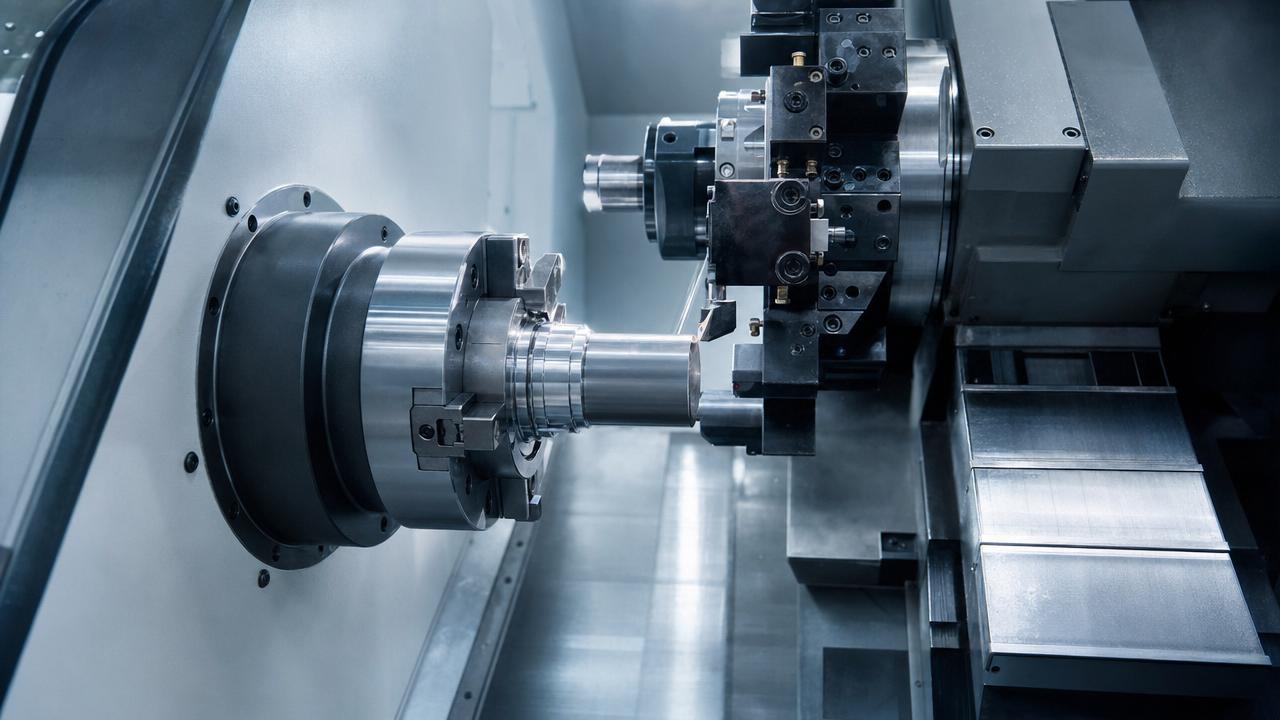
A metal lathe rarely fails without warning. For after-sales maintenance teams, recognizing early wear signs can prevent costly downtime, protect machining accuracy, and extend equipment life. From spindle vibration and abnormal noise to guideway scoring and thermal instability, knowing what should not be ignored is essential for keeping CNC operations stable, efficient, and production-ready.
Why wear signals on a metal lathe matter more in today’s manufacturing environment
The maintenance logic around every metal lathe is changing. In the past, many workshops accepted gradual accuracy loss as part of machine aging and relied on reactive repair. That approach is becoming harder to sustain. Across automotive, aerospace, energy equipment, electronics, and general precision manufacturing, production schedules are tighter, tolerance requirements are stricter, and machine utilization is expected to stay high. In this environment, early wear signs are no longer minor workshop issues; they are business signals that affect delivery reliability, quality stability, and service cost.
For after-sales maintenance personnel, this shift is especially important. Customers now expect not only repairs, but also condition judgment, failure prediction, and practical guidance on how to avoid repeat stoppages. A metal lathe that shows spindle heat growth, inconsistent surface finish, backlash drift, or lubrication contamination may still run, but it is already communicating that performance margins are shrinking. Ignoring these signals can turn a low-cost correction into spindle overhaul, ball screw replacement, or even long production interruption.
Another reason these signs deserve closer attention is the broader move toward smart manufacturing. As more factories connect machine tools to monitoring systems, variation that once stayed hidden is becoming visible. Vibration patterns, thermal trends, servo load changes, and cycle-time instability now support earlier intervention. This means maintenance teams must interpret wear not only as a mechanical problem, but also as a trend that affects process capability and customer confidence.
The current trend: wear is being detected earlier, but the consequences of delay are becoming more severe
One clear industry signal is that the acceptable window between first symptom and corrective action is narrowing. A modern metal lathe often operates as part of a linked process, feeding downstream assembly, inspection, or finishing. If wear starts to distort concentricity, taper control, thread quality, or repeatability, the impact is not limited to one machine. It can spread into scrap, rework, delayed shipment, and complaints related to lot consistency.
This is why many service teams are paying closer attention to small but persistent abnormalities. A slight increase in spindle noise at specific RPM ranges, a periodic mark on turned surfaces, slower axis response, or uneven chuck clamping behavior may appear manageable at first. However, under high production load, these weak signals often accelerate. A metal lathe under thermal stress or poor lubrication can deteriorate rapidly once friction increases and alignment begins to drift.
From a trend perspective, the practical question is no longer whether wear exists, but how early teams can separate harmless variation from actionable deterioration. That distinction is becoming a core after-sales skill.
What is driving this change in metal lathe maintenance priorities
Several forces are making wear detection more important. First is the demand for precision under continuous utilization. As factories push machines harder, a metal lathe spends less time idle and more time in temperature-sensitive operation. Extended high-speed turning, mixed-material production, and shorter setup intervals all increase the stress on spindle systems, linear components, clamping devices, and coolant management.
Second is the diversification of parts. A maintenance team may support one metal lathe that cuts simple shafts in the morning and precision threaded parts in the afternoon. Different loads, different cutting behaviors, and different tool strategies can expose weak machine elements more quickly. Wear that was once tolerated in low-precision jobs becomes unacceptable when the same equipment is assigned to more demanding work.
Third is the higher cost of unplanned downtime. In connected production lines, one stopped machine can disrupt planning, operators, tooling flow, and inspection resources. Service teams therefore need to identify patterns before emergency stoppage occurs. This is why subtle signs on a metal lathe, such as a rise in servo current, a recurring alarm under load, or worsening tailstock alignment, now carry more strategic weight than they did before.
Finally, digital monitoring is raising expectations. Once customers can see trend charts and historical alarms, they expect maintenance teams to explain causes and recommend action thresholds. The service role is moving from “fix after failure” to “judge risk before failure.”
The wear signs that should never be treated as routine background noise
Not every irregularity means an immediate shutdown, but several categories deserve prompt attention because they often indicate progressive mechanical or thermal deterioration.
1. Persistent spindle vibration or abnormal sound
A healthy metal lathe has a repeatable acoustic pattern across speed ranges. If the sound changes from smooth rotation to rumble, whine, or periodic knock, the maintenance team should not assume it is only tool-related. Spindle bearing wear, contamination, imbalance, or drawbar-related issues may be developing. If vibration increases with RPM or appears at specific speed bands, the trend should be recorded and compared with machining quality data.
2. Surface finish deterioration without an obvious tooling cause
When a metal lathe starts producing chatter marks, waviness, or inconsistent finish even after tool changes, it often points to deeper wear. Common sources include spindle runout, worn guideways, turret indexing instability, loose gibs, or insufficient rigidity in the workholding system. Maintenance teams should avoid focusing only on tool parameters when the defect pattern repeats across jobs.
3. Axis hesitation, backlash drift, or positioning inconsistency
In a production metal lathe, small motion changes can have major process effects. Wear in ball screws, couplings, thrust bearings, or servo transmission components may first appear as hesitation during reversal, unstable thread pitch, or growing compensation values. These signs matter because they often develop gradually and can be masked by temporary control adjustments until the mechanical gap becomes too large.
4. Guideway scoring and lubrication failure
Guideways are often where long-term condition becomes visible. Scoring, discoloration, oil starvation marks, or irregular movement indicate that the wear process is already underway. On any metal lathe, lubrication failure can create a cascade effect: friction rises, heat increases, motion smoothness declines, and accuracy suffers. Maintenance teams should treat contaminated oil, clogged lines, and poor distribution as root-cause issues, not housekeeping details.
5. Thermal growth that changes part results over time
Thermal instability is becoming more important as customers expect long-run dimensional consistency. If the first parts differ from later parts, or if tolerance shifts with spindle warm-up, the metal lathe may be signaling wear in bearings, lubrication circuits, cooling systems, or structural interfaces. Heat-related drift is especially critical in high-precision turning because operators may compensate manually while the underlying problem continues to worsen.
Who is most affected when wear signs on a metal lathe are ignored
The impact extends beyond the machine itself. That is another major shift in how maintenance decisions should be viewed. Wear no longer sits only in the maintenance domain; it influences multiple roles and performance targets.
What after-sales maintenance personnel should now pay closer attention to
For service teams, the key change is methodological. It is no longer enough to inspect a metal lathe only when failure becomes obvious. The better approach is to build a wear judgment routine around trend comparison. This means collecting repeatable observations: spindle temperature by shift, vibration by RPM range, backlash values over time, lubrication condition, chuck clamping repeatability, and part quality deviations linked to operating hours.
Equally important is cross-functional communication. Maintenance findings should be compared with operator notes, quality records, and tooling changes. If a metal lathe begins to show recurring taper error after warm-up, the best answer may come from combining thermal observation, alignment checks, and process history rather than changing one parameter at a time.
Teams should also distinguish between cosmetic symptoms and structural warnings. Coolant leaks, unusual chip accumulation, or repeated alarm resets may appear secondary, yet they often reveal failures in sealing, lubrication, or motion reliability. In a high-use metal lathe, these “small” symptoms often precede measurable accuracy loss.
A practical judgment framework for deciding when wear becomes a business risk
A useful trend-based framework is to classify wear signs into three stages. This helps after-sales teams recommend action with clearer urgency and makes communication with customers more effective.
How the next phase of maintenance is likely to evolve
Looking ahead, maintenance for the metal lathe market will likely become more data-supported, but still strongly dependent on field judgment. Sensors and machine logs can show that vibration or temperature is changing, yet experienced technicians remain essential for deciding whether the cause is spindle wear, poor installation, tooling imbalance, environmental heat, or process misuse.
Another likely direction is service standardization. Customers increasingly want clear thresholds: when should a metal lathe continue running, when should parts be ordered, and when should production be rescheduled? Maintenance organizations that can define these thresholds with evidence will be better positioned than those relying only on general advice.
There is also growing value in wear history. Machines that repeatedly show the same spindle, guideway, or lubrication issues create a pattern that can improve preventive planning across similar installed equipment. For after-sales teams, each repair should strengthen future judgment, not just restore current operation.
What to confirm now if you want to reduce risk on every metal lathe in service
If a company wants to understand how wear trends may affect its installed metal lathe base, several questions deserve immediate review. Which machines are showing repeatable variation by shift or temperature? Which units have rising compensation values, recurring vibration complaints, or unexplained finish issues? Where is lubrication verification weak or inconsistent? Which customers are running tighter tolerances than the machine’s current wear state can safely support?
These questions help move maintenance from reaction to judgment. The main lesson is simple: wear signs on a metal lathe should not be treated as isolated defects. They are early indicators of changing machine capability, changing service risk, and changing production reliability. For after-sales maintenance personnel, the best response is to watch trends early, connect symptoms to process impact, and act before minor deterioration becomes a major interruption.
PREVIOUS ARTICLE
Recommended for You
![]() Five Ministries Launch Joint Enforcement on EV Battery RecyclingManufacturing Policy Research Center
Five Ministries Launch Joint Enforcement on EV Battery RecyclingManufacturing Policy Research Center![]() Top 10 Future Industries Roadmap 2026 ReleasedManufacturing Market Research Center
Top 10 Future Industries Roadmap 2026 ReleasedManufacturing Market Research Center![]() Global Methanol-Electric Ecosystem Alliance LaunchedManufacturing Market Research Center
Global Methanol-Electric Ecosystem Alliance LaunchedManufacturing Market Research Center![]() ISO 23218-3:2026 Enters Force: CNC Digital Twin Interoperability Standard Goes GlobalCNC Machining Technology Center
ISO 23218-3:2026 Enters Force: CNC Digital Twin Interoperability Standard Goes GlobalCNC Machining Technology Center![]() ANVISA New Rule: Portuguese Biocompatibility Labels for Medical CNC EquipmentManufacturing Policy Research Center
ANVISA New Rule: Portuguese Biocompatibility Labels for Medical CNC EquipmentManufacturing Policy Research Center![]() KATS Updates KC Certification: CNC Cybersecurity Modules Must Comply with IEC 62443-4-2Manufacturing Policy Research Center
KATS Updates KC Certification: CNC Cybersecurity Modules Must Comply with IEC 62443-4-2Manufacturing Policy Research Center


Aris Katos
Future of Carbide Coatings
15+ years in precision manufacturing systems. Specialized in high-speed milling and aerospace grade alloy processing.
▶
Industrial lathe size selection errors that affect output laterMachine Tool Industry Editorial Team▶
Automated lathe problems that quietly reduce part consistencyMachine Tool Industry Editorial Team▶
Industrial lathe selection gets harder when part sizes varyMachine Tool Industry Editorial Team▶
Metal lathe wear signs that should not be ignoredMachine Tool Industry Editorial Team▶
Vertical lathe vs horizontal options for large diameter partsMachine Tool Industry Editorial Team
Mastering 5-Axis Workholding Strategies
Join our technical panel on Nov 15th to learn about reducing vibrations in thin-wall components.

Providing you with integrated sanding solutions
Before-sales and after-sales services
Comprehensive technical support