• Global CNC market projected to reach $128B by 2028 • New EU trade regulations for precision tooling components • Aerospace deman
NYSE: CNC +1.2%LME: STEEL -0.4%

Industrial lathe size selection errors that affect output later
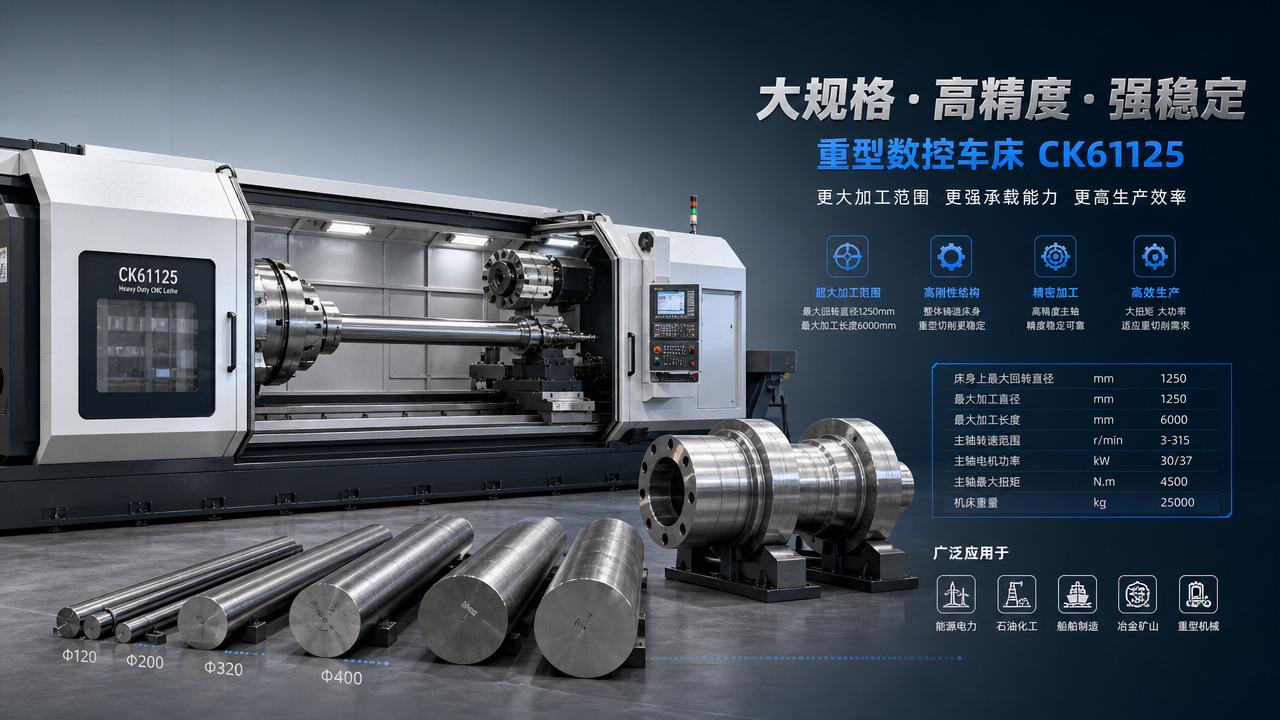
Choosing the wrong industrial lathe size can create problems that do not appear during installation but become costly once production volumes rise. A machine may accept today’s part length yet struggle with larger bar stock, heavier workpieces, longer cycle times, or tighter future tolerances. In practical terms, industrial lathe size selection affects spindle load, chuck capacity, swing, turning length, tooling options, automation compatibility, and shop-floor layout. This is why size decisions should be based on process capability and production forecasts, not only the current drawing. The questions below explain the most common sizing mistakes, the warning signs behind them, and the checks that help avoid output losses later.
What does industrial lathe size really mean beyond swing and length?
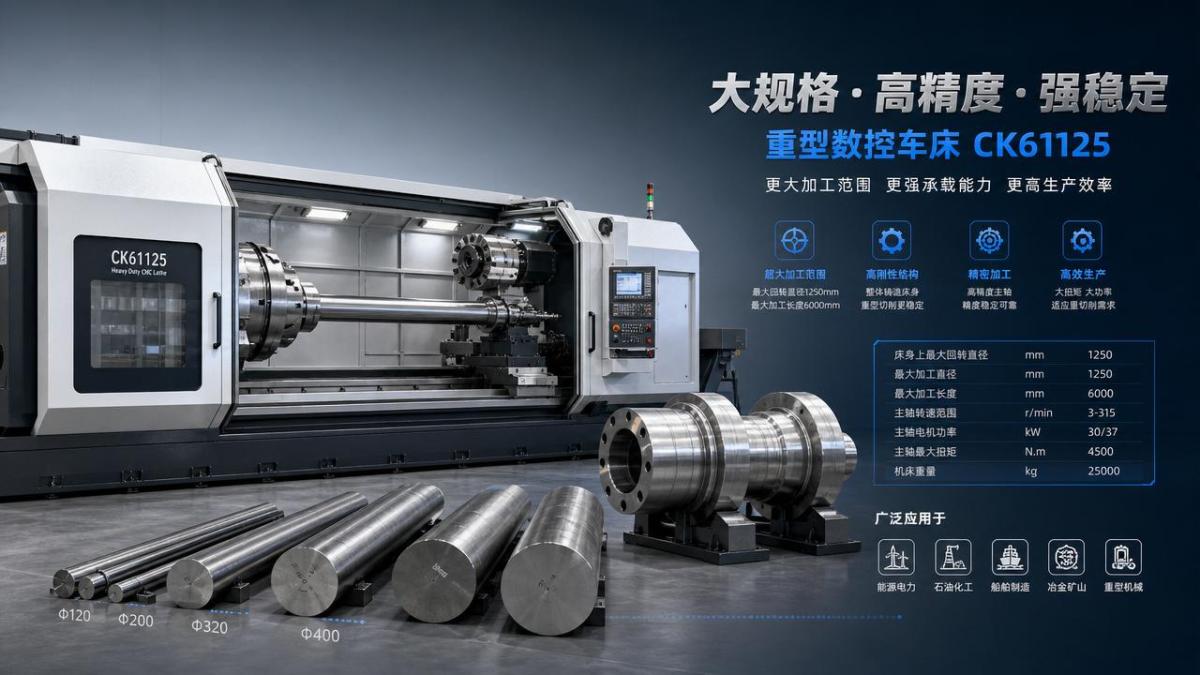
Many buyers reduce industrial lathe size to two catalog numbers: maximum swing and maximum turning length. Those figures matter, but they are only the outer layer of capacity. A machine that appears large enough on paper may still underperform if spindle bore is too small for the required bar diameter, if the chuck cannot hold the part safely, or if the turret lacks rigidity for heavy cuts.
A complete size evaluation usually includes spindle power, torque at low speed, bed rigidity, Z-axis travel, X-axis travel, tailstock or sub-spindle support, maximum workpiece weight, tool station quantity, and available clearance for loading devices. In high-mix production, the usable work envelope often matters more than the advertised maximum envelope. This is especially true when long tools, boring bars, steady rests, or part catchers reduce actual space.
For this reason, the best way to define industrial lathe size is as a combination of dimensional capacity and stable output capability. If a machine can theoretically fit a part but cannot maintain repeatability, chip evacuation, or cycle-time targets, it is not the right size in practice.
Why is selecting an industrial lathe only for current parts a common mistake?
The most common sizing error is choosing an industrial lathe around the largest current part print and ignoring what production may look like in 12 to 36 months. This often happens in competitive bidding, where a smaller machine looks attractive because purchase price, freight, and footprint are lower. The hidden issue is that manufacturing demand rarely stays fixed. Material specifications change, shaft lengths increase, larger flanges are introduced, or batch sizes grow enough to justify bar feeders and robotic loading.
When there is no sizing margin, even small engineering changes can force process compromises. A longer part may require special setup support that slows changeovers. A wider diameter may need a different machine entirely. A tougher alloy may push the spindle into lower efficiency zones, extending cycle time and reducing throughput. What looked like a cost-saving decision becomes a long-term output constraint.
A practical rule is to evaluate three part ranges instead of one: current production, near-term forecast, and possible expansion range. If the industrial lathe can comfortably run all three, the investment is more likely to remain productive. If it can only just handle today’s parts, future flexibility is already limited.
Useful forecast checks before final sizing
- Largest planned bar diameter within the next two years
- Expected increase in part length or unsupported overhang
- Shift from aluminum to steel, stainless steel, or alloy materials
- Potential need for live tooling, Y-axis, or secondary operations
- Automation plans such as gantry loading, robot tending, or bar feeding
How can an undersized industrial lathe reduce output even when it can machine the part?
An undersized industrial lathe does not always fail immediately. Often it completes the job, but with lower efficiency, higher tool wear, and unstable scheduling. This is why the problem is easy to miss during trials. Test runs are short, operators are attentive, and production pressure is limited. Once normal shifts begin, the machine’s lack of margin starts to show.
For example, limited spindle bore may require shorter raw stock lengths and more manual handling. Insufficient torque can force lighter cuts, adding minutes to each cycle. Restricted travel may increase repositioning steps. A bed that is too light for the workpiece can increase vibration, affecting finish quality and dimensional consistency. If the machine is near its weight or diameter limit, setup also becomes slower because support and alignment demand extra care.
These losses accumulate in several ways: lower parts per shift, more frequent stoppages, higher scrap risk, and reduced room for urgent jobs. In high-volume environments, even a small cycle-time increase can cost far more than the original price difference between a smaller and a better-sized industrial lathe.
What sizing factors are often missed when comparing industrial lathe models?
Catalog comparisons often focus on visible dimensions while overlooking application-specific limits. One commonly missed factor is material behavior. Soft nonferrous parts may run well on a compact machine, but the same envelope can become marginal when cutting hard steels or heat-resistant alloys. The industrial lathe size that works for one material family may be too small for another because power, rigidity, and thermal stability requirements change.
Another overlooked issue is tooling stack-up. Long boring bars, live tool holders, probes, and custom fixtures consume space and can reduce safe travel. Tailstock pressure and center support also affect the real capability of the machine, especially for slender shafts. In addition, chip management is part of size planning. Larger or tougher parts generate more chips and heat, which can overwhelm conveyors or reduce unattended runtime if the machine is too compactly configured.
Integration should also be considered. A modern industrial lathe may later be connected to robots, in-process gauging, MES systems, or palletized material flow. If machine access, door opening, or side clearance are too limited, automation upgrades become difficult and expensive. In this sense, machine size is not only about cutting space but also about system compatibility.
Quick comparison table for common sizing errors
How do you judge the right industrial lathe size for mixed production and future growth?
The right industrial lathe size is usually not the biggest machine available and not the cheapest machine that can barely process the current part. It is the machine that covers the real production window with enough margin to protect uptime, quality, and expansion. A balanced evaluation starts by grouping parts into families based on diameter, length, material, tolerance, and batch size. From there, identify the family that creates the heaviest demand on spindle capacity, support, and tool access.
Next, compare not only machine specifications but process scenarios. Ask whether the machine can run lights-out with a bar feeder, whether changeovers remain practical for short batches, and whether second operations can be absorbed through live tooling or a sub-spindle. This approach is valuable in the broader manufacturing sector, where demand can shift between prototype work, medium-batch production, and repetitive orders.
It is also wise to calculate output per square meter and output per labor hour rather than judging by purchase cost alone. A slightly larger industrial lathe that reduces setups, accepts a wider material range, and supports automation may deliver lower unit cost over time, even if the initial investment is higher.
A simple decision framework
- List current and expected part envelopes, not just the largest print.
- Match spindle bore, chuck size, and workpiece weight to the real material flow.
- Check torque, rigidity, and support needs for the hardest material family.
- Reserve room for tooling growth, chip evacuation, and automation access.
- Compare total output economics over several years, not only machine price.
What final checks help avoid industrial lathe size regrets before purchase?
Before confirming an industrial lathe, verify performance using representative part families, realistic materials, and actual production assumptions. A useful review includes setup time, target cycle time, expected tool life, support method for long parts, and loading method for both current and future batches. If possible, review the machine with sample fixtures, estimated tool lengths, and bar stock strategy rather than relying only on brochure dimensions.
Another effective step is to create a risk checklist for “near-limit” conditions. If the machine is close to maximum diameter, near full turning length, or dependent on special support for routine jobs, the chosen size may be too tight. Likewise, if future growth depends on adding automation but no practical interface or floor access exists, the machine may limit output later even if it performs well at the start.
The most reliable decision comes from treating industrial lathe size as a strategic production variable. Capacity margin, process stability, and upgrade potential often matter more than the lowest initial specification match.
FAQ summary table
In summary, industrial lathe size selection should be tied to output goals, part-family development, material strategy, and integration plans. The best decision is usually the one that preserves stable machining today while leaving enough room for tomorrow’s product mix. Before moving forward, map actual part families, compare real process loads, and test whether the selected industrial lathe can support both current demand and future expansion without becoming a hidden bottleneck.
PREVIOUS ARTICLE
NEXT ARTICLE
Recommended for You
![]() Five Ministries Launch Joint Enforcement on EV Battery RecyclingManufacturing Policy Research Center
Five Ministries Launch Joint Enforcement on EV Battery RecyclingManufacturing Policy Research Center![]() Top 10 Future Industries Roadmap 2026 ReleasedManufacturing Market Research Center
Top 10 Future Industries Roadmap 2026 ReleasedManufacturing Market Research Center![]() Global Methanol-Electric Ecosystem Alliance LaunchedManufacturing Market Research Center
Global Methanol-Electric Ecosystem Alliance LaunchedManufacturing Market Research Center![]() ISO 23218-3:2026 Enters Force: CNC Digital Twin Interoperability Standard Goes GlobalCNC Machining Technology Center
ISO 23218-3:2026 Enters Force: CNC Digital Twin Interoperability Standard Goes GlobalCNC Machining Technology Center![]() ANVISA New Rule: Portuguese Biocompatibility Labels for Medical CNC EquipmentManufacturing Policy Research Center
ANVISA New Rule: Portuguese Biocompatibility Labels for Medical CNC EquipmentManufacturing Policy Research Center![]() KATS Updates KC Certification: CNC Cybersecurity Modules Must Comply with IEC 62443-4-2Manufacturing Policy Research Center
KATS Updates KC Certification: CNC Cybersecurity Modules Must Comply with IEC 62443-4-2Manufacturing Policy Research Center


Aris Katos
Future of Carbide Coatings
15+ years in precision manufacturing systems. Specialized in high-speed milling and aerospace grade alloy processing.
▶
Industrial lathe size selection errors that affect output laterMachine Tool Industry Editorial Team▶
Automated lathe problems that quietly reduce part consistencyMachine Tool Industry Editorial Team▶
Industrial lathe selection gets harder when part sizes varyMachine Tool Industry Editorial Team▶
Metal lathe wear signs that should not be ignoredMachine Tool Industry Editorial Team▶
Vertical lathe vs horizontal options for large diameter partsMachine Tool Industry Editorial Team
Mastering 5-Axis Workholding Strategies
Join our technical panel on Nov 15th to learn about reducing vibrations in thin-wall components.

Providing you with integrated sanding solutions
Before-sales and after-sales services
Comprehensive technical support