• Global CNC market projected to reach $128B by 2028 • New EU trade regulations for precision tooling components • Aerospace deman
NYSE: CNC +1.2%LME: STEEL -0.4%

Can a CNC Lathe Really Improve Mass Production Consistency?
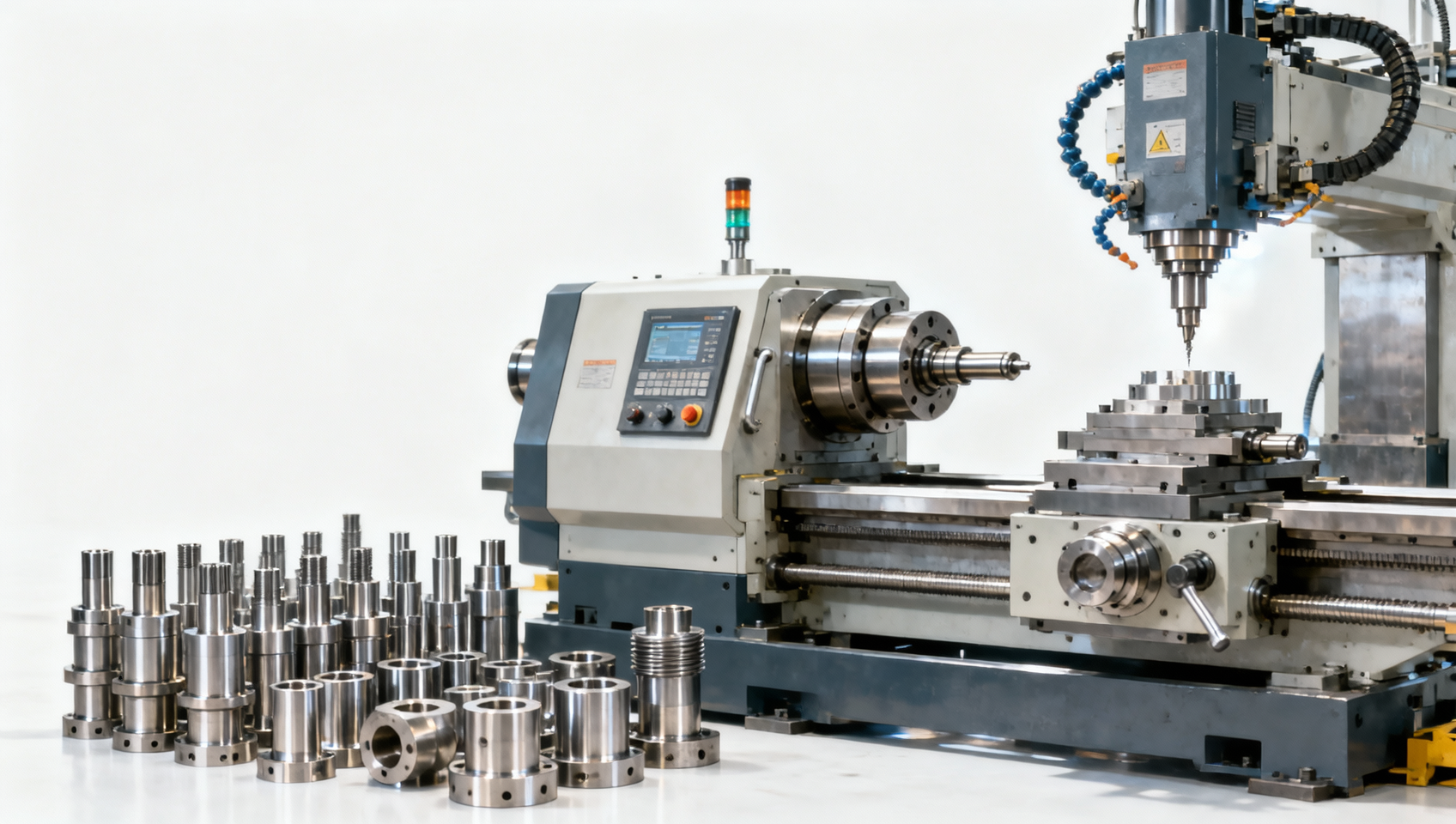
For manufacturers chasing tighter tolerances and repeatable output, a CNC Lathe for Mass Production can be a game changer. It supports stable quality, faster cycle times, and better integration with Industrial Automation solutions for smart factory environments. Combined with an optimized machining process and reliable tooling, it helps reduce variation, improve throughput, and strengthen production consistency across high-volume operations.
Why does a CNC lathe matter so much for mass production consistency?
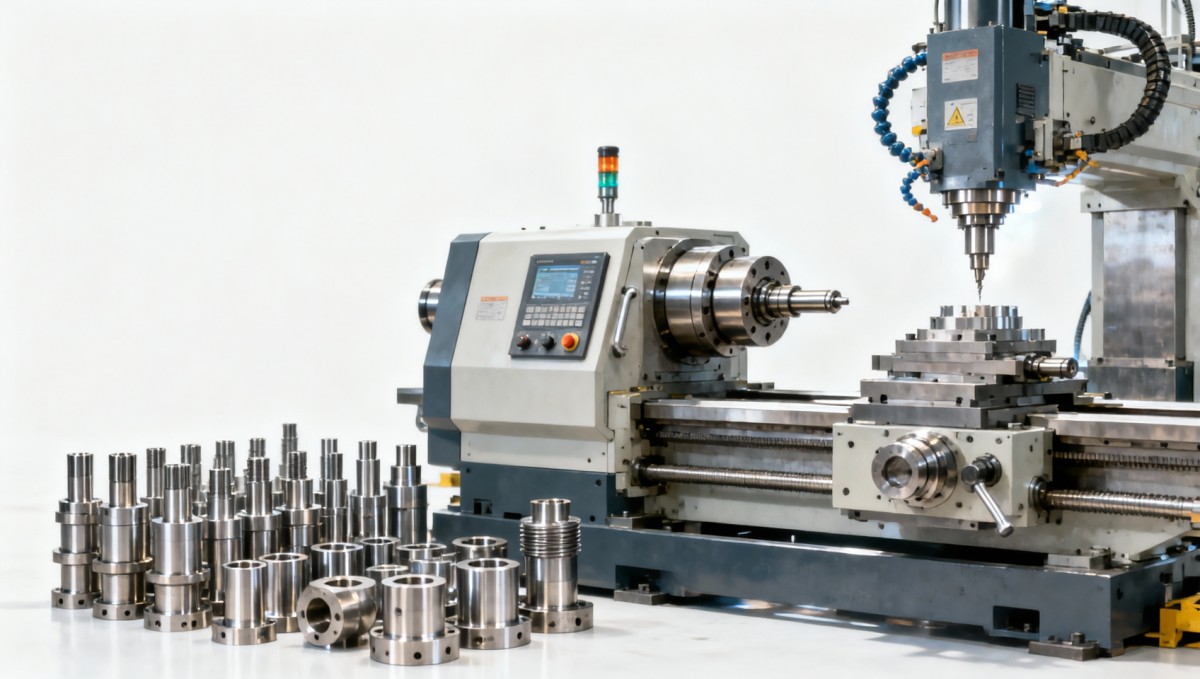
In high-volume manufacturing, consistency is not only about making parts quickly. It is about holding the same dimensions, surface finish, and cycle rhythm across hundreds, thousands, or even tens of thousands of pieces. A CNC lathe improves this by replacing manual variation with programmed motion, controlled spindle behavior, and repeatable tool paths. For buyers and factory managers, that means fewer surprises between the first batch and later production runs.
A conventional turning setup can still work for low-volume jobs, repairs, or simple shafts. However, once output moves into medium-batch or large-batch production, even small operator differences become costly. A few microns of drift, a tool offset entered incorrectly, or an inconsistent loading method can cause scrap, rework, and delivery delays. In a CNC Lathe for Mass Production environment, those risks are easier to control through repeatable programs, setup sheets, and standardized process windows.
This matters across automotive, energy equipment, electronics, general industrial parts, and precision subcontracting. Common turned components such as shafts, bushings, sleeves, threaded connectors, and precision discs often need dimensional stability over 2 shifts or 3 shifts per day. When output is scaled, process stability becomes a business issue, not just a machining issue. Procurement teams care because unstable production increases hidden costs beyond the initial machine price.
Industrial automation also changes the equation. A modern CNC lathe can connect with bar feeders, robotic loading, inline gauging, and digital production monitoring. That creates a more stable flow from raw material to finished part. Instead of relying on operator intuition alone, factories can build a controlled machining process with measurable checkpoints every batch, every setup, or every 2–4 hours depending on the part and tolerance class.
What consistency really includes in production
Many companies define consistency too narrowly. It is not only about diameter tolerance. In practical manufacturing, consistency usually includes four linked outputs: dimensional accuracy, surface quality, cycle time stability, and defect predictability. If one of these shifts, the production line may still run, but total performance drops.
- Dimensional repeatability: the ability to keep critical features within a defined tolerance band, such as ±0.01 mm or tighter where required by the drawing.
- Surface consistency: stable roughness and edge condition across long runs, especially important for sealing surfaces, bearing fits, and threaded parts.
- Cycle stability: maintaining similar machining time from part to part, which supports capacity planning and on-time delivery.
- Process predictability: knowing when tools wear, when offsets should be adjusted, and when inspection frequency should increase.
When a CNC turning process is designed around these four points, consistency becomes measurable. That is the real advantage of CNC over manual dependence in large-scale production.
Which factors actually improve or weaken repeatable output?
A CNC lathe does not create consistency automatically. The machine is only one part of a larger system. Stable output depends on the relationship between machine rigidity, spindle condition, workholding, cutting tools, coolant control, inspection routine, and operator discipline. For plant teams comparing suppliers, this is why two similar machines can produce very different results in the field.
The first major factor is machine structure. A rigid bed, stable spindle, and accurate axis movement help the lathe resist vibration and thermal influence. In continuous operation over 8–16 hours, heat growth and chatter can gradually affect part quality. Machines built for long-run production usually perform better when processing steel, alloy materials, or parts with interrupted cuts.
The second factor is tooling and fixtures. Even a high-end CNC lathe will struggle if the insert grade, nose radius, clamping method, or chuck condition is poorly matched. For example, a shaft with a long overhang may require tailstock support, a steady rest, or optimized cutting parameters. Mass production consistency is often won or lost in this setup stage, not after the first quality complaint appears.
The third factor is process management. Repeatable production relies on documented offsets, first-piece approval, in-process inspection, and planned tool replacement intervals. In many factories, a 4-step control loop works well: setup verification, first article inspection, periodic sampling, and end-of-batch review. This structure helps maintain output quality without slowing production unnecessarily.
Key variables buyers and operators should evaluate
The table below summarizes the most common variables that affect CNC lathe consistency in mass production, along with typical concerns from operators, procurement teams, and production managers.
For most factories, consistency improves when these four areas are managed together. A strong machine alone is not enough. The purchasing decision should include the production system around the machine, especially if the line is expected to scale from small batches into regular monthly volume.
Common warning signs before consistency drops
- Size trends moving gradually after 50–100 pieces, often linked to tool wear or heat buildup.
- Surface finish changing between day shift and night shift because process settings are not standardized.
- Cycle time variation larger than 5%–10%, which usually points to unstable loading, chip evacuation, or tool condition.
- Frequent manual offset correction without clear records, making root cause analysis difficult.
If these signs appear, the issue is often broader than the machine itself. Reviewing the complete machining process usually provides a faster improvement path than replacing hardware immediately.
CNC lathe vs conventional turning: where does the difference show up in real production?
For decision-makers comparing investment options, the most useful question is not whether CNC is more advanced. The practical question is where it creates measurable value. In low-volume repair work, a manual lathe may remain the economical choice. In recurring production, however, a CNC Lathe for Mass Production offers stronger control over repeatability, labor efficiency, and integration with automated systems.
The advantage becomes clearer when the same part is produced across multiple batches or multiple shifts. Conventional turning depends heavily on operator skill, manual measurement frequency, and adjustment experience. CNC turning stores the process logic in the program, tool library, and setup standard. That reduces variation when staff changes, when demand rises, or when production is transferred between facilities.
There is also a planning benefit. Procurement and operations teams need predictable capacity. A stable CNC cycle helps estimate daily output, weekly loading, and delivery commitment more accurately. In B2B supply chains, this matters as much as tolerance control because late delivery can damage customer relationships even when part quality is acceptable.
The comparison below focuses on typical production conditions rather than extreme claims. Actual results depend on part geometry, material, operator training, and factory management level.
Side-by-side comparison for purchasing and process planning
The result is not that conventional turning becomes obsolete. It means the best choice depends on batch size, part mix, and quality risk. Once production reaches repeated demand, the CNC route usually offers stronger consistency and better long-term control.
When CNC delivers the biggest advantage
- When annual demand is recurring and output needs to remain stable over 6–12 months.
- When the part has several turning features that must remain concentric or repeatable in one setup.
- When labor availability is unstable and the factory needs stronger process standardization.
- When the plant plans to connect machining with industrial automation or digital production tracking.
These are the situations where a CNC lathe improves not only part quality but also scheduling confidence, labor efficiency, and customer delivery performance.
How should buyers select a CNC lathe for stable large-volume production?
Procurement often goes wrong when teams compare machines mainly by spindle power or quoted price. For mass production consistency, selection should begin with the part family and process target. Are you producing short bushings, long shafts, threaded connectors, or precision discs? Are batch sizes typically 500 pieces, 5,000 pieces, or mixed weekly orders? The machine specification should match that production pattern.
Three categories usually deserve close review. First is machine capability: turning diameter, turning length, spindle speed range, turret configuration, and support for bar feeding or robotic loading. Second is process support: tooling compatibility, coolant arrangement, chip control, and ease of setup repeatability. Third is supplier support: delivery lead time, installation planning, training duration, spare parts availability, and response for service issues.
For many factories, installation and ramp-up take longer than expected. A typical project may need 2–4 weeks for delivery coordination and site readiness, then several more days for machine commissioning, trial cutting, and process confirmation depending on complexity. Buyers who ask about these steps early usually avoid delays later, especially when the machine must enter an existing production line.
The right supplier should also discuss application details instead of offering a generic model only. A serious technical conversation often covers workpiece material, tolerance level, daily run hours, target takt time, tooling brand preference, and whether the factory plans future automation expansion within 12–24 months.
Practical selection checklist for procurement teams
Use the following checklist to compare CNC lathe solutions more objectively before requesting a final quotation.
- Confirm part range: maximum diameter, length, material type, and whether thin-wall or long-shaft stability is required.
- Check production mode: small-batch mixed jobs, medium-batch repeat orders, or large-batch continuous output over 8–24 hours.
- Review consistency targets: tolerance band, surface finish expectation, and sampling frequency per batch or per time interval.
- Evaluate automation readiness: bar feeder, gantry, robot loading, part catcher, conveyor, or MES interface requirements.
- Ask about service details: operator training scope, spare parts lead time, remote troubleshooting, and commissioning support.
This type of structured review helps purchasing teams compare total suitability, not just upfront machine cost. In many cases, the better value comes from lower variation, easier maintenance, and faster production stabilization.
Selection priorities by user role
Different stakeholders judge a CNC lathe differently, so alignment inside the company is important. Operators usually focus on setup convenience, tool change accessibility, and alarm handling. Quality teams care about repeatability and inspection access. Procurement looks at budget and support terms. Executives usually want output stability, delivery reliability, and return on investment over the medium term.
A buying decision becomes stronger when these roles agree on 3–5 measurable priorities before supplier discussions begin. That reduces internal conflict and improves the chance of choosing equipment that performs well after installation, not only on paper.
What risks, misconceptions, and implementation gaps should companies watch for?
One common misconception is that buying a CNC lathe automatically solves consistency problems. In reality, unstable raw material, poor tool management, weak inspection discipline, or unclear setup documentation can still create variation. The machine can improve control, but only if the production method around it is mature enough to use that control effectively.
Another risk is underestimating process validation. Before full-rate production starts, companies should normally run trial parts, confirm critical dimensions, evaluate tool wear behavior, and establish inspection intervals. For some parts, this can be done in 1 shift. For more demanding workpieces, a longer verification window over several batches may be safer. Rushing directly into large orders increases the chance of hidden defects appearing late.
Training is also frequently overlooked. Even with user-friendly controls, operators need to understand offsets, tooling logic, alarm response, and part-specific risk points. A short handover is rarely enough for complex production. Many factories benefit from structured training over several sessions, followed by supervision during the first 1–2 weeks of live production.
Finally, cost should be viewed carefully. The lowest machine price may lead to higher total cost if downtime rises, spare parts are hard to access, or process stability requires excessive manual correction. Decision-makers should compare total operating impact, not just purchase cost.
FAQ for researchers, users, and buyers
How do I know whether a CNC lathe is suitable for my product mix?
Start with three checks: part geometry, batch frequency, and consistency target. If you produce recurring turned parts such as shafts, sleeves, connectors, or precision round components in repeated batches, a CNC lathe is usually worth evaluating. It becomes even more suitable when tolerances are tight, delivery commitments are regular, or labor consistency is difficult to maintain across shifts.
What should operators monitor during continuous production?
Operators should track tool wear, offset drift, chip evacuation, coolant condition, and clamping repeatability. A simple control plan may include first-piece approval, then sampling every 30–60 parts or at defined hourly intervals depending on risk level. This supports stable output without creating unnecessary inspection burden.
Is automation necessary for mass production consistency?
Not always, but it often helps. A CNC lathe can already improve consistency through programmed machining alone. Automation adds value when loading time, operator fatigue, or shift-to-shift handling differences start affecting results. Bar feeders, robotic loading, and monitoring systems are especially useful in long-run production and lights-out strategies.
What is a reasonable implementation path for a new CNC lathe project?
A practical approach often follows 4 stages: application review, machine selection, commissioning and trial cutting, then batch validation. Depending on complexity, this may take from several days for simple parts to 2–4 weeks for more integrated projects. The key is to validate the process before full-volume commitments are made.
Why work with a platform that understands global CNC machining and precision manufacturing?
When evaluating a CNC Lathe for Mass Production, buyers need more than a catalog description. They need guidance that connects machine capability with real industrial use cases, sourcing realities, and automation trends. Our platform focuses on the global CNC machining and precision manufacturing industry, covering production technology, market developments, and international trade dynamics that matter to manufacturers, sourcing teams, and industrial investors.
This broader industry view is useful because machine decisions are rarely isolated. A lathe may need to fit within an automated line, support a specific export market, or align with long-term digital factory plans. We help readers and buyers evaluate not only machining performance, but also process compatibility, sourcing logic, and implementation priorities across different industrial contexts.
If you are comparing CNC turning solutions, you can contact us for practical support around parameter confirmation, part suitability review, equipment selection logic, typical delivery cycle discussion, automation matching, and quotation communication. If your project involves custom fixtures, sample evaluation, or multi-step machining flow, we can also help organize the discussion points needed before formal procurement.
The most effective next step is to share your workpiece drawings, material type, expected batch size, tolerance requirements, and production targets. With that information, the conversation becomes concrete. It is easier to judge whether a CNC lathe will truly improve mass production consistency, what configuration range is appropriate, and what risks should be addressed before the project moves forward.
PREVIOUS ARTICLE
NEXT ARTICLE
Recommended for You
![]() Iranian LNG Vessels Breach U.S. Strait Blockade; Shanghai Crude Surges 4%Manufacturing Market Research Center
Iranian LNG Vessels Breach U.S. Strait Blockade; Shanghai Crude Surges 4%Manufacturing Market Research Center![]() Pakistan Launches CNC Localization Tender for CPEC II Smart Manufacturing ParkGlobal Machine Tool Trade Research Center
Pakistan Launches CNC Localization Tender for CPEC II Smart Manufacturing ParkGlobal Machine Tool Trade Research Center![]() NVIDIA Joins $1T Club; AI-Driven CNC Digital Twin Gains Global TractionCNC Machining Technology Center
NVIDIA Joins $1T Club; AI-Driven CNC Digital Twin Gains Global TractionCNC Machining Technology Center![]() World's First 5-Axis Middle-Grade Wire EDM Machine Enters Mass ProductionMachine Tool Industry Editorial Team
World's First 5-Axis Middle-Grade Wire EDM Machine Enters Mass ProductionMachine Tool Industry Editorial Team![]() China’s CNC Machine Tool Export Prices Up 11.3% in Q1 2026Global Machine Tool Trade Research Center
China’s CNC Machine Tool Export Prices Up 11.3% in Q1 2026Global Machine Tool Trade Research Center![]() Saudi Energy Security Boosts CNC Import Efficiency in Middle EastGlobal Machine Tool Trade Research Center
Saudi Energy Security Boosts CNC Import Efficiency in Middle EastGlobal Machine Tool Trade Research Center


Aris Katos
Future of Carbide Coatings
15+ years in precision manufacturing systems. Specialized in high-speed milling and aerospace grade alloy processing.
▶
Can a CNC Lathe Really Improve Mass Production Consistency?Machine Tool Industry Editorial Team▶
Metal Lathe Accuracy Drifts After Warm Up for a ReasonMachine Tool Industry Editorial Team▶
Automated Lathe Bar Feeding Problems That Hurt UptimeMachine Tool Industry Editorial Team▶
Metal Lathe Bed Wear Signs That Are Easy to MissMachine Tool Industry Editorial Team▶
A metal lathe can lose accuracy long before it failsMachine Tool Industry Editorial Team
Mastering 5-Axis Workholding Strategies
Join our technical panel on Nov 15th to learn about reducing vibrations in thin-wall components.

Providing you with integrated sanding solutions
Before-sales and after-sales services
Comprehensive technical support