• Global CNC market projected to reach $128B by 2028 • New EU trade regulations for precision tooling components • Aerospace deman
NYSE: CNC +1.2%LME: STEEL -0.4%

Metal Lathe Bed Wear Signs That Are Easy to Miss
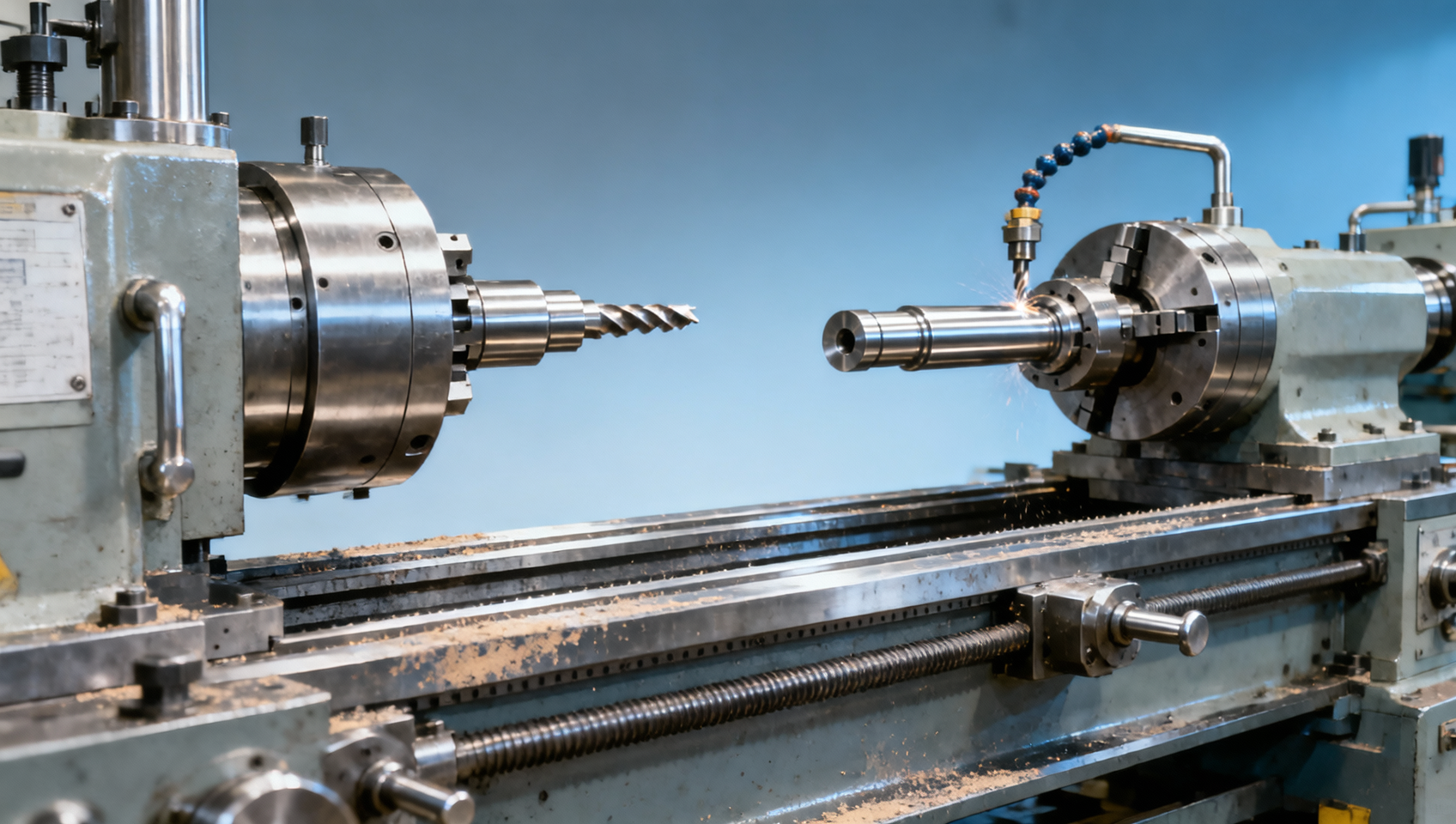
In metal machining, subtle metal lathe bed wear can quietly reduce accuracy, disrupt the production process, and raise costs across CNC production environments. For operators, buyers, and manufacturing decision-makers in industrial CNC and automated production, recognizing these easy-to-miss warning signs is essential. This article explains how hidden wear affects metal lathe performance, CNC cutting quality, and long-term reliability in today’s Manufacturing Industry.
Why metal lathe bed wear is often missed until production quality drops
Metal lathe bed wear does not always begin with obvious vibration or visible surface damage. In many workshops, the first stage appears as a slow decline in dimensional repeatability, a slight drift in parallelism, or inconsistent surface finish during runs that last 2–4 hours. Because these changes can be gradual, operators may attribute them to tooling, coolant, fixture setup, or material variation instead of bed wear.
The lathe bed is the geometric foundation of the machine. When wear develops on guideways or supporting surfaces, carriage travel no longer follows the intended path with the same consistency. In CNC lathes used for shafts, sleeves, and precision turned parts, even small alignment changes can affect taper, roundness, and finish. This is especially important in automotive, aerospace, energy equipment, and electronics production where tolerance windows are often narrow.
For procurement teams and plant managers, hidden bed wear is not only a maintenance issue. It also becomes a cost and capacity issue. Scrap rates may rise over several weeks, cycle correction frequency may increase, and operators may spend more time compensating offsets. What looks like a tooling problem can actually be a machine foundation problem that slowly reduces CNC production efficiency.
A practical way to understand the risk is to separate visible symptoms from structural causes. The table below helps buyers, service teams, and users connect daily workshop signals with possible metal lathe bed wear conditions before a full rebuild becomes urgent.
These signs do not prove bed wear by themselves, but they are strong triggers for inspection. In a precision manufacturing environment, early detection is valuable because corrective maintenance planned over 7–15 days is usually easier to manage than an emergency shutdown that interrupts delivery schedules and customer commitments.
Why the issue becomes more serious in automated and high-mix production
As manufacturing moves toward digital integration and flexible production lines, machine condition affects more than a single workstation. A worn metal lathe bed can influence downstream inspection, robotic handling consistency, and batch traceability. In a smart factory setting, one unstable machine may create hidden variation across multiple process steps.
High-mix production also exposes wear more quickly. A machine cutting both short precision discs and longer shaft parts will load guideways differently across multiple travel positions. If one zone has seen years of concentrated use, the difference may remain hidden until a new job requires wider travel and stricter geometric accuracy.
What easy-to-miss wear signs should operators and inspectors check first?
Operators usually notice the direct symptoms before maintenance teams see the root cause. A machine can still run, complete parts, and pass basic checks while wear is already affecting accuracy under load. That is why routine observation should include not only finished dimensions, but also machine behavior during acceleration, cutting engagement, and full-stroke carriage travel.
The most overlooked warning sign is positional inconsistency by location. If part diameter, taper, or finish changes depending on where the tool cuts along the bed, that pattern matters. Another warning sign is compensation creep: when operators add small offset corrections every day or every week, those small actions can hide a growing mechanical problem instead of solving it.
Inspection teams should also compare unloaded movement with actual cutting performance. A machine may move smoothly in dry testing but behave differently when cutting medium or heavy loads. This gap often matters in industrial CNC machining, where rigidity and travel accuracy must remain stable throughout the cycle rather than only during idle movement.
A structured inspection routine makes these signs easier to capture. The checklist below is useful for daily operators, supervisors, and buyers evaluating used CNC lathes before purchase.
- Check whether surface finish changes across different carriage positions on the same material and tool condition.
- Compare trial cuts at short travel and near full travel to identify localized bed wear patterns.
- Review whether offset adjustments have increased over the last 3–6 months without a clear tooling reason.
- Observe lubrication condition, contamination buildup, and unusual stick-slip motion during low-speed carriage movement.
- Verify whether test pieces show taper or dimensional drift after longer continuous runs such as 50–100 parts.
This kind of process-based checking is more effective than relying on sound alone. Many worn machines do not produce dramatic noise. Instead, they reveal themselves through repeatability loss, travel-zone variation, and unstable quality over time. For buyers, these patterns are often more meaningful than cosmetic appearance or fresh paint.
Signs that are often mistaken for tooling or programming issues
Not every accuracy problem comes from bed wear, but several symptoms overlap. Tool deflection usually changes with cutting load. Programming errors often repeat in a predictable way. Bed wear, by contrast, often shows up as a location-based error, a gradual process drift, or a repeatability problem that becomes more visible after thermal stabilization.
If two different tools and two different programs show a similar taper trend on one machine but not on another comparable machine, the probability of a mechanical geometry issue rises. That is why cross-checking between machines over 1–2 comparable jobs is useful before assuming the root cause is process programming.
A quick field judgment rule
When accuracy changes mainly by workpiece length, travel position, or accumulated run time rather than by insert brand or cutting data alone, metal lathe bed wear should move higher on the inspection list. This is not a final diagnosis, but it is a practical rule that helps avoid delayed maintenance decisions.
How bed wear affects machining accuracy, cost, and procurement decisions
The effect of bed wear reaches beyond simple machine aging. In production terms, it changes the cost structure of machining. When a CNC lathe loses geometric reliability, a company may spend more on inspection time, operator intervention, tool compensation, and rework. These hidden costs can accumulate faster than the visible repair budget, especially in medium-batch and large-batch manufacturing.
For procurement personnel, bed wear is also a decision factor in used machine evaluation and life-cycle planning. A lower purchase price may look attractive, but if guideway wear limits part tolerance capability or requires rebuilding within 3–6 months, the total ownership picture changes. Decision-makers need to compare immediate capital savings against downtime risk and future refurbishment cost.
For operators and production engineers, the risk shows up in process instability. A machine with hidden wear may still produce acceptable parts at moderate tolerance levels, but struggle when a new order requires tighter concentricity, better surface finish, or longer unsupported cuts. This creates capacity bottlenecks because not every machine on the floor remains interchangeable.
The following comparison table helps connect bed condition with practical business outcomes in procurement and production planning.
This comparison is useful because not all wear leads to the same decision. Some machines can be reassigned to roughing or secondary operations. Others remain viable only after alignment correction, guideway service, or a rebuild. The right response depends on part mix, tolerance level, utilization rate, and delivery commitments.
Three cost areas that are easy to underestimate
Many factories focus only on direct repair expense. In reality, there are at least 3 cost areas to assess together: process losses, downtime losses, and capability losses. Process losses include scrap, rework, extra inspection, and increased setup effort. Downtime losses include delayed orders and disrupted production scheduling. Capability losses include losing the ability to quote tighter tolerance jobs profitably.
In competitive manufacturing markets, capability loss can be the most serious. If a worn CNC lathe can no longer support higher-value precision work, the business impact may exceed the maintenance bill. That is why bed wear assessment belongs in both maintenance planning and commercial planning.
How to inspect, evaluate, and choose the right response
A sound evaluation process should move from simple observation to measured verification. First, confirm whether the quality issue is repeatable. Second, isolate whether the error changes by travel position, load, or thermal condition. Third, decide whether the machine remains fit for its current job mix. This 3-step logic prevents rushed decisions and helps plants avoid replacing machines that only need targeted service.
For used equipment buyers, inspection should include both static and dynamic checks. Static checks may cover visible guideway condition, lubrication quality, and basic alignment history. Dynamic checks should include trial cutting, repeatability evaluation over several cycles, and observation at different bed positions. A machine can look acceptable during idle travel but still fail under production conditions.
For current owners, the response options usually fall into 4 paths: continue with monitored use, reassign the machine to lower-precision work, perform targeted maintenance or alignment correction, or plan a rebuild or replacement. The correct choice depends on part tolerance, throughput demand, and expected machine utilization over the next 12–24 months.
The table below provides a practical selection guide for these response paths.
This decision model helps different stakeholders work from the same criteria. Operators focus on symptoms, maintenance teams focus on mechanical condition, buyers focus on investment value, and managers focus on delivery stability. A shared evaluation framework reduces internal disagreement and speeds up practical action.
A useful 4-step inspection process
- Review recent production records for scrap, offsets, taper trends, and location-related defects over the past 4–12 weeks.
- Run controlled test cuts at different bed positions using the same material, tooling condition, and cutting parameters.
- Check lubrication, contamination, carriage smoothness, and whether behavior changes after thermal warm-up.
- Match the findings to future production needs before choosing monitoring, repair, reassignment, or replacement.
In many cases, the most effective decision is not the fastest one. Plants that evaluate bed wear against actual production plans make better investments than those reacting only to one week of poor results.
Standards and compliance perspective
When geometric accuracy or acceptance testing is discussed, many manufacturers refer to common machine tool inspection practices and internationally used alignment methods. The exact standard applied will depend on machine type, customer requirements, and regional practice, but the principle remains the same: machine condition should be verified with traceable measurement methods, not only operator judgment.
Common misconceptions, FAQ, and what smart buyers should ask
Metal lathe bed wear is often misunderstood because the machine may still operate and produce acceptable parts in some conditions. That leads many teams to delay action until a key order fails or a customer rejects a batch. The better approach is to ask targeted questions early, especially when evaluating used CNC lathes, planning factory upgrades, or managing mixed-precision production.
The FAQ below addresses common search intent from researchers, machine users, procurement teams, and company decision-makers. Each answer focuses on practical judgment rather than theory alone.
Can software compensation solve metal lathe bed wear?
Compensation can help in limited cases, especially when the error is stable, well measured, and narrow in scope. However, compensation does not restore rigidity, contact condition, or true guideway geometry. If the wear pattern changes with temperature, load, or travel position, compensation becomes less reliable. For precision CNC machining, it should be treated as a temporary or supplementary measure, not a full solution.
How often should a production lathe be checked for hidden bed wear signs?
For machines running daily in medium or high utilization, a basic condition review each month is sensible, with deeper inspection every quarter or when recurring quality drift appears. Shops handling tighter tolerance parts or long-shaft production may need more frequent checks, especially after workload changes, crashes, or prolonged heavy cutting periods.
What should buyers ask before purchasing a used CNC lathe?
Ask for maintenance history, alignment or accuracy records, lubrication service evidence, and recent sample part results. Request a cutting test over different bed positions, not just an idle movement demonstration. Also confirm the machine’s previous application. A machine used mainly for one repeated short-stroke job may show concentrated wear in one zone even if the rest of the machine appears clean.
Is bed wear equally serious for all applications?
No. The severity depends on part geometry, tolerance demand, batch volume, and whether the machine is expected to hold consistency across long travel. For roughing, secondary machining, or less critical components, moderate wear may remain manageable. For precision shafts, sealing surfaces, or high-accuracy structural parts, the same wear may be commercially unacceptable.
Why choose us for CNC machining industry insight and next-step support
In the global CNC machine tool industry, better decisions come from combining technical understanding with market awareness. Our platform focuses on CNC machining, precision manufacturing, industrial automation, and international equipment trade. That means we do not look at metal lathe bed wear as an isolated maintenance topic. We connect machine condition with production stability, sourcing strategy, upgrade planning, and long-term manufacturing competitiveness.
For information researchers, we can help clarify technical terminology, application differences, and market trends across CNC lathes, machining centers, and automated production systems. For operators and users, we support practical judgment on machine condition, process risk, and inspection priorities. For buyers and decision-makers, we help compare equipment options, refurbishment logic, lead-time expectations, and fit-for-purpose selection criteria.
If you are reviewing a worn lathe, sourcing a replacement, or comparing rebuild versus new equipment, contact us with the details that matter: part type, tolerance level, machine travel, current quality issues, expected delivery cycle, and target budget range. We can help you discuss parameter confirmation, machine selection, application suitability, typical delivery windows, customization direction, certification-related questions, and quotation communication in a way that fits real B2B manufacturing needs.
A good next step is simple. Send your machining scenario, production volume, and current machine concerns. Whether you need guidance on used equipment evaluation, precision manufacturing risk assessment, or CNC production line planning, we can help turn scattered symptoms into a more confident procurement or maintenance decision.
PREVIOUS ARTICLE
Recommended for You
 Heavy-duty Machining Center for mold making: Why coolant filtration standards evolve faster than OEM manualsMachine Tool Industry Editorial Team
 Quick-change Fixture Design for CNC turning: Why clamping force consistency drops after 200 cyclesCNC Machining Technology Center
 5 Axis Machining for impeller manufacturing: Why toolpath smoothing affects surface fatigue lifeCNC Machining Technology Center
 Lean Production Process implementation: Where value stream mapping fails to expose hidden machine downtimeManufacturing Market Research Center
 Modular Tooling System for flexible manufacturing: Why interface repeatability degrades faster than expectedMachine Tool Industry Editorial Team
 Industrial Automation control system for CNC machines: When cybersecurity updates disrupt scheduled maintenanceMachine Tool Industry Editorial Team




Aris Katos
Future of Carbide Coatings
15+ years in precision manufacturing systems. Specialized in high-speed milling and aerospace grade alloy processing.
▶
Metal Lathe Accuracy Drifts After Warm Up for a ReasonMachine Tool Industry Editorial Team▶
Automated Lathe Bar Feeding Problems That Hurt UptimeMachine Tool Industry Editorial Team▶
Metal Lathe Bed Wear Signs That Are Easy to MissMachine Tool Industry Editorial Team▶
A metal lathe can lose accuracy long before it failsMachine Tool Industry Editorial Team▶
Where vertical lathe performance falls short in real productionMachine Tool Industry Editorial Team
Mastering 5-Axis Workholding Strategies
Join our technical panel on Nov 15th to learn about reducing vibrations in thin-wall components.

Providing you with integrated sanding solutions
Before-sales and after-sales services
Comprehensive technical support