• Global CNC market projected to reach $128B by 2028 • New EU trade regulations for precision tooling components • Aerospace deman
NYSE: CNC +1.2%LME: STEEL -0.4%

Metal Lathe Accuracy Drifts After Warm Up for a Reason
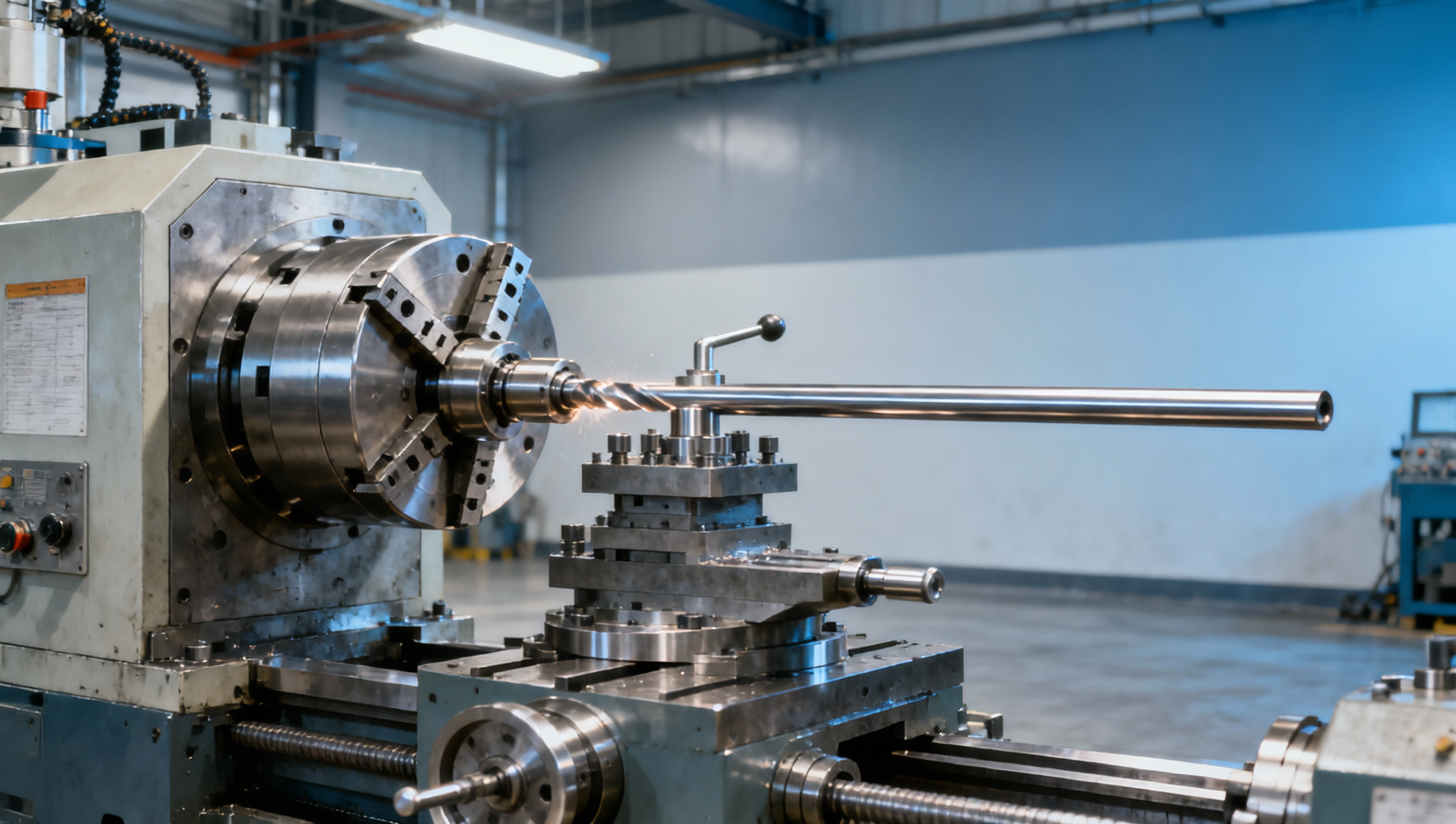
When a metal lathe starts cutting accurately cold but drifts after warm-up, the cause is rarely random. In today’s metal machining and industrial CNC environment, thermal growth, spindle behavior, lubrication changes, and production process conditions can all affect CNC metalworking precision. This article explains why accuracy shifts occur, how operators and buyers can identify the source, and what practical steps improve stability in automated production.
Why does a metal lathe lose accuracy after warm-up?
A metal lathe does not warm evenly. The spindle, headstock, ballscrews, turret, guideways, hydraulic unit, and coolant circuit all rise in temperature at different speeds during the first 20–90 minutes of operation. That uneven thermal growth changes tool center position, spindle axis alignment, and even clamping behavior. In precision turning, a small shift of a few microns can already show up as taper, diameter drift, poor roundness, or unstable surface finish.
In conventional workshop discussions, operators often blame “machine age” first. In reality, warm-up drift may appear on both older manual lathes and newer CNC turning centers. The difference is that modern CNC machines usually run at higher spindle loads, faster feed transitions, and longer duty cycles, so heat builds faster. When production shifts from trial cuts to continuous batches, thermal behavior becomes much more visible.
For information researchers and production engineers, the key point is simple: cold accuracy and thermal stability are not the same metric. A lathe may pass an initial test piece, then move outside tolerance after 30 pieces or after 2–3 hours of continuous work. Buyers who compare machines only by static brochure accuracy often miss the real operational risk.
For procurement teams and decision-makers, warm-up drift matters because it directly affects scrap rate, first-pass yield, setup frequency, and operator confidence. In automotive, aerospace, energy equipment, and electronics-related precision parts, tolerance windows may be narrow enough that thermal drift creates repeated offset corrections, slower cycle planning, and higher hidden production cost.
The most common sources of thermal accuracy drift
- Spindle heating from speed, preload, bearings, and cutting load, especially during long runs above medium RPM ranges.
- Ballscrew and servo motor heat generation, which can shift axis positioning after repeated rapid moves or dense cycle patterns.
- Lubrication viscosity change in the first 15–45 minutes, affecting friction, slideway motion, and repeatability.
- Coolant temperature change, especially when a shop starts cold in the morning and the coolant tank gradually rises toward room or machine temperature.
- Chuck and workholding expansion, which can alter gripping force and part seating on thin-wall or long shaft components.
These causes are especially relevant in the global CNC machine tool industry because higher automation and unattended production reduce the chance for frequent manual correction. As factories adopt smart manufacturing, thermal consistency becomes a machine selection issue, not only a maintenance topic.
How can operators identify whether drift comes from heat, mechanics, or process setup?
Diagnosis should start with pattern recognition. If the part dimension changes gradually from piece 1 to piece 10, then stabilizes, thermal growth is a strong suspect. If the error appears randomly across the whole shift, look more closely at tool wear, chuck pressure, insert seating, or material variation. If drift changes with spindle speed bands, spindle and bearing temperature behavior deserve closer review.
A practical shop-floor method is to separate the machine from the process in 3 stages: idle warm-up, no-load motion test, and loaded cutting test. Run the spindle and axes without cutting for 20–30 minutes, measure repeatability, then compare against measurements taken after real cutting cycles. This helps determine whether the problem is machine thermal movement or cutting-force-related displacement.
Operators should also track where the error appears. Diameter growth often points toward X-axis or thermal expansion around the spindle and tool position. Taper on long shafts may indicate headstock-to-tailstock alignment shift, bed growth, or workholding movement. Face flatness issues may come from Z-axis behavior, turret seating, or inconsistent chucking after temperature rise.
For purchasing staff evaluating suppliers, the right question is not only “What is the machine accuracy?” but also “How is thermal stability controlled during continuous operation of 1–4 hours?” That discussion reveals whether the supplier understands real production conditions, not only acceptance testing.
A quick troubleshooting sequence for shop use
- Measure a cold-start reference part and record spindle speed, feed, coolant state, and ambient temperature.
- Repeat the same cycle after 30 minutes, 60 minutes, and 120 minutes without changing tooling or offsets.
- Check spindle housing, ballscrew support, and hydraulic unit temperatures using the same method each time.
- Run a no-cut positioning repeatability test to isolate mechanical motion from cutting load effects.
- Review tool wear land, insert edge condition, chuck pressure, and coolant concentration before changing machine geometry settings.
This sequence is useful because it prevents a common mistake: adjusting geometry compensation too early. If the root cause is actually tooling, lubrication, or clamping, repeated offset edits will only hide the problem for a short period.
Typical symptom mapping
The table below helps operators and engineers connect visible part defects with likely warm-up related causes. It is not a substitute for machine inspection, but it can reduce diagnostic time during production transfer, first article approval, or supplier evaluation.
A structured symptom map improves communication between operators, maintenance teams, and machine suppliers. It also helps buyers ask better technical questions before committing to a turning center for high-precision or multi-shift production.
Which machine design and process conditions influence warm-up stability the most?
Machine design has a direct effect on how a metal lathe behaves after warm-up. Bed structure, spindle cartridge design, bearing preload strategy, ballscrew mounting, and thermal compensation logic all matter. In many CNC machine tool applications, the real gap between machines is not peak speed or brochure power, but how predictably they hold geometry from the first cycle to the hundredth cycle.
Environmental conditions are just as important. Shop temperature swings of 5°C–10°C across a day can create measurable drift, especially when machines sit near loading doors, compressed-air discharge points, or heat-producing furnaces. Coolant management also matters. If coolant starts much colder than machine structure and rises significantly during the first hour, the process can shift even when the machine itself is mechanically healthy.
Production style changes the thermal load profile. Short prototype runs, medium-batch turning, and 24/7 automated cell operation do not stress a machine in the same way. A machine that performs acceptably in intermittent use may struggle in continuous operation with long spindle-on time, repeated acceleration, and frequent turret indexing.
This is why application matching is critical across automotive shafts, aerospace sleeves, energy equipment components, and electronics-related precision metal parts. In global precision manufacturing, thermal behavior is increasingly linked to digital process control, predictive maintenance, and lower intervention production models.
Key factors buyers and engineers should compare
The table below compares common factors that influence warm-up accuracy drift and shows how they affect purchasing and process planning decisions for CNC metalworking operations.
A comparison like this is more useful than a simple specification sheet because it links design features to production results. For procurement teams, it supports a total-cost view rather than a purchase-price-only decision.
Process conditions that often amplify drift
- Long spindle-on cycles above typical daily averages, especially in the first 1–2 hours of shift start.
- Aggressive roughing followed immediately by tight-tolerance finishing without a stable thermal condition.
- Thin-wall parts or slender shafts that react strongly to chuck force and heat transfer from the workholding system.
- Frequent product changeover where every setup begins from a cold or semi-cold machine state.
In many facilities, better results come not from a major machine rebuild but from aligning machine type, duty cycle, thermal routine, and part family more intelligently.
What practical steps improve metal lathe accuracy stability in daily production?
The first improvement is a controlled warm-up routine. For many CNC lathes, 15–30 minutes of spindle and axis motion before critical finishing work is a practical starting point. The exact time depends on spindle size, machine structure, speed range, and whether the machine was idle overnight or only paused briefly. The goal is not to waste time, but to reach a repeatable thermal condition before tolerance-sensitive cutting begins.
Second, standardize measurement timing. If one operator measures after the part cools for 10 minutes and another measures immediately, data will be inconsistent. A stable inspection method should define at least 4 items: measurement point in the cycle, part temperature condition, gauge type, and sampling frequency. This is especially important in automated production cells where process decisions depend on trend consistency.
Third, verify supporting systems, not just the machine axes. Coolant concentration, filtration, tank cleanliness, lubrication level, hydraulic stability, chuck condition, and insert clamping all influence what appears to be “machine drift.” In many plants, one maintenance review per month and one deeper process review per quarter can prevent recurring accuracy complaints from becoming scrap problems.
Fourth, use data logging whenever possible. Recording part dimensions over 20, 50, or 100 consecutive pieces gives far more insight than reacting to a single out-of-tolerance part. Even a simple manual sheet with timestamp, machine state, offset value, and spindle speed can reveal whether the drift is progressive, speed-dependent, or tied to tool life.
A shop-floor checklist for stable CNC turning
- Create separate startup routines for cold morning start, short pause restart, and full-day continuous production.
- Use the same warm-up spindle speed bands each day instead of informal operator judgment.
- Inspect chuck jaws, tailstock centers, and insert pockets at fixed intervals such as every shift or every batch change.
- Trend offsets by time rather than deleting old values, so process drift becomes visible.
- Separate thermal compensation issues from tool wear by changing only one variable at a time.
For high-mix factories, these steps also support faster setup transfer and more realistic machine utilization planning. For low-mix, high-volume factories, they reduce repeated micro-adjustments that consume skilled labor without improving capability.
Where standards and acceptance thinking help
When discussing precision machine tools, teams often refer to common acceptance and test concepts associated with machine tool geometry, positioning, and repeatability. Even when no specific standard is written into a purchase order, using structured test logic helps. A practical acceptance plan should include cold checks, warm checks after defined running time, and trial cuts under realistic load conditions rather than idle-only demonstrations.
This matters in international trade as well. Global buyers sourcing from machine tool clusters in China, Germany, Japan, South Korea, and other regions should align on test conditions early. Without the same spindle-on duration, ambient condition range, tooling approach, and measurement method, one supplier’s “accuracy result” may not match another’s in any meaningful way.
How should buyers evaluate a lathe when thermal stability affects cost, quality, and delivery?
Buyers should treat thermal stability as part of the procurement specification, not as a service issue to solve later. In a B2B environment, poor warm-up behavior can increase sampling time, delay first article approval, raise scrap during shift start, and force experienced operators to spend extra time on offsets. These costs are rarely obvious in the quotation, but they become visible within the first weeks of production.
A stronger sourcing approach is to compare machines across 3 decision layers: static accuracy, thermal repeatability, and process compatibility. Static accuracy matters for installation and geometry. Thermal repeatability matters for batch production. Process compatibility matters for your real mix of materials, duty cycles, tolerance bands, and automation level. Ignoring any one of these layers can distort the investment decision.
For budget-limited projects, it may be more economical to buy a machine with proven thermal behavior than a lower-price model that demands constant operator intervention. For high-precision sectors, the better question is not “What is the cheapest turning center?” but “Which solution gives stable tolerance across a 1-shift, 2-shift, or lights-out production pattern?”
Decision-makers should also consider service response, spare parts access, commissioning support, and process optimization capability. A supplier that understands machining applications, not just machine assembly, can reduce startup risk significantly.
Procurement questions worth asking before purchase
The table below can be used during quotation comparison, supplier meetings, or technical clarification rounds. It helps buyers connect machine design claims to practical outcomes in precision manufacturing and automated production.
This procurement view is especially relevant for companies scaling from manual or semi-automatic machining into digitalized CNC production. As automation rises, hidden instability becomes more expensive because it interrupts the very efficiency the investment was meant to create.
Common misconceptions that delay the right decision
“If the first part is good, the machine is fine”
Not always. A machine can make an accurate first part and still drift over the next 30–60 minutes. Continuous-run performance must be checked separately.
“Only old lathes suffer from warm-up drift”
Not true. New CNC lathes can show drift too, especially under aggressive cycles, poor environment control, or mismatched application conditions.
“More offset correction means better process control”
Frequent correction may only mean the root cause remains unresolved. Good control reduces the need for repeated intervention rather than normalizing it.
FAQ and next-step guidance for operators, buyers, and decision-makers
How long should a CNC metal lathe warm up before precision work?
There is no universal time because machine size, spindle design, and workload differ. In many workshops, 15–30 minutes of controlled spindle and axis motion is a practical baseline for precision work, while heavy-duty or high-speed applications may need longer validation. The important point is to build a repeatable routine and confirm results with measured parts, not assumptions.
Can thermal compensation alone solve warm-up accuracy drift?
Thermal compensation can help, but it should not be expected to solve every issue. If the root cause involves chuck distortion, unstable coolant temperature, poor lubrication, or tool wear, software compensation will only partially mask the problem. Good results usually come from combining machine design, controlled environment, stable process parameters, and disciplined maintenance.
What should a buyer request during machine evaluation?
Ask for a test plan that includes cold start, defined warm running, and cutting under representative load. Request clear acceptance logic for geometry, repeatability, and trial part stability over time. If your production involves batch turning, shaft components, precision discs, or multi-shift use, those conditions should be reflected in the evaluation process.
Which industries are most sensitive to warm-up drift in turning operations?
Automotive, aerospace, energy equipment, electronics production, and precision subcontract machining are especially sensitive because they often combine tight tolerances, repeat orders, and pressure for high first-pass yield. In these sectors, even small dimensional trends can affect assembly fit, inspection rejection, and delivery reliability.
Why choose us for CNC machining insight and sourcing support?
We focus on the global CNC machining and precision manufacturing industry, with attention to machine tool application, production stability, market trends, and international sourcing reality. That means we can help you look beyond simple catalog accuracy and evaluate what matters in real metal lathe performance: thermal behavior, process matching, delivery planning, and long-term operating value.
If you are comparing CNC lathes, turning centers, tooling combinations, or production line upgrades, you can contact us to discuss practical topics such as parameter confirmation, machine selection for shaft or disc parts, expected lead time ranges, customization needs, inspection logic, and common tolerance risks after warm-up. This is especially useful when your team includes both technical users and non-technical buyers.
We can also support quotation-stage communication by helping clarify application conditions, part characteristics, batch size expectations, service scope, and supplier comparison criteria. For projects involving automation, smart factory planning, or international equipment sourcing, early technical alignment often prevents costly misunderstandings later in commissioning.
If your current concern is metal lathe accuracy drift after warm-up, reach out with your part type, material, tolerance band, operating duration, and current machine configuration. Based on those inputs, the next conversation can focus on the right items: source diagnosis, selection advice, delivery planning, sample support options, and quotation communication that matches your actual production goals.
PREVIOUS ARTICLE
NEXT ARTICLE
Recommended for You
 Global Manufacturing Lead Times Improve but Not EverywhereGlobal Machine Tool Trade Research Center
 Machine Tool Market Inventory Pressure Is Building AgainGlobal Machine Tool Trade Research Center
 Metal Lathe vs CNC Milling for Low Volume Round PartsCNC Machining Technology Center
 CNC Cutting Gas Choice Affects More Than Edge FinishCNC Machining Technology Center
 CNC Metalworking Shops Face New Pressure on TraceabilityManufacturing Policy Research Center
 Automated Lathe Cycle Time Gains Can Hide Quality LossesCNC Machining Technology Center


Aris Katos
Future of Carbide Coatings
15+ years in precision manufacturing systems. Specialized in high-speed milling and aerospace grade alloy processing.
▶
Metal Lathe Accuracy Drifts After Warm Up for a ReasonMachine Tool Industry Editorial Team▶
Automated Lathe Bar Feeding Problems That Hurt UptimeMachine Tool Industry Editorial Team▶
A metal lathe can lose accuracy long before it failsMachine Tool Industry Editorial Team▶
Where vertical lathe performance falls short in real productionMachine Tool Industry Editorial Team▶
Automated lathe errors that often start with bar feedingMachine Tool Industry Editorial Team
Mastering 5-Axis Workholding Strategies
Join our technical panel on Nov 15th to learn about reducing vibrations in thin-wall components.

Providing you with integrated sanding solutions
Before-sales and after-sales services
Comprehensive technical support