• Global CNC market projected to reach $128B by 2028 • New EU trade regulations for precision tooling components • Aerospace deman
NYSE: CNC +1.2%LME: STEEL -0.4%

CNC production delays often start with one planning mistake
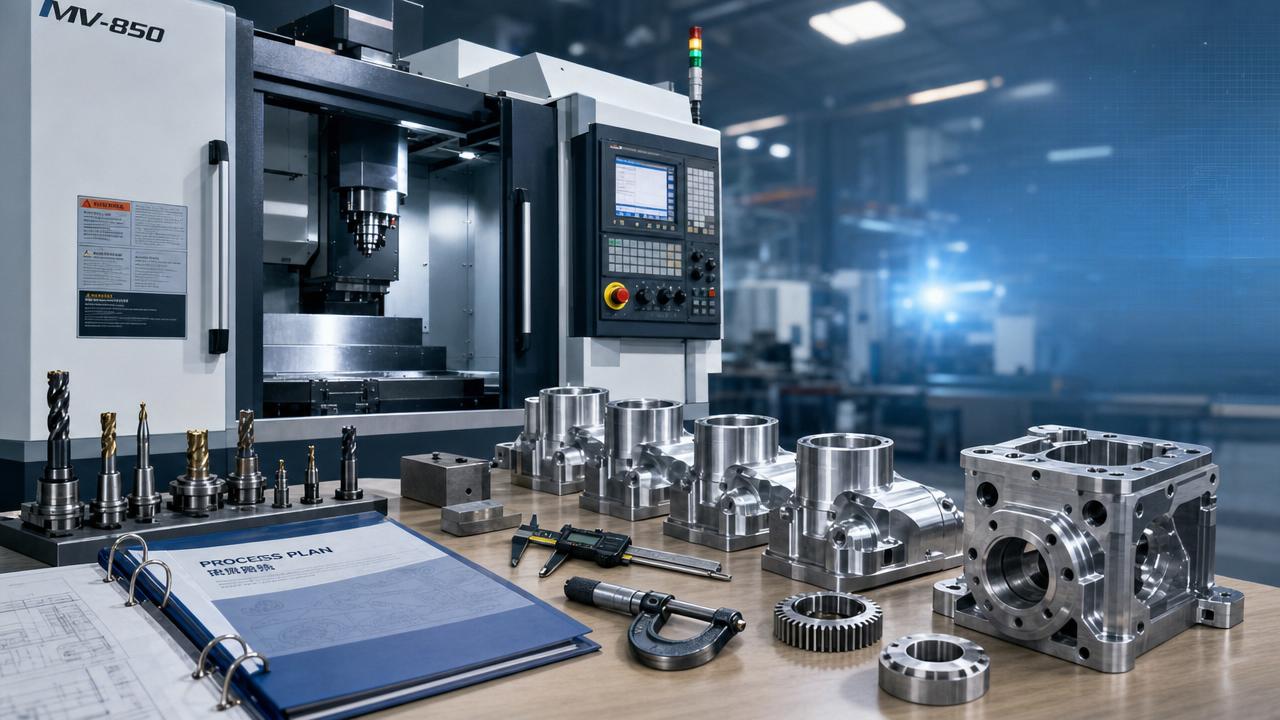
In CNC production, costly delays often begin long before the first cut is made. For project managers and engineering leads, a single planning mistake—whether in scheduling, material readiness, tooling, or process coordination—can disrupt delivery targets and increase production risk. Understanding where planning fails is the first step to keeping precision manufacturing projects on time, efficient, and competitive.
When people search for why CNC production gets delayed, they are usually not looking for a generic list of shop-floor problems. They want to know which early decision creates the biggest schedule risk, how to spot it before machining starts, and what practical controls can reduce missed deadlines. For project managers, the answer is often the same: production is launched before the full manufacturing plan is truly ready.
That mistake sounds simple, but its impact is broad. A job may be released with an incomplete routing, an unverified setup sequence, uncertain raw material lead times, missing fixtures, unstable programming assumptions, or unrealistic capacity expectations. On paper, the project is “in progress.” In reality, the team has only moved the uncertainty downstream, where every correction becomes more expensive.
In modern CNC production, especially in high-mix, precision-focused environments, schedule performance depends less on how fast a machine can cut and more on how well the entire process is aligned before release. Machine time is valuable, but coordinated readiness across engineering, procurement, quality, tooling, and scheduling is what protects delivery.
What is the planning mistake that causes most CNC production delays?
The most common planning mistake is releasing work to production before the manufacturing system is fully synchronized. In practical terms, this means the project plan assumes that material, tooling, CNC programs, inspection methods, machine capacity, and operator readiness will come together on time, even though one or more of them has not been confirmed.
For engineering leaders, this is not just a documentation issue. It is a decision-quality issue. If the production plan is built on assumptions instead of verified readiness, the schedule becomes fragile. The first disruption then triggers a chain reaction: machines wait for material, setups take longer than expected, quality inspection bottlenecks appear, and downstream operations lose their slots.
In many factories, delays are blamed on urgent orders, supplier problems, or operator shortages. Those issues are real, but they often expose a deeper planning failure. The original mistake was not that a challenge appeared. It was that the plan had no realistic buffer, no cross-functional validation, and no clear gate to prevent premature release.
For project managers responsible for customer commitments, this distinction matters. If you treat every delay as an isolated event, you keep firefighting. If you recognize that weak pre-production planning is the root issue, you can build a repeatable system that improves delivery reliability across multiple projects.
Why incomplete readiness hurts more than most teams expect
CNC production operates within a tight web of dependencies. A machining center may be available, but if the cutting tools have not arrived, the fixture is still being modified, or the first article inspection plan is incomplete, the machine is not truly available for productive output. This is why schedule confidence should never be based on machine calendars alone.
One of the biggest hidden costs of incomplete planning is the false sense of progress. Once a work order is released, stakeholders often assume the job is moving. However, released work can sit in queues, consume attention, disrupt priority rules, and create pressure for shortcuts. The production board looks active, but the actual throughput may be deteriorating.
Another issue is that early planning gaps usually multiply during execution. A missing tool is not just a purchasing problem. It can force setup changes, affect cutting parameters, require program edits, delay first article approval, and shift labor to less efficient workarounds. By the time management sees the delay, the root cause has already spread across departments.
This matters even more in precision manufacturing sectors such as aerospace, automotive components, electronics, and energy equipment. In these environments, tolerances are tighter, documentation is stricter, traceability is more important, and any planning error can create both schedule loss and compliance risk. The more complex the part or the process, the more expensive reactive correction becomes.
Where project managers should look first when a CNC schedule seems at risk
When a CNC production project starts to slip, many teams jump directly to expediting. They push suppliers, request overtime, or reshuffle machine loading. Sometimes that helps, but those actions are only effective if the real bottleneck has been identified. Project managers should first review readiness at five critical points.
The first is material readiness. Has the raw material been ordered, received, inspected, and confirmed against the latest drawing and specification? Material availability is not binary. A bar, forging, or casting may be on-site, but if certification is incomplete or dimensions vary from the process assumption, machining cannot start smoothly.
The second is tooling and fixture readiness. Are all standard and special tools available? Have fixture designs been released, built, tested, and approved? Many CNC production delays begin when a team assumes that “tooling will be ready by the time the machine is free.” That assumption often fails under schedule pressure.
The third is process and programming maturity. Has the routing been validated? Are setup strategies realistic? Has the CNC program been simulated or tested for collision risk and cycle-time reasonableness? If process planning is still evolving after production release, the schedule is already carrying avoidable instability.
The fourth is inspection readiness. Is there a clear first article plan, gauge availability, CMM capacity, and agreement on critical characteristics? A finished part is not truly complete until it can be verified. In high-precision work, quality planning should be treated as part of production readiness, not an afterthought.
The fifth is capacity realism. Does the schedule reflect actual available machine time, including setup, prove-out, inspection, maintenance, and operator constraints? Many plans fail because they treat nominal capacity as usable capacity. For project leads, this is one of the easiest traps to miss and one of the most damaging when deadlines are tight.
How the wrong scheduling logic creates downstream delays
Even when engineering preparation is strong, CNC production can still be delayed by flawed scheduling logic. A common error is scheduling by due date alone instead of by readiness and constraint. This creates a queue of high-priority jobs that all compete for the same machine family, setup expertise, or inspection resource at the same time.
Another issue is ignoring setup concentration. In precision machining, setup changes can consume significant time. If scheduling decisions frequently switch part families, spindle utilization drops and lead time expands. From a project perspective, the problem is not just inefficiency. It is unpredictability. The plan becomes harder to trust, and every urgent order disrupts more work than expected.
Multi-operation components introduce further risk. A part may require turning, milling, heat treatment, grinding, and final inspection. If each step is planned independently, small delays accumulate between handoffs. A one-day slip in one operation can become a week-long delay if the next constrained process has already filled its capacity window.
For managers, the lesson is clear: scheduling in CNC production should be constraint-aware, readiness-based, and cross-process coordinated. A job should not be prioritized simply because the customer wants it soon. It should be prioritized when the entire path to completion has a realistic chance of being executed without interruption.
What a better CNC production planning system looks like
The best-performing teams do not eliminate all uncertainty. They reduce avoidable uncertainty before release and make remaining risk visible. That starts with a formal pre-production readiness review. Before a job enters active production scheduling, the team confirms material, tooling, program status, fixture readiness, inspection requirements, and machine routing assumptions.
This review should not be overly bureaucratic, but it must be disciplined. A short gate checklist can prevent long downstream losses. For example, teams can classify each project as ready, conditionally ready, or not ready. Conditional release should be limited and clearly controlled, not used as the default response to customer pressure.
High-value CNC production planning also relies on ownership clarity. One person may coordinate the project, but readiness is cross-functional. Engineering owns process definition, procurement owns supply timing, production planning owns capacity logic, quality owns inspection readiness, and operations owns execution feedback. Delays often grow when these responsibilities are blurred.
Digital visibility also improves outcomes. Shops that connect ERP, MES, tooling data, and quality workflows can identify risks earlier than shops managing readiness through disconnected spreadsheets and informal updates. Technology alone is not the answer, but integrated data helps managers distinguish between assumed readiness and verified readiness.
Another useful practice is planning with risk categories instead of treating all jobs equally. New part introductions, tight-tolerance parts, multi-axis work, outsourced secondary operations, and customer-critical launches should carry higher planning scrutiny. Routine repeat work can often move faster with standardized controls. This focus helps teams spend planning effort where delay risk is truly highest.
Questions engineering leaders should ask before approving production release
Project managers do not need to micromanage every technical detail, but they do need the right questions. Before approving a production launch, ask whether the process plan has been validated against the current drawing revision. Small engineering changes can invalidate tooling, setup logic, or inspection methods if not reflected everywhere.
Ask whether material lead times and supplier commitments have been verified recently, not just copied from historical assumptions. In volatile supply conditions, old purchasing data can create false confidence. A plan is only as strong as its latest confirmed dependency.
Ask whether the CNC program is proven, partially proven, or still theoretical. There is a major difference between simulated readiness and demonstrated readiness. If the first setup is likely to require substantial tuning, the delivery plan should reflect that reality.
Ask whether bottleneck resources beyond machines have been considered. These may include fixture assembly, special tool presetting, CMM inspection, deburring, heat treatment vendors, or experienced setup personnel. In many factories, these constraints cause more delay than spindle availability itself.
Finally, ask what could stop this job within the first 48 hours of release. This question often surfaces the most practical risks quickly. If the answers are vague, confidence in the schedule should be low. If the risks are known and controlled, the plan is much more likely to hold.
Business value: why fixing one planning mistake improves more than on-time delivery
For target readers in management and project leadership roles, the benefit of better planning is not limited to shorter lead times. Stronger CNC production planning improves margin protection. Every unplanned interruption adds hidden cost through overtime, scrap risk, machine idling, expedited freight, engineering rework, and schedule disruption to other orders.
It also improves customer trust. In many industrial markets, buyers can tolerate a realistic lead time more easily than an unreliable one. When delivery commitments are based on actual readiness, communication becomes more credible. This supports long-term customer relationships, especially in sectors where precision, traceability, and launch timing are critical.
Internally, planning discipline improves decision speed. Teams spend less time debating status because readiness criteria are clearer. Escalations become more meaningful because they focus on verified risks instead of assumptions. Over time, management gains a better understanding of where capacity investment, supplier development, or process standardization will produce the strongest return.
There is also a strategic advantage. As global manufacturing moves toward higher precision, digital integration, and more flexible production, the companies that win are not only the ones with advanced machines. They are the ones that can turn customer demand into predictable output with fewer surprises. Planning maturity becomes a competitive capability, not just an internal process issue.
Conclusion: the first real fix for CNC production delays happens before machining begins
CNC production delays rarely start at the machine. More often, they start when a project is released on the basis of hope rather than verified readiness. For project managers and engineering leads, the single most important shift is to treat production launch as a controlled commitment, not a symbolic start date.
If material, tooling, programming, inspection, and capacity are not aligned, the schedule is already vulnerable. If they are aligned through a clear readiness process, many downstream problems become manageable or avoidable. That is why the most effective way to reduce CNC production delays is not simply to work harder during execution. It is to plan more rigorously before execution begins.
For leaders responsible for delivery, cost, and customer confidence, this is the key takeaway: the planning mistake is usually not one dramatic error. It is the quiet decision to move forward without full coordination. Correct that decision, and on-time performance, resource efficiency, and production stability all become much easier to achieve.
Recommended for You
![]() Five Ministries Launch Joint Enforcement on EV Battery RecyclingManufacturing Policy Research Center
Five Ministries Launch Joint Enforcement on EV Battery RecyclingManufacturing Policy Research Center![]() Top 10 Future Industries Roadmap 2026 ReleasedManufacturing Market Research Center
Top 10 Future Industries Roadmap 2026 ReleasedManufacturing Market Research Center![]() Global Methanol-Electric Ecosystem Alliance LaunchedManufacturing Market Research Center
Global Methanol-Electric Ecosystem Alliance LaunchedManufacturing Market Research Center![]() ISO 23218-3:2026 Enters Force: CNC Digital Twin Interoperability Standard Goes GlobalCNC Machining Technology Center
ISO 23218-3:2026 Enters Force: CNC Digital Twin Interoperability Standard Goes GlobalCNC Machining Technology Center![]() ANVISA New Rule: Portuguese Biocompatibility Labels for Medical CNC EquipmentManufacturing Policy Research Center
ANVISA New Rule: Portuguese Biocompatibility Labels for Medical CNC EquipmentManufacturing Policy Research Center![]() KATS Updates KC Certification: CNC Cybersecurity Modules Must Comply with IEC 62443-4-2Manufacturing Policy Research Center
KATS Updates KC Certification: CNC Cybersecurity Modules Must Comply with IEC 62443-4-2Manufacturing Policy Research Center


Aris Katos
Future of Carbide Coatings
15+ years in precision manufacturing systems. Specialized in high-speed milling and aerospace grade alloy processing.
▶
Can space-saving CNC manufacturing still handle larger workloadsMachine Tool Industry Editorial Team▶
When CNC industrial upgrades start paying off on the shop floorMachine Tool Industry Editorial Team▶
How to compare industrial machining equipment for mixed-part productionMachine Tool Industry Editorial Team▶
CNC production delays often start with one planning mistakeMachine Tool Industry Editorial Team▶
What changes first when CNC industrial capacity is too smallMachine Tool Industry Editorial Team
Mastering 5-Axis Workholding Strategies
Join our technical panel on Nov 15th to learn about reducing vibrations in thin-wall components.

Providing you with integrated sanding solutions
Before-sales and after-sales services
Comprehensive technical support