• Global CNC market projected to reach $128B by 2028 • New EU trade regulations for precision tooling components • Aerospace deman
NYSE: CNC +1.2%LME: STEEL -0.4%

Can space-saving CNC manufacturing still handle larger workloads
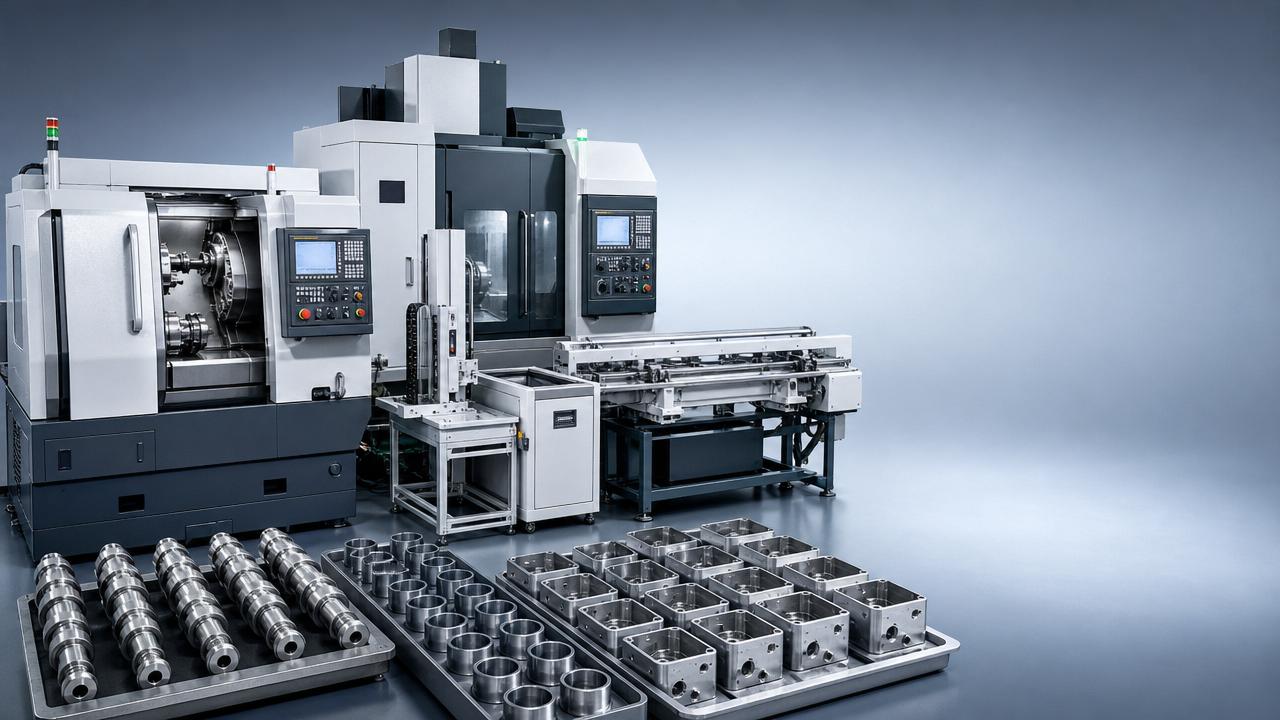
Can space-saving CNC manufacturing really keep up with larger workloads when production targets rise and floor space stays tight? In many production environments, the answer is yes—but only when compact equipment is supported by the right automation layout, spindle utilization plan, tooling strategy, and digital process control. Space-saving CNC manufacturing is no longer limited to low-volume work or simple parts. In practical terms, it can support demanding output goals across automotive components, electronics housings, energy parts, precision shafts, and mixed-batch industrial production. The critical question is not whether a smaller footprint can cut metal accurately, but whether the full system can maintain throughput, stability, and predictable delivery as workloads increase.
When does space-saving CNC manufacturing make sense for higher-output operations?
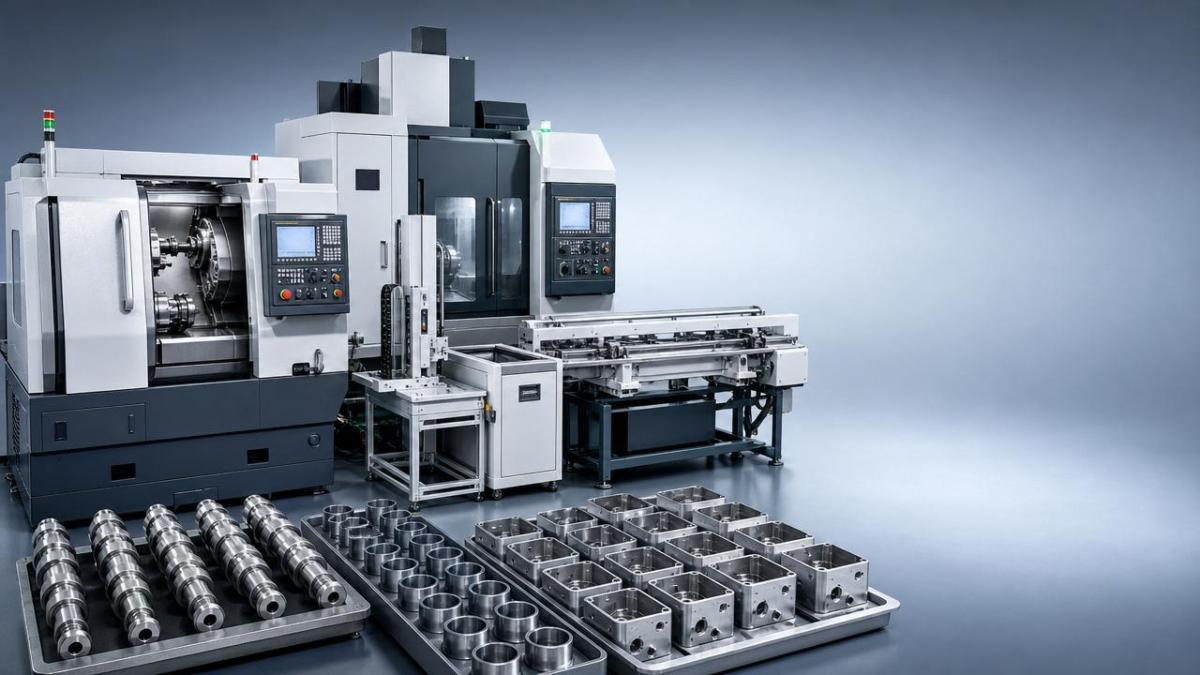
The value of space-saving CNC manufacturing becomes clear when production growth is constrained more by floor layout than by market demand. This situation is common in urban factories, retrofit workshops, high-mix production cells, and facilities that need to add capacity without expanding the building. In these settings, compact CNC lathes, vertical machining centers, multi-tasking platforms, and palletized work cells can deliver more output per square meter than traditional equipment arrangements.
However, larger workloads do not automatically fit a smaller machine footprint. A compact setup works best when cycle times are balanced, loading is standardized, and part families share fixtures, tools, or programming logic. If the workload includes frequent changeovers, unstable material supply, oversized parts, or excessive manual intervention, the benefit of space-saving CNC manufacturing can disappear quickly. The right judgment depends on production mix, tolerance level, batch size, and uptime expectations.
Which production scenarios show that compact CNC setups can scale successfully?
Scenario 1: High-mix, medium-volume parts with repeatable process windows
Space-saving CNC manufacturing performs well in high-mix environments when parts are different in shape but similar in process logic. Examples include valve bodies, precision plates, small structural brackets, motor flanges, and instrument housings. In these cases, compact machining centers can run multiple part numbers efficiently if tool libraries are standardized and setup offsets are managed through digital presets.
The key judgment point is whether the process family can share clamping methods, cutting parameters, and inspection routines. If yes, a compact CNC cell can support larger workloads by reducing idle floor space, shortening operator walking distance, and increasing machine density without causing process confusion.
Scenario 2: Precision turning and shaft work with stable demand
For shafts, bushings, sleeves, threaded connectors, and similar rotational parts, space-saving CNC manufacturing can be highly effective when demand is steady and workholding is repeatable. Compact CNC lathes with bar feeders, part catchers, and in-process gauging often achieve strong spindle utilization in a small footprint. This is especially valuable where uninterrupted output matters more than large individual machine size.
In this scenario, larger workloads are handled not by increasing machine dimensions, but by extending unattended runtime, minimizing setup variation, and using automated material feed. If process capability remains stable over long runs, compact turning cells can outperform larger, less optimized layouts on both output density and labor efficiency.
Scenario 3: Electronics, medical, and light industrial components with strict tolerance control
Compact equipment is often a strong fit for industries producing smaller precision components where thermal stability, positioning accuracy, and clean workflow matter more than maximum work envelope. Space-saving CNC manufacturing supports these workloads when machine rigidity, environmental control, and inspection integration are carefully planned. The result is a compact but capable production island that handles larger cumulative workloads through consistency rather than brute machine size.
This scenario becomes viable when the production target depends on quality retention over long operating hours. If scrap rates rise under continuous running, the small-footprint advantage is lost. Therefore, compact scalability requires stable coolant control, chip evacuation, and real-time compensation.
Scenario 4: Flexible expansion inside existing factories
A common reason to adopt space-saving CNC manufacturing is the need to expand output without relocating utilities, changing structural columns, or stopping adjacent lines. Compact machines make it possible to build modular cells near inspection, deburring, assembly, or robotic transfer areas. This shortens internal logistics and improves production flow.
In this case, larger workloads are supported through layout efficiency. The judgment point is whether reducing travel time, handling steps, and queue time produces more net capacity than simply buying a larger standalone machine. In many factories, it does.
How do workload requirements differ across compact CNC production scenarios?
Not every workload stresses a compact system in the same way. Some scenarios demand longer spindle time, while others depend more on automation, quality assurance, or changeover speed. The table below shows how space-saving CNC manufacturing should be evaluated under different operating conditions.
What makes space-saving CNC manufacturing capable of handling larger workloads?
The first factor is machine utilization. A compact machine that runs consistently at high spindle-on time can deliver more useful capacity than a larger machine with frequent waiting, manual resets, or poor scheduling. Space-saving CNC manufacturing succeeds when every square meter contributes to productive time rather than unused buffer space.
The second factor is automation depth. This does not always mean full robotics. Even simple additions—automatic doors, pallet changers, tool life management, bar feeders, and in-cycle probing—can turn a compact setup into a scalable production asset. As workloads grow, these features prevent labor bottlenecks from overwhelming machine capacity.
The third factor is process stability. Larger workloads amplify small weaknesses. Minor chip evacuation issues, inconsistent tool wear, poor datum control, or weak fixture repeatability may appear manageable at low volume but become costly during extended runs. Space-saving CNC manufacturing handles growth best when process control is built into the cell from the start.
- Standardize part families before adding more compact machines.
- Measure output per square meter, not only output per machine.
- Prioritize unattended operation for repeatable part streams.
- Use digital monitoring to detect drift before it affects larger workloads.
How should compact CNC systems be adapted for different workload profiles?
A practical adaptation plan starts with workload type, not machine catalog size. If the workload is stable and repetitive, the best route is often to increase autonomous runtime through feeders, pallet systems, and closed-loop tool management. If the workload is variable, then faster changeovers, digital setup instructions, and fixture modularity become more important than raw machine speed.
For mixed industrial production, space-saving CNC manufacturing should be configured around a balanced cell concept. That means pairing compact machines with nearby measurement, tool presetting, and organized material staging. Without these support functions, compact layouts can become crowded and lose the efficiency they were designed to create.
- For repeat shafts and turned parts: focus on bar automation, chip control, and long-run dimensional stability.
- For milled precision parts: focus on tool commonality, fixture repeatability, and thermal consistency.
- For retrofit expansion: focus on utility access, operator movement, and internal logistics flow.
- For quality-critical workloads: focus on probing, in-process verification, and scrap prevention.
What are the most common mistakes when evaluating space-saving CNC manufacturing?
One frequent mistake is assuming footprint reduction automatically means efficiency gain. In reality, space-saving CNC manufacturing only works when the surrounding workflow is also compressed intelligently. If raw material, finished parts, gauges, and tools have no defined path, congestion replaces efficiency.
Another mistake is judging scalability by spindle power alone. Larger workloads are often limited by setup discipline, inspection capacity, program consistency, and operator intervention rate. A compact machine can handle substantial demand if these variables are controlled; a larger machine can struggle if they are not.
A third oversight is ignoring maintenance access. Dense layouts must still allow service, cleaning, chip removal, and coolant management. If routine maintenance becomes difficult, uptime declines and the promised advantage of space-saving CNC manufacturing weakens over time.
What is the next practical step if larger workloads must fit into limited space?
Start with a workload map. Group parts by process similarity, estimate spindle hours by family, and identify where delays come from: setup, loading, waiting, inspection, or internal transport. Then compare the current output per square meter with the projected output of a compact CNC cell. This approach gives a realistic answer to whether space-saving CNC manufacturing can absorb larger workloads.
The strongest results usually come from phased implementation. Begin with one compact cell, validate cycle stability, measure true uptime, and expand only after process repeatability is proven. In this way, space-saving CNC manufacturing becomes a scalable production strategy rather than a simple equipment purchase. When designed around the actual application scenario, it can support larger workloads with precision, flexibility, and long-term operational efficiency.
PREVIOUS ARTICLE
NEXT ARTICLE
Recommended for You
![]() Five Ministries Launch Joint Enforcement on EV Battery RecyclingManufacturing Policy Research Center
Five Ministries Launch Joint Enforcement on EV Battery RecyclingManufacturing Policy Research Center![]() Top 10 Future Industries Roadmap 2026 ReleasedManufacturing Market Research Center
Top 10 Future Industries Roadmap 2026 ReleasedManufacturing Market Research Center![]() Global Methanol-Electric Ecosystem Alliance LaunchedManufacturing Market Research Center
Global Methanol-Electric Ecosystem Alliance LaunchedManufacturing Market Research Center![]() ISO 23218-3:2026 Enters Force: CNC Digital Twin Interoperability Standard Goes GlobalCNC Machining Technology Center
ISO 23218-3:2026 Enters Force: CNC Digital Twin Interoperability Standard Goes GlobalCNC Machining Technology Center![]() ANVISA New Rule: Portuguese Biocompatibility Labels for Medical CNC EquipmentManufacturing Policy Research Center
ANVISA New Rule: Portuguese Biocompatibility Labels for Medical CNC EquipmentManufacturing Policy Research Center![]() KATS Updates KC Certification: CNC Cybersecurity Modules Must Comply with IEC 62443-4-2Manufacturing Policy Research Center
KATS Updates KC Certification: CNC Cybersecurity Modules Must Comply with IEC 62443-4-2Manufacturing Policy Research Center


Aris Katos
Future of Carbide Coatings
15+ years in precision manufacturing systems. Specialized in high-speed milling and aerospace grade alloy processing.
▶
Can space-saving CNC manufacturing still handle larger workloadsMachine Tool Industry Editorial Team▶
When CNC industrial upgrades start paying off on the shop floorMachine Tool Industry Editorial Team▶
How to compare industrial machining equipment for mixed-part productionMachine Tool Industry Editorial Team▶
CNC production delays often start with one planning mistakeMachine Tool Industry Editorial Team▶
What changes first when CNC industrial capacity is too smallMachine Tool Industry Editorial Team
Mastering 5-Axis Workholding Strategies
Join our technical panel on Nov 15th to learn about reducing vibrations in thin-wall components.

Providing you with integrated sanding solutions
Before-sales and after-sales services
Comprehensive technical support