• Global CNC market projected to reach $128B by 2028 • New EU trade regulations for precision tooling components • Aerospace deman
NYSE: CNC +1.2%LME: STEEL -0.4%

How to compare industrial machining equipment for mixed-part production
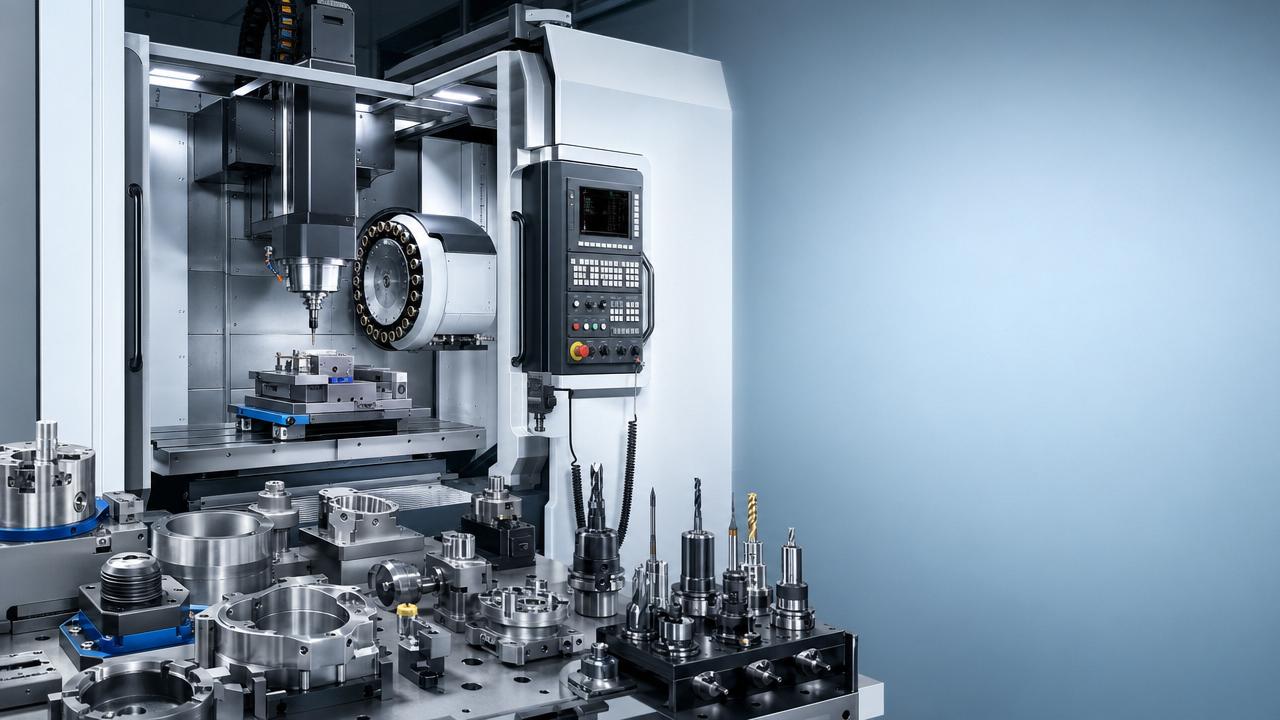
Choosing the right industrial machining equipment for mixed-part production requires more than comparing price tags or spindle speeds. Procurement teams must evaluate flexibility, precision, changeover efficiency, automation compatibility, and long-term operating costs to match diverse production needs. This guide outlines the key factors that help buyers compare equipment options with greater confidence and make smarter investment decisions.
For buyers responsible for mixed-part production, the core question is simple: which machine will handle changing part types with the lowest total risk and the best long-term return? In practice, that means looking beyond brochure specifications and comparing how equipment performs across part variety, setup frequency, operator dependence, maintenance demands, and digital integration.
The best purchasing decision is usually not the machine with the highest maximum capability. It is the one that fits your actual production mix, protects quality across different jobs, and supports future growth without creating unnecessary complexity or cost. That is especially true when production includes small batches, recurring part changes, and a need to balance flexibility with throughput.
Start with the production mix, not the machine catalog
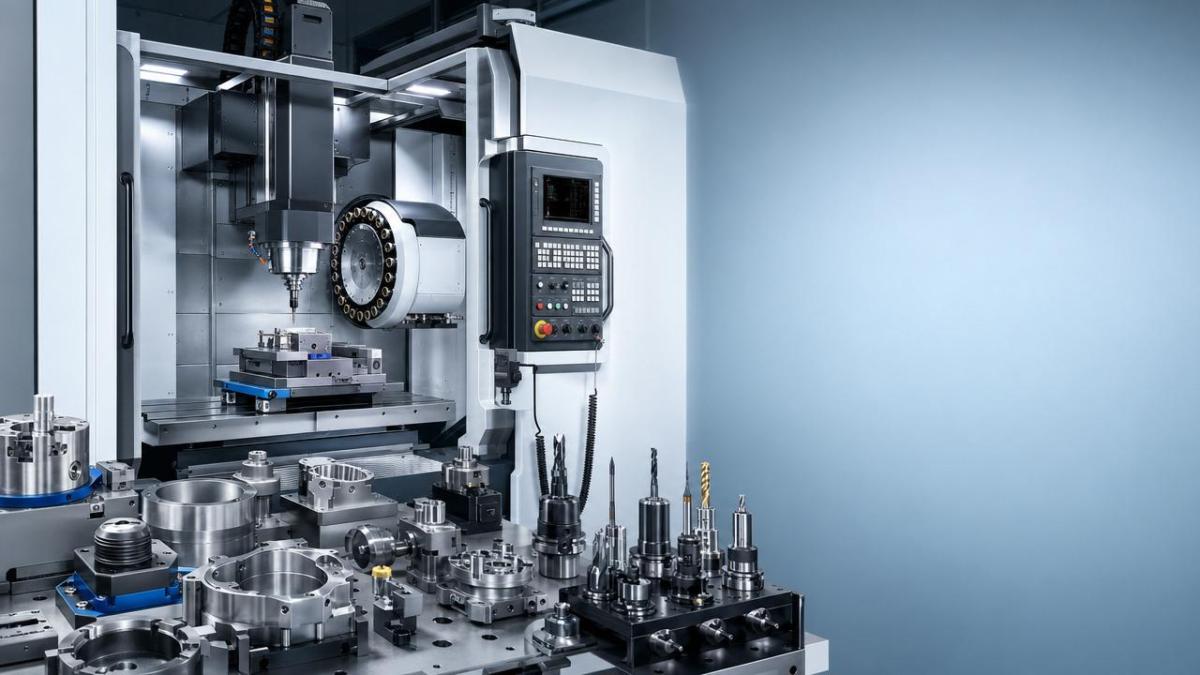
Before comparing industrial machining equipment suppliers or machine models, procurement teams should define the production profile in measurable terms. Mixed-part production can mean many things: high-mix low-volume work, medium-volume families of similar components, or a hybrid environment where repeat parts and custom jobs share the same line.
Key data points include the number of part families, material types, dimensional tolerances, average batch size, setup frequency, annual volume by part category, and expected design changes. Without this baseline, it is easy to overbuy capability that will be underused or choose a cheaper platform that becomes a bottleneck as complexity rises.
A useful comparison method is to group parts by machining behavior rather than by customer name or drawing number. For example, classify them by turning versus milling dominance, axis requirements, surface finish demands, fixturing complexity, and cycle time range. This approach makes it easier to match equipment architecture to actual production needs.
Buyers should also ask whether future demand is likely to become more varied. If the business is moving toward shorter product cycles, more customized components, or broader customer requirements, flexibility becomes a more valuable purchasing criterion than maximum output on a single part type.
Compare machine flexibility where it affects daily operations
For mixed-part production, flexibility is one of the most important factors in evaluating industrial machining equipment. However, flexibility should be defined in operational terms, not marketing language. A flexible machine is one that reduces disruption when switching from one part to another while maintaining consistent quality.
Important flexibility indicators include axis configuration, work envelope, tool magazine capacity, spindle speed range, torque characteristics, probing options, and control software adaptability. Machines that support a wider range of parts without frequent manual intervention are often more valuable than machines optimized for only one process window.
For example, a machining center with sufficient tool capacity and automatic probing can reduce setup effort across multiple jobs. A mill-turn platform may consolidate operations for parts that otherwise require multiple machines. A multi-axis system may improve access to complex features, reducing fixtures and secondary handling.
That said, more flexibility is not always better. Extra axes, advanced automation, and highly configurable control systems can increase training requirements, programming complexity, and maintenance cost. Procurement teams should compare whether added flexibility solves a real production issue or simply adds capability that will be rarely used.
Measure changeover efficiency as carefully as cutting performance
In mixed-part environments, machine utilization is often lost during setup, fixture changes, program validation, and first-piece inspection rather than during actual cutting. That is why changeover performance deserves as much attention as spindle power or rapid traverse rates.
Ask suppliers for realistic setup time data, not idealized demo conditions. Compare how long it takes to switch tools, load fixtures, set work offsets, verify programs, and achieve first-pass quality. Machines designed for fast repeat changeovers can create major gains even if their nominal cycle times are only slightly better than competing models.
Features that improve changeover efficiency include quick-change fixturing, tool presetting support, standardized setup interfaces, automatic pallet systems, touch probes, stable thermal compensation, and intuitive control screens. These details matter because they directly affect how fast production can move from one part to the next.
For buyers, one useful calculation is the percentage of planned production time spent in non-cutting activity. If mixed-part jobs involve frequent setup events, reducing changeover time may deliver a stronger return than purchasing a machine with a marginally faster spindle or feed rate.
Evaluate precision and consistency across different part types
Procurement teams often focus on headline accuracy figures, but mixed-part production requires a broader view of performance. A machine may achieve excellent accuracy on one demonstration part yet struggle to hold consistency across varying geometries, materials, and cycle lengths.
When comparing industrial machining equipment, ask how the machine maintains precision under changing workloads. Important factors include structural rigidity, thermal stability, guideway design, spindle quality, feedback systems, and compensation functions. Machines used for a diverse part mix must remain predictable even when job requirements change throughout the shift.
It is also important to review repeatability, not just positioning accuracy. In practical production, repeatability has a major influence on scrap rates, inspection burden, and confidence during repeat orders. Buyers should request sample data from similar applications, especially when dealing with close-tolerance parts or materials prone to distortion.
If possible, compare machine performance using representative parts rather than generic test cuts. A machine intended for mixed production should be evaluated under conditions that reflect actual complexity, including different feature types, multiple tool changes, and realistic batch transitions.
Look at tooling, fixturing, and process ecosystem costs
The machine itself is only part of the investment. For procurement teams, the surrounding process ecosystem often determines whether a project delivers value quickly or becomes difficult to scale. That includes tooling, fixtures, tool holders, software, coolant systems, chip management, and metrology support.
Some machine platforms require more specialized tooling or custom fixturing to achieve flexibility. Others are designed around more standardized accessories, which can lower implementation cost and simplify ongoing operation. Buyers should compare not only purchase price, but also the cost and lead time of getting the machine production-ready.
Tool life management is another important area. In mixed-part production, tool consumption can become harder to control because jobs vary in material and geometry. Machines with better monitoring, tool breakage detection, and tool data management can reduce hidden operating costs and improve scheduling reliability.
Fixture strategy deserves equal attention. If each new part requires expensive custom workholding, the machine may not be the right fit for a dynamic part mix. A better option may be equipment that supports modular fixturing or multiple part families with limited adaptation.
Assess automation compatibility based on your batch pattern
Automation is now a major factor in comparing industrial machining equipment, but it should be matched to production reality. In mixed-part manufacturing, the question is not simply whether a machine can be automated. It is whether automation will remain efficient when parts, tools, and setups change frequently.
For some buyers, simple automation such as bar feeders, pallet changers, or robot-assisted loading may deliver strong value with manageable complexity. For others, integrated flexible cells with storage, scheduling software, and automated part identification may be justified by labor constraints or high machine utilization targets.
When comparing options, look at how quickly automation can adapt to different workpieces. Consider gripper flexibility, pallet standardization, part traceability, in-process measurement, and the ease of integrating with existing production systems. A highly automated solution that requires extensive reprogramming for every part change may underperform in a true high-mix environment.
Procurement teams should also review fallback scenarios. If the automation system stops, can the machine continue in semi-manual mode? Resilience matters because a mixed-part facility often needs the ability to recover quickly from interruptions without stopping multiple orders at once.
Compare software, controls, and data integration capabilities
In modern manufacturing, machine value increasingly depends on software and connectivity. For mixed-part production, this is especially important because programming, job switching, tool data control, and production visibility all affect responsiveness and cost.
Buyers should evaluate the CNC control from the operator and engineering perspective. Is it easy to manage multiple part programs? Does it support simulation, collision prevention, probing cycles, and standardized setup routines? Can less experienced operators use it effectively after training, or does the machine depend too heavily on a few specialists?
Integration with CAM software, MES platforms, ERP systems, and tool management databases can also improve planning and traceability. This becomes valuable when production includes many part numbers and frequent scheduling changes. Better digital integration helps reduce errors, shorten setup verification, and provide clearer production feedback.
Remote diagnostics, predictive maintenance tools, and machine monitoring dashboards are also worth comparing. These functions do not replace sound machine design, but they can improve uptime and make service planning more proactive.
Use total cost of ownership instead of unit price alone
Price remains important, but purchase cost alone is a weak basis for comparing industrial machining equipment for mixed-part work. Two machines with similar list prices can produce very different long-term outcomes depending on uptime, labor needs, setup efficiency, scrap rates, service support, and consumable usage.
A more reliable procurement model includes capital cost, installation, training, tooling package, fixtures, software licenses, automation add-ons, energy consumption, maintenance intervals, spare parts availability, and expected resale value. It should also account for less visible costs such as delayed ramp-up, unstable quality, or dependence on highly skilled operators.
For mixed-part production, labor-related costs are particularly important. Machines that are easier to set up, program, and troubleshoot can lower the impact of labor shortages and reduce the risk of production disruption. In many cases, a more expensive machine can become the lower-cost option over three to five years.
It is also wise to estimate the cost of underutilized capability. If a machine offers advanced functions that your team rarely uses, those features may not generate enough value to justify the investment. Procurement decisions should be based on expected use, not aspirational use.
Check supplier support, service coverage, and implementation risk
The best machine on paper can still become a poor investment if supplier support is weak. Procurement teams should compare the vendor’s ability to support installation, training, spare parts, maintenance response, and application engineering after the sale.
This matters even more in mixed-part production because process stability often depends on collaboration during the early ramp-up period. Buyers should ask whether the supplier can help optimize programs, tooling strategy, fixture design, and cycle balance for a varied product mix.
Service response times, local technician availability, and spare part stock should be reviewed in detail. A lower-priced machine with long service delays can create far higher production losses than a premium model backed by dependable regional support.
Reference checks are valuable here. Speak with users running similar part complexity, batch sizes, and uptime expectations. Their experience often reveals practical strengths and weaknesses that are not visible in technical brochures.
A practical comparison framework for procurement teams
To make evaluation more objective, build a weighted scorecard based on your production priorities. Typical categories include part-range fit, changeover speed, precision stability, tooling and fixturing cost, automation readiness, software usability, service support, and total cost of ownership.
Each category should be weighted according to business impact. For example, a supplier serving aerospace prototypes and short-run precision parts may assign greater weight to flexibility and repeatability. A buyer focused on medium-volume families may place more weight on cycle efficiency and palletized automation.
Use real production scenarios when scoring. Ask each supplier to respond to the same representative part mix, throughput expectation, tolerance requirement, and staffing model. This helps avoid comparisons based on generic claims and keeps the decision tied to business outcomes.
Where possible, involve operations, manufacturing engineering, quality, maintenance, and finance in the evaluation. Procurement leads the decision process, but cross-functional input reduces the risk of overlooking hidden constraints that affect long-term success.
Conclusion: the best equipment is the one that matches production reality
Comparing industrial machining equipment for mixed-part production is ultimately a question of fit. Procurement teams should prioritize machines that handle part variety efficiently, maintain quality across changing jobs, and support future automation and digital integration without creating unnecessary complexity.
The strongest buying decisions come from aligning equipment selection with real production data, not just machine specifications. When buyers compare flexibility, changeover efficiency, precision consistency, ecosystem cost, software capability, and supplier support together, they gain a clearer view of long-term value.
For mixed-part manufacturing, the right machine is rarely defined by the highest speed or the lowest price. It is defined by how well it performs across the full reality of your shop floor: different parts, frequent transitions, tight quality demands, and ongoing pressure to produce more with less risk.
PREVIOUS ARTICLE
Recommended for You
![]() Five Ministries Launch Joint Enforcement on EV Battery RecyclingManufacturing Policy Research Center
Five Ministries Launch Joint Enforcement on EV Battery RecyclingManufacturing Policy Research Center![]() Top 10 Future Industries Roadmap 2026 ReleasedManufacturing Market Research Center
Top 10 Future Industries Roadmap 2026 ReleasedManufacturing Market Research Center![]() Global Methanol-Electric Ecosystem Alliance LaunchedManufacturing Market Research Center
Global Methanol-Electric Ecosystem Alliance LaunchedManufacturing Market Research Center![]() ISO 23218-3:2026 Enters Force: CNC Digital Twin Interoperability Standard Goes GlobalCNC Machining Technology Center
ISO 23218-3:2026 Enters Force: CNC Digital Twin Interoperability Standard Goes GlobalCNC Machining Technology Center![]() ANVISA New Rule: Portuguese Biocompatibility Labels for Medical CNC EquipmentManufacturing Policy Research Center
ANVISA New Rule: Portuguese Biocompatibility Labels for Medical CNC EquipmentManufacturing Policy Research Center![]() KATS Updates KC Certification: CNC Cybersecurity Modules Must Comply with IEC 62443-4-2Manufacturing Policy Research Center
KATS Updates KC Certification: CNC Cybersecurity Modules Must Comply with IEC 62443-4-2Manufacturing Policy Research Center


Aris Katos
Future of Carbide Coatings
15+ years in precision manufacturing systems. Specialized in high-speed milling and aerospace grade alloy processing.
▶
Can space-saving CNC manufacturing still handle larger workloadsMachine Tool Industry Editorial Team▶
When CNC industrial upgrades start paying off on the shop floorMachine Tool Industry Editorial Team▶
How to compare industrial machining equipment for mixed-part productionMachine Tool Industry Editorial Team▶
CNC production delays often start with one planning mistakeMachine Tool Industry Editorial Team▶
What changes first when CNC industrial capacity is too smallMachine Tool Industry Editorial Team
Mastering 5-Axis Workholding Strategies
Join our technical panel on Nov 15th to learn about reducing vibrations in thin-wall components.

Providing you with integrated sanding solutions
Before-sales and after-sales services
Comprehensive technical support