• Global CNC market projected to reach $128B by 2028 • New EU trade regulations for precision tooling components • Aerospace deman
NYSE: CNC +1.2%LME: STEEL -0.4%

When CNC industrial upgrades start paying off on the shop floor
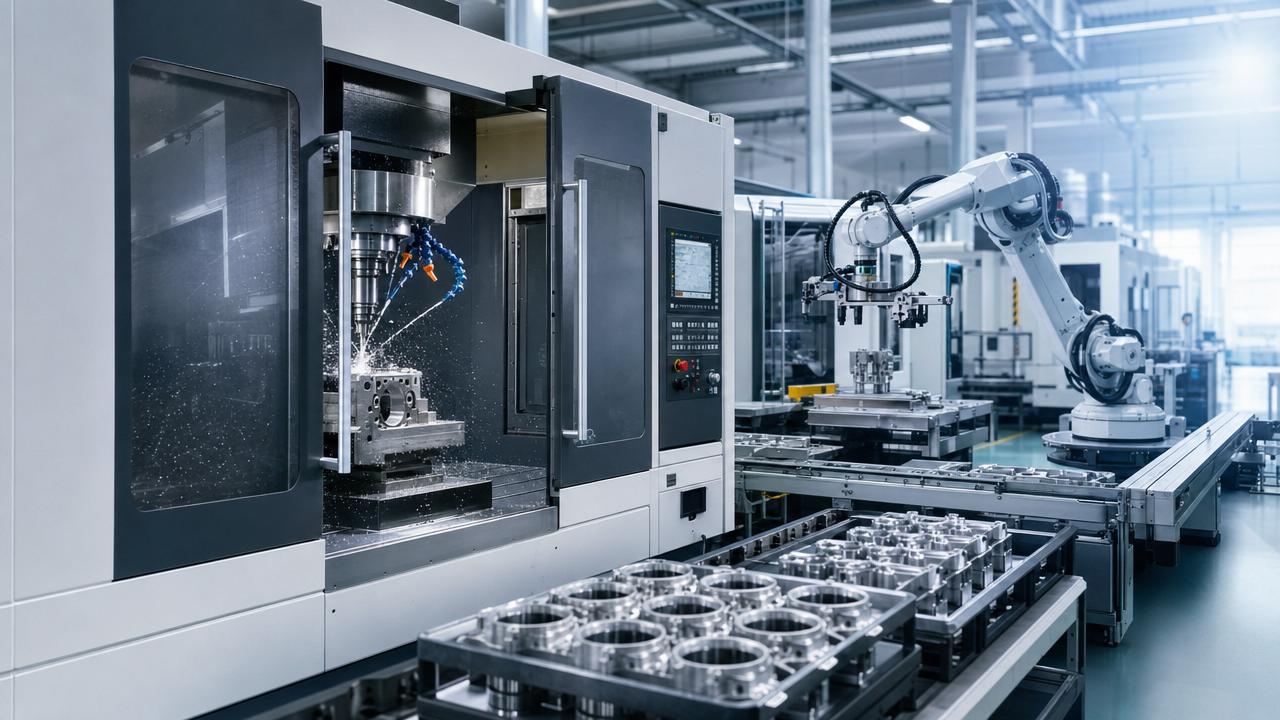
CNC industrial upgrades begin to pay off when higher precision, faster cycle times, and better production visibility turn into measurable results on the shop floor. In modern manufacturing, the business case for new equipment is no longer limited to machine replacement alone. The stronger return often comes from linking CNC machine tools, automation systems, cutting strategies, and production data into one practical operating model. Across automotive, aerospace, electronics, energy equipment, and general precision manufacturing, CNC industrial improvement is increasingly evaluated by reduced scrap, improved spindle utilization, shorter setup time, and more stable delivery performance.
As factories pursue smarter production, CNC industrial investment is shifting from isolated hardware decisions to broader operational transformation. A machining center with higher dynamic accuracy matters, but so does tool life monitoring, fixture repeatability, pallet automation, and digital scheduling. When these elements work together, the shop floor begins to show clear gains: fewer bottlenecks, more predictable output, and better control over quality and cost. That is the point where CNC industrial upgrades start paying off in a way that supports both daily production and long-term competitiveness.
What CNC industrial upgrades really include
In practical terms, CNC industrial upgrading refers to the coordinated improvement of machine capability, process control, and production connectivity. It can include replacing legacy CNC lathes, adding multi-axis machining systems, improving cutting tool management, integrating industrial robots, or connecting machines to manufacturing execution and monitoring platforms. The goal is not simply to own more advanced equipment, but to make precision manufacturing faster, more consistent, and easier to manage at scale.
A useful way to view CNC industrial modernization is through three layers. The first layer is equipment performance: spindle speed, rigidity, thermal stability, repeatability, and axis control. The second layer is process efficiency: setup reduction, cycle optimization, tool path improvement, and fixture standardization. The third layer is digital integration: machine data capture, predictive maintenance, scheduling visibility, and traceable quality records. Upgrades begin to pay off fastest when all three layers move together rather than independently.
This is especially relevant in the broader machine tool industry, where precision requirements continue to rise while lead times and labor constraints remain under pressure. In that environment, CNC industrial performance is not judged only by cutting capability, but by how well the entire operation converts machine time into profitable output.
Current industry signals shaping investment decisions
Several market and technology signals explain why CNC industrial upgrades are moving higher on the agenda across the manufacturing sector. Global competition has increased the need for stable quality and lower per-part cost. At the same time, complex parts, shorter product cycles, and fluctuating order volumes are making flexible production more valuable than fixed-capacity planning. Smart factory initiatives are also changing expectations around traceability, energy efficiency, and machine utilization.
These signals matter across regions with strong machine tool ecosystems, including China, Germany, Japan, and South Korea. Their industrial clusters continue to influence the global CNC industrial market through precision engineering, supplier networks, component innovation, and export-driven competition. As a result, even local production sites are increasingly benchmarking themselves against global levels of process stability and automation.
How CNC industrial upgrades create measurable value
The strongest value from CNC industrial improvement appears where technical changes directly affect operating outcomes. A new machining center may offer better feed rates and higher axis acceleration, but the business impact becomes visible only when throughput rises, rework falls, and scheduling confidence improves. That is why high-performing projects focus on metrics that matter to production reality rather than only to equipment specifications.
- Higher precision reduces scrap, customer complaints, and secondary inspection burdens.
- Faster cycle times increase output without requiring proportional labor expansion.
- Better setup consistency supports smaller batch production and product changeover flexibility.
- Automation lowers machine idle time and stabilizes overnight or unattended production.
- Digital monitoring improves decision speed by showing downtime causes, utilization patterns, and maintenance needs.
In many facilities, the biggest hidden gain is not raw speed but process reliability. A CNC industrial line that runs slightly faster yet stops unpredictably may still underperform a line with lower nominal speed but stronger repeatability. Stable tooling, accurate probing, controlled coolant management, and standardized workholding often produce a stronger return than isolated increases in spindle power. This is why successful industrial upgrades usually combine machine investment with process engineering discipline.
Operational indicators that show payback
Signs that CNC industrial investment is paying off include lower cost per finished part, better first-pass yield, reduced non-cutting time, improved on-time delivery, and fewer urgent maintenance interruptions. Another useful indicator is whether planning teams can commit to lead times with more confidence because machine capacity has become more visible and stable. When that happens, the value of the upgrade extends beyond production into customer service and commercial performance.
Typical application scenarios across modern manufacturing
CNC industrial upgrades do not produce identical returns in every environment. Payback depends on part complexity, production volume, tolerance requirements, material type, and scheduling variability. Still, several common application paths appear repeatedly across the comprehensive manufacturing landscape.
General machining workshops also benefit when CNC industrial systems are aligned with mixed production needs. In low-to-medium batch operations, reducing setup variation can be more valuable than chasing maximum machine speed. In high-volume lines, unattended operation and tool breakage monitoring often become the most important sources of return. The right upgrade path therefore depends on where losses currently occur: time, accuracy, labor, energy, or scheduling.
Practical considerations before upgrading
A common mistake in CNC industrial planning is treating equipment acquisition as the finish line rather than the starting point. Real return depends on implementation quality. Before launching a project, it helps to define the production constraint that needs to be solved. Is the issue excessive scrap, low spindle utilization, unstable dimensional control, excessive setup time, or poor machine availability? Clear problem definition prevents overspending on features that do not improve actual performance.
- Map the current process and identify where downtime, variation, and waste appear most often.
- Evaluate machine capability together with tooling, fixtures, software, and operator workflow.
- Use baseline metrics such as OEE, scrap rate, setup duration, and delivery adherence before investment.
- Plan training and standard operating methods so that performance gains are repeatable.
- Confirm data compatibility if machines need to connect with MES, ERP, or quality systems.
Another important point is sequencing. In some cases, the best CNC industrial upgrade is not a full line replacement. Installing probing, tool presetting, machine monitoring, or pallet handling may deliver faster payback than purchasing a more advanced platform too early. In other cases, outdated machine rigidity or control architecture limits every downstream improvement, making full replacement the better economic choice. The decision should be based on bottleneck analysis rather than technology fashion.
Turning investment into sustained shop floor results
For CNC industrial upgrades to keep delivering value, continuous review is essential. Initial gains can fade if tool libraries are not maintained, preventive maintenance is ignored, or process standards drift over time. A good practice is to review post-upgrade performance at fixed intervals and compare expected gains with actual output, scrap, downtime, and labor efficiency. This helps determine whether the issue lies in equipment, process settings, training, or scheduling behavior.
The most durable advantage appears when CNC industrial capabilities become part of a broader improvement culture. That includes disciplined root-cause analysis, controlled process changes, cross-functional data sharing, and regular evaluation of fixture design, cutting conditions, and automation balance. Over time, this creates a manufacturing system that is not only faster but more resilient to product changes, supply fluctuations, and quality pressure.
The next practical step is to assess one production area where precision loss, setup time, or machine downtime is visibly limiting output. Establish a baseline, define target improvements, and match the CNC industrial solution to the real constraint. When upgrades are tied to measurable shop floor outcomes rather than broad technology goals, they are far more likely to pay off quickly and support stronger long-term manufacturing performance.
Recommended for You
![]() Five Ministries Launch Joint Enforcement on EV Battery RecyclingManufacturing Policy Research Center
Five Ministries Launch Joint Enforcement on EV Battery RecyclingManufacturing Policy Research Center![]() Top 10 Future Industries Roadmap 2026 ReleasedManufacturing Market Research Center
Top 10 Future Industries Roadmap 2026 ReleasedManufacturing Market Research Center![]() Global Methanol-Electric Ecosystem Alliance LaunchedManufacturing Market Research Center
Global Methanol-Electric Ecosystem Alliance LaunchedManufacturing Market Research Center![]() ISO 23218-3:2026 Enters Force: CNC Digital Twin Interoperability Standard Goes GlobalCNC Machining Technology Center
ISO 23218-3:2026 Enters Force: CNC Digital Twin Interoperability Standard Goes GlobalCNC Machining Technology Center![]() ANVISA New Rule: Portuguese Biocompatibility Labels for Medical CNC EquipmentManufacturing Policy Research Center
ANVISA New Rule: Portuguese Biocompatibility Labels for Medical CNC EquipmentManufacturing Policy Research Center![]() KATS Updates KC Certification: CNC Cybersecurity Modules Must Comply with IEC 62443-4-2Manufacturing Policy Research Center
KATS Updates KC Certification: CNC Cybersecurity Modules Must Comply with IEC 62443-4-2Manufacturing Policy Research Center


Aris Katos
Future of Carbide Coatings
15+ years in precision manufacturing systems. Specialized in high-speed milling and aerospace grade alloy processing.
▶
Can space-saving CNC manufacturing still handle larger workloadsMachine Tool Industry Editorial Team▶
When CNC industrial upgrades start paying off on the shop floorMachine Tool Industry Editorial Team▶
How to compare industrial machining equipment for mixed-part productionMachine Tool Industry Editorial Team▶
CNC production delays often start with one planning mistakeMachine Tool Industry Editorial Team▶
What changes first when CNC industrial capacity is too smallMachine Tool Industry Editorial Team
Mastering 5-Axis Workholding Strategies
Join our technical panel on Nov 15th to learn about reducing vibrations in thin-wall components.

Providing you with integrated sanding solutions
Before-sales and after-sales services
Comprehensive technical support