• Global CNC market projected to reach $128B by 2028 • New EU trade regulations for precision tooling components • Aerospace deman
NYSE: CNC +1.2%LME: STEEL -0.4%

How to tell if industrial machining equipment is outdated
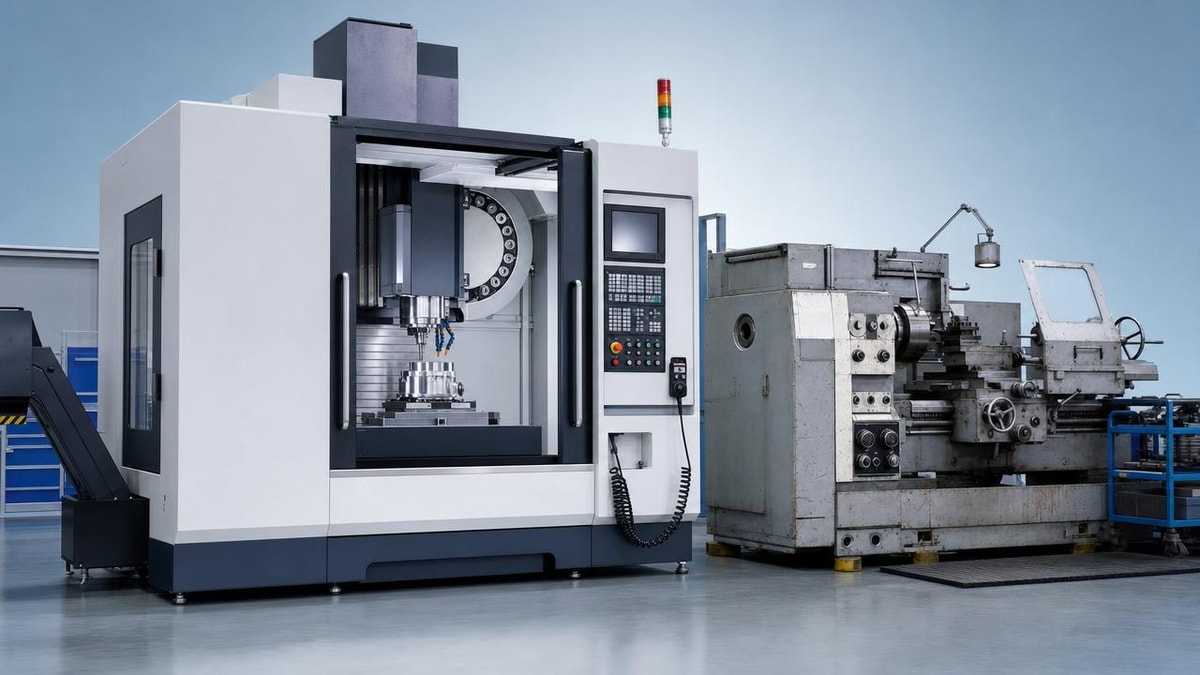
Knowing when industrial machining equipment is outdated is critical for technical evaluators responsible for productivity, precision, and long-term asset performance. As manufacturing shifts toward smarter, more automated systems, older machines can quietly limit efficiency, increase maintenance risk, and reduce process consistency. This article explains the practical signs of aging industrial machining equipment and helps you assess whether an upgrade, retrofit, or replacement is the right move.
What does it really mean for industrial machining equipment to be outdated?
Outdated industrial machining equipment is not simply old equipment. A machine can be twenty years old and still productive if it meets process capability, safety, uptime, and integration requirements. In contrast, a newer asset may already be outdated if it cannot support current tolerances, data connectivity, automation goals, or part complexity. For technical evaluators, the question is less about calendar age and more about whether the machine still supports present and future manufacturing demands.
In the CNC machine tool industry, obsolescence usually appears in three forms. The first is technical obsolescence, where spindle speed, axis control, positioning accuracy, thermal stability, or software capability no longer match production needs. The second is operational obsolescence, where downtime, setup time, scrap rates, or maintenance burden become unacceptable. The third is strategic obsolescence, where the equipment cannot connect with automated production lines, industrial robots, digital monitoring systems, or smart factory workflows that now define competitive manufacturing.
This distinction matters across automotive manufacturing, aerospace, electronics production, and energy equipment. In these sectors, even small losses in precision or repeatability can cascade into part rejection, delayed delivery, higher tool consumption, and weaker traceability. That is why industrial machining equipment should be evaluated against current process requirements rather than legacy expectations.
Which warning signs show that industrial machining equipment may be falling behind?
The clearest signs are usually visible in everyday production data before they appear in financial reports. Technical evaluators should look for patterns instead of isolated events. If several of the following issues occur together, the industrial machining equipment is likely approaching a point where retrofit or replacement should be seriously considered.
- Frequent unplanned downtime caused by aging controls, servo systems, spindles, lubrication units, or electrical components.
- Declining machining accuracy, unstable repeatability, or growing dependence on manual compensation.
- Long setup and changeover times compared with modern CNC lathes, machining centers, or multi-axis systems.
- Difficulty sourcing spare parts, especially for discontinued controllers, drives, sensors, and proprietary interfaces.
- Inability to support advanced tooling, high-speed cutting, automated probing, or closed-loop measurement.
- Weak connectivity to MES, ERP, machine monitoring platforms, or predictive maintenance tools.
- Higher scrap, rework, and tool wear on parts that newer equipment can process more consistently.
- Operator dependency that makes output quality vary significantly by shift or personnel experience.
Another important indicator is energy and utility efficiency. Older industrial machining equipment may consume more power, coolant, compressed air, and floor space per part produced. In a market increasingly focused on cost control and sustainable manufacturing, these hidden losses can weaken competitiveness even if the machine still runs.
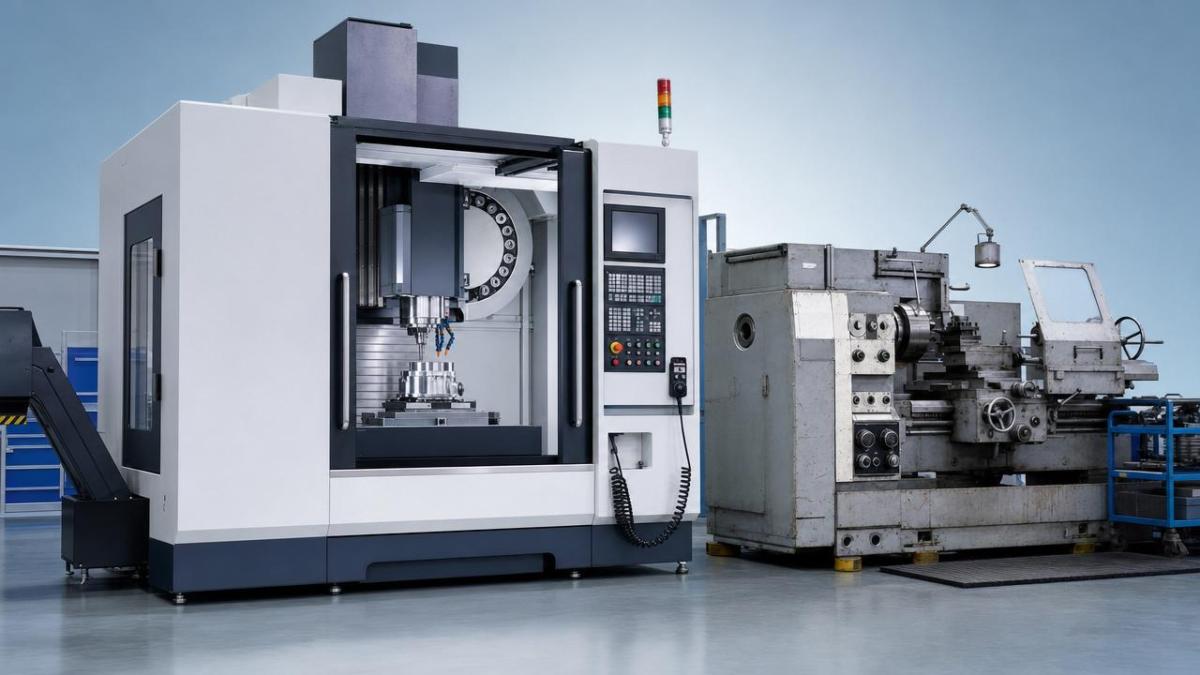
How can technical evaluators judge whether the problem is age, condition, or capability?
A disciplined assessment should separate physical wear from capability gaps. Some machines are mechanically sound but digitally weak. Others have modern controls but worn guideways, unstable spindles, or poor thermal behavior. Evaluators should review the equipment from four angles: process performance, maintenance status, integration readiness, and business fit.
Start with process performance. Compare actual cycle times, dimensional capability, surface finish, and first-pass yield against target levels and benchmark machines. If industrial machining equipment consistently misses tolerance on critical shaft components, discs, or structural parts, the issue is not cosmetic. It directly affects output quality and customer confidence.
Next, review maintenance status. Examine MTBF trends, parts replacement frequency, alarm history, spindle vibration, backlash, hydraulic leakage, and lubrication performance. A machine that requires rising maintenance hours just to maintain basic production is usually sending a clear signal. Also ask whether in-house technicians still have the expertise to support the controller and whether OEM support remains available.
Then evaluate integration readiness. In smart manufacturing, industrial machining equipment must often communicate with tool management systems, automated loading, in-process inspection, and digital production dashboards. If data collection depends on manual recording, if machine status cannot be standardized, or if interfaces block automation upgrades, the machine may be strategically outdated even when mechanically serviceable.
Finally, check business fit. A machine may still be acceptable for low-mix, low-precision, non-critical work but unsuitable for high-value aerospace parts, electronics housings, or flexible production lines. The right question is not “Can it still cut metal?” but “Can it produce the right part at the right cost, quality level, and response speed?”
What metrics should be tracked before deciding on retrofit or replacement?
Good decisions depend on measurable evidence. Technical evaluators should build a comparison framework that captures both direct and hidden costs of aging industrial machining equipment. This makes discussions with production, maintenance, procurement, and management more objective.
When these metrics are tracked over time, patterns become visible. A single repair bill may not justify replacement, but repeated quality drift, rising downtime, and weak digital compatibility often do. In global precision manufacturing, where delivery reliability and traceable quality are increasingly important, these trends can be more decisive than machine age alone.
Is it better to upgrade old industrial machining equipment or replace it completely?
There is no universal answer, because the best choice depends on machine structure, application criticality, available budget, and future production strategy. Retrofit can be a strong option when the base machine has sound mechanical rigidity and enough remaining life. Upgrading controls, drives, encoders, HMIs, probing systems, or safety modules can restore reliability and improve usability without the cost and disruption of a full replacement.
However, replacement is often the better path when the industrial machining equipment has multiple stacked limitations. For example, if the machine suffers from worn mechanics, limited axis capability, obsolete CNC architecture, poor automation compatibility, and high maintenance frequency at the same time, retrofit may only postpone deeper problems. In such cases, a modern machining center or CNC lathe may deliver better precision, faster setup, lower labor dependency, and easier integration with automated production lines.
Technical evaluators should compare total lifecycle value rather than initial price. Replacement costs more upfront, but it may reduce scrap, shorten cycle times, support unattended operation, and simplify quality control. Retrofit costs less in capital terms, but it should only be selected when it clearly extends capability in a meaningful way. If the business is moving toward industrial robots, flexible manufacturing cells, or smart factory architecture, replacement often aligns better with long-term goals.
What common mistakes lead companies to misjudge outdated industrial machining equipment?
One common mistake is treating machine survival as proof of machine suitability. Equipment that still operates may no longer support profitable production. Another mistake is focusing only on maintenance spending while ignoring slower cycle times, higher inspection burden, manual intervention, and lost scheduling flexibility. These indirect costs often exceed visible repair costs.
A third mistake is comparing old equipment only against historical output instead of current market expectations. Precision manufacturing is evolving quickly. Tolerances, traceability requirements, software integration, and automation readiness have all become more important. Industrial machining equipment that once performed well may now create competitive gaps even if its original specification has not changed.
Another frequent error is failing to involve cross-functional stakeholders. Technical evaluators should gather input from operators, maintenance engineers, quality teams, process engineers, and production planners. Operators may highlight recurring instability, while quality teams may see subtle drift long before breakdowns occur. Maintenance teams can reveal whether support risk is increasing due to obsolete parts or shrinking vendor support.
Finally, some companies assume that all old machines should be removed. That is also inaccurate. Certain robust machine tools remain valuable for secondary operations, less demanding components, prototyping support, or overflow capacity. The goal is not blanket replacement, but correct allocation of industrial machining equipment according to capability and business value.
What should be confirmed before making a final equipment decision?
Before approving any upgrade, retrofit, or replacement plan, technical evaluators should confirm a short list of practical questions. What parts will the equipment need to process over the next three to five years? What tolerance, surface finish, and throughput targets are expected? Will the machine need to connect with automated loading, tool monitoring, or production management systems? Are spare parts and service support available at acceptable lead times? What is the expected downtime during transition, and how will production be protected during implementation?
It is also important to define success criteria in advance. If a retrofit is chosen, what measurable improvements must it achieve in uptime, accuracy, or data visibility? If replacement is selected, what payback assumptions are being used, and are they based on realistic cycle time and scrap reductions? Strong decisions in the CNC machine tool industry depend on linking equipment strategy to real manufacturing outcomes, not generic modernization language.
For organizations operating across global supply chains, this decision is especially important. Reliable industrial machining equipment supports delivery confidence, export quality standards, and smoother integration with modern precision manufacturing systems. If you need to confirm a specific direction, it helps to first discuss part types, tolerance requirements, automation plans, maintenance history, expected production volume, digital integration needs, and the budget window for implementation. Those questions will clarify whether the right next step is continued use, targeted retrofit, or full replacement.
PREVIOUS ARTICLE
Recommended for You
![]() ANVISA New Rule: Portuguese Biocompatibility Labels for Medical CNC Machines in BrazilManufacturing Policy Research Center
ANVISA New Rule: Portuguese Biocompatibility Labels for Medical CNC Machines in BrazilManufacturing Policy Research Center![]() EMO Hannover 2027 Booth Booking Opens: China AI-Machining Pavilion LaunchesGlobal Machine Tool Trade Research Center
EMO Hannover 2027 Booth Booking Opens: China AI-Machining Pavilion LaunchesGlobal Machine Tool Trade Research Center![]() KATS Updates KC Rules: CNC Cybersecurity Modules Must Meet IEC 62443-4-2Manufacturing Policy Research Center
KATS Updates KC Rules: CNC Cybersecurity Modules Must Meet IEC 62443-4-2Manufacturing Policy Research Center![]() Shanghai Port Launches Green Clearance Channel for CNC EquipmentManufacturing Market Research Center
Shanghai Port Launches Green Clearance Channel for CNC EquipmentManufacturing Market Research Center![]() ISO 23218-3:2026 Published: CNC Digital Twin Interoperability StandardCNC Machining Technology Center
ISO 23218-3:2026 Published: CNC Digital Twin Interoperability StandardCNC Machining Technology Center![]() Vietnam Cuts CNC Equipment Import Tariff to 3.8% from June 2026Global Machine Tool Trade Research Center
Vietnam Cuts CNC Equipment Import Tariff to 3.8% from June 2026Global Machine Tool Trade Research Center


Aris Katos
Future of Carbide Coatings
15+ years in precision manufacturing systems. Specialized in high-speed milling and aerospace grade alloy processing.
▶
CNC production planning issues that lead to late deliveriesMachine Tool Industry Editorial Team▶
How to tell if industrial machining equipment is outdatedMachine Tool Industry Editorial Team▶
How to Judge CNC Production Equipment Beyond Catalog SpecsMachine Tool Industry Editorial Team▶
CNC Production Bottlenecks That Appear After Capacity ExpansionMachine Tool Industry Editorial Team▶
CNC production delays often start with planning, not machinesMachine Tool Industry Editorial Team
Mastering 5-Axis Workholding Strategies
Join our technical panel on Nov 15th to learn about reducing vibrations in thin-wall components.

Providing you with integrated sanding solutions
Before-sales and after-sales services
Comprehensive technical support