• Global CNC market projected to reach $128B by 2028 • New EU trade regulations for precision tooling components • Aerospace deman
NYSE: CNC +1.2%LME: STEEL -0.4%

CNC Production Bottlenecks That Appear After Capacity Expansion
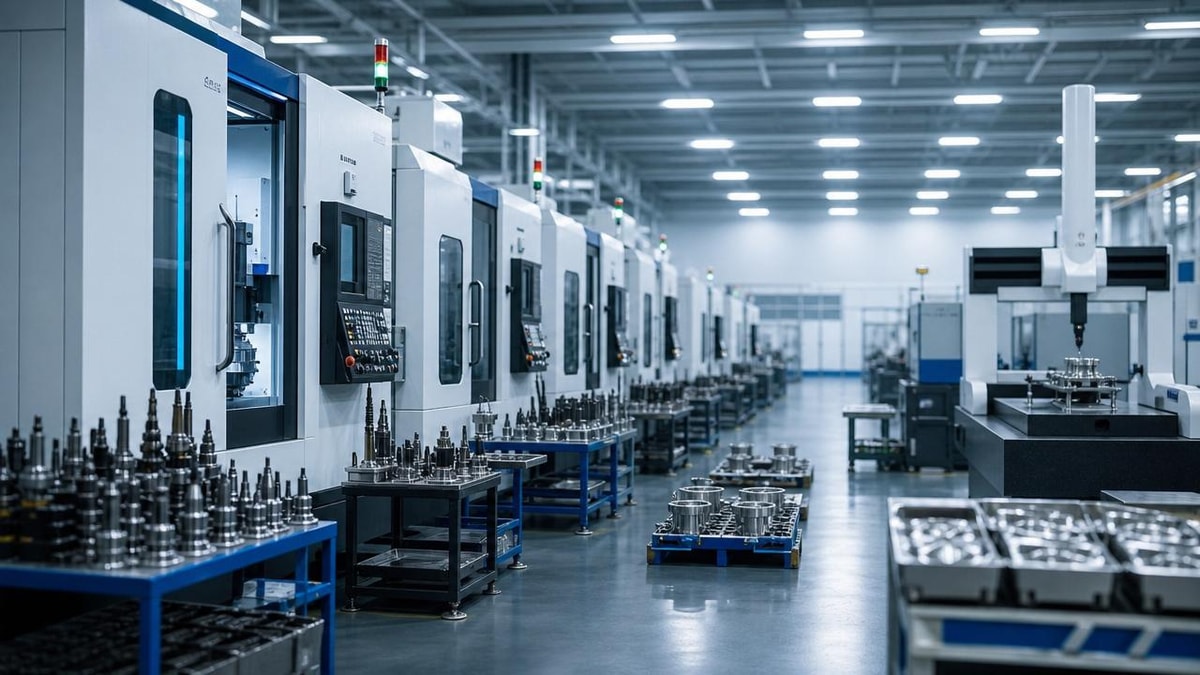
As manufacturers scale up, hidden constraints often emerge across planning, staffing, tooling, and data flow. In CNC production, capacity expansion does not automatically deliver higher output or stable lead times. For project managers and engineering leaders, identifying these bottlenecks early is critical to protecting quality, controlling costs, and keeping complex production programs on schedule.
In practice, many expansion programs add machines first and solve process discipline later. The result is familiar: spindle hours increase, but on-time delivery improves by only 5% to 10%, or in some cases declines as rework, queue time, and setup complexity grow faster than available capacity. This is especially common in high-mix CNC production environments serving automotive, aerospace, energy, and electronics supply chains.
For project leaders, the challenge is not simply to install more CNC lathes, machining centers, or multi-axis systems. The challenge is to align planning logic, operator capability, tool management, inspection flow, fixture readiness, and digital visibility so that every added resource contributes to usable output. The sections below examine the most common bottlenecks that appear after expansion and how to control them before they damage throughput and margin.
Where CNC Production Slows Down After New Capacity Goes Live
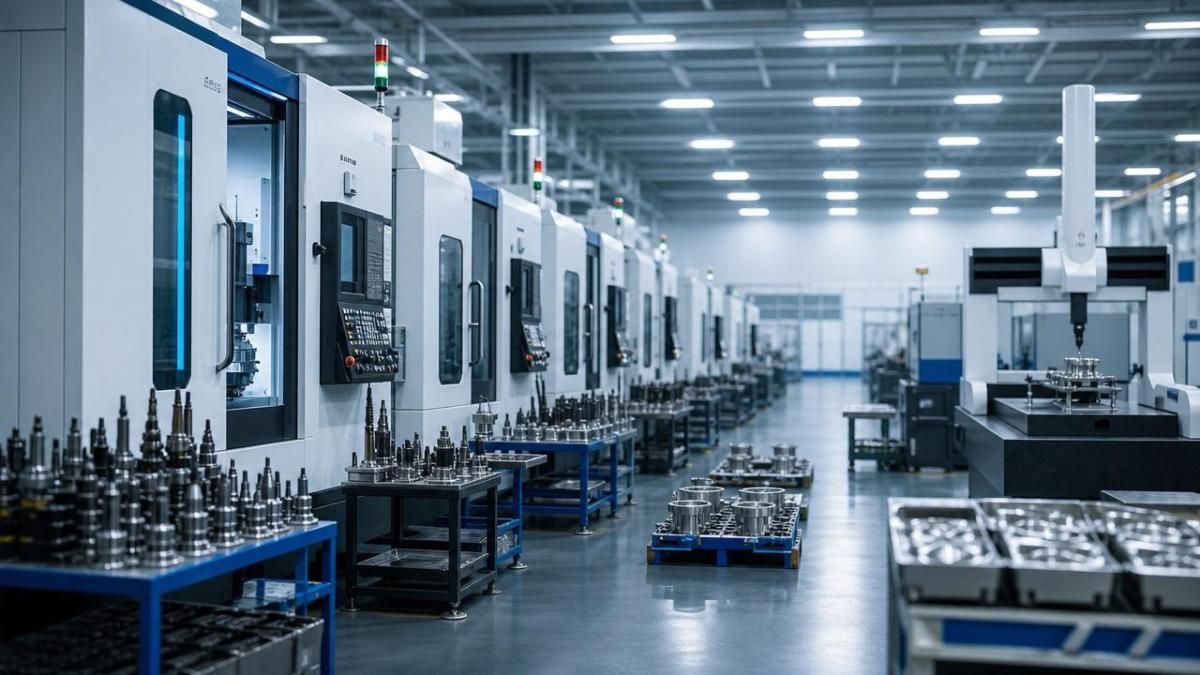
The first 30 to 90 days after commissioning new equipment are often the most misleading. Machine utilization may look healthy on paper, yet actual completed parts per shift remain unstable. In many plants, the gap between planned and shipped volume reaches 15% to 25% during this phase because the real bottleneck has moved from machine availability to process coordination.
Planning Bottlenecks: More Machines, Same Scheduling Logic
A common mistake in CNC production expansion is keeping the same scheduling method that worked for 6 machines and expecting it to perform equally well with 12 or 20. Once part families, due dates, tool dependencies, and inspection routing multiply, spreadsheet-based planning starts to create hidden queue time. A shop may gain 40% nominal machine capacity but lose 8 to 12 hours per week per line through poor sequence planning alone.
Project managers should track three separate indicators rather than one general utilization number: setup hours, waiting hours, and completed part flow. If utilization is above 75% but output is flat, the issue usually sits in sequencing, material release, or setup mismatch instead of machine count.
Typical signs of scheduling overload
- Frequent daily rescheduling, often more than 2 times per shift
- Rush orders interrupting long-cycle parts and increasing changeovers by 15% to 30%
- Multiple machines waiting for the same fixture, tool preset, or first-article approval
- Lead time extending from 7 days to 10 or 14 days despite added capacity
Labor and Skill Constraints: Capacity Is Limited by People, Not Only Equipment
New CNC production cells often expose a skill bottleneck faster than a spindle bottleneck. One experienced programmer or setup technician may support 4 to 6 machines efficiently, but after expansion that same person may be asked to support 8 to 10. The result is delayed changeovers, inconsistent offsets, and longer prove-out time for new jobs.
This problem becomes sharper in multi-axis machining or close-tolerance work where first-piece validation cannot be rushed. If setup time rises from 45 minutes to 70 minutes across 6 changeovers in a day, the lost productive time can exceed 2.5 hours per machine. For project leaders, staffing plans should include skills by process stage, not just headcount by shift.
Tooling, Fixtures, and Presetting Delays
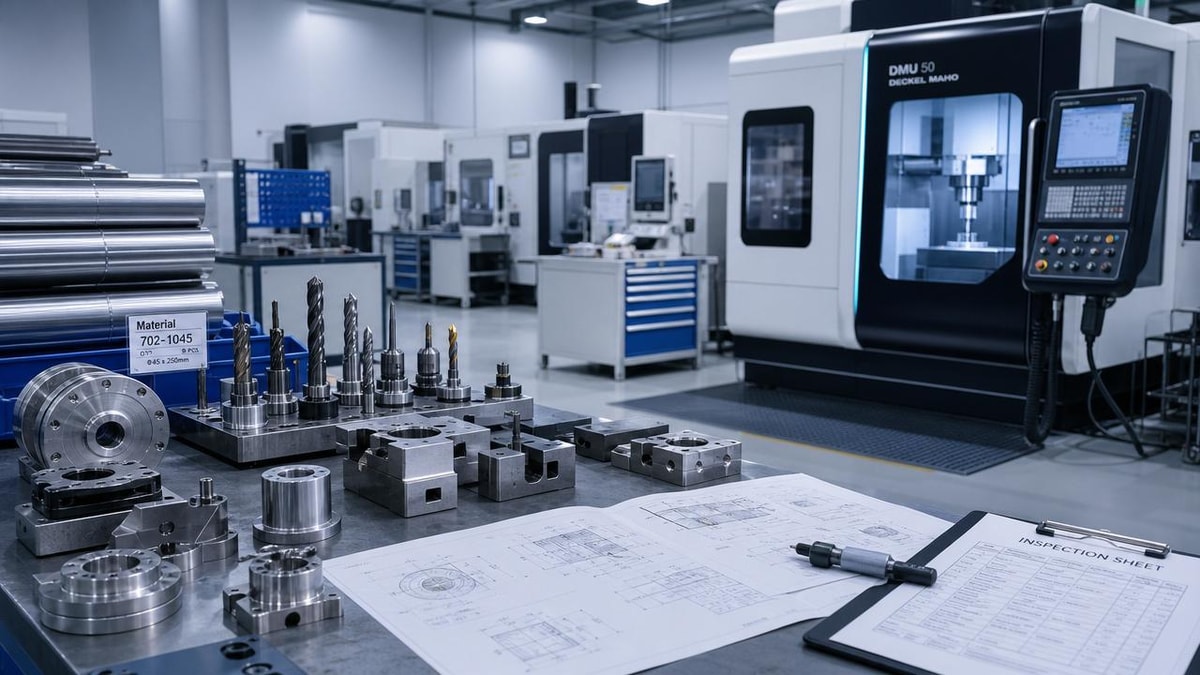
In expanding CNC production, tooling readiness often becomes the hidden governor of output. Additional machines require more duplicate tool assemblies, more presetting stations, more fixture maintenance, and stricter tool life tracking. Without those supporting resources, a factory may own enough machine hours but still lose production in 20-minute blocks throughout the day.
This is particularly relevant for high-precision disc parts, shafts, and structural components that demand repeatable clamping and predictable cutting behavior. If fixture availability is 1 set for every 3 machines instead of 1 set for every 1 or 2 critical processes, queues form quickly and schedule integrity breaks down.
The table below summarizes common post-expansion bottlenecks in CNC production and the operational effect each one creates.
The key lesson is that CNC production capacity should be measured as system capacity, not machine count. When support functions stay flat while production assets rise, the bottleneck simply shifts downstream or upstream. That shift is often expensive because it is less visible than a machine breakdown and harder to recover from late in the schedule.
Data, Quality, and Process Control Problems That Limit Scaled Output
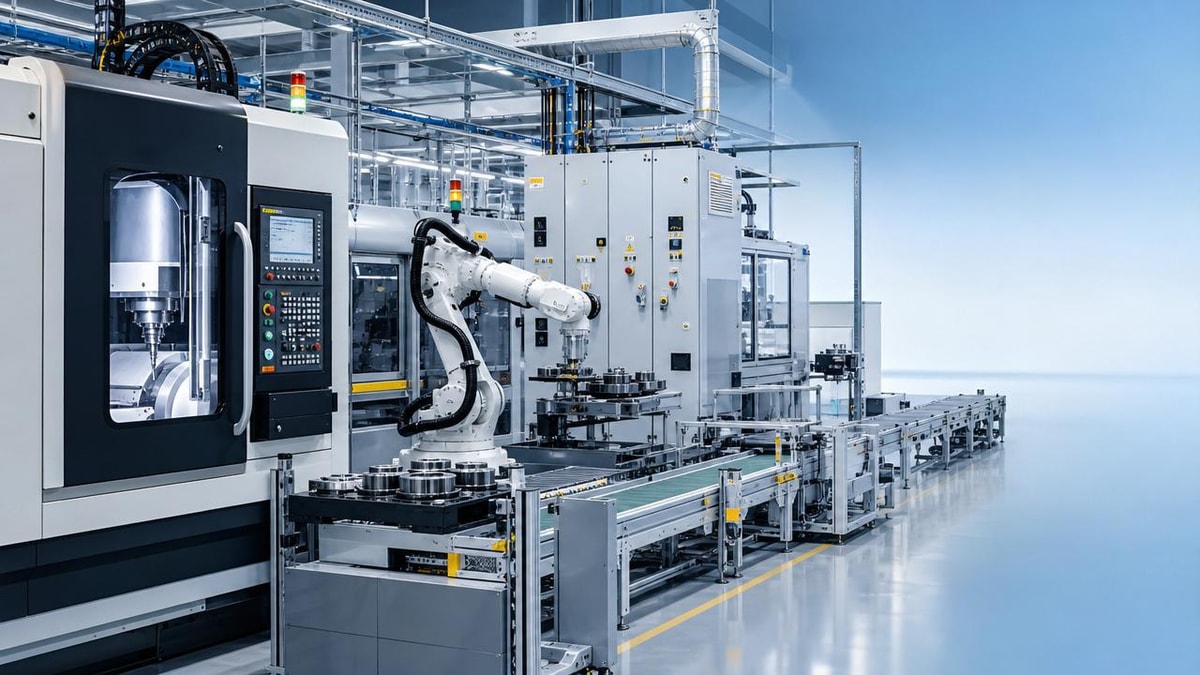
As CNC production expands, data quality starts to matter as much as cutting performance. Shops that add more machining centers, robots, or automated loading systems without standardizing program control and process data often create a new layer of instability. In these cases, the constraint is no longer physical capacity but decision latency: teams cannot see the right status quickly enough to respond.
Program Version Control and Process Standardization
When several machines run the same family of parts, even a small mismatch in NC program revision, tool offset logic, or workholding notes can trigger scrap or unplanned downtime. A revision error discovered after 200 parts is far more damaging in a scaled CNC production line than in a single-machine cell. This is why document discipline should be treated as a production control issue, not an administrative task.
Project managers should define at least 4 controlled elements for every repeating job: NC program version, setup sheet, tool list, and inspection plan. If these are not synchronized at release, every added machine multiplies the risk. In high-mix environments, even a 1% documentation error rate can lead to recurring schedule disruption.
Inspection Capacity and Quality Gates
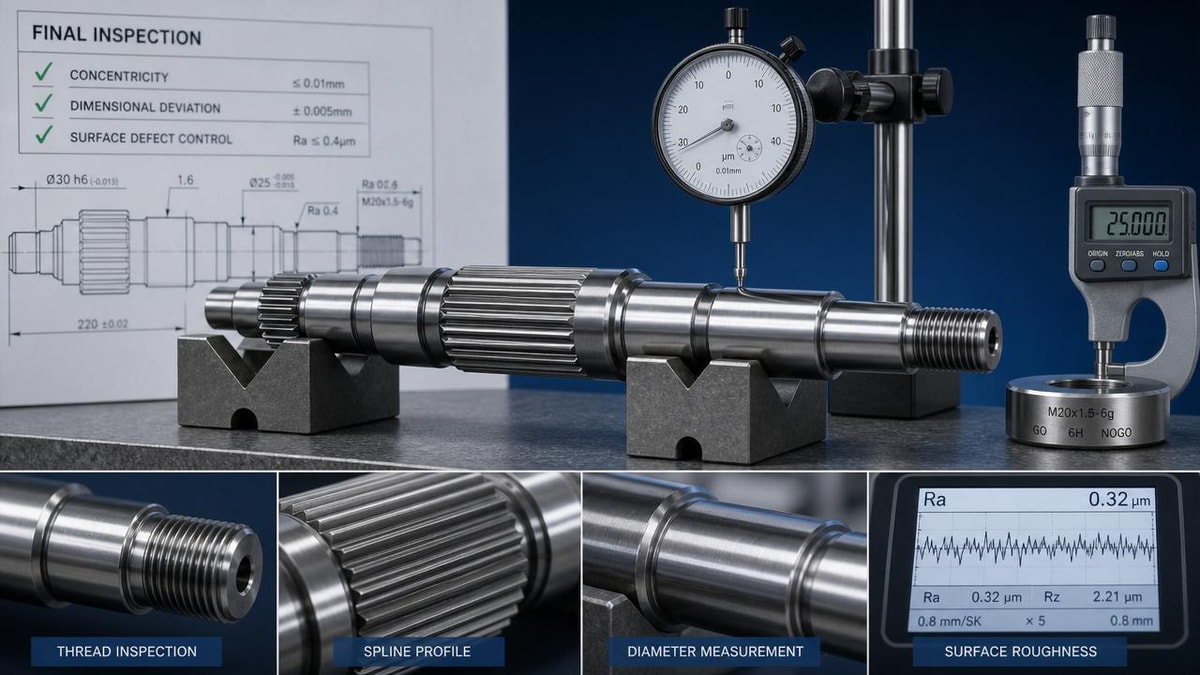
A second major bottleneck appears in metrology. More CNC production volume means more first-off checks, more in-process verification, and more final dimensional records. If the inspection room, CMM availability, or gauge system does not expand with production, WIP accumulates quickly. Parts may be machined on time but not released on time.
For precision components with tolerances such as ±0.01 mm to ±0.02 mm, the cost of delayed or overloaded inspection is not only slower delivery. It also increases the chance that process drift goes undetected for too long. A one-hour delay in feedback may allow dozens of nonconforming parts to continue through the line.
Quality control checkpoints worth scaling early
- First-article approval for every new setup or revision change
- In-process dimensional verification at defined cycle intervals, such as every 20 to 50 parts
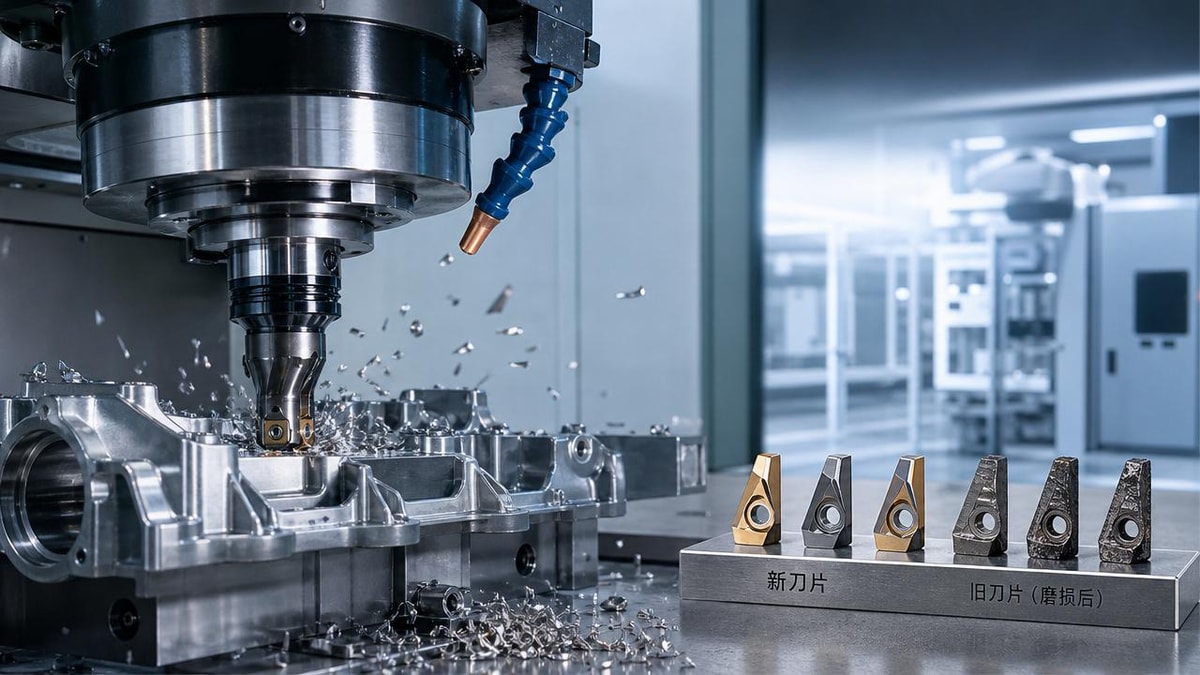
- Tool wear confirmation before critical tolerance features drift out of range
- Final inspection release with traceable documentation for priority jobs
Maintenance and Uptime Stability
Expansion also raises the maintenance burden. A plant that moves from 8 to 16 CNC machines does not simply double output potential; it also doubles preventive maintenance points, lubrication checks, coolant management tasks, and spare-part planning needs. If preventive maintenance remains reactive or calendar-based only, uptime variation becomes a hidden source of missed delivery.
A useful rule for project leaders is to separate downtime into three buckets: mechanical failure, process stoppage, and support waiting. In many expanded CNC production operations, support waiting accounts for 20% to 35% of lost time and is often easier to reduce than equipment failure. That makes it a high-return improvement area.
The next table outlines practical control points that help stabilize output after capacity expansion.
These controls do not require a full smart factory rollout on day one. Even basic discipline in revision control, inspection routing, and downtime coding can improve output predictability within 2 to 6 weeks. For many plants, this generates more usable CNC production capacity than another rushed equipment purchase.
How Project Managers Can Prevent Bottlenecks Before They Damage Delivery
Capacity expansion succeeds when it is managed as a cross-functional program instead of a procurement milestone. Project managers and engineering leaders need a launch plan that connects production engineering, tooling, quality, maintenance, supply chain, and operator training. If one of those functions is late by even 1 to 2 weeks, the entire CNC production ramp can underperform.
Use a 5-Point Ramp-Up Checklist
Before declaring new capacity ready, confirm five conditions. First, machine acceptance must be complete under actual part conditions, not only dry-cycle testing. Second, fixture and tool duplication must match the target mix. Third, operators and setup staff need process-specific training. Fourth, inspection capacity must cover first-off and routine verification. Fifth, planning rules should reflect the new routing and batch logic.
When these five points are validated, CNC production ramps more smoothly and lead-time volatility drops. Without them, the plant often spends the first 60 days firefighting rather than producing.
Measure the Right Metrics During the First 8 Weeks
Do not rely on overall equipment utilization alone. During ramp-up, the more useful metrics are first-pass yield, setup adherence, queue time before machining, queue time before inspection, and schedule attainment by part family. A practical review frequency is daily for the first 2 weeks, then twice weekly until performance stabilizes.
This approach helps teams distinguish between a temporary learning curve and a structural bottleneck. If schedule attainment stays below 85% for 3 consecutive weeks, the issue usually lies in system design rather than operator adaptation.
Common Expansion Mistakes to Avoid
- Buying additional machine capacity before validating tool, fixture, and inspection readiness
- Assuming one experienced programmer or process engineer can support unlimited added complexity
- Ignoring WIP growth because spindle utilization appears high
- Launching automation without clear exception handling for stoppages, alarms, and quality holds
- Treating data capture as optional during the first production phase
Procurement and Partner Selection Considerations
When selecting machine tool suppliers, automation partners, fixture providers, or external CNC production support, decision-makers should assess more than quoted cycle time. Ask how quickly spare parts can be supplied, whether training is included, how post-installation debugging is handled, and what integration support exists for digital tracking. A lower purchase price can become expensive if commissioning stretches from 2 weeks to 8 weeks.
For global manufacturing programs, also review localization risk. Plants operating across China, Germany, Japan, South Korea, or other industrial clusters may face different response times for service, tooling replenishment, and quality documentation. Those factors directly affect CNC production stability after expansion.
Questions worth asking suppliers and internal teams
- What is the realistic ramp-up period to stable output: 2 weeks, 6 weeks, or longer?
- How many duplicate fixtures and tool assemblies are required at target batch volume?
- What inspection resources must be added for tolerance-sensitive components?
- Which downtime codes will be tracked from day one?
- Who owns version control for NC programs, setup sheets, and process changes?
The strongest CNC production expansion plans do not chase maximum machine loading in the first week. They focus on stable flow, controlled quality, and fast problem visibility. Once those conditions are in place, throughput improves with less rework, fewer schedule shocks, and better margin protection across the full production program.
If your team is preparing for a new CNC production ramp, a line transfer, or a precision machining capacity upgrade, now is the right time to review planning logic, tooling readiness, quality gates, and data flow before hidden bottlenecks appear. Contact us to discuss your production scenario, get a tailored capacity assessment, or learn more solutions for scalable and reliable manufacturing performance.
PREVIOUS ARTICLE
Recommended for You
 CNC Milling Capacity Gaps Can Hurt Small Batch ProfitabilityManufacturing Market Research Center
 Industrial Robotics Payback Is Changing in Mid-Size PlantsManufacturing Market Research Center
 Shaft Parts Machining Problems That Show Up at Final InspectionCNC Machining Technology Center
 Production Process Delays Usually Start Before Machining BeginsCNC Machining Technology Center
 Industrial Automation Projects Often Miss This Integration StepCNC Machining Technology Center
 CNC Metal Cutting Tool Wear Is Costing More Than You ThinkCNC Machining Technology Center

Aris Katos
Future of Carbide Coatings
15+ years in precision manufacturing systems. Specialized in high-speed milling and aerospace grade alloy processing.
▶
How to Judge CNC Production Equipment Beyond Catalog SpecsMachine Tool Industry Editorial Team▶
CNC Production Bottlenecks That Appear After Capacity ExpansionMachine Tool Industry Editorial Team▶
CNC production delays often start with planning, not machinesMachine Tool Industry Editorial Team▶
How to choose industrial machining equipment for mixed-part jobsMachine Tool Industry Editorial Team▶
CNC Production Delays Often Start Before the First CutMachine Tool Industry Editorial Team
Mastering 5-Axis Workholding Strategies
Join our technical panel on Nov 15th to learn about reducing vibrations in thin-wall components.

Providing you with integrated sanding solutions
Before-sales and after-sales services
Comprehensive technical support