• Global CNC market projected to reach $128B by 2028 • New EU trade regulations for precision tooling components • Aerospace deman
NYSE: CNC +1.2%LME: STEEL -0.4%

How to Judge CNC Production Equipment Beyond Catalog Specs
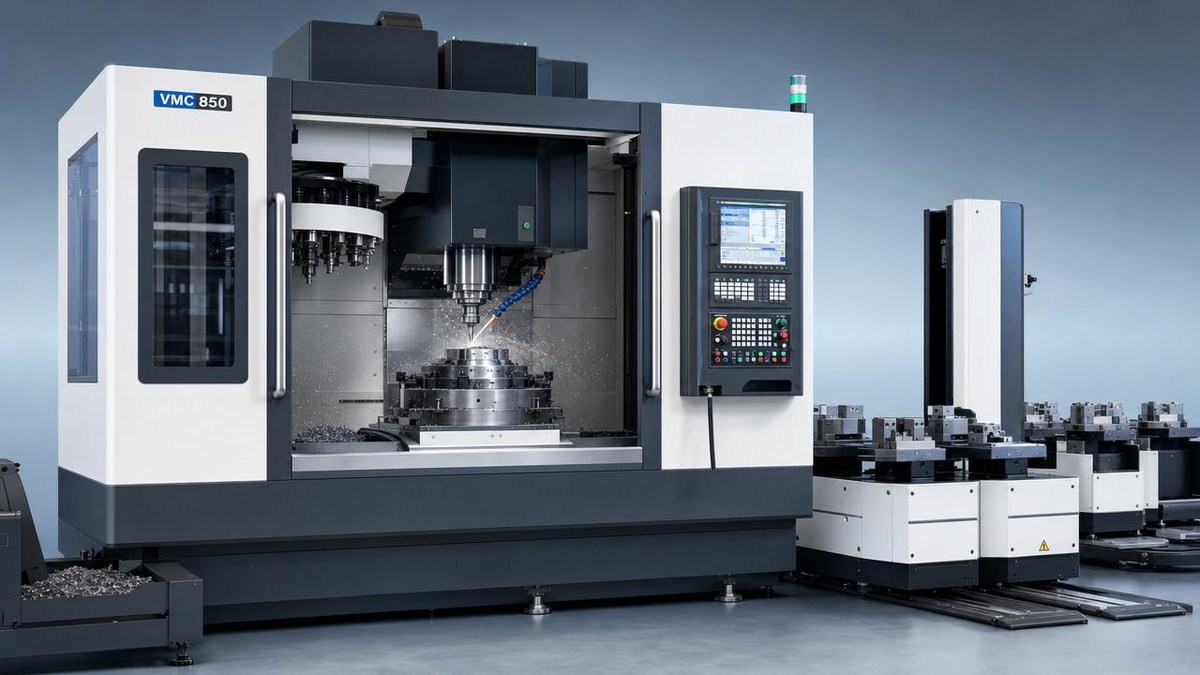
Catalog data can only tell part of the story. For technical evaluators, judging CNC production equipment requires looking beyond spindle speed, travel, and tolerance claims to assess stability, process capability, automation readiness, and long-term reliability. This article explains how to evaluate real-world performance factors that directly affect production efficiency, part quality, and investment value.
Why a checklist-based review works better than a spec-sheet comparison
For technical assessment teams, the biggest mistake in reviewing CNC production equipment is treating brochure numbers as proof of production capability. A machine may advertise high spindle speed, rapid traverse, and impressive positional accuracy, yet still underperform when cutting difficult materials, holding thermal stability over a shift, or integrating with an automated line. A checklist approach helps evaluators move from isolated parameters to production reality.
This matters across the broader manufacturing sector, from automotive and aerospace to energy equipment and electronics, because real value comes from repeatable output, not from peak values measured under ideal conditions. When CNC production equipment is judged through structured checkpoints, teams can compare suppliers more fairly, reduce hidden commissioning risks, and make decisions that support throughput, quality, and lifecycle cost control.
Start with the five questions that should be answered first
Before reviewing detailed machine specifications, technical evaluators should first confirm the production context. The same CNC production equipment may be excellent for one plant and unsuitable for another. Use the following priority questions to frame the evaluation:
- What part family will the machine run most often: shafts, discs, housings, thin-wall parts, hardened materials, or mixed batches?
- What is the real production target: first-pass yield, cycle time, unattended operation, flexibility, or overall equipment effectiveness?
- What process load will it face: roughing, finishing, interrupted cutting, multi-axis contouring, or long-duration high-duty operation?
- How much automation is required now and within two to three years: robot loading, pallet systems, in-process probing, tool life monitoring, or MES connectivity?
- What service conditions exist at the site: operator skill level, ambient temperature control, power quality, maintenance capability, and spare parts access?
If these questions remain vague, even a technically advanced CNC production equipment selection can become a mismatch. Clear use-case definition is the foundation of meaningful comparison.
Core checklist: how to judge real machine capability beyond catalog specs
1. Structural rigidity and vibration behavior
A machine’s frame, column, bed, guideway layout, and spindle interface determine how well it resists deflection and chatter. Ask for cutting test data under load, not only no-load motion accuracy. Review how the machine behaves during heavy roughing, interrupted cuts, and long-tool machining. If possible, inspect finished surfaces from sample parts and ask whether the supplier can share vibration analysis or modal testing results. For CNC production equipment used in high-mix or high-precision environments, rigidity is often more valuable than headline speed.
2. Thermal stability over time, not just initial accuracy
Many machines perform well during short demonstrations and drift during full-shift operation. Evaluators should ask how spindle growth, ballscrew heating, coolant temperature variation, and ambient changes are compensated. A strong supplier should explain thermal design, warm-up requirements, compensation logic, and stable performance after several hours of production. In practical terms, thermal control affects bore size consistency, geometric accuracy, and the need for manual offsets.
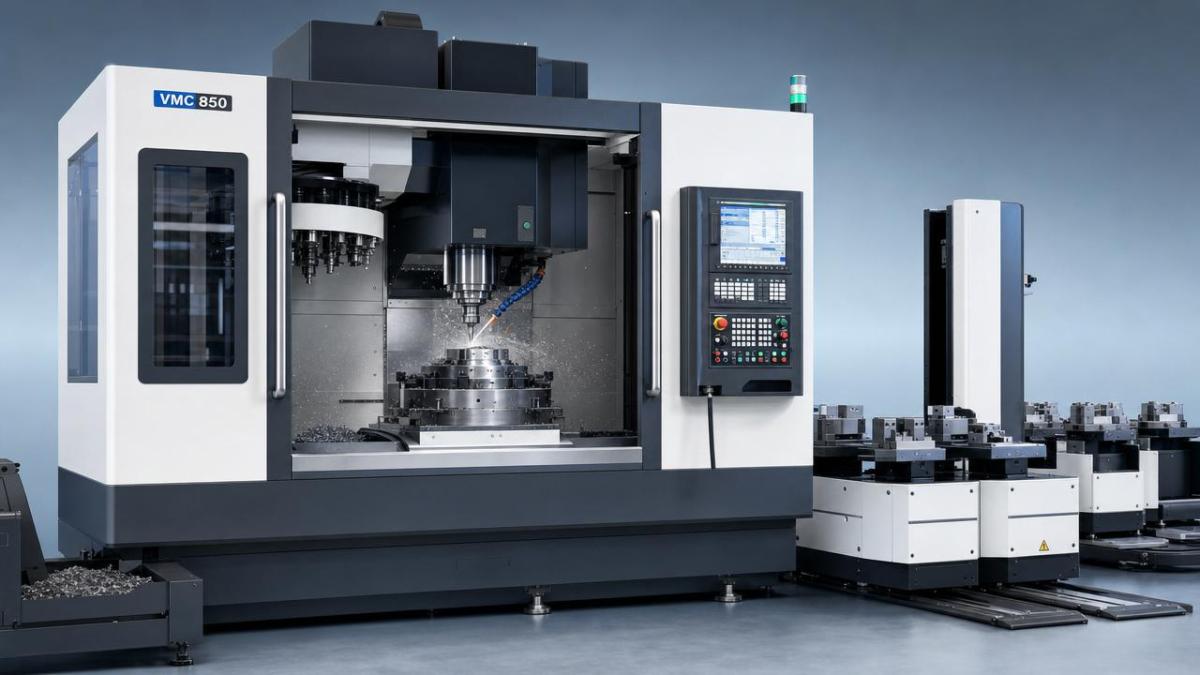
3. Process capability under target parts and target materials
Do not accept generic sample parts as evidence. Require trials that reflect actual materials, tolerances, tooling strategies, and batch expectations. The most useful review includes cycle time, surface finish, dimensional variation, tool wear pattern, and scrap rate. For technical evaluators, true process capability means the CNC production equipment can repeatedly produce acceptable parts with manageable operator intervention, not simply reach a best-case tolerance once.
4. Spindle and axis performance under production conditions
Catalog values often emphasize maximum rpm and rapid traverse, but productive machining depends on torque curve, acceleration, deceleration, servo response, and contour accuracy. Ask where usable power sits in the speed range. A spindle that looks strong on paper may be weak in the exact range needed for cutting alloy steel or large-diameter parts. Likewise, axis speed matters less than stable interpolation during actual machining paths.
5. Tooling, fixturing, and chip management compatibility
CNC production equipment should not be judged in isolation from the process ecosystem. Confirm compatibility with standard toolholders, quick-change fixtures, probing systems, coolant delivery, and chip evacuation requirements. Poor chip control can ruin unattended operation even when core machine performance is good. In high-output environments, chip flow, filtration, coolant access, and fixture change speed can define real productivity more than machine travel numbers.
6. Control system usability and data integration
For modern manufacturing, the CNC control is part of the investment case. Review programming workflow, alarm clarity, offset management, tool life functions, remote diagnostics, and connectivity with MES, ERP, or shop-floor monitoring systems. If the machine is expected to join an automated or digital production environment, ask whether the control supports data collection standards, process traceability, and production analytics. Evaluating CNC production equipment today means evaluating its digital usefulness, not only mechanical quality.
7. Reliability, maintainability, and support depth
Ask what commonly fails, how often preventive maintenance is required, and which critical parts have long lead times. Evaluate lubrication systems, access to service points, electrical cabinet layout, diagnostic tools, and supplier response capability. A machine with strong uptime history and local support is often a better production asset than a more advanced model with uncertain service coverage. Long-term reliability is one of the most underestimated dimensions in CNC production equipment selection.
A practical scoring table for technical evaluators
To compare different CNC production equipment options objectively, many teams use weighted scoring. The table below shows a simple structure that can be adapted to different factories or project goals.
What to add for different application scenarios
The checklist should be adjusted by use case. Technical evaluators should not review all CNC production equipment with a single fixed standard.
For high-volume production
Prioritize uptime, chip handling, automatic tool management, fixture repeatability, and fast recovery from alarms. In this environment, even small instability can multiply into major cost. Focus on cycle consistency rather than only best-case cycle time.
For high-precision manufacturing
Place more weight on thermal drift, spindle runout, interpolation quality, probing accuracy, and environmental sensitivity. Request longer validation runs and more dimensional data points. Precision CNC production equipment should prove repeatability over time, not only pass a one-part inspection.
For flexible or mixed-batch operations
Evaluate setup speed, program change efficiency, fixture adaptability, tool magazine capacity, and operator interface simplicity. In these settings, flexibility and changeover discipline often matter more than extreme peak output.
Common blind spots that distort equipment judgment
- Confusing positioning accuracy with production accuracy under heat, load, and wear.
- Accepting supplier sample parts without verifying actual tooling, material lot, and process assumptions.
- Ignoring operator usability, training burden, and programming efficiency.
- Underestimating the importance of local service capability and spare parts logistics.
- Reviewing the machine only as standalone CNC production equipment instead of as part of the full production cell.
- Failing to examine future automation, data integration, and smart factory compatibility.
Execution advice: how to run a more reliable evaluation process
A strong evaluation process usually includes three stages. First, define the target parts, materials, tolerances, batch sizes, and business goals. Second, require structured supplier evidence such as trial reports, uptime references, acceptance criteria, and integration details. Third, conduct side-by-side scoring based on weighted production priorities, not sales presentation quality.
If possible, include manufacturing engineering, quality, maintenance, and automation personnel in the review. Each group sees different risks. Quality teams often detect hidden repeatability issues, maintenance teams identify service weak points, and automation specialists can quickly judge whether the CNC production equipment is suitable for future line upgrades. Cross-functional review improves decision quality and reduces post-purchase surprises.
FAQ for technical evaluators
Is a machine with higher spindle speed always the better choice?
No. Higher spindle speed helps only if it aligns with the material, tooling, and process window. Torque, thermal control, and rigidity may be more important than rpm in many real applications.
What is the most important proof to request from suppliers?
Application-specific cutting trials using your part family or a close equivalent are usually the most valuable proof. They reveal whether the CNC production equipment can meet actual quality and throughput targets.
How early should automation readiness be reviewed?
At the beginning. Even if robotic loading or digital monitoring is not required on day one, interface limitations can become costly barriers later.
Final decision checklist and next-step discussion points
When making the final judgment on CNC production equipment, technical evaluators should confirm whether the machine has proven stability under load, process capability on target parts, practical automation potential, supportable maintenance demands, and acceptable lifecycle risk. These factors determine real investment value far more than isolated brochure claims.
If your team needs to move forward, the next discussion with suppliers should prioritize six items: target part data, expected output and quality metrics, tooling and fixture assumptions, integration requirements, acceptance test standards, and service response commitments. With these inputs clarified early, CNC production equipment selection becomes faster, more comparable, and much more aligned with production success.
PREVIOUS ARTICLE
NEXT ARTICLE
Recommended for You
 CNC Milling Capacity Gaps Can Hurt Small Batch ProfitabilityManufacturing Market Research Center
 Industrial Robotics Payback Is Changing in Mid-Size PlantsManufacturing Market Research Center
 Shaft Parts Machining Problems That Show Up at Final InspectionCNC Machining Technology Center
 Production Process Delays Usually Start Before Machining BeginsCNC Machining Technology Center
 Industrial Automation Projects Often Miss This Integration StepCNC Machining Technology Center
 CNC Metal Cutting Tool Wear Is Costing More Than You ThinkCNC Machining Technology Center

Aris Katos
Future of Carbide Coatings
15+ years in precision manufacturing systems. Specialized in high-speed milling and aerospace grade alloy processing.
▶
How to Judge CNC Production Equipment Beyond Catalog SpecsMachine Tool Industry Editorial Team▶
CNC Production Bottlenecks That Appear After Capacity ExpansionMachine Tool Industry Editorial Team▶
CNC production delays often start with planning, not machinesMachine Tool Industry Editorial Team▶
How to choose industrial machining equipment for mixed-part jobsMachine Tool Industry Editorial Team▶
CNC Production Delays Often Start Before the First CutMachine Tool Industry Editorial Team
Mastering 5-Axis Workholding Strategies
Join our technical panel on Nov 15th to learn about reducing vibrations in thin-wall components.

Providing you with integrated sanding solutions
Before-sales and after-sales services
Comprehensive technical support