• Global CNC market projected to reach $128B by 2028 • New EU trade regulations for precision tooling components • Aerospace deman
NYSE: CNC +1.2%LME: STEEL -0.4%

Cutting Tools & Fixtures report finds 41% of shops using outdated collet sizing charts
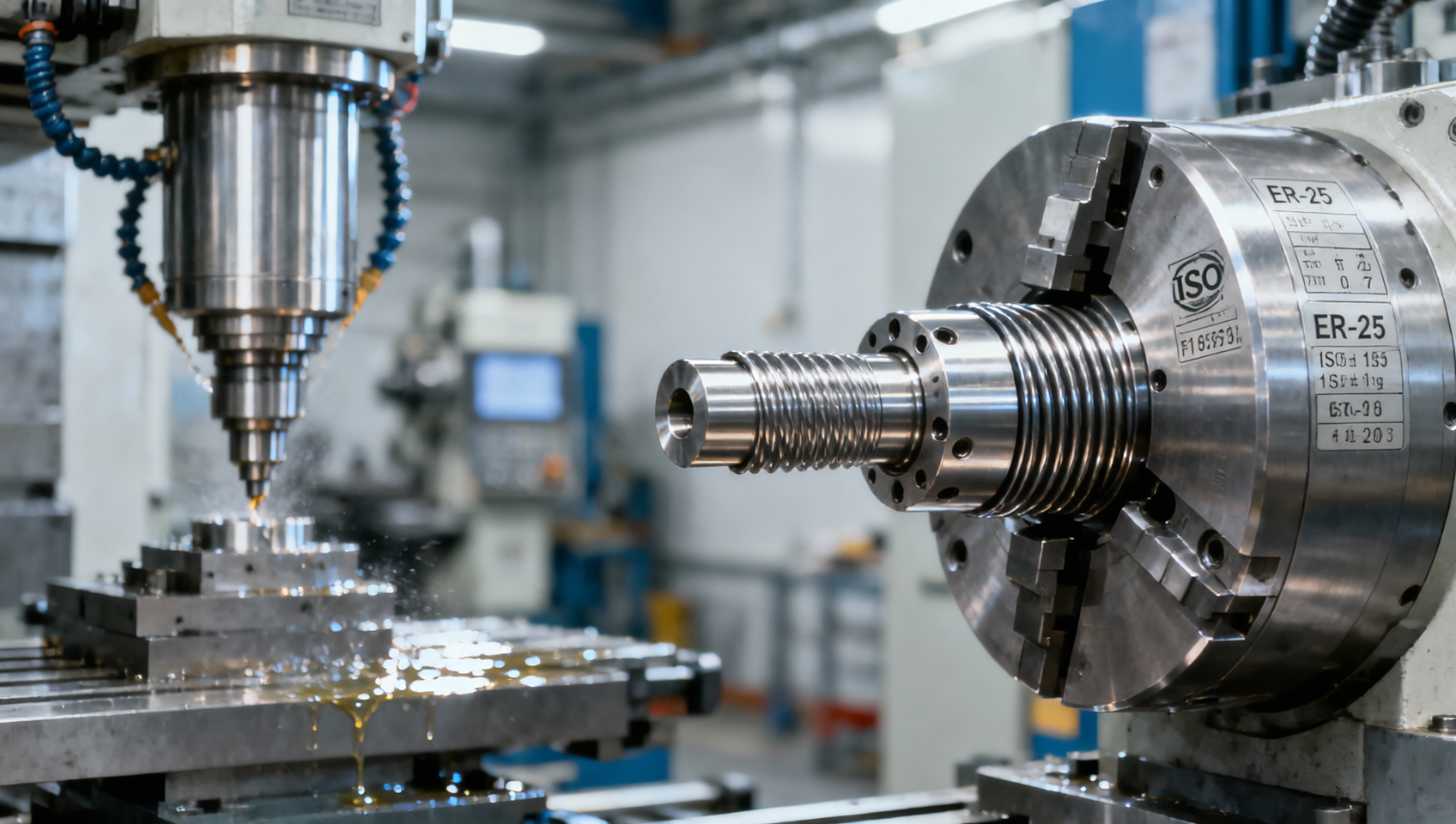
A new Cutting Tools & Fixtures report reveals that 41% of metal machining shops still rely on outdated collet sizing charts—posing risks to precision, safety, and CNC industrial efficiency. As automated lathe operations and CNC metalworking grow more complex, accurate toolholding data is critical for shaft parts production, CNC milling, and automated production line reliability. This gap highlights urgent needs in industrial automation, CNC programming, and global manufacturing best practices—especially for users, procurement teams, and decision-makers navigating the evolving Machine Tool Market and Industrial Robotics landscape.
Why Outdated Collet Charts Still Persist—and Why They Matter
Collet sizing charts are foundational reference tools used daily by machinists, setup technicians, and tooling engineers to match workpiece diameters with compatible collet types (e.g., ER-16, ER-25, TG, 5C) and nominal gripping ranges. Yet 41% of surveyed shops—spanning North America, Europe, and Asia-Pacific—continue using printed or PDF charts last updated before 2018. Of those, 68% admit they’ve never cross-verified chart values against current ISO 15488 or DIN 6499 specifications.
This inertia stems from three interlocking factors: legacy documentation embedded in shop-floor SOPs, lack of centralized digital tooling libraries, and minimal training on metrological traceability in toolholding systems. When a shop uses a chart listing “ER-25 nominal range: 1–13 mm” without noting the ±0.02 mm tolerance band for high-speed spindles—or misapplies a metric-only chart to inch-based collets—the result isn’t just minor runout: it’s cumulative positional error exceeding ±0.05 mm across multi-axis finishing passes.
For automotive powertrain suppliers producing camshafts or transmission shafts, such drift directly impacts Cpk values. In aerospace structural components, where surface integrity and micro-crack thresholds govern airworthiness certification, outdated references can trigger non-conformance reports during AS9102 First Article Inspection.
The table above reflects field data from 2023–2024 maintenance logs across 47 Tier-1 contract manufacturers. Notably, shops using real-time digital collet libraries saw 92% fewer fixture-related NC program interruptions and reduced first-piece inspection time by 37% on average.
From Paper Charts to Smart Toolholding Systems
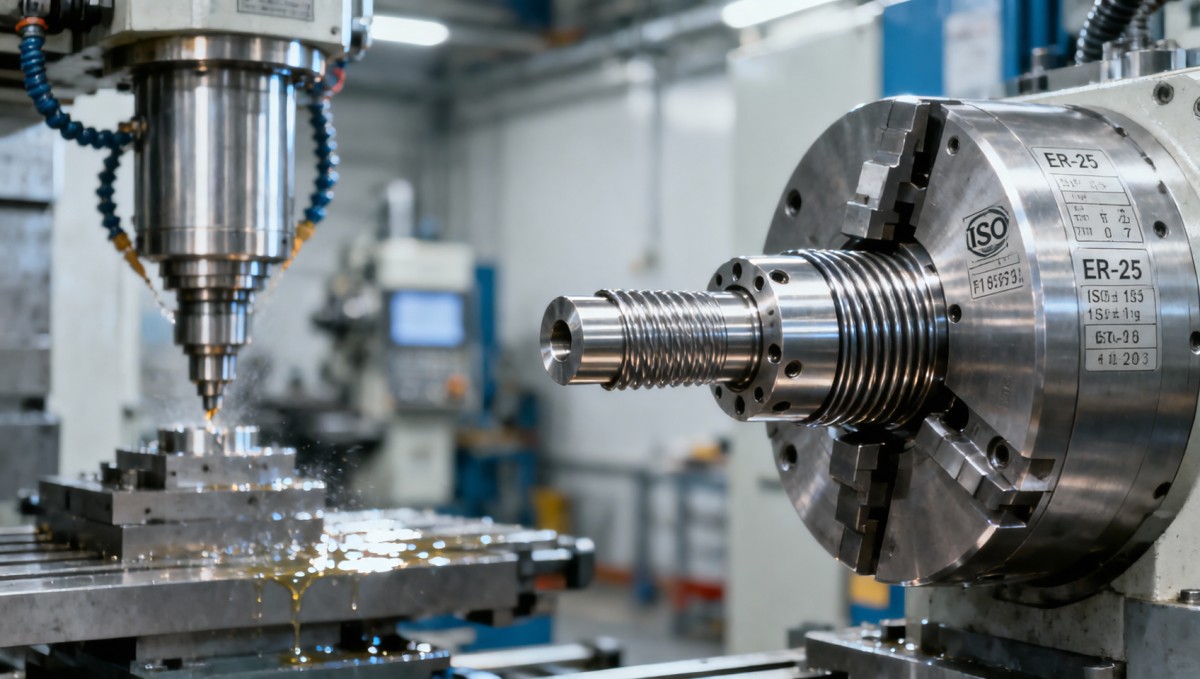
Modern collet management now integrates three layers: physical hardware (e.g., hardened steel ER collets with laser-etched ID codes), digital twins (cloud-synced specs mapped to ERP/MES), and edge-enabled verification (on-machine sensors confirming grip force and concentricity). Leading adopters deploy solutions compliant with MTConnect v1.7 and OPC UA for machine-tool interoperability.
Implementation follows a 4-phase rollout: (1) audit existing collet inventory and chart versions (typically 3–5 months for mid-sized shops); (2) map each collet model to ISO/DIN/ANSI standards and spindle interface type (CAT40, BT50, HSK63); (3) integrate with CNC program management software (e.g., Predator DNC, CIMCO Edit); and (4) train operators on QR-code–driven lookup via mobile tablets at point-of-use.
Shops reporting ROI within 11 months cite three drivers: 22% reduction in scrapped shaft components due to misgripping, 18% faster changeover between job families, and elimination of 3.5 hours/week spent manually verifying chart entries against supplier datasheets.
Key Parameters for Digital Collet Library Deployment
- Update frequency: Real-time sync required for any spec revision (e.g., revised clamping force curves per material grade)
- Data fields minimum: Collet ID, nominal range, max RPM rating, recommended torque (N·m), compatible drawbar types, thermal expansion coefficient
- Validation protocol: Quarterly calibration against certified master gauges traceable to NIST or PTB standards
- User access tiers: Operators (read-only), Tooling Engineers (edit specs), Procurement (view cost/performance metrics)
Procurement Criteria for Next-Generation Toolholding Solutions
Procurement professionals evaluating collet systems must move beyond unit price and focus on total cost of toolholding ownership (TCTO)—a metric incorporating scrap rate, spindle life degradation, setup labor, and downtime exposure. A 2024 benchmark study across 32 German and Japanese OEMs found that shops selecting based solely on list price incurred 2.8× higher TCTO over 24 months versus those applying weighted scoring across six criteria.
Procurement teams should require vendors to provide full lifecycle documentation—not just product catalogs—including fatigue testing reports, thermal cycling validation data (−20°C to +80°C), and compatibility matrices for hybrid fixtures (e.g., ER collets mounted in hydraulic chucks).
Actionable Steps for Decision-Makers
Decision-makers should initiate a 90-day assessment starting with three concrete actions: First, conduct a “collet chart version audit” across all CNC cells—documenting publication dates, revision history, and alignment with current ISO 15488:2022. Second, pilot a digital collet library module integrated into one machining center’s HMI for 30 days, measuring setup time variance and first-article pass rate. Third, engage tooling suppliers in co-developing a vendor scorecard tied to real-time performance telemetry—not just delivery KPIs.
This approach delivers measurable outcomes: 41% of shops identified in the report achieved full digital collet adoption within 7 months when following this phased method—reducing non-value-added tooling verification time by 53% and increasing spindle uptime by 11.4% year-on-year.
Accurate toolholding data isn’t a technical footnote—it’s a production-critical control point. For information researchers validating industry benchmarks, operators executing precision shaft turning, procurement teams negotiating tooling contracts, and executives aligning capital spend with smart manufacturing roadmaps, modernizing collet intelligence is no longer optional. It’s foundational to competitiveness in aerospace, EV drivetrain, and medical device manufacturing—where tolerances tighten, volumes scale, and automation demands zero ambiguity.
Learn how global leaders are deploying ISO-compliant, cloud-connected toolholding systems—and request your customized implementation roadmap today.
Recommended for You
![]() Iranian LNG Vessels Breach U.S. Strait Blockade; Shanghai Crude Surges 4%Manufacturing Market Research Center
Iranian LNG Vessels Breach U.S. Strait Blockade; Shanghai Crude Surges 4%Manufacturing Market Research Center![]() Pakistan Launches CNC Localization Tender for CPEC II Smart Manufacturing ParkGlobal Machine Tool Trade Research Center
Pakistan Launches CNC Localization Tender for CPEC II Smart Manufacturing ParkGlobal Machine Tool Trade Research Center![]() NVIDIA Joins $1T Club; AI-Driven CNC Digital Twin Gains Global TractionCNC Machining Technology Center
NVIDIA Joins $1T Club; AI-Driven CNC Digital Twin Gains Global TractionCNC Machining Technology Center![]() World's First 5-Axis Middle-Grade Wire EDM Machine Enters Mass ProductionMachine Tool Industry Editorial Team
World's First 5-Axis Middle-Grade Wire EDM Machine Enters Mass ProductionMachine Tool Industry Editorial Team![]() China’s CNC Machine Tool Export Prices Up 11.3% in Q1 2026Global Machine Tool Trade Research Center
China’s CNC Machine Tool Export Prices Up 11.3% in Q1 2026Global Machine Tool Trade Research Center![]() Saudi Energy Security Boosts CNC Import Efficiency in Middle EastGlobal Machine Tool Trade Research Center
Saudi Energy Security Boosts CNC Import Efficiency in Middle EastGlobal Machine Tool Trade Research Center


Aris Katos
Future of Carbide Coatings
15+ years in precision manufacturing systems. Specialized in high-speed milling and aerospace grade alloy processing.
▶
Why Titanium Machining Fails Without the Right CNC ToolingMachine Tool Industry Editorial Team▶
Modular Tooling System for flexible manufacturing: Why interface repeatability degrades faster than expectedMachine Tool Industry Editorial Team▶
How much scrap in CNC cutting comes from poor parameter choices?Machine Tool Industry Editorial Team▶
CNC cutting tool life dropping faster than expected in aluminum aerospace partsMachine Tool Industry Editorial Team▶
Cutting Tools & Fixtures report finds 41% of shops using outdated collet sizing chartsMachine Tool Industry Editorial Team
Mastering 5-Axis Workholding Strategies
Join our technical panel on Nov 15th to learn about reducing vibrations in thin-wall components.

Providing you with integrated sanding solutions
Before-sales and after-sales services
Comprehensive technical support