• Global CNC market projected to reach $128B by 2028 • New EU trade regulations for precision tooling components • Aerospace deman
NYSE: CNC +1.2%LME: STEEL -0.4%

Is CNC Production Still the Best Fit for Short Runs?
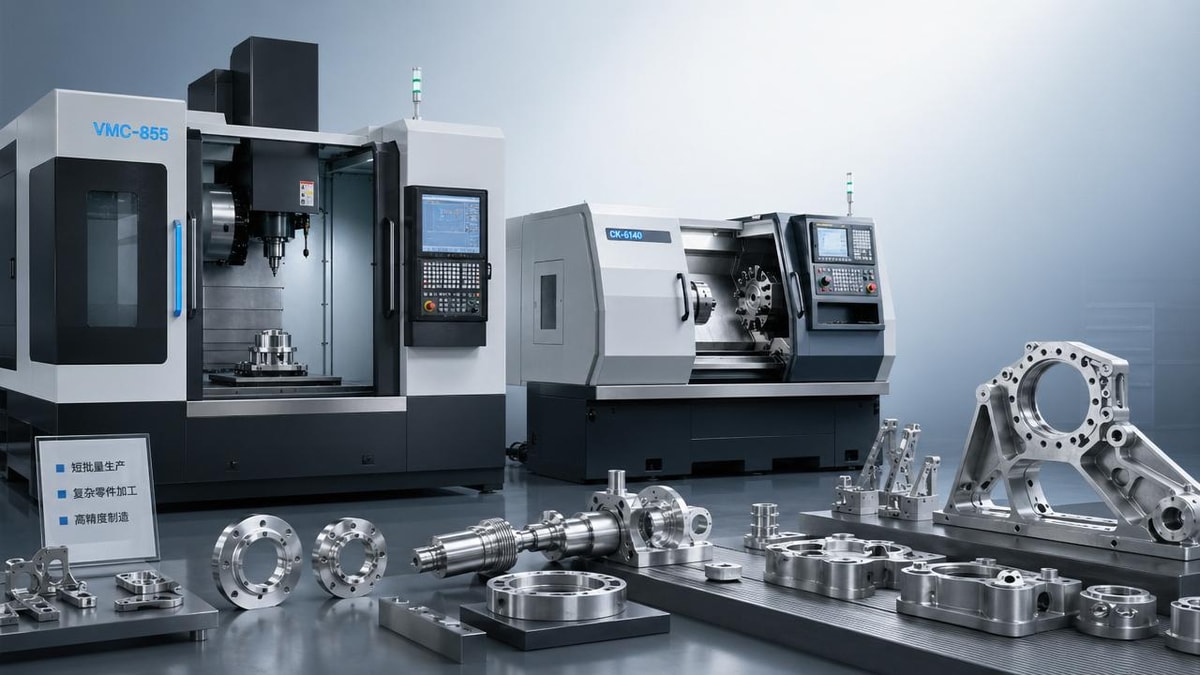
As manufacturers face rising cost pressures, tighter delivery schedules, and growing demand for customization, many are rethinking whether CNC production remains the smartest option for short runs. Known for its precision, flexibility, and broad application across modern industries, CNC production still offers clear advantages—but shifting technologies and alternative processes are changing the decision landscape.
When does CNC production still make sense for short runs?
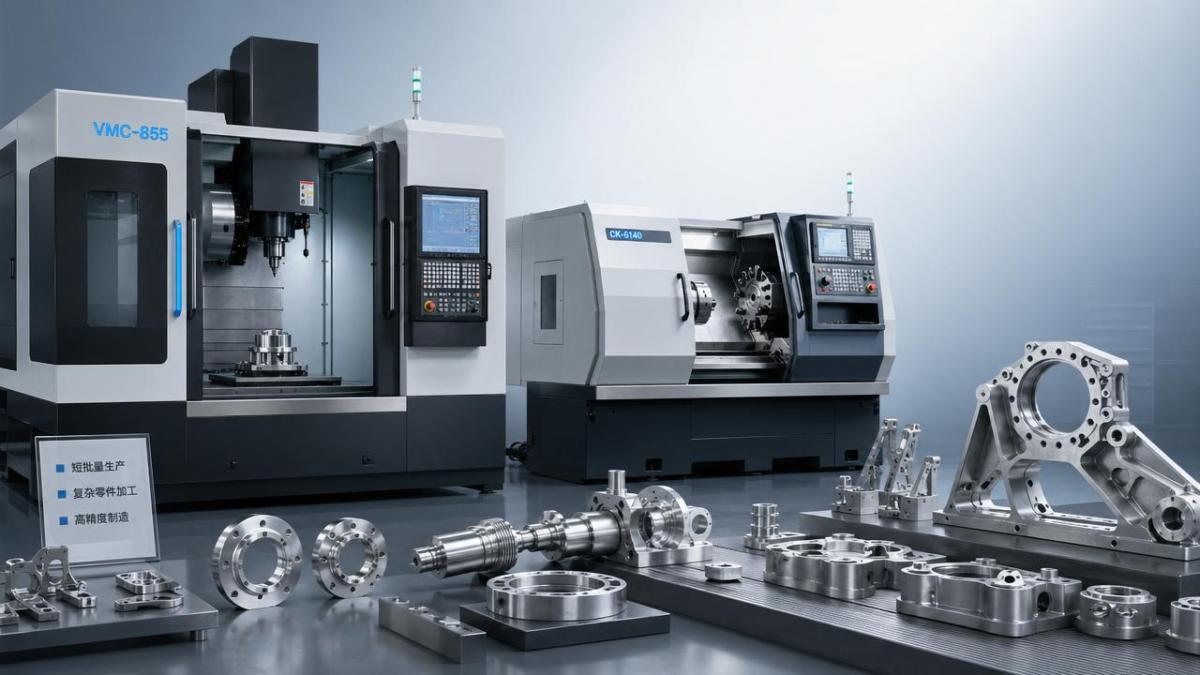
For information researchers, the real question is not whether CNC production is outdated. It is whether the process still delivers the right mix of cost, speed, accuracy, and scalability for low-volume manufacturing. In many cases, the answer is yes—especially when part geometry is complex, tolerances are tight, materials are demanding, or design revisions are still likely.
Short runs usually refer to limited batches produced before full-scale manufacturing, after engineering changes, or for aftermarket and specialized industrial use. In the CNC machine tool sector, this often includes shafts, housings, flanges, structural brackets, discs, tooling components, and precision fixtures used across automotive, aerospace, electronics, energy equipment, and industrial automation.
The strength of CNC production lies in controlled repeatability. A machining center, CNC lathe, or multi-axis system can move from one design to another without new hard tooling. That flexibility matters when companies need ten parts today, fifty next month, and perhaps a revised version after testing. For short runs, avoiding mold investment can be more important than achieving the lowest unit cost.
- Prototype-to-pilot transitions where design freeze has not been finalized.
- Replacement parts or maintenance components with unpredictable demand.
- High-mix manufacturing environments that require frequent changeovers.
- Industries that depend on aluminum, stainless steel, titanium, engineering plastics, or specialty alloys.
Why short-run buyers continue to rely on CNC production
Short-run decisions are rarely based on machine capability alone. Buyers also look at programming effort, fixture complexity, inspection demands, supplier responsiveness, and the risk of quality drift. CNC production remains attractive because it can combine precision manufacturing with relatively fast setup compared with processes that require dedicated tooling or molds.
This is especially relevant in modern manufacturing systems moving toward digital integration. CAD/CAM workflows, simulation, probing, tool management, and automated inspection have reduced the friction between design and machining. As a result, CNC production for short runs can be more efficient today than it was even a few years ago.
Which short-run scenarios favor CNC production over alternatives?
The table below helps compare common short-run situations and shows where CNC production typically performs well. This kind of scenario-based view is useful when evaluating whether machining, casting, additive manufacturing, or sheet fabrication should lead the process plan.
The key takeaway is that CNC production performs best when flexibility, precision, and engineering control outweigh pure volume economics. It is less compelling when parts are extremely simple, unit price dominates every decision, and the design is already fixed for very large production quantities.
Typical applications across the broader manufacturing market
Because the machine tool industry serves many downstream sectors, CNC production for short runs appears in more places than buyers often expect. It supports not only direct part manufacturing, but also fixtures, jigs, repair tooling, sample verification, and precision assemblies.
- Automotive: sensor housings, brackets, drivetrain trial parts, fixture plates.
- Aerospace: lightweight structural details, test coupons, low-volume machined inserts.
- Energy equipment: valve bodies, sealing surfaces, connector components, repair parts.
- Electronics production: precision plates, heat sinks, support frames, automation tooling.
- General industry: custom machine parts, assembly nests, prototype housings, shafts and discs.
CNC production vs alternative short-run processes: what really changes?
Many sourcing teams compare CNC production with 3D printing, casting, laser cutting, stamping, or fabrication. The right choice depends less on hype and more on geometry, tolerance, surface finish, material, and what happens after the first batch. The following comparison highlights the tradeoffs most relevant to short-run buyers.
This comparison shows why CNC production remains central to modern manufacturing despite growing alternatives. Competing processes may reduce cost in specific cases, but they often need secondary machining, finishing, or more engineering compromise. When buyers need functional parts that match production-grade materials and tolerances, CNC machining still has a strong position.
What usually drives the decision?
- Tolerance and surface requirements. If the part must fit, seal, rotate, or align precisely, CNC production often wins.
- Material realism. Functional testing often requires the same alloy or engineering plastic planned for final production.
- Change frequency. If revisions are expected, flexible programming is safer than fixed tooling investment.
- Total process chain. A cheaper forming process can become expensive after trimming, drilling, tapping, or inspection corrections.
How should buyers evaluate cost, lead time, and technical risk?
The most common mistake in short-run sourcing is focusing only on unit price. CNC production cost is shaped by setup, toolpath programming, raw material, cycle time, fixturing, operator skill, and inspection. For low volumes, setup and engineering preparation can carry a large share of the quote. That does not make CNC production expensive by default; it means buyers should compare total project cost, not just part price.
Lead time is equally important. A supplier may promise fast machining but lose time on drawing review, material procurement, fixture preparation, or first article inspection. In sectors such as aerospace, medical-adjacent industrial equipment, or export-oriented machinery, documentation and traceability can also extend the schedule. Early technical alignment reduces both cost surprises and delivery risk.
A practical checklist before requesting a CNC production quote
- Confirm annual demand and first-batch quantity separately. A 20-piece urgent batch is different from a long-term 2,000-piece program.
- Mark critical tolerances clearly instead of applying tight tolerance to the whole drawing.
- Specify material grade, heat treatment, coating, and inspection requirements early.
- Ask whether the part can be completed in one setup, two setups, or on multiple machines.
- Check whether fixturing is standard, modified standard, or dedicated custom tooling.
- Request feedback on features that increase cost, such as deep cavities, thin walls, or hard-to-reach internal corners.
The table below offers a selection-focused framework that buyers can use when evaluating CNC production for short runs across general industrial applications.
Using this framework can prevent a common procurement issue: selecting a supplier based on a low initial quote, then facing delays because the technical scope was not fully aligned. In short-run CNC production, quote clarity is often as valuable as price competitiveness.
What standards, quality controls, and process details should not be overlooked?
Even for limited quantities, quality requirements in CNC production should be defined with production discipline. This is especially important when parts support export equipment, safety-critical assemblies, or downstream automated production lines. General standards such as ISO-based quality systems, material traceability expectations, drawing revision control, and dimensional inspection routines all affect the reliability of a short-run order.
Core process controls worth checking
- Drawing and revision management to avoid machining from outdated files.
- Incoming material verification when alloy, hardness, or lot consistency matters.
- In-process measurement for critical dimensions rather than end-of-line correction only.
- Tool wear monitoring where repeated short runs must maintain the same fit and finish.
- Final inspection planning that matches the application instead of over-inspecting every feature.
For information researchers, this matters because supplier capability is not only about owning CNC equipment. It also depends on process discipline, machining know-how, and the ability to connect machine tools, cutting tools, fixtures, and inspection into a stable manufacturing flow. In today’s market, that integration is increasingly shaped by digital work instructions, machine data, and flexible production planning.
Common misconceptions about CNC production for short runs
“Short runs are always too expensive for CNC production”
Not always. CNC production can be cost-efficient when it replaces mold investment, supports immediate launch, or avoids rework from less accurate processes. The cost picture improves further when the design is optimized for machining and critical features are prioritized instead of over-specified.
“3D printing has replaced CNC production for prototypes and low volumes”
3D printing is valuable, but it does not fully replace CNC production. Functional testing, mating features, sealing surfaces, threaded holes, and production-grade materials often still require machining. In many projects, additive methods and CNC are complementary rather than mutually exclusive.
“Any CNC supplier can handle a short-run order equally well”
Short-run manufacturing needs a different mindset from repetitive contract machining. Engineering response speed, fixture adaptability, programming skill, and communication quality matter more when batch sizes are low and changes are frequent. A supplier built around flexible manufacturing cells may handle such work better than one optimized only for long, stable production campaigns.
FAQ: what do buyers ask most about CNC production for short runs?
How small can a short-run CNC production order be?
It can be as small as one piece if the application justifies the setup effort. Single-part machining is common for validation samples, repair parts, and urgent engineering replacements. However, buyers should expect the setup and programming share of the cost to be highest at this level.
What lead time is typical for short-run CNC production?
Lead time varies by material, geometry, workload, and inspection scope. Simple parts from common materials can move quickly, while multi-operation components with special alloys, surface treatment, or detailed reports take longer. The most accurate way to judge timing is to separate drawing review, material readiness, machining, finishing, and inspection in the supplier discussion.
How can buyers reduce CNC production cost without hurting quality?
Three actions help most: simplify non-functional features, apply tight tolerances only where they matter, and align material choice with actual performance needs. It also helps to batch similar parts together so setup time is shared across the order.
When should a company switch from CNC production to another process?
A switch becomes worth evaluating when the design is stable, volume is rising, and tooling cost can be amortized across many units. At that point, casting, forging, stamping, or other forming methods may reduce unit price. Even then, CNC production often stays in the process chain for finishing critical surfaces.
Why the answer is often not “CNC or not,” but “how to use CNC production wisely”
For short runs, CNC production is still one of the most practical manufacturing routes when precision, functional materials, and engineering flexibility are required. Its value is strongest in industries shaped by automation, high accuracy, and frequent product variation. The rise of smart manufacturing, multi-axis systems, better tooling, and digital process control has reinforced that value rather than erased it.
The smarter question for buyers is not whether CNC production is universally the best fit. It is whether the part, batch size, tolerance demand, and future volume profile justify it better than the alternatives. That is a technical and commercial judgment—and the best outcomes usually come from early discussion, not late-stage quoting.
Why choose us for CNC production research and sourcing support?
We focus on the global CNC machining and precision manufacturing industry, covering the technologies, market developments, and production realities that shape sourcing decisions. That makes our support useful for buyers who need more than a basic quote. We help connect application needs with practical manufacturing paths across machine tools, machining methods, and supply chain options.
If you are comparing CNC production for a short-run project, you can contact us to discuss key details such as part parameters, machining route selection, expected delivery cycle, sample support, inspection expectations, customization options, and budget-sensitive alternatives. We can also help you clarify whether your project should stay with CNC production, combine machining with another process, or prepare for a later transition into higher-volume manufacturing.
- Need help confirming drawings, tolerances, or material specifications before RFQ?
- Want to compare short-run CNC production with casting, additive, or sheet-based options?
- Looking for guidance on lead time, inspection level, or export-related documentation needs?
- Planning a pilot batch and want a clearer path from sample to recurring production?
Reach out with your part files, quantity plan, and application context, and the discussion can start from concrete questions: process fit, technical risk, delivery timing, and quotation structure. That is usually the fastest way to decide whether CNC production is still the best fit for your short run.
Recommended for You
![]() ZhiAnHua GNA Named Top 5 GEO Service Provider for 2026Machine Tool Industry Editorial Team
ZhiAnHua GNA Named Top 5 GEO Service Provider for 2026Machine Tool Industry Editorial Team![]() 2026 Bio-based Feedstock Supply Chain Guide ReleasedMachine Tool Industry Editorial Team
2026 Bio-based Feedstock Supply Chain Guide ReleasedMachine Tool Industry Editorial Team![]() Beijing E-Bike Battery Compartment Rules Take Effect May 1, 2026Machine Tool Industry Editorial Team
Beijing E-Bike Battery Compartment Rules Take Effect May 1, 2026Machine Tool Industry Editorial Team![]() 2026 World Intelligent Industry Expo: CNC Structural Parts in FocusMachine Tool Industry Editorial Team
2026 World Intelligent Industry Expo: CNC Structural Parts in FocusMachine Tool Industry Editorial Team![]() NMPA Adds 74 External Experts; CNC High-Purity Tubing Standards Align with ISO 15378CNC Machining Technology Center
NMPA Adds 74 External Experts; CNC High-Purity Tubing Standards Align with ISO 15378CNC Machining Technology Center![]() 2026 China Bike Show: CNC Fixture Export OpportunityCNC Machining Technology Center
2026 China Bike Show: CNC Fixture Export OpportunityCNC Machining Technology Center


Aris Katos
Future of Carbide Coatings
15+ years in precision manufacturing systems. Specialized in high-speed milling and aerospace grade alloy processing.
▶
Where the Manufacturing Industry Is Creating New CNC DemandManufacturing Market Research Center▶
Is CNC Production Still the Best Fit for Short Runs?Manufacturing Market Research Center▶
Q1 2026 Lithium Battery Sector Sustains High Momentum, Storage Drives CNC Structural Part DemandManufacturing Market Research Center▶
Which Machine Tool Suits the Automotive Industry BestManufacturing Market Research Center▶
Which Machine Tool Fits Energy Equipment Production BestManufacturing Market Research Center
Mastering 5-Axis Workholding Strategies
Join our technical panel on Nov 15th to learn about reducing vibrations in thin-wall components.

Providing you with integrated sanding solutions
Before-sales and after-sales services
Comprehensive technical support