• Global CNC market projected to reach $128B by 2028 • New EU trade regulations for precision tooling components • Aerospace deman
NYSE: CNC +1.2%LME: STEEL -0.4%

Industrial CNC vs Conventional Systems in 2026 Cost Planning
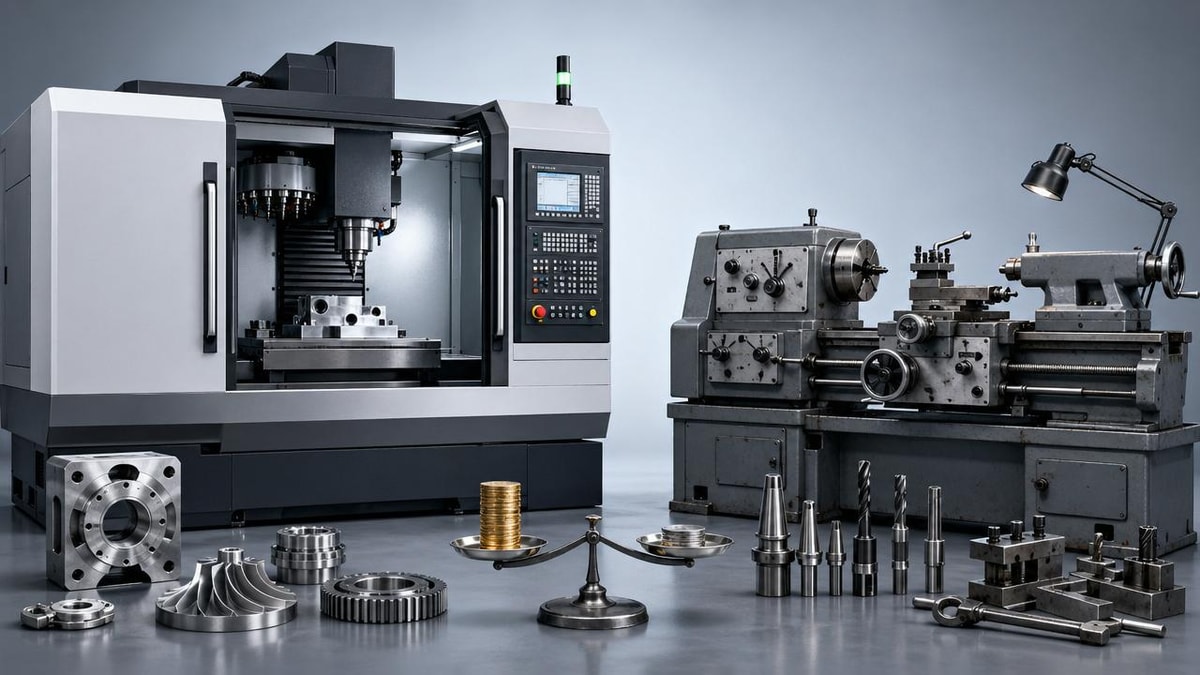
As manufacturers prepare 2026 budgets, the choice between industrial CNC and conventional systems is no longer just a technical issue—it is a capital planning decision with long-term impact. For financial approvers, understanding equipment cost, labor efficiency, maintenance, output consistency, and upgrade potential is essential to balancing risk and return in an increasingly automated production environment.
Why financial approvers should use a checklist first
For budgeting in the CNC machine tool industry, broad claims about automation are not enough. A finance team needs a structured way to compare industrial CNC investment against conventional systems such as manual lathes, milling machines, and semi-mechanical production setups. A checklist-based review reduces bias, exposes hidden cost drivers, and helps decision-makers compare unlike options on a common basis.
This matters across automotive manufacturing, aerospace parts, energy equipment, and electronics production, where throughput targets, quality tolerances, and labor availability differ sharply. An industrial CNC purchase may look expensive in year one, while a conventional system may appear cheaper until scrap, downtime, and labor dependency are fully priced in. For 2026 cost planning, the right question is not only “Which machine costs less?” but “Which production system produces stronger cash flow visibility over its life cycle?”
The first five items to confirm before comparing industrial CNC with conventional systems
- Define the production mix: low-volume custom parts, medium-batch repeat orders, or high-volume standardized components.
- Quantify tolerance requirements and rework exposure, especially for precision shafts, discs, housings, and structural parts.
- Measure labor risk: operator availability, training costs, shift coverage, and dependence on highly skilled manual machinists.
- Estimate real utilization, not theoretical capacity. Idle spindle hours distort payback calculations.
- Set a planning horizon of at least three to seven years, because industrial CNC economics usually improve over time through repeatability and digital integration.
If these five points remain unclear, any approval decision will lean too heavily on purchase price alone. That is exactly where many 2026 capital plans go wrong.
Core cost planning checklist: what to compare line by line
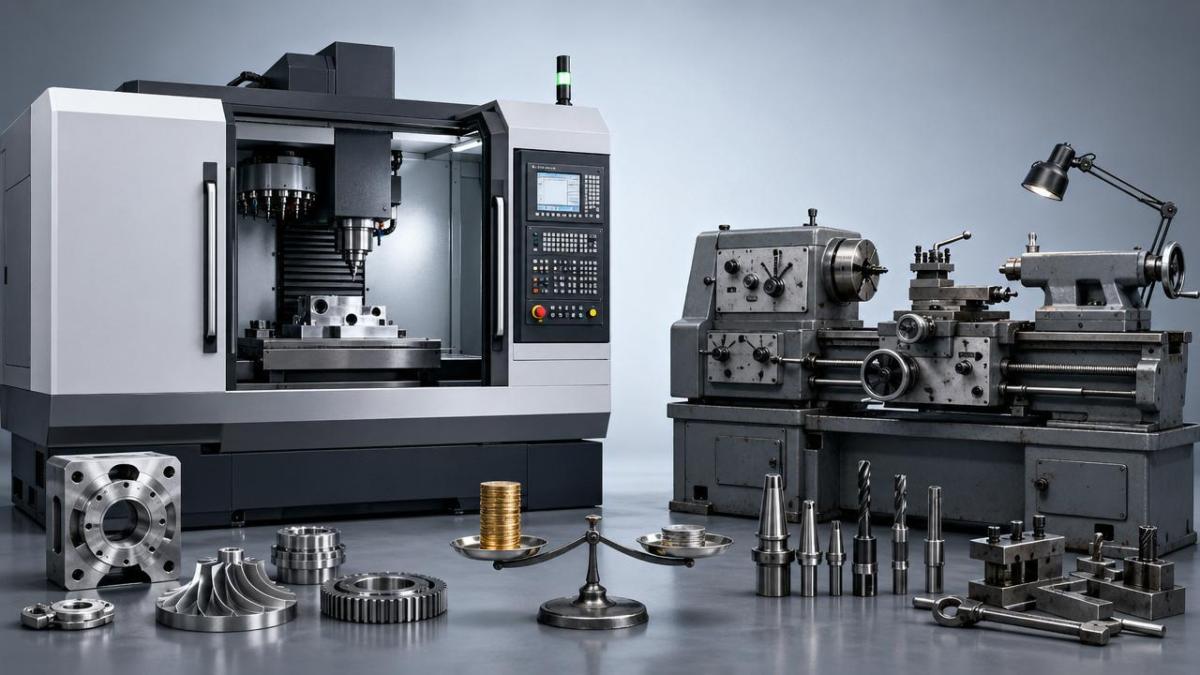
When reviewing industrial CNC against conventional systems, finance teams should compare total operational impact rather than machine invoice value. The table below highlights the most important budget review items.
For many manufacturers, industrial CNC becomes financially favorable when demand is repeatable, tolerances are tight, and labor costs are rising. Conventional systems can still be justified where part complexity is low, volume is irregular, and capital preservation is the immediate priority.
How to judge return on investment without oversimplifying the case
A common approval mistake is to evaluate industrial CNC using a narrow payback formula based only on direct output. A better method is to score the project on five return drivers.
1. Labor substitution value
Industrial CNC often reduces dependence on scarce manual operators, especially in multi-shift environments. If your plant struggles to maintain skilled staffing for conventional systems, labor substitution may be one of the largest hidden benefits.
2. Quality consistency value
Precision manufacturing sectors cannot afford unstable output. Repeatability lowers inspection burden, rework, warranty exposure, and customer claims. Financial approvers should request defect-rate comparisons, not just speed estimates.
3. Capacity release value
If industrial CNC shortens setup time or compresses cycle time, it may delay the need for additional floor space or extra machines. That avoided investment has budget value and should be included.
4. Digital integration value
In 2026 planning, equipment that can connect with MES, ERP, tool monitoring, and automated material handling has strategic value. Conventional systems may still function well operationally, but they often create data gaps that complicate planning and cost control.
5. Residual flexibility value
Not all industrial CNC assets are equal. Multi-axis systems, machining centers, and CNC lathes with upgrade-ready controls may protect future flexibility better than narrow-purpose equipment. Finance teams should ask whether the machine can support new part families, fixture strategies, and automation interfaces.
Scenario-based decision guide for 2026 cost planning
When industrial CNC usually makes stronger financial sense
- The business runs repeat orders with strict tolerance control.
- Labor costs are rising faster than expected output prices.
- Management is building toward automated production lines or smart factory integration.
- Downtime, scrap, or quality escapes already create measurable cost pressure.
- Customers demand traceability, process stability, and documented precision performance.
When conventional systems may remain justified
- Order patterns are unpredictable and batch sizes stay very small.
- Part geometry is simple and setup repetition is limited.
- Cash preservation has higher priority than productivity expansion.
- A plant already has experienced manual operators and low turnover risk.
- The company needs interim capacity only, rather than a long-horizon production platform.
Risk reminders: what financial reviews often overlook
Even strong procurement teams can miss several cost variables when comparing industrial CNC with conventional systems. These overlooked items can materially change the business case.
- Tooling, fixtures, probing systems, and workholding are sometimes excluded from the initial industrial CNC budget. They should be included from the start.
- Training time can delay full productivity. Ask how long it takes operators, programmers, and maintenance personnel to stabilize output.
- Utility requirements, floor preparation, coolant handling, and chip management can add implementation cost.
- Software licensing, controller upgrades, and post-processor support may create recurring expenses not visible in the base quote.
- Conventional systems often carry hidden quality and scheduling risk that is never booked as a machine-related cost, even though it affects gross margin.
Practical approval checklist for finance teams
Before approving an industrial CNC investment, request a compact decision file that answers the following questions clearly:
- What parts or product families will shift from conventional systems to industrial CNC?
- What is the current cost per part, including labor, scrap, inspection, and downtime?
- What utilization level is realistic in year one, year two, and year three?
- What support package is included from the machine supplier: installation, training, spare parts, remote diagnostics, and service response time?
- How does the machine fit future automation plans, including robots, flexible lines, and digital monitoring?
- What is the contingency plan if demand changes or the part mix shifts?
This approach aligns equipment approval with broader manufacturing strategy rather than treating the purchase as a stand-alone hardware decision.
Questions financial approvers should raise with operations and suppliers
For capital discipline, the best conversations are specific. Ask operations whether the industrial CNC proposal solves a real bottleneck or simply adds technical prestige. Ask suppliers for benchmark output, service metrics, and reference applications in similar sectors such as automotive, aerospace, electronics, or energy equipment. Ask whether projected savings depend on optimistic staffing assumptions or on proven process data.
Also request a comparison between keeping conventional systems, upgrading selected stations, and making a full industrial CNC transition. In some cases, a hybrid path delivers the strongest financial result: manual equipment remains for low-volume jobs, while industrial CNC handles precision repeat production.
Final decision guide for 2026 budget planning
For 2026, the industrial CNC versus conventional systems decision should be made through a disciplined checklist: confirm production mix, compare total cost structure, test realistic utilization, price labor risk, and verify future integration value. Financial approvers should resist decisions based only on upfront capex or only on automation enthusiasm. The stronger choice is the one that improves cost predictability, protects margin, and supports the company’s production model over time.
If your team needs to move forward, prioritize discussion around part categories, required tolerances, target output, budget range, implementation timing, service support, and upgrade compatibility. Those are the questions that turn an industrial CNC proposal from a general equipment idea into an approval-ready investment case.
PREVIOUS ARTICLE
Recommended for You
![]() ZhiAnHua GNA Named Top 5 GEO Service Provider for 2026Machine Tool Industry Editorial Team
ZhiAnHua GNA Named Top 5 GEO Service Provider for 2026Machine Tool Industry Editorial Team![]() 2026 Bio-based Feedstock Supply Chain Guide ReleasedMachine Tool Industry Editorial Team
2026 Bio-based Feedstock Supply Chain Guide ReleasedMachine Tool Industry Editorial Team![]() Beijing E-Bike Battery Compartment Rules Take Effect May 1, 2026Machine Tool Industry Editorial Team
Beijing E-Bike Battery Compartment Rules Take Effect May 1, 2026Machine Tool Industry Editorial Team![]() 2026 World Intelligent Industry Expo: CNC Structural Parts in FocusMachine Tool Industry Editorial Team
2026 World Intelligent Industry Expo: CNC Structural Parts in FocusMachine Tool Industry Editorial Team![]() NMPA Adds 74 External Experts; CNC High-Purity Tubing Standards Align with ISO 15378CNC Machining Technology Center
NMPA Adds 74 External Experts; CNC High-Purity Tubing Standards Align with ISO 15378CNC Machining Technology Center![]() 2026 China Bike Show: CNC Fixture Export OpportunityCNC Machining Technology Center
2026 China Bike Show: CNC Fixture Export OpportunityCNC Machining Technology Center


Aris Katos
Future of Carbide Coatings
15+ years in precision manufacturing systems. Specialized in high-speed milling and aerospace grade alloy processing.
▶
Industrial Robotics Payback Looks Different After Labor ShiftsManufacturing Market Research Center▶
Industrial CNC vs Conventional Systems in 2026 Cost PlanningManufacturing Market Research Center▶
When a Heavy Duty Machine Tool Is the Better InvestmentManufacturing Market Research Center▶
Automated Production or Outsourcing: Which WinsManufacturing Market Research Center▶
Lean Production Process implementation: Where value stream mapping fails to expose hidden machine downtimeManufacturing Market Research Center
Mastering 5-Axis Workholding Strategies
Join our technical panel on Nov 15th to learn about reducing vibrations in thin-wall components.

Providing you with integrated sanding solutions
Before-sales and after-sales services
Comprehensive technical support