• Global CNC market projected to reach $128B by 2028 • New EU trade regulations for precision tooling components • Aerospace deman
NYSE: CNC +1.2%LME: STEEL -0.4%

Automated Production or Outsourcing: Which Wins
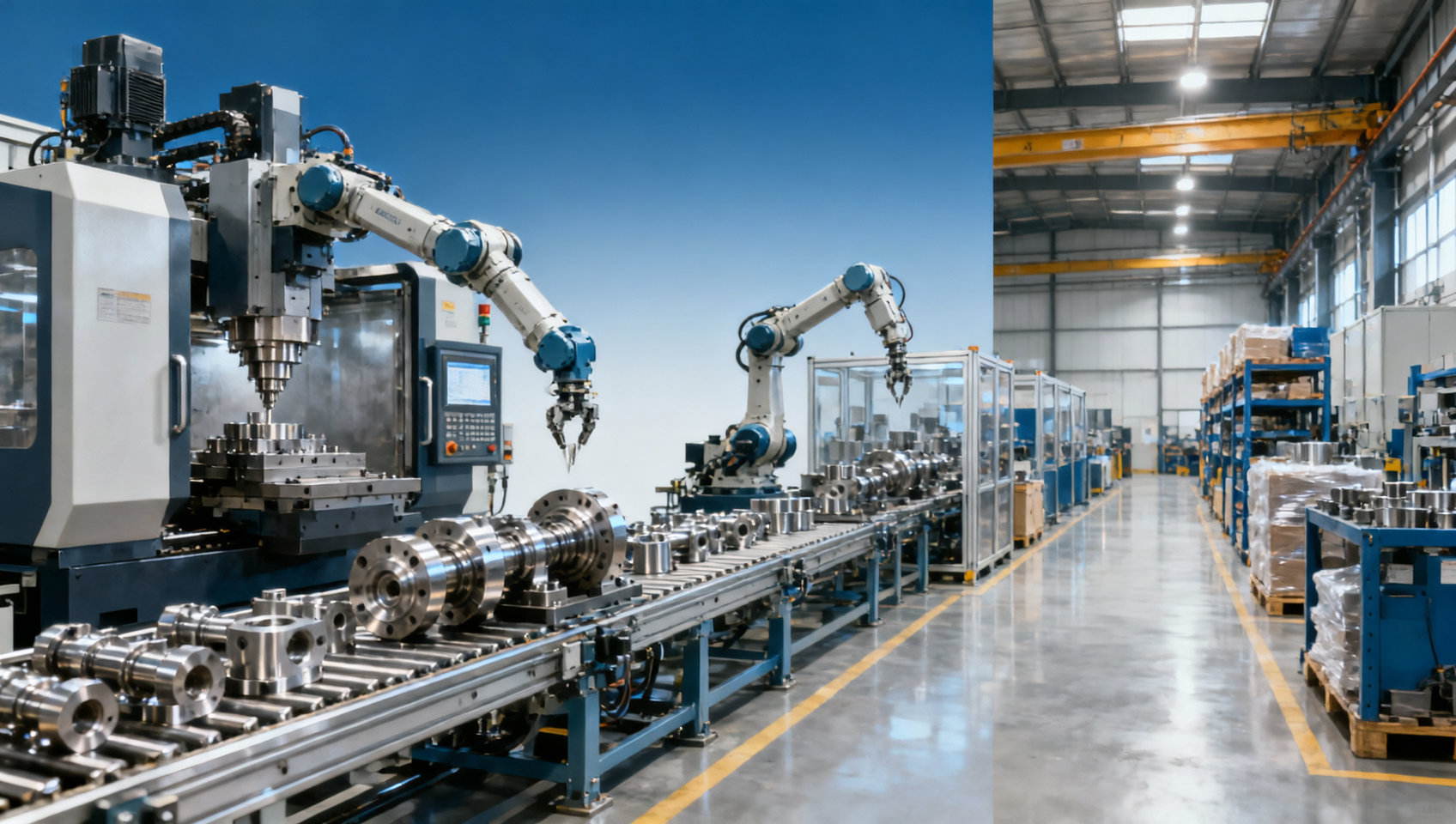
As Global Manufacturing faces rising cost, quality, and speed pressures, the choice between automated production and outsourcing is reshaping the Manufacturing Industry. From industrial CNC, CNC milling, and CNC cutting to full Automated Production Line deployment, manufacturers must balance control, flexibility, and investment. This article explores which model delivers greater value across the machine tool market and modern production process.
For researchers, machine operators, sourcing teams, and business evaluators, this is no longer a theoretical debate. It affects lead time, unit cost, tolerance stability, supply chain resilience, and the ability to scale production from pilot runs of 50 parts to repeat orders of 50,000 pieces.
In the CNC machine tool industry, the answer depends on part complexity, annual volume, capital budget, labor availability, and the maturity of the production process. A factory producing precision shafts with ±0.01 mm tolerance has different priorities from a buyer sourcing mixed batches of machined housings, brackets, and turned parts from several global suppliers.
The most effective decision is usually not based on ideology but on production economics and operational fit. Automated production and outsourcing each have clear strengths, risks, and best-use scenarios, especially in sectors such as automotive, aerospace, electronics, and energy equipment manufacturing.
Understanding the Two Models in Modern CNC Manufacturing
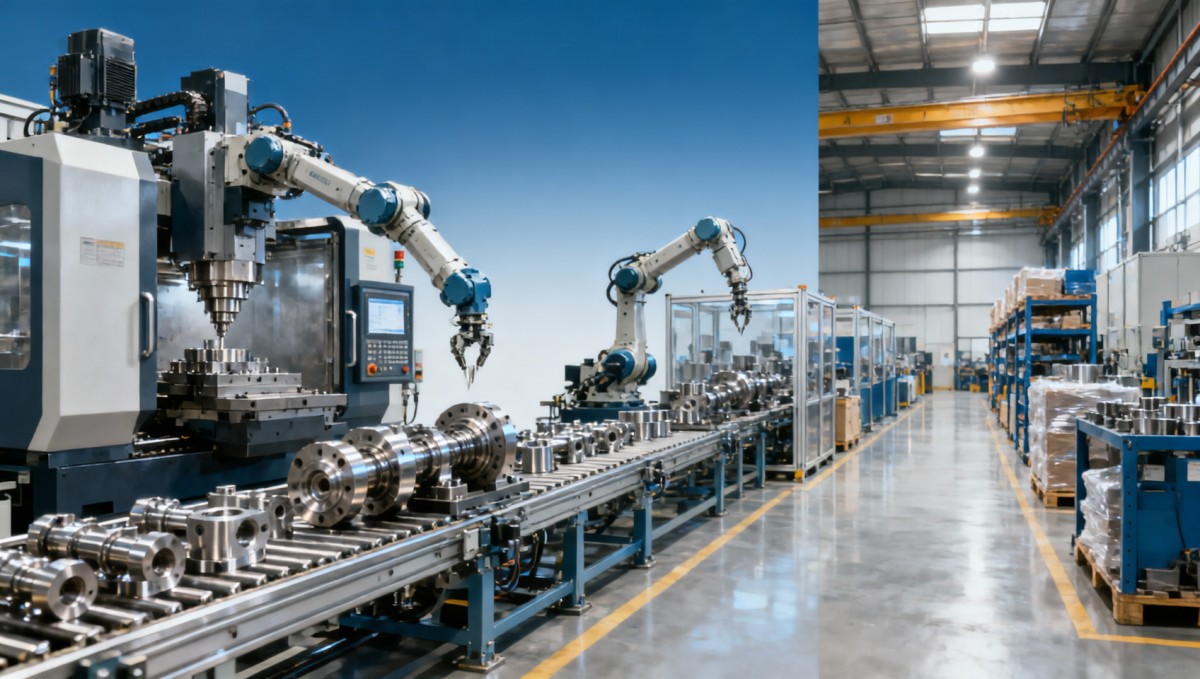
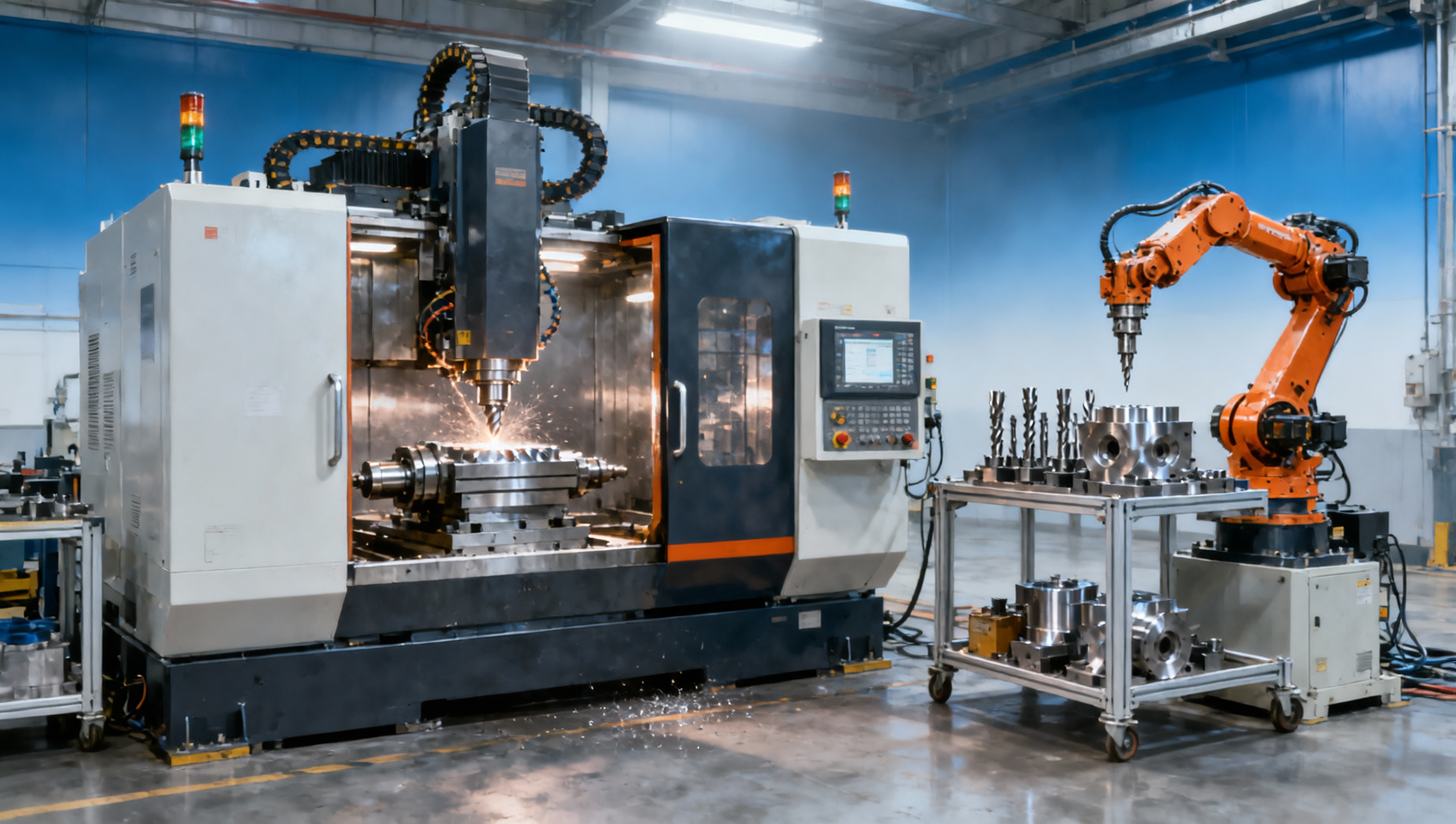
Automated production means a manufacturer controls its own machining and process flow through CNC lathes, machining centers, robotic handling, inspection systems, and integrated software. In a mature setup, one automated cell can run 16 to 24 hours per day with limited manual intervention, especially for standardized parts and repeat jobs.
Outsourcing means part or all of the manufacturing process is assigned to external suppliers. This can include CNC milling, CNC cutting, turning, grinding, heat treatment, surface finishing, or even full subassembly. Outsourcing may involve one specialist shop or a network of suppliers across 2 to 4 countries, depending on cost and capability needs.
The difference is not only about ownership of machines. It also involves control over scheduling, process knowledge, quality checkpoints, tooling decisions, and engineering changes. In-house automated production gives stronger visibility into cycle time and machine utilization, while outsourcing often offers lower upfront investment and quicker access to specialized capacity.
For companies in the machine tool market, the choice often starts with three questions: how stable is demand, how complex are the parts, and how much process risk can the business absorb? A shop facing weekly design changes may benefit from flexible outsourced support, while a plant with a stable 12-month production forecast may justify automation faster.
What Automated Production Usually Includes
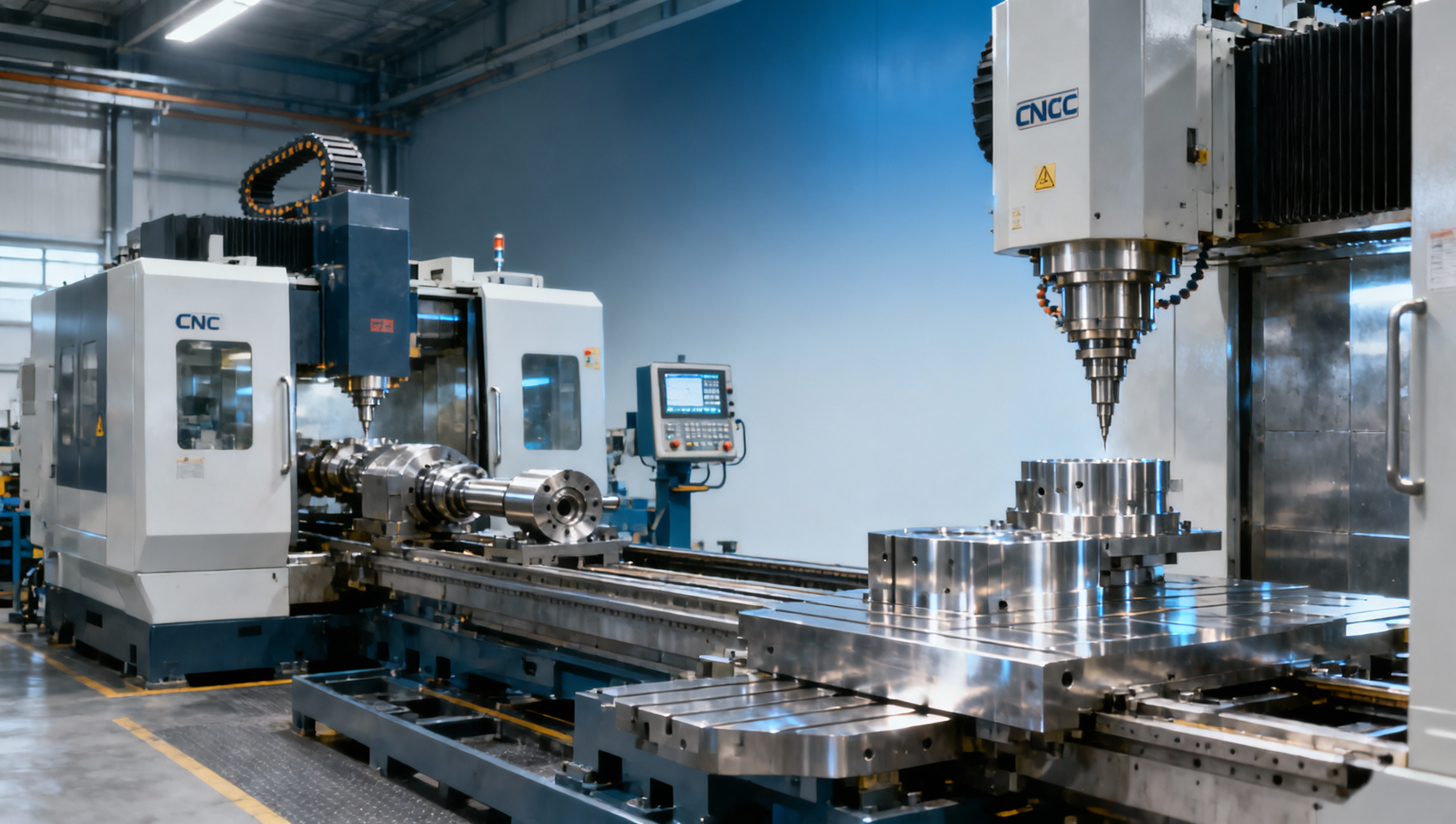
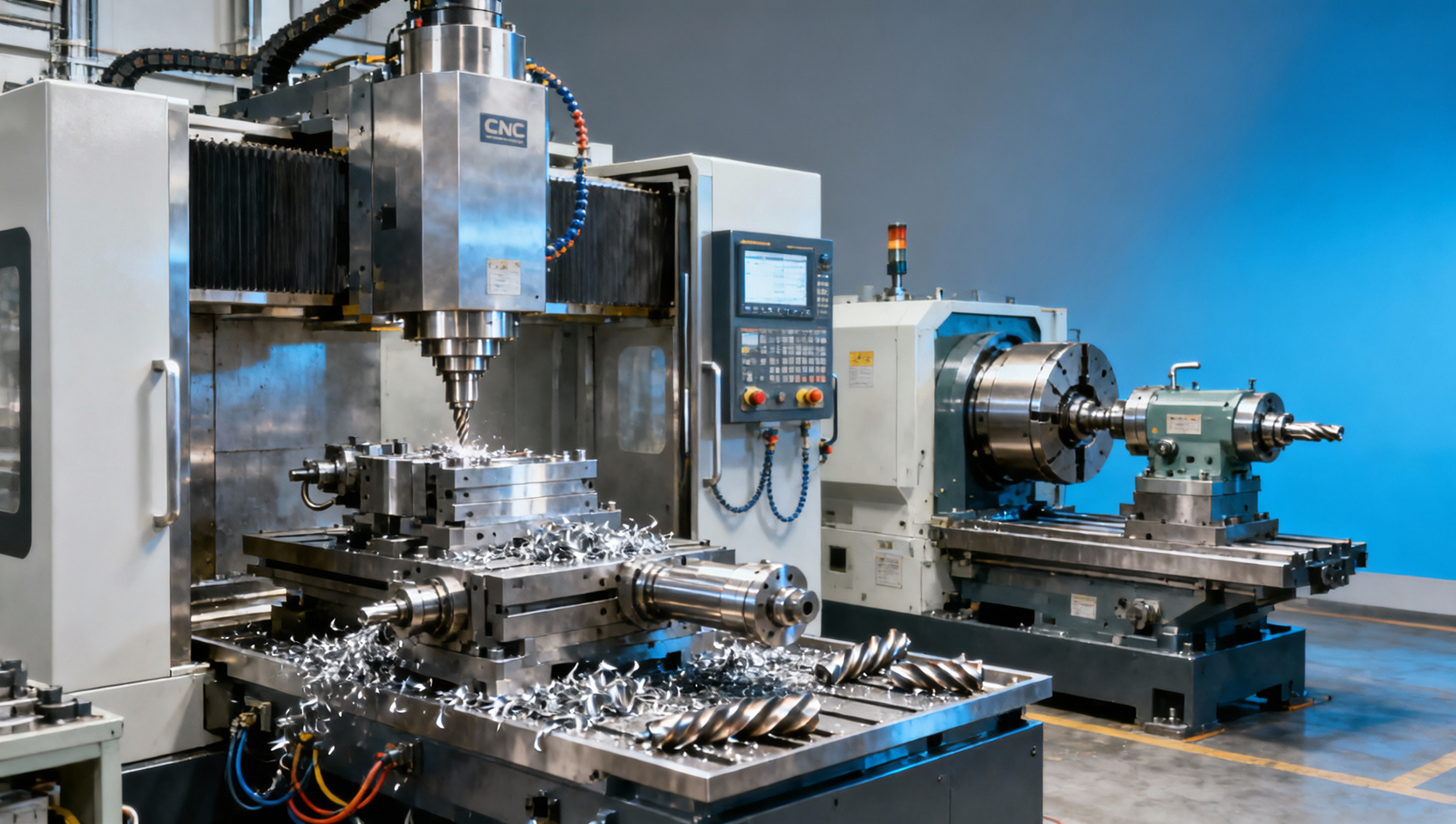
- CNC machining centers, CNC lathes, and multi-axis systems for repeatable machining operations.
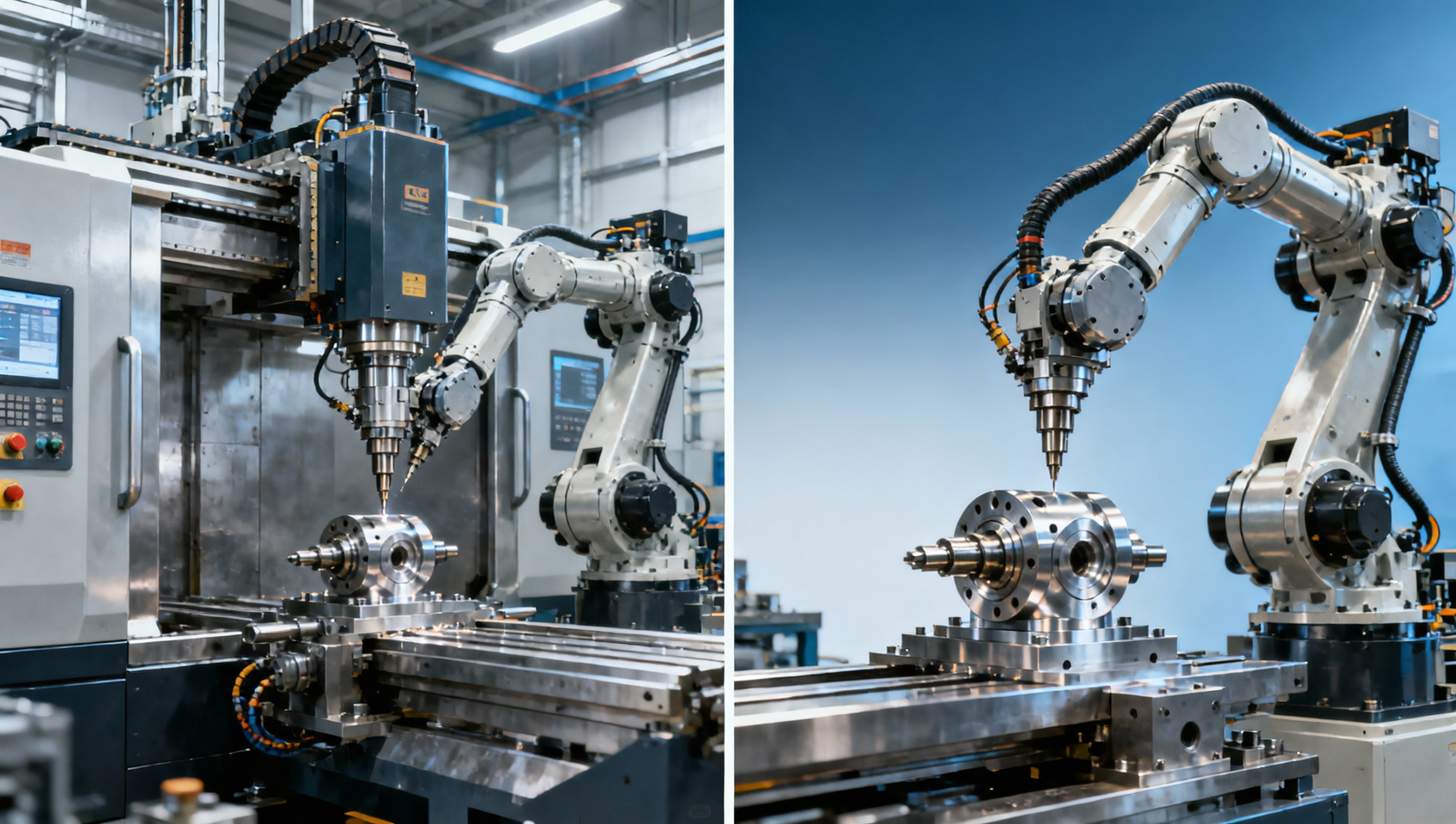
- Robotic loading or gantry handling to reduce setup labor and idle time.
- Inline gauging, vision inspection, or CMM checkpoints for tolerance control.
- MES, ERP, or machine monitoring systems for production data and traceability.
Where Outsourcing Adds Value
Outsourcing works especially well when internal capacity is below 70% utilization for some months and above 95% in others, or when the business lacks specific capabilities such as 5-axis machining, precision grinding, or low-volume prototype support. It also helps companies avoid tying up capital in machines with a payback period longer than 36 to 60 months.
The table below highlights how the two models differ across practical manufacturing dimensions.
The key insight is that neither model wins in every case. Automated production performs best when process repeatability and asset utilization are high. Outsourcing performs best when demand uncertainty, technology diversity, or capital constraints make internal investment less efficient.
Cost, Quality, and Speed: Which Model Performs Better?
Cost comparison should go beyond the quoted part price. Automated production includes machine depreciation, preventive maintenance, tooling wear, software integration, energy use, operator training, scrap risk, and floor space. Outsourcing includes purchase price, logistics, quality claims handling, communication overhead, incoming inspection, and possible resourcing if one supplier fails.
In many CNC applications, automation begins to show an advantage when annual volume is high enough to spread fixed costs. For example, a dedicated automated line for one family of turned parts may become cost-effective above 20,000 to 100,000 units per year, while low-mix prototype work remains better suited to outsourcing or semi-automated production.
Quality performance also depends on process stability. In-house automated production can reduce variation by minimizing manual loading errors, setup inconsistency, and process drift. On repeat jobs, manufacturers often target Cpk levels above 1.33 for critical dimensions and can use in-process monitoring to react within minutes instead of waiting for an external quality report.
Speed is more nuanced. Outsourcing may be faster at the beginning because no installation is required, and a qualified supplier can often start within 7 to 21 days. However, once an automated production line is commissioned, internal scheduling can shorten repeat-order response, especially when demand spikes or engineering changes occur every 2 to 6 weeks.
A Practical Comparison Framework
The following table shows how buyers and operations teams can compare the two options without relying on a single cost metric.
A common mistake is to compare a 3-year automation project with a 3-month outsourcing quote. A fair analysis should use at least 12 to 36 months of expected demand, realistic scrap assumptions, maintenance intervals, and actual supplier lead-time variability. In sectors with traceability or compliance pressure, quality escape costs can easily outweigh a small unit-price saving.
Hidden Cost Items Often Missed
- Engineering change delays caused by supplier communication loops.
- Scrap and rework from inconsistent fixtures, tool wear, or incomplete process documentation.
- Expedited freight for urgent orders when external lead times slip by 3 to 10 days.
- Low machine utilization in-house when demand is too volatile for dedicated automation.
For procurement teams, the best-performing model is often the one that produces the lowest total landed cost with acceptable quality risk and responsive delivery, not simply the lowest initial quote.
When Automated Production Wins in the Machine Tool Industry
Automated production is strongest in environments with repeatability, predictable scheduling, and measurable throughput targets. Automotive components, electronic hardware, motor shafts, pump housings, and standardized precision discs are good examples. If the same part family runs for 6 to 18 months with minor revisions, automation usually improves both consistency and labor efficiency.
In CNC machining, a well-designed automated production line can reduce handling steps from 5 or 6 to 2 or 3, lower setup time per batch, and improve spindle utilization. For medium-volume manufacturers, even a semi-automated cell with pallet changers and robotic loading can support lights-out production during night shifts or weekends, extending effective operating hours without proportional labor growth.
Control is another major advantage. Internal teams can optimize cutting parameters, fixture design, offset management, tool life monitoring, and in-process inspection based on real-time results. This matters when dimensions are tight, surface finish must stay within Ra 0.8 to 1.6, or traceability must cover material lot, machine record, and inspection history for every batch.
Automation also improves supply chain resilience when external disruptions occur. If imported components face shipping delays of 2 to 5 weeks, an internal automated line can protect production continuity for critical parts. This is particularly important in energy equipment and aerospace support manufacturing, where downtime costs are often much higher than pure machining cost.
Best-Fit Scenarios for Automation
- Annual demand is stable enough to keep machine utilization above 75%.
- Part tolerances are strict, often within ±0.02 mm or tighter on key features.
- Repeat batches justify dedicated fixtures, tool presets, and process validation.
- Short engineering response time is critical for launch, revision, or service parts.
Operational Risks to Manage
Automated production is not automatically efficient. Poor fixture design, low programming maturity, and weak preventive maintenance can create expensive bottlenecks. A machine down for 8 hours on a single-point automated line may interrupt far more output than the same failure in a diversified supplier network.
Before investing, companies should validate three factors: expected run time, process capability after 30 to 90 days, and maintenance support readiness. Without these, automation can become an underused asset rather than a cost advantage.
When Outsourcing Wins for Flexibility and Commercial Efficiency
Outsourcing remains the better choice when production demand is uncertain, product variety is high, or the required process mix extends beyond internal capability. A manufacturer may need turning, 5-axis milling, sheet-related CNC cutting, grinding, anodizing, and assembly in one project. Building all of this in-house often stretches capital and management resources too far.
For sourcing teams, outsourcing creates access to specialized suppliers already optimized for certain materials or geometries. One partner may handle hardened steel shafts, another aluminum electronics enclosures, and another precision plates. This specialization can reduce trial-and-error and shorten the industrialization cycle from 8 to 12 weeks down to a more manageable launch schedule.
Commercially, outsourcing converts fixed cost into variable cost. Instead of committing to equipment with a 4-year payback estimate, the buyer pays by batch, project, or annual contract. This helps companies preserve cash for product development, market expansion, or inventory planning, especially when order visibility is limited to 3 to 6 months.
Outsourcing also supports geographic flexibility. Global machine tool clusters in China, Germany, Japan, and South Korea offer broad capability coverage, and many buyers combine local suppliers for urgent jobs with overseas partners for cost-sensitive standard parts. That said, supply chain spread must be balanced against logistics, communication, and quality verification effort.
How to Evaluate an Outsourcing Strategy
A useful outsourcing model depends on supplier qualification, not just price comparison. The table below summarizes practical checkpoints for buyers and business evaluators.
The table shows that successful outsourcing is a management system, not merely a vendor list. Buyers should qualify at least 2 suppliers for critical categories, define inspection standards before mass production, and review capacity risk every quarter. That approach helps preserve flexibility without sacrificing control.
Common Outsourcing Mistakes
- Selecting a supplier based only on piece price while ignoring process stability.
- Sending incomplete drawings without GD&T, surface finish, or material traceability needs.
- Using a single supplier for all part families without a backup source.
- Failing to define acceptable lead time variation, packaging, and inspection responsibilities.
For many manufacturers, outsourcing wins when product mix changes faster than internal automation can adapt. It is also a strong option for trial production, bridge capacity, market entry, and parts that require niche expertise but not continuous volume.
A Hybrid Decision Framework for Procurement and Operations Teams
In practice, many successful manufacturers do not choose one model exclusively. They use a hybrid strategy. Critical, repeat, tolerance-sensitive parts stay in automated production, while overflow work, prototypes, low-volume specials, or secondary processes are outsourced. This combination often balances cost control with commercial agility.
A useful framework starts by grouping parts into three categories: core volume parts, variable-demand parts, and specialist-process parts. Core volume parts are candidates for automated production. Variable-demand parts fit outsourcing or flexible cells. Specialist-process parts often remain external unless annual demand clearly justifies investment.
Decision-makers should also compare five practical dimensions: annual quantity, tolerance level, engineering change frequency, required delivery speed, and internal technical support. If three or more dimensions point toward stability and repeatability, automation usually deserves deeper financial review. If three or more point toward uncertainty and specialization, outsourcing often carries lower risk.
For implementation, a phased approach reduces decision error. Instead of buying a full automated production line immediately, companies can start with one CNC cell, one robot, and one validated part family. Likewise, they can begin outsourcing with a pilot batch of 100 to 500 units before moving to annual contracts.
Five-Step Selection Process
- Map the production mix by volume, complexity, material, and tolerance.
- Calculate total cost over 12 to 36 months, not just initial pricing.
- Assess process risk, including downtime, logistics, and quality escape exposure.
- Run a pilot with measurable KPIs such as scrap rate, lead time, and OEE.
- Scale based on actual data, then update the sourcing or automation roadmap quarterly.
FAQ for Buyers and Manufacturing Teams
How do I know when automation becomes financially justified? A common trigger is stable repeat demand for at least 12 months, utilization above 75%, and enough volume to absorb tooling, programming, maintenance, and depreciation without relying on optimistic assumptions.
Is outsourcing risky for precision CNC parts? It can be if supplier qualification is weak. Risk falls sharply when buyers verify machine capability, sample approval, inspection plans, and corrective action timelines before full-volume release.
Can one company use both models at the same time? Yes. Many manufacturers keep strategic shaft parts, structural components, or recurring assemblies in-house while outsourcing overflow, prototypes, and specialist finishing processes.
What delivery periods are typical? Prototype machining may run 7 to 15 days, standard outsourced production 2 to 6 weeks, and automation installation or line ramp-up 8 to 20 weeks depending on complexity.
The strongest decision model is therefore evidence-based, phased, and aligned with actual production behavior. That is especially true in the CNC machine tool industry, where a wrong capacity decision can affect not only margin but also customer delivery performance and long-term competitiveness.
Automated production wins when demand is stable, tolerances are tight, and control over quality, throughput, and response time creates measurable value. Outsourcing wins when flexibility, lower capital exposure, specialist capability, and faster external access matter more than direct internal control. For many manufacturers, the most resilient answer is a hybrid strategy built around part type, risk level, and real operating data.
If you are evaluating CNC machining, precision machine tools, or an Automated Production Line strategy, a structured comparison can reveal where investment will generate the strongest return and where qualified outsourcing can improve speed and flexibility. To discuss your production mix, sourcing priorities, or machine tool market requirements, contact us to get a tailored solution, review technical options, and explore the right path for your manufacturing operation.
NEXT ARTICLE
Recommended for You
 How to Choose the Right Metal Machining ProcessCNC Machining Technology Center
 Metal Machining vs CNC Metalworking: What MattersCNC Machining Technology Center
 What Drives Cost in Industrial CNC ProjectsManufacturing Market Research Center
 Is Industrial CNC Worth Upgrading in 2026Machine Tool Industry Editorial Team
 How CNC Industrial Systems Improve Shop EfficiencyMachine Tool Industry Editorial Team
 CNC Industrial Setup Mistakes to Avoid FirstCNC Machining Technology Center

Aris Katos
Future of Carbide Coatings
15+ years in precision manufacturing systems. Specialized in high-speed milling and aerospace grade alloy processing.
▶
Automated Production or Outsourcing: Which WinsManufacturing Market Research Center▶
Lean Production Process implementation: Where value stream mapping fails to expose hidden machine downtimeManufacturing Market Research Center▶
Industrial Automation Investment Is Shifting to Modular CellsManufacturing Market Research Center▶
Why some industrial lathe investments take longer to pay backManufacturing Market Research Center▶
Automated production is expanding in parts with stable repeat demandManufacturing Market Research Center
Mastering 5-Axis Workholding Strategies
Join our technical panel on Nov 15th to learn about reducing vibrations in thin-wall components.

Providing you with integrated sanding solutions
Before-sales and after-sales services
Comprehensive technical support