• Global CNC market projected to reach $128B by 2028 • New EU trade regulations for precision tooling components • Aerospace deman
NYSE: CNC +1.2%LME: STEEL -0.4%

Industrial Robotics Payback Looks Different After Labor Shifts
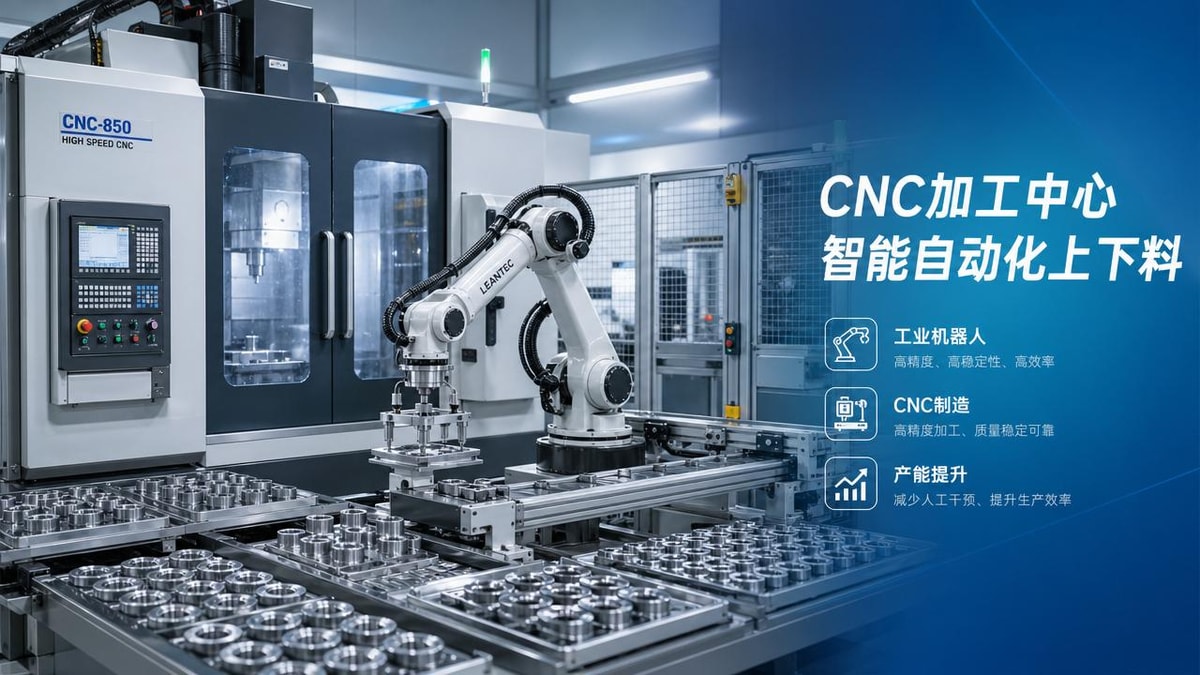
Industrial Robotics payback no longer depends only on direct labor replacement. For financial decision-makers in CNC machining and precision manufacturing, recent labor shifts, rising demand volatility, and the push for smarter production are changing how automation returns should be evaluated. This article explores why ROI calculations now require a broader view of uptime, quality, flexibility, and long-term production resilience.
In machine tool environments, the old model was simple: compare robot cost against direct operator wages and estimate a payback period of 18 to 36 months. That approach is now too narrow for CNC lathes, machining centers, multi-axis cells, and automated loading systems working under tighter lead times, smaller batch sizes, and more demanding quality targets.
For finance teams approving capital expenditure, the more relevant question is not whether Industrial Robotics can remove one operator from one station. It is whether automation can protect spindle utilization, reduce scrap, stabilize throughput across 2 or 3 shifts, and support production continuity when labor availability, order mix, and quality requirements all move at once.
Why Industrial Robotics ROI Has Changed in CNC Manufacturing
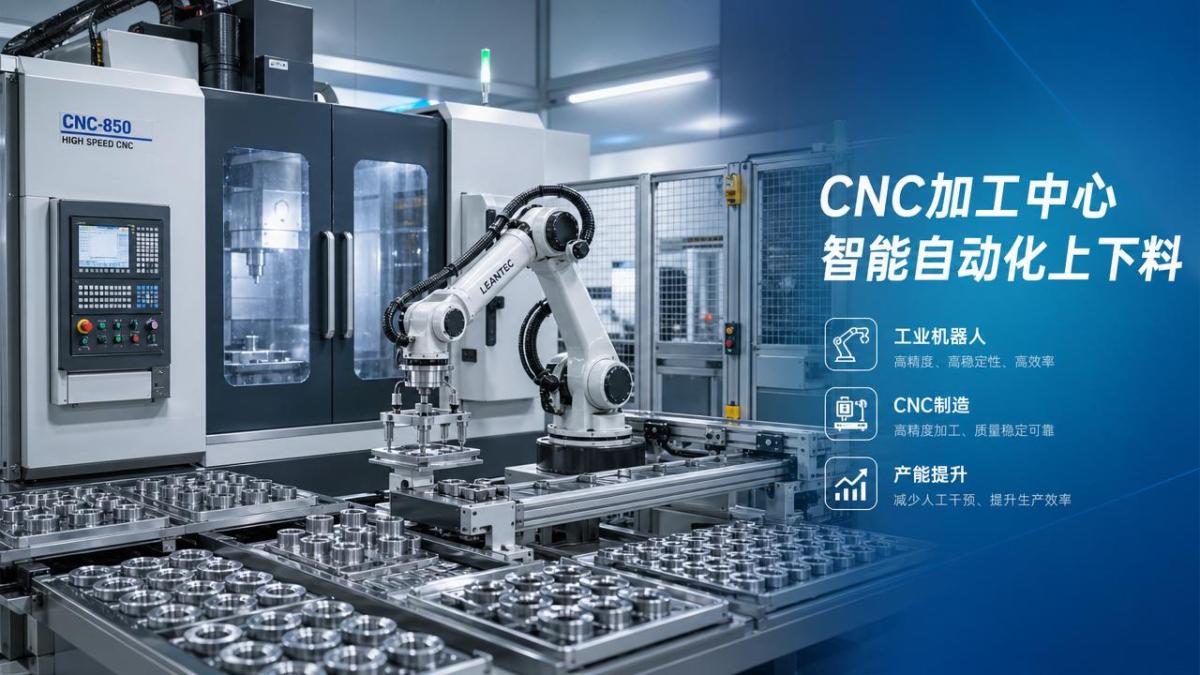
The economics of Industrial Robotics in precision manufacturing have shifted because labor is no longer a stable baseline. In many CNC shops, operators are harder to recruit for night shifts, cross-training takes 8 to 16 weeks, and absenteeism can interrupt machine loading, in-process checks, and secondary handling. A robot cell may not fully replace labor, but it can reduce the operational volatility attached to it.
This matters especially in automotive, aerospace, energy equipment, and electronics component production, where part tolerances, traceability, and output consistency carry direct financial consequences. If a machining cell loses 45 minutes per shift due to loading delays, fixture handling mistakes, or operator movement between machines, the cost is not just labor. It is lost machine capacity, delayed delivery, and potentially lower on-time performance.
From labor substitution to capacity protection
A modern Industrial Robotics business case often starts with machine utilization rather than headcount reduction. A CNC machining center running at 62% effective utilization can sometimes be lifted to 75% or 80% through robotic tending, pallet flow coordination, and reduced waiting between cycles. Even a 10-point increase in utilization can be financially meaningful when machine hourly rates, tool wear, and delivery commitments are already fixed into the cost structure.
For finance approvers, that means ROI should include three layers: direct labor impact, recovered productive hours, and avoided disruption costs. In many workshops, the second and third layers are now larger than the first, particularly where expensive 4-axis or 5-axis equipment must run beyond normal daytime labor coverage.
The hidden costs of unstable manual operations
Manual loading may look flexible on paper, but it often introduces variable cycle time, inconsistent part orientation, uneven inspection timing, and idle spindle periods between jobs. In high-mix environments, those losses are spread across dozens of small interruptions each day. A robot does not eliminate all of them, but it can compress task variation within a repeatable range such as ±1 to 3 seconds per load sequence instead of 10 to 20 seconds of operator variation.
That consistency is valuable when processing precision shafts, discs, housings, and structural parts where unattended or semi-attended machining is needed. The finance perspective should therefore include not only payroll savings, but also whether automation reduces variance enough to make planning, scheduling, and throughput more predictable over a 12- to 24-month horizon.
Typical cost drivers now reviewed by finance teams
- Spindle idle time per shift, often measured in 15-minute blocks
- Scrap and rework rates, especially on precision parts with tighter than ±0.02 mm process windows
- Night-shift staffing premiums or overtime dependence over 3 to 6 months
- Changeover delays when the same cell runs 5 to 20 SKUs per week
- Delayed shipments, expedited logistics, and contractual delivery risk
The table below shows how Industrial Robotics payback assumptions typically look different before and after recent labor shifts in CNC and precision manufacturing operations.
The key takeaway is that Industrial Robotics should now be evaluated as a production-risk and capacity-management tool, not only as a labor-cost tool. For CNC-oriented businesses with expensive equipment and strict delivery targets, this reframing often changes which projects receive budget approval first.
What Financial Approvers Should Measure Beyond Headcount Savings
A stronger investment case for Industrial Robotics comes from measuring the value of uptime, repeatability, scheduling flexibility, and lower process loss. These factors are easier to defend internally when translated into operational metrics that finance teams already use, such as hours recovered, margin protected, scrap reduced, and working capital exposure lowered through more reliable output.
1. Uptime and spindle utilization
If a machining center is available for 20 hours per day but productive for only 13 to 14 hours, the gap deserves financial attention. Industrial Robotics can reduce loading delays, support lights-out windows of 2 to 6 hours, and maintain feeding consistency during breaks, shift changes, or labor shortages. When machine hourly value is high, each recovered hour can be more important than one avoided labor hour.
2. Quality cost and rework avoidance
In precision manufacturing, quality losses are often nonlinear. One mishandled part may not only create scrap, but also consume extra inspection, setup verification, and schedule recovery time. Robotic part handling can improve repeatable placement, fixture engagement, and process sequence discipline. Even a scrap reduction from 3.0% to 1.8% may justify a meaningful part of the investment in high-value material or tight-tolerance production.
3. Flexibility across changing order mix
Many factories no longer run one high-volume part family for months. Instead, they shift between medium and small batches, urgent inserts, and customer-specific revisions. Industrial Robotics with suitable grippers, fixture logic, and job recipes can support this environment if changeover is planned properly. The finance issue is whether the system can handle 4, 8, or 12 part variants without creating expensive engineering rework each quarter.
4. Resilience and staffing exposure
A robot investment can reduce dependency on hard-to-fill roles, especially for repetitive tending, loading, unloading, and machine-to-machine transfer tasks. This does not remove the need for skilled people; it changes where skills are applied. More of the workforce can be shifted toward setup, process optimization, programming support, and quality control rather than repetitive handling.
The following framework can help finance teams compare Industrial Robotics projects using measurable criteria rather than a single labor-replacement assumption.
When these metrics are quantified early, the approval process becomes more grounded. Industrial Robotics projects that appear marginal on wage replacement alone may become attractive once utilization and risk reduction are included in a realistic operating model.
How to Evaluate Industrial Robotics in CNC and Precision Manufacturing
Not every robot project produces the same payback. The best candidates usually sit where machine value is high, loading work is repetitive, cycle time is stable enough to automate, and quality losses from handling errors are material. Financial approvers should ask for a structured review before release of budget.
Start with the right application scope
The first screening step is operational fit. CNC machine tending, blank loading, finished part unloading, deburring transfer, pallet movement, and inspection handoff are often stronger use cases than highly variable manual assembly steps. If one cell runs parts with similar dimensions, similar clamping logic, and cycle times in a predictable band such as 90 to 420 seconds, automation feasibility tends to improve.
Four questions finance should require before approval
- What is the current effective utilization of the target machine or cell?
- How many part variants must the robot handle in the first 12 months?
- What non-labor losses will be reduced: scrap, waiting, overtime, or missed deliveries?
- What is the expected integration period, usually 6 to 14 weeks, and what production disruption is planned during ramp-up?
Look closely at integration complexity
Industrial Robotics economics can deteriorate if integration is underestimated. The robot itself is only one layer. Grippers, guarding, infeed and outfeed design, part presence verification, machine interface signals, fixture repeatability, and recovery logic after faults all affect implementation cost and ramp-up time. A low purchase price does not compensate for poor cell design that causes frequent stoppages.
In CNC machining environments, compatibility with existing machines is critical. Older machine tools may require additional interface work, while newer smart factory setups may already support easier data exchange. The finance team should therefore review total installed cost, not only robot list price, and should expect a staged validation process covering dry run, pilot production, and stable output.
Build ROI around realistic operating assumptions
A credible Industrial Robotics model should use conservative assumptions. For example, instead of assuming immediate full unattended operation, start with 70% to 80% of the planned automation window during the first 8 to 12 weeks. Include training, preventive maintenance checks, fixture tuning, and expected debugging time. This creates a more reliable payback estimate and reduces the risk of disappointment after commissioning.
It is also useful to compare best-case, base-case, and constrained-case scenarios. If payback works only under ideal conditions, the project is fragile. If it remains acceptable even when uptime improvement is 8% rather than 15%, or when batch mix becomes more complex than planned, approval confidence should increase.
Common Decision Mistakes and How to Avoid Them
The most common mistake is treating Industrial Robotics as a generic automation purchase instead of a cell-specific operational investment. Payback varies sharply between a well-matched tending application and a poorly selected process with unstable upstream flow, inconsistent blanks, or frequent engineering changes.
Mistake 1: Using wage rates as the only financial input
This can understate value in high-precision production where machine time and quality exposure are more expensive than manual handling. It can also overstate value if the process bottleneck is not labor but programming, setup, or inspection capacity.
Mistake 2: Ignoring low-volume or mixed-model requirements
A robot cell that performs well on 1 or 2 parts may fail financially when the production plan expands to 10 variants with different gripping conditions. Approval should therefore include review of part family roadmap, not just current demand.
Mistake 3: Underfunding support and training
Even robust Industrial Robotics deployments need operator training, maintenance ownership, backup procedures, and spare-part planning. A practical standard is to define 3 support layers: daily operation checks, weekly preventive review, and escalation for integration or programming issues. Without this structure, small faults can turn into recurring downtime.
Practical approval checklist
- Confirm baseline utilization with at least 2 to 4 weeks of production data
- Separate direct labor savings from throughput and quality gains
- Review integration scope line by line, including guarding and machine interface costs
- Test whether the cell can handle expected part-family variation
- Require a ramp-up plan with measurable milestones at 30, 60, and 90 days
For CNC machining, precision manufacturing, and smart factory upgrades, the payback of Industrial Robotics now looks different because the manufacturing environment itself has changed. Labor scarcity, demand variability, stricter quality requirements, and pressure for digital integration all increase the value of stable, repeatable, scalable automation.
Financial approvers who evaluate robotics through the broader lens of uptime, quality, flexibility, and resilience are more likely to identify projects that protect long-term production capability rather than merely reduce short-term labor cost. If you are assessing automation options for CNC lathes, machining centers, multi-axis systems, or flexible production lines, now is the right time to compare applications, clarify total installed cost, and build a realistic ROI model.
To discuss your production scenario, review a tailored automation framework, or explore more Industrial Robotics solutions for precision manufacturing, contact us today for a customized plan and detailed project guidance.
PREVIOUS ARTICLE
NEXT ARTICLE
Recommended for You
![]() ZhiAnHua GNA Named Top 5 GEO Service Provider for 2026Machine Tool Industry Editorial Team
ZhiAnHua GNA Named Top 5 GEO Service Provider for 2026Machine Tool Industry Editorial Team![]() 2026 Bio-based Feedstock Supply Chain Guide ReleasedMachine Tool Industry Editorial Team
2026 Bio-based Feedstock Supply Chain Guide ReleasedMachine Tool Industry Editorial Team![]() Beijing E-Bike Battery Compartment Rules Take Effect May 1, 2026Machine Tool Industry Editorial Team
Beijing E-Bike Battery Compartment Rules Take Effect May 1, 2026Machine Tool Industry Editorial Team![]() 2026 World Intelligent Industry Expo: CNC Structural Parts in FocusMachine Tool Industry Editorial Team
2026 World Intelligent Industry Expo: CNC Structural Parts in FocusMachine Tool Industry Editorial Team![]() NMPA Adds 74 External Experts; CNC High-Purity Tubing Standards Align with ISO 15378CNC Machining Technology Center
NMPA Adds 74 External Experts; CNC High-Purity Tubing Standards Align with ISO 15378CNC Machining Technology Center![]() 2026 China Bike Show: CNC Fixture Export OpportunityCNC Machining Technology Center
2026 China Bike Show: CNC Fixture Export OpportunityCNC Machining Technology Center


Aris Katos
Future of Carbide Coatings
15+ years in precision manufacturing systems. Specialized in high-speed milling and aerospace grade alloy processing.
▶
Industrial Robotics Payback Looks Different After Labor ShiftsManufacturing Market Research Center▶
Industrial CNC vs Conventional Systems in 2026 Cost PlanningManufacturing Market Research Center▶
When a Heavy Duty Machine Tool Is the Better InvestmentManufacturing Market Research Center▶
Automated Production or Outsourcing: Which WinsManufacturing Market Research Center▶
Lean Production Process implementation: Where value stream mapping fails to expose hidden machine downtimeManufacturing Market Research Center
Mastering 5-Axis Workholding Strategies
Join our technical panel on Nov 15th to learn about reducing vibrations in thin-wall components.

Providing you with integrated sanding solutions
Before-sales and after-sales services
Comprehensive technical support