• Global CNC market projected to reach $128B by 2028 • New EU trade regulations for precision tooling components • Aerospace deman
NYSE: CNC +1.2%LME: STEEL -0.4%

What to check before investing in Industrial Robotics
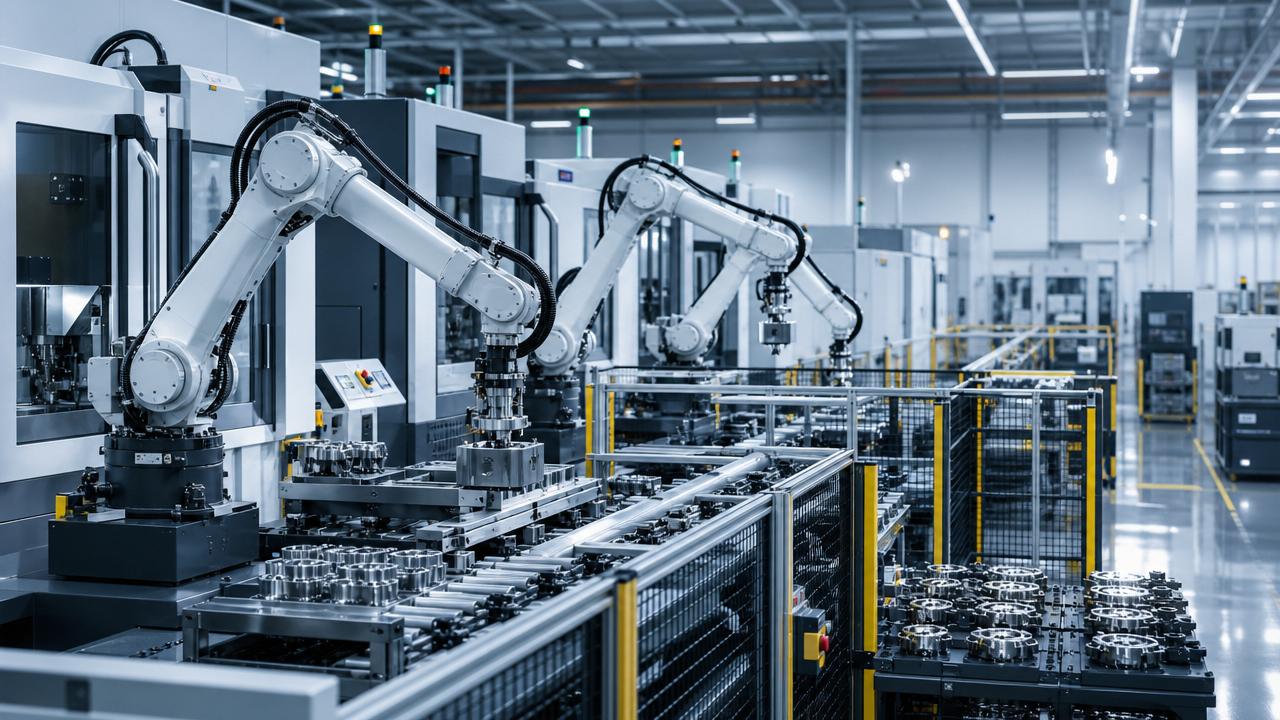
Before allocating budget to Industrial Robotics, financial decision-makers need more than headline ROI claims. The right investment depends on total cost of ownership, integration with CNC machines and automated lines, supplier reliability, maintenance needs, and expected productivity gains. A careful review of these factors can reduce risk, improve capital efficiency, and support smarter long-term manufacturing decisions.
Why a checklist matters before investing in Industrial Robotics
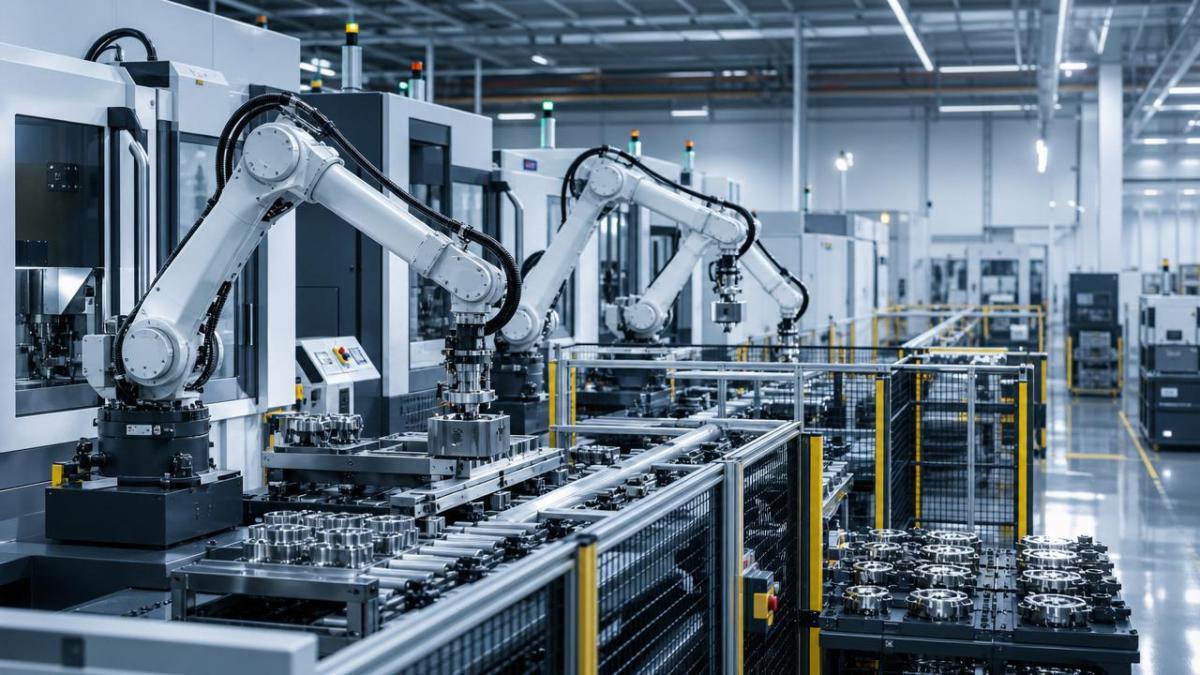
Industrial Robotics projects often look attractive in presentations. Real value, however, appears only after installation, programming, ramp-up, and stable production under actual factory conditions.
In CNC machining, precision manufacturing, and automated assembly, one weak assumption can distort the business case. A checklist creates structure, compares options consistently, and reveals hidden costs early.
It also helps align robotics investments with throughput targets, quality requirements, labor availability, digitalization plans, and long-term equipment strategy across multiple production lines.
Core checklist for evaluating Industrial Robotics
- Define the task clearly. Map each robot’s exact role, cycle time, payload, reach, accuracy, duty cycle, and interface with CNC machines, conveyors, sensors, and safety systems.
- Measure the current baseline. Record output, scrap, downtime, labor hours, changeover frequency, and bottlenecks before comparing manual, semi-automated, and fully automated robotics options.
- Check process stability first. Avoid automating unstable machining, loading, welding, palletizing, or inspection tasks, because robotics can amplify upstream variation instead of removing it.
- Calculate full ownership cost. Include robot arm, end-of-arm tooling, guards, software, installation, integration, training, spare parts, maintenance, and future line modification expenses.
- Test compatibility with existing assets. Review PLC communication, CNC controller integration, MES connectivity, tooling standards, fixture design, and plant power or air requirements.
- Validate supplier capability. Compare integrators and robotics vendors on references, application experience, service coverage, commissioning quality, and spare-part response time.
- Review programming complexity. Estimate the effort for teaching paths, handling part variation, recipe changes, offline simulation, and future product introduction across multiple shifts.
- Assess safety and compliance. Confirm guarding, interlocks, collaborative operation limits, risk assessment documentation, and local standards before approving any Industrial Robotics deployment.
- Stress-test expected ROI. Run scenarios for low utilization, delayed ramp-up, scrap events, overtime changes, and maintenance interruptions instead of relying on one optimistic model.
- Plan for lifecycle support. Confirm preventive maintenance intervals, technician skills, software updates, obsolescence risks, and the long-term availability of replacement components.
What to verify in key application scenarios
Machine tending for CNC lines
Industrial Robotics in CNC machine tending can raise spindle utilization and reduce repetitive handling. Yet the gains depend on part presentation, door timing, chip control, and fixture repeatability.
Verify gripper design, workholding consistency, robot access angles, and recovery logic after alarms. Also check whether one robot can serve multiple machines without creating a new bottleneck.
Automated assembly and material handling
For assembly cells, Industrial Robotics should be reviewed against takt time, part orientation accuracy, feeder reliability, and inspection integration. Small stops can erase expected labor savings quickly.
Look closely at end-of-arm tooling wear, sensor false positives, and changeover design. Flexible automation is valuable only when recipes and components can switch without long engineering delays.
Inspection, finishing, and precision tasks
When Industrial Robotics supports deburring, polishing, vision inspection, or metrology, performance depends on repeatability, force control, software tuning, and surface-quality consistency.
Confirm that the robot can hold required tolerances under real load, not only in catalog conditions. In precision manufacturing, process capability matters more than nominal positioning claims.
Commonly overlooked risks in Industrial Robotics investment
Underestimating integration effort
The robot itself may represent only part of the budget. Interfaces with CNC equipment, vision, part tracking, guarding, and plant software frequently consume more time than expected.
Ignoring tooling and consumable wear
End-of-arm tooling, vacuum systems, cutters, and sensors degrade over time. If replacement cycles are missing from the model, Industrial Robotics ROI can weaken within months.
Assuming labor savings are immediate
Many projects need a long stabilization period. During ramp-up, manual support, engineering hours, and extra troubleshooting can temporarily increase cost instead of reducing it.
Missing changeover realities
High-mix production can challenge Industrial Robotics economics. Frequent part changes, new fixtures, and recipe edits may reduce utilization if flexibility was not engineered from the start.
Overlooking data and diagnostics
Without usable dashboards and alarm history, it becomes difficult to prove output gains or identify chronic stops. Data visibility is essential for continuous improvement after commissioning.
A practical way to execute the review
- Start with one use case. Select the process where downtime, labor intensity, or quality losses are measurable and where Industrial Robotics can address a defined constraint.
- Build a fact-based model. Use actual cycle data, maintenance logs, scrap rates, and engineering estimates instead of vendor averages or generic automation benchmarks.
- Request application proof. Ask for simulation, sample parts, reference visits, or pilot testing to confirm that the proposed robotics solution matches the production reality.
- Compare at least three scenarios. Review manual improvement, partial automation, and full Industrial Robotics deployment before committing capital to the most complex option.
- Set approval gates. Tie budget release to design review, safety validation, cycle confirmation, and service commitments so risk is reduced before final purchase.
Decision points that deserve extra attention
A strong Industrial Robotics decision usually balances three dimensions: technical fit, financial return, and operational resilience. Weakness in any one area can reduce overall project value.
Technical fit means the robot can perform the task repeatedly inside the real process window. Financial return means cash flow remains attractive after all hidden costs are included.
Operational resilience means the system can run through shift changes, product changes, maintenance events, and staffing variation without creating new production instability.
In sectors linked to CNC machining, aerospace components, automotive parts, electronics, and energy equipment, this balanced review is especially important because uptime and precision are tightly connected.
Conclusion and next action
Industrial Robotics can deliver meaningful gains in throughput, consistency, and labor efficiency, but only when the investment case is built on verified production facts and realistic integration planning.
Use a checklist to review process stability, total ownership cost, supplier strength, compatibility with CNC and automated lines, safety, and lifecycle support before approving the project.
The next practical step is simple: choose one target application, collect baseline data for four weeks, and score each Industrial Robotics option against cost, risk, flexibility, and expected output improvement.
PREVIOUS ARTICLE
NEXT ARTICLE
Recommended for You
![]() ISO/TR 24122:2026 CNC Machine Carbon Footprint Guide PublishedManufacturing Policy Research Center
ISO/TR 24122:2026 CNC Machine Carbon Footprint Guide PublishedManufacturing Policy Research Center![]() Shenwei CNC Dual-Spindle Transfer Machine Passes TÜV Rheinland Production-Line Integration CertificationMachine Tool Industry Editorial Team
Shenwei CNC Dual-Spindle Transfer Machine Passes TÜV Rheinland Production-Line Integration CertificationMachine Tool Industry Editorial Team![]() China's CNC Machine Tool Penetration Rate Exceeds 51%Manufacturing Market Research Center
China's CNC Machine Tool Penetration Rate Exceeds 51%Manufacturing Market Research Center![]() VDMA-TÜV South Germany Releases 2026 CNC Green Procurement GuideManufacturing Policy Research Center
VDMA-TÜV South Germany Releases 2026 CNC Green Procurement GuideManufacturing Policy Research Center![]() Brazil INMETRO Enforcement: 37 CNC Lathes Rejected Over IoT ModuleManufacturing Policy Research Center
Brazil INMETRO Enforcement: 37 CNC Lathes Rejected Over IoT ModuleManufacturing Policy Research Center![]() Red Sea Crisis Escalates: Maersk Suspends CNC Equipment Bookings on Asia-Europe RoutesGlobal Machine Tool Trade Research Center
Red Sea Crisis Escalates: Maersk Suspends CNC Equipment Bookings on Asia-Europe RoutesGlobal Machine Tool Trade Research Center


Aris Katos
Future of Carbide Coatings
15+ years in precision manufacturing systems. Specialized in high-speed milling and aerospace grade alloy processing.
▶
What to check before investing in Industrial RoboticsManufacturing Market Research Center▶
Is Industrial Automation worth it for rising labor costsManufacturing Market Research Center▶
When does Industrial Automation actually pay for itself?Manufacturing Market Research Center▶
Is Industrial Automation worth it for mid-size factories now?Manufacturing Market Research Center▶
Is Industrial Automation worth the upfront investment?Manufacturing Market Research Center
Mastering 5-Axis Workholding Strategies
Join our technical panel on Nov 15th to learn about reducing vibrations in thin-wall components.

Providing you with integrated sanding solutions
Before-sales and after-sales services
Comprehensive technical support