• Global CNC market projected to reach $128B by 2028 • New EU trade regulations for precision tooling components • Aerospace deman
NYSE: CNC +1.2%LME: STEEL -0.4%

What to check before investing in Industrial Robotics
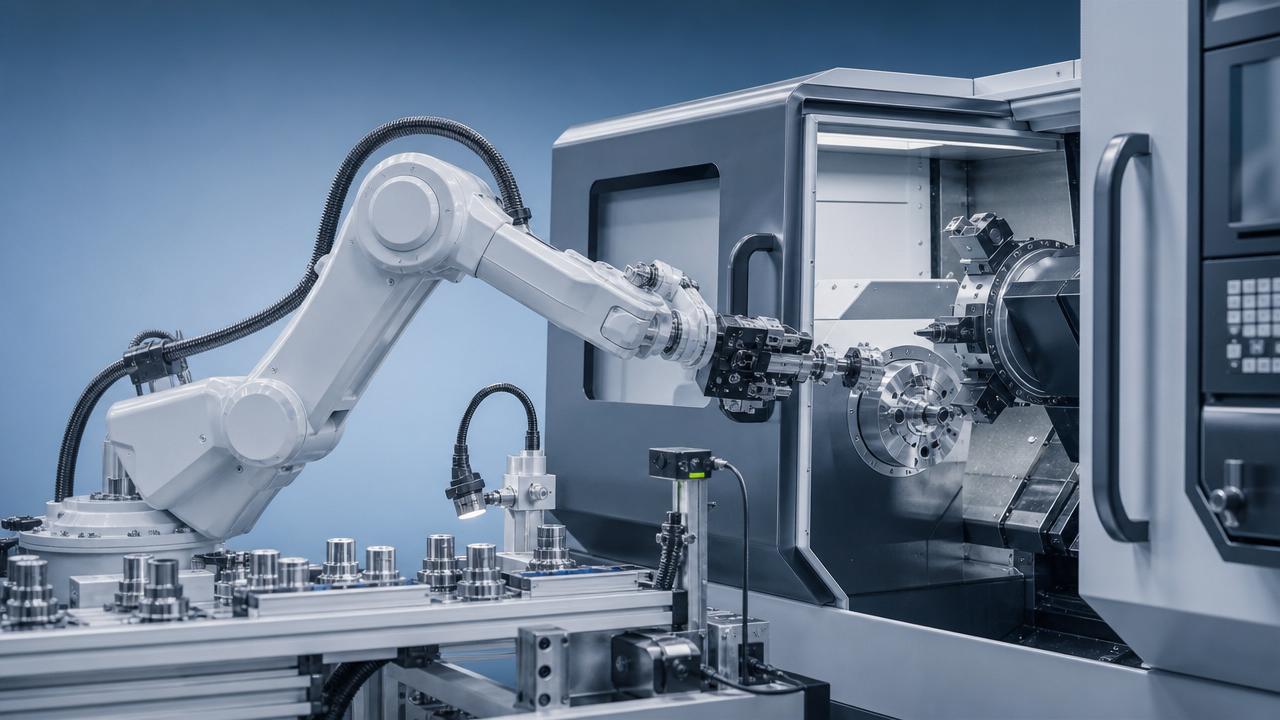
Before investing in Industrial Robotics, it is essential to evaluate more than payload, speed, or brand reputation. In CNC machining, precision manufacturing, and automated production, the value of Industrial Robotics depends on how well the system fits real production conditions. A robot that looks impressive on paper can still create bottlenecks if it lacks software compatibility, stable accuracy, or practical service support.
In modern manufacturing, Industrial Robotics often works alongside CNC lathes, machining centers, fixtures, conveyors, sensors, and quality control systems. That means an investment decision should connect capital cost with integration complexity, uptime targets, product mix, and long-term automation plans. A structured checklist reduces risk and helps compare robotic options on measurable criteria rather than marketing claims.
Why a checklist matters before investing in Industrial Robotics
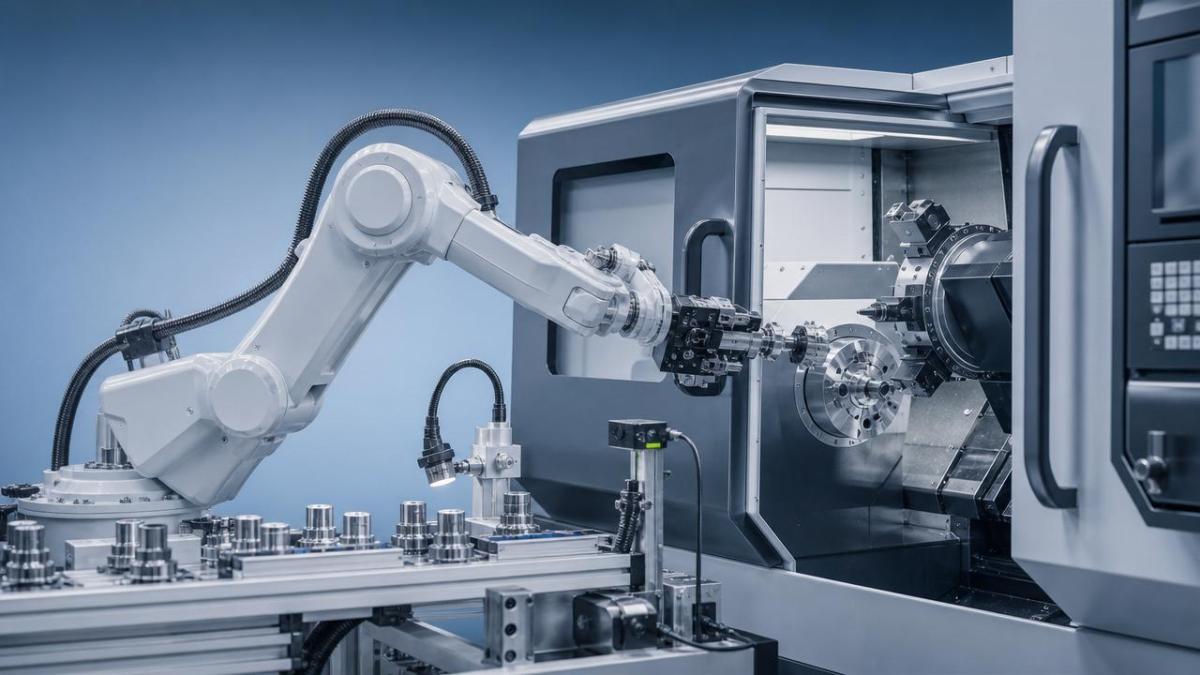
Industrial Robotics projects usually affect cycle time, labor allocation, plant layout, data flow, tooling, and maintenance routines at the same time. A checklist prevents important technical details from being missed during supplier discussions, pilot testing, and budgeting.
This is especially important in the CNC machine tool industry, where production accuracy, repeatability, and machine utilization directly influence profitability. The right Industrial Robotics solution can improve consistency and reduce manual handling. The wrong one may increase downtime, reprogramming effort, and hidden engineering costs.
Core checklist: what to check before investing in Industrial Robotics
- Define the target process clearly, including loading, unloading, assembly, deburring, inspection, or palletizing, so the Industrial Robotics investment matches an actual production task.
- Verify payload, reach, and wrist configuration against real part weight, gripper mass, tooling offsets, and machine access angles, not brochure values alone.
- Check repeatability requirements against machining tolerances, fixture variation, and vision guidance limits, especially for precision parts used in aerospace, automotive, and electronics production.
- Assess cycle time with realistic motion paths, door opening time, chuck actuation, part orientation, and safety interlocks to confirm the robot supports expected throughput.
- Review controller compatibility with CNC systems, PLCs, MES platforms, sensors, and industrial networks such as Profinet, EtherNet/IP, or OPC UA.
- Evaluate gripper and end-of-arm tooling options for part geometry, surface finish protection, chip contamination, and quick change requirements across different product families.
- Inspect layout constraints, including robot footprint, guarding, maintenance access, cable routing, and operator interaction within the existing production line.
- Calculate full lifecycle cost, including integration engineering, tooling, spare parts, training, software licenses, downtime risk, and future line modifications.
- Test programming flexibility for small batches, product changeovers, and mixed-model production, where Industrial Robotics must adapt without excessive offline engineering effort.
- Confirm safety strategy, covering fencing, scanners, collaborative zones, emergency stops, and compliance with local machine safety and robotic cell standards.
- Investigate service response time, local technical support, spare parts availability, and remote diagnostics capabilities before approving any Industrial Robotics supplier.
- Request proof from similar installations, using FAT, sample trials, and reference sites to validate performance in comparable CNC and precision manufacturing environments.
Application-specific checks across manufacturing scenarios
CNC machine tending
For CNC loading and unloading, Industrial Robotics must synchronize with spindle status, chuck confirmation, door signals, and part presence detection. Access path accuracy matters more than top travel speed.
Chip control is another critical factor. Coolant, sharp edges, and inconsistent part positioning can reduce gripper reliability. The robotic cell should be tested under actual shop conditions, not a clean demonstration area.
Precision assembly and handling
In electronics, precision components, and high-value assemblies, Industrial Robotics must protect surface quality while maintaining positional consistency. Soft gripping, force sensing, and vision calibration may be necessary.
Software integration becomes more important in these applications. Traceability, barcode reading, inspection feedback, and error recovery routines should be evaluated before final approval.
Flexible production lines
Where product mix changes frequently, Industrial Robotics should support recipe switching, quick gripper changes, and parameter management across multiple part numbers. Flexibility often creates more value than raw speed.
Digital connectivity also matters here. A robot that shares production status with MES or line monitoring systems can support scheduling, utilization tracking, and predictive maintenance goals.
Heavy-duty material movement
For larger castings, forgings, or structural parts, Industrial Robotics must be checked for payload margin, acceleration behavior, base rigidity, and safety stopping distance under full load.
In these cases, integration with positioners, conveyors, or automated storage can affect the total business case more than the robot itself. The complete cell should be evaluated as one system.
Commonly overlooked issues and risk reminders
Underestimating integration effort
Many Industrial Robotics budgets focus on the arm and controller, while the real complexity sits in interfaces, guarding, fixtures, sensing, and machine communication. Integration cost can reshape project ROI.
Using nominal speed instead of real cycle data
Catalog speed rarely reflects real production. Acceleration limits, approach accuracy, safety zones, and waiting logic can reduce throughput. Always request a simulated or proven cycle study.
Ignoring maintainability
A compact robotic cell may save floor space but create service problems later. Maintenance access to cables, grippers, lubrication points, and sensors should be reviewed during layout approval.
Overlooking software lock-in
Some Industrial Robotics solutions depend heavily on proprietary programming environments or paid software modules. This can increase long-term costs and limit future line expansion.
Skipping operator and technician training
Even reliable robotic systems lose value when recovery procedures, recipe selection, and basic troubleshooting are unclear. Training should be included in the project scope, not added later.
Practical execution advice for evaluating Industrial Robotics
- Map the full material flow before comparing robot models, including upstream buffers, part orientation, downstream inspection, and line balancing constraints.
- Prepare sample parts with tolerance variation, oil residue, and actual packaging conditions when asking for a robotic application test.
- Score each Industrial Robotics option using the same matrix for accuracy, integration risk, service strength, flexibility, and lifecycle cost.
- Ask suppliers to document assumptions behind cycle time, uptime, and maintenance intervals so quotes can be compared on equal terms.
- Start with a pilot cell if process uncertainty is high, then scale to a flexible production line after proving stability and programming workflow.
Conclusion and next-step guidance
Investing in Industrial Robotics is not simply a purchase of equipment. It is a decision about process design, digital integration, precision control, and future manufacturing flexibility. In CNC machining and precision production, success depends on matching robotic capability with actual parts, actual machines, and actual operating conditions.
Use a checklist-led approach to compare Industrial Robotics options across payload, repeatability, software compatibility, safety, service, and lifecycle economics. Then validate the shortlist with realistic trials, integration reviews, and site-level planning. That method turns automation interest into a practical investment decision with lower risk and stronger long-term value.
PREVIOUS ARTICLE
NEXT ARTICLE
Recommended for You
![]() China's CSF Harmonic Drives Pass ISO 9409-1:2023, Open Import-Substitution Window
China's CSF Harmonic Drives Pass ISO 9409-1:2023, Open Import-Substitution Window![]() Weimait CNC Achieves IATF 16949:2024 Certification
Weimait CNC Achieves IATF 16949:2024 Certification![]() New MIIT Rule: CNC Export Equipment Must Include Multilingual Remote Diagnostics from May 2026
New MIIT Rule: CNC Export Equipment Must Include Multilingual Remote Diagnostics from May 2026![]() CCMT 2026 Concludes in Shanghai: Surge in Five-Axis CNC Export Orders, Lead Times Extend to 14 Weeks
CCMT 2026 Concludes in Shanghai: Surge in Five-Axis CNC Export Orders, Lead Times Extend to 14 Weeks![]() CIMES 2026 Opens in Beijing: Global Buyers Prioritize Smart Production Lines and Export Compliance
CIMES 2026 Opens in Beijing: Global Buyers Prioritize Smart Production Lines and Export Compliance A weak Production Process can raise costs without warningCNC Machining Technology Center


Aris Katos
Future of Carbide Coatings
15+ years in precision manufacturing systems. Specialized in high-speed milling and aerospace grade alloy processing.
▶
What to check before investing in Industrial RoboticsManufacturing Market Research Center▶
What to check before investing in Industrial RoboticsManufacturing Market Research Center▶
Is Industrial Automation worth it for rising labor costsManufacturing Market Research Center▶
When does Industrial Automation actually pay for itself?Manufacturing Market Research Center▶
Is Industrial Automation worth it for mid-size factories now?Manufacturing Market Research Center
Mastering 5-Axis Workholding Strategies
Join our technical panel on Nov 15th to learn about reducing vibrations in thin-wall components.

Providing you with integrated sanding solutions
Before-sales and after-sales services
Comprehensive technical support