• Global CNC market projected to reach $128B by 2028 • New EU trade regulations for precision tooling components • Aerospace deman
NYSE: CNC +1.2%LME: STEEL -0.4%

Why some industrial lathe investments take longer to pay back
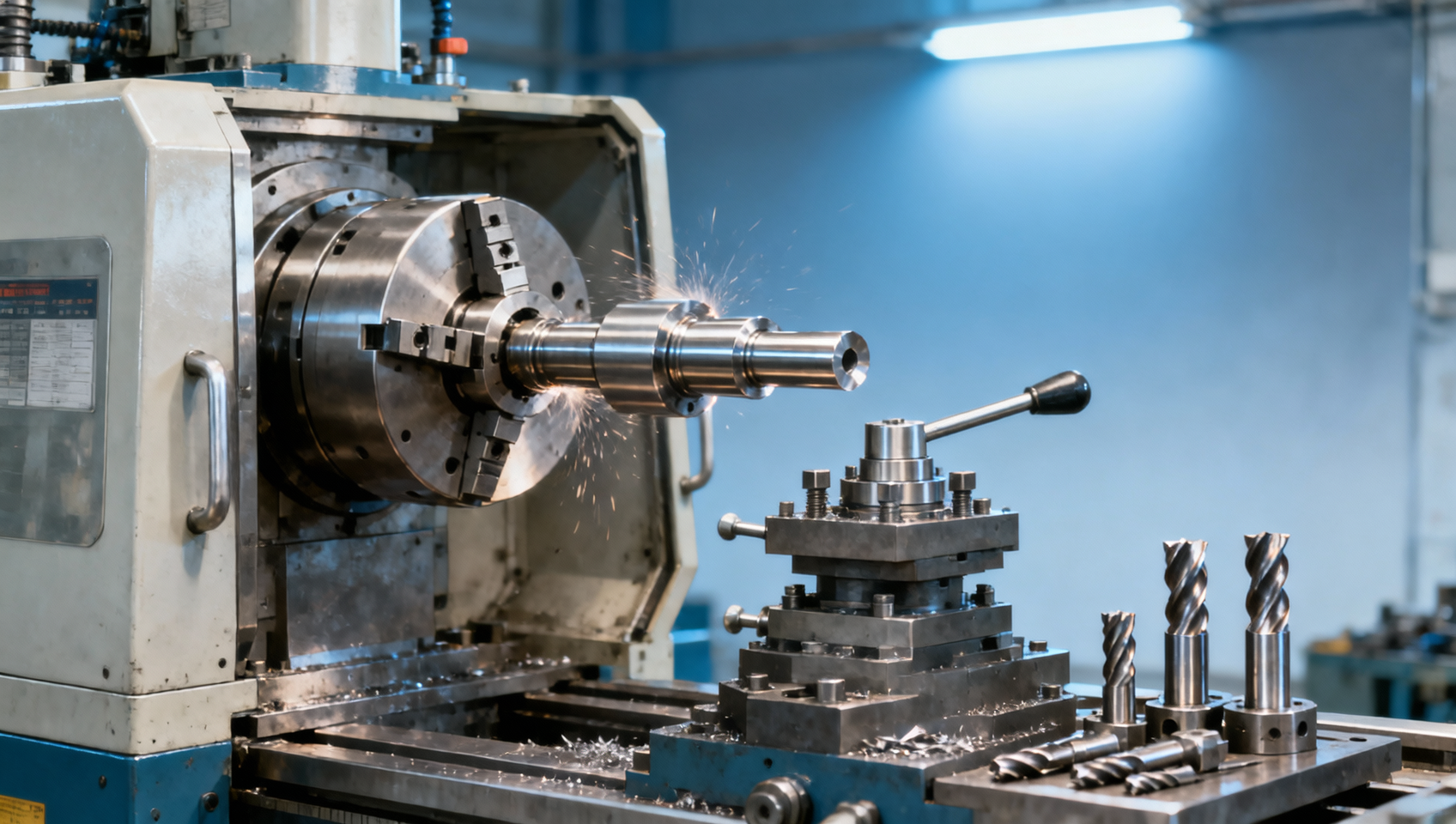
In the Manufacturing Industry, an industrial lathe or automated lathe can seem like a fast path to higher output, yet the real payback often depends on more than machine price alone. From metal machining efficiency and CNC Programming to labor skills, tooling, uptime, and the wider Production Process, many factors shape ROI. Understanding these variables helps buyers and operators make smarter industrial CNC investment decisions.
For researchers, machine operators, procurement teams, and business decision-makers, the challenge is rarely whether a CNC lathe can improve production. The harder question is why two companies can buy similar equipment and see very different results after 12, 24, or even 36 months. In many workshops, the delay is caused by hidden costs, weak process planning, or poor application matching rather than the machine itself.
This article explains why some industrial lathe investments take longer to pay back, what variables most affect return on investment, and how manufacturers can shorten the payback cycle through better selection, implementation, and ongoing machine utilization.
The machine price is only one part of the payback equation
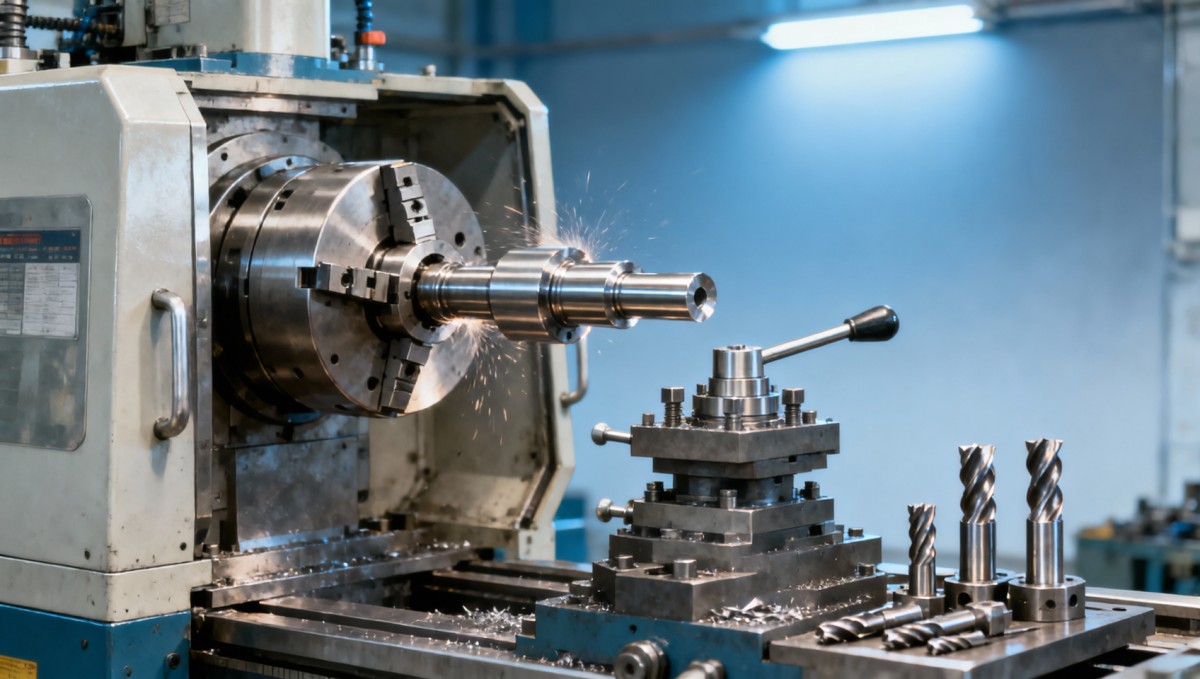
Many buyers begin with the capital cost of the lathe, but payback depends on total ownership cost over a period that often ranges from 3 to 7 years. A standard CNC lathe, an automated lathe, and a multi-axis turning center may all support similar part families, yet their installation demands, tooling needs, and labor requirements can differ sharply. A lower purchase price can still lead to a slower return if operating costs stay high.
In practical manufacturing, hidden costs usually appear in 5 areas: tooling consumption, setup time, operator training, downtime, and process integration. If one machine saves 18% in cycle time but needs frequent changeovers and higher-cost inserts, the financial advantage may be smaller than expected. On the other hand, a more expensive industrial lathe can reach payback faster if it supports stable unmanned shifts or reduces scrap by 2%–5%.
This is especially important in sectors such as automotive parts, aerospace components, energy equipment, and electronics hardware, where dimensional accuracy, repeatability, and throughput all influence profitability. A machine that performs well in a brochure may not perform equally well in a production environment with mixed batches, urgent orders, or strict tolerance control.
Core cost categories that affect ROI
Before approving a purchase, decision-makers should compare the visible and invisible cost structure of the planned investment. A clear financial model often prevents unrealistic payback expectations.
The key lesson is simple: a machine tool investment should be judged by productive output per month, not by invoice price alone. Buyers that model utilization, labor savings, and throughput over at least 24 months usually make more accurate decisions than those comparing only quotations.
A better way to estimate return
A practical ROI estimate should include at least these 4 metrics:
- Expected spindle utilization rate, such as 55%, 70%, or above 80% after ramp-up.
- Average cycle time reduction per part, for example 10–30 seconds on repeat jobs.
- Labor impact, including whether 1 operator can manage 1 machine or 2–3 connected cells.
- Scrap and rework reduction, especially for tolerance-critical parts within ±0.01 mm to ±0.05 mm ranges.
When these figures are realistic, the payback timeline becomes easier to forecast. When they are guessed or overstated, the investment often underperforms.
Poor process matching is a common reason payback slows down
An industrial lathe delivers the strongest return when it matches the actual production mix. Problems start when a machine is selected for maximum specification rather than real shop-floor demand. A plant producing 500 to 2,000 repeat shaft components per month needs a different solution from a subcontractor handling 20 to 50 part numbers with frequent setup changes.
In mixed manufacturing environments, setup reduction can be more valuable than raw cutting speed. If a high-performance CNC lathe cuts 15% faster but requires 40 minutes more per changeover, overall output may drop for short-run production. This is why batch size, material type, tolerance level, and workholding strategy should all be reviewed before purchase.
Another issue is underloading. Some factories buy a multi-axis or automated turning solution designed for lights-out production, but only run it on one day shift. In that case, the machine’s capacity is never fully used, and the repayment window can extend from 18 months to 30 months or more.
Typical mismatch scenarios
The table below shows how production profile affects whether an investment pays back quickly or slowly.
This comparison shows that a slower payback often starts before installation. It begins when the selected solution does not fit the order mix, operator skill level, or future production plan.
Questions procurement teams should ask
- What is the average batch size over the last 6 to 12 months, not just the largest order?
- How many part families require changeover in a typical week?
- What percentage of production needs tolerances tighter than ±0.02 mm?
- Will the machine run 1 shift, 2 shifts, or support unattended hours at night?
- Can existing operators program and maintain the equipment within 30–60 days?
If these questions are answered early, companies reduce the risk of buying capacity they cannot use or complexity they cannot support.
Training, programming, and uptime often matter more than brochure performance
Even a well-chosen industrial CNC lathe can take longer to pay back when shop-floor readiness is weak. Programming quality affects cycle time, tool life, and part consistency. Operators who are new to turning centers, live tooling, or multi-axis routines may need 2 to 6 weeks to reach stable daily output, and more time if the machine includes automation interfaces or in-process measurement functions.
Uptime is equally critical. A machine expected to run 22 days per month but losing 12% of available time to alarms, maintenance delays, or fixture problems can miss its revenue targets by a wide margin. In ROI terms, every lost hour matters because capital cost continues whether the spindle is cutting or not.
Another overlooked issue is post-installation support. If spare parts require 7–14 days to arrive, or remote troubleshooting is slow, small faults can become costly interruptions. For businesses with tight delivery schedules, support responsiveness may be as important as machine rigidity or spindle speed.
Where delays usually happen after installation
Most payback delays show up in the first 90 to 180 days. That period should be managed as a structured launch stage, not treated as a simple handover.
- Machine commissioning takes longer than planned because utilities, coolant systems, or foundation readiness were not finalized.
- Programming is not optimized, so actual cycle time remains 8%–20% above target.
- Operators lack confidence with tool offsets, alarm handling, or automatic routines.
- Tool wear data is not tracked, leading to premature insert changes or unexpected part variation.
- Preventive maintenance is reactive instead of scheduled, which increases unplanned downtime.
Practical actions to shorten the ramp-up phase
Factories can improve payback speed by preparing a launch plan with measurable milestones. For example, week 1 may focus on installation and first-article validation, weeks 2–4 on program optimization, and months 2–3 on OEE stabilization. A target such as 75% utilization by day 60 and 85% by day 120 provides a more realistic benchmark than general promises of “fast startup.”
It also helps to cross-train at least 2 people per shift. When only one programmer or one senior operator understands the machine, output becomes vulnerable. In contrast, a broader skill base supports consistent production, quicker fault recovery, and stronger long-term return.
In advanced manufacturing cells, digital monitoring can add further value. Tracking spindle hours, alarm frequency, and actual versus planned cycle times once per shift gives managers early visibility into slow ROI drivers before they become major losses.
How to evaluate an industrial lathe investment before you buy
A better procurement process does not eliminate risk, but it makes the return more predictable. Instead of selecting purely by technical specification, buyers should combine production data, cost assumptions, and implementation requirements in a single review. This approach is useful for both standalone CNC lathes and more automated turning solutions integrated into smart manufacturing lines.
For many factories, 4 decision layers matter most: application fit, total cost, service support, and future flexibility. A machine that fits today’s shaft parts but cannot support next year’s disc components or secondary operations may become a bottleneck. Likewise, attractive pricing means little if support coverage is weak or consumable cost is too high for long-term production.
A structured evaluation matrix is especially valuable for procurement managers comparing multiple suppliers across China, Germany, Japan, South Korea, or other manufacturing markets. The goal is not simply to identify the cheapest offer, but to find the option with the best production economics over a realistic operating period.
Suggested pre-purchase evaluation matrix
The following framework helps teams review investment quality with more discipline.
This kind of matrix helps companies compare offers on production value, not just equipment list. It also creates a stronger internal business case for finance teams and plant leadership.
Warning signs before purchase
- The supplier cannot explain expected setup time for your specific part family.
- No clear training plan is offered for operators, programmers, and maintenance staff.
- Tooling, chucking, automation, or software costs are excluded from the main quotation.
- ROI assumptions are based on full-capacity operation from day 1.
- There is no defined spare-parts or technical response window for the first year.
If two or more of these warning signs appear, the investment may still work, but the payback period should be modeled more conservatively.
Strategies to accelerate payback after installation
Once the industrial lathe is on the floor, the fastest way to improve return is to increase productive time while controlling process variation. In most factories, that means shortening setup, standardizing tooling, improving scheduling, and raising machine loading efficiency. Even a 10% increase in monthly spindle utilization can make a noticeable difference to breakeven speed.
For example, if a CNC lathe is planned for 320 available hours per month but actually cuts for only 180 hours, the utilization rate is just 56.25%. Raising that figure to 230 or 250 hours through better job grouping, preset tooling, or reduced waiting time can do more for ROI than minor speed adjustments. The machine must be treated as part of a production system, not an isolated asset.
It is also useful to prioritize the right jobs. High-repeat parts with stable tolerances, predictable material supply, and low changeover complexity should be loaded first when a new machine is commissioned. That creates faster revenue capture and gives the team time to refine programs before moving to more difficult parts.
Operational moves that usually improve ROI
- Standardize the top 10 to 20 tools used most often to reduce setup errors and inventory confusion.
- Preset offsets offline where possible so the machine is not occupied during preparation work.
- Group similar materials and diameters in production planning to lower changeover frequency.
- Track OEE, scrap rate, and average cycle time weekly for the first 6 months.
- Schedule preventive maintenance every 250–500 spindle hours based on actual use and machine guidance.
FAQ for buyers and plant teams
The questions below reflect common search intent from procurement managers, operators, and manufacturing leaders.
How long should an industrial lathe take to pay back?
There is no single answer, but many manufacturers model a payback target between 18 and 36 months. High-volume automated applications may recover faster, while low-mix, high-changeover environments often need a longer window. The right target depends on utilization, labor savings, tooling cost, and quality performance.
What is the biggest mistake in CNC lathe investment planning?
A common mistake is assuming the machine will immediately run at planned speed and schedule. In reality, commissioning, training, and process optimization usually require several weeks or months. ROI models should include a ramp-up period instead of full production from the first month.
Is automation always better for faster return?
Not always. Automation can greatly improve throughput in repeat production, especially above several thousand units per month. But if the order mix is unstable or the shop runs only one shift, the additional capital and complexity may delay payback rather than accelerate it.
Which KPI should be monitored first after installation?
Start with spindle utilization, actual cycle time versus quoted cycle time, scrap rate, and alarm frequency. These 4 indicators usually reveal whether the machine is moving toward expected ROI or drifting away from plan.
Industrial lathe investments take longer to pay back when capital planning ignores the realities of production: setup time, operator capability, tooling strategy, maintenance discipline, and actual machine utilization. The best-performing CNC machine tool projects are rarely the ones with the lowest purchase price. They are the ones with the best fit between machine capability and the real manufacturing process.
For information researchers, users, procurement teams, and enterprise decision-makers, the practical path is clear: evaluate the full cost structure, confirm process compatibility, prepare a 90-day ramp-up plan, and monitor output with hard metrics. If you are reviewing industrial lathe options, planning a CNC upgrade, or comparing automated turning solutions for precision manufacturing, now is the right time to get a tailored assessment. Contact us to discuss your production goals, request a customized solution, or learn more about machine tool selection strategies that support faster and more reliable ROI.
PREVIOUS ARTICLE
NEXT ARTICLE
Recommended for You
 Metal machining costs keep rising. Where is the waste?CNC Machining Technology Center
 What slows metal machining even when machines look busy?CNC Machining Technology Center
 Industrial CNC uptime drops for simple reasons too oftenMachine Tool Industry Editorial Team
 When does industrial CNC need an upgrade, not a repair?Machine Tool Industry Editorial Team
 CNC industrial demand is shifting toward smaller batch runsManufacturing Market Research Center
 Why CNC industrial projects miss deadlines after quotingCNC Machining Technology Center

Aris Katos
Future of Carbide Coatings
15+ years in precision manufacturing systems. Specialized in high-speed milling and aerospace grade alloy processing.
▶
Why some industrial lathe investments take longer to pay backManufacturing Market Research Center▶
Automated production is expanding in parts with stable repeat demandManufacturing Market Research Center▶
Precision equipment buyers assumed AI-assisted alignment was standard—turns out only 37% of models deliver itManufacturing Market Research Center▶
Industrial CNC adoption hit a plateau in Q1 2026—not from cost, but from operator readiness gapsManufacturing Market Research Center▶
Manufacturing technology adoption slowed in Q1 2026 — not from budget cuts, but from integration fatigueManufacturing Market Research Center
Mastering 5-Axis Workholding Strategies
Join our technical panel on Nov 15th to learn about reducing vibrations in thin-wall components.

Providing you with integrated sanding solutions
Before-sales and after-sales services
Comprehensive technical support