• Global CNC market projected to reach $128B by 2028 • New EU trade regulations for precision tooling components • Aerospace deman
NYSE: CNC +1.2%LME: STEEL -0.4%

CNC industrial demand is shifting toward smaller batch runs
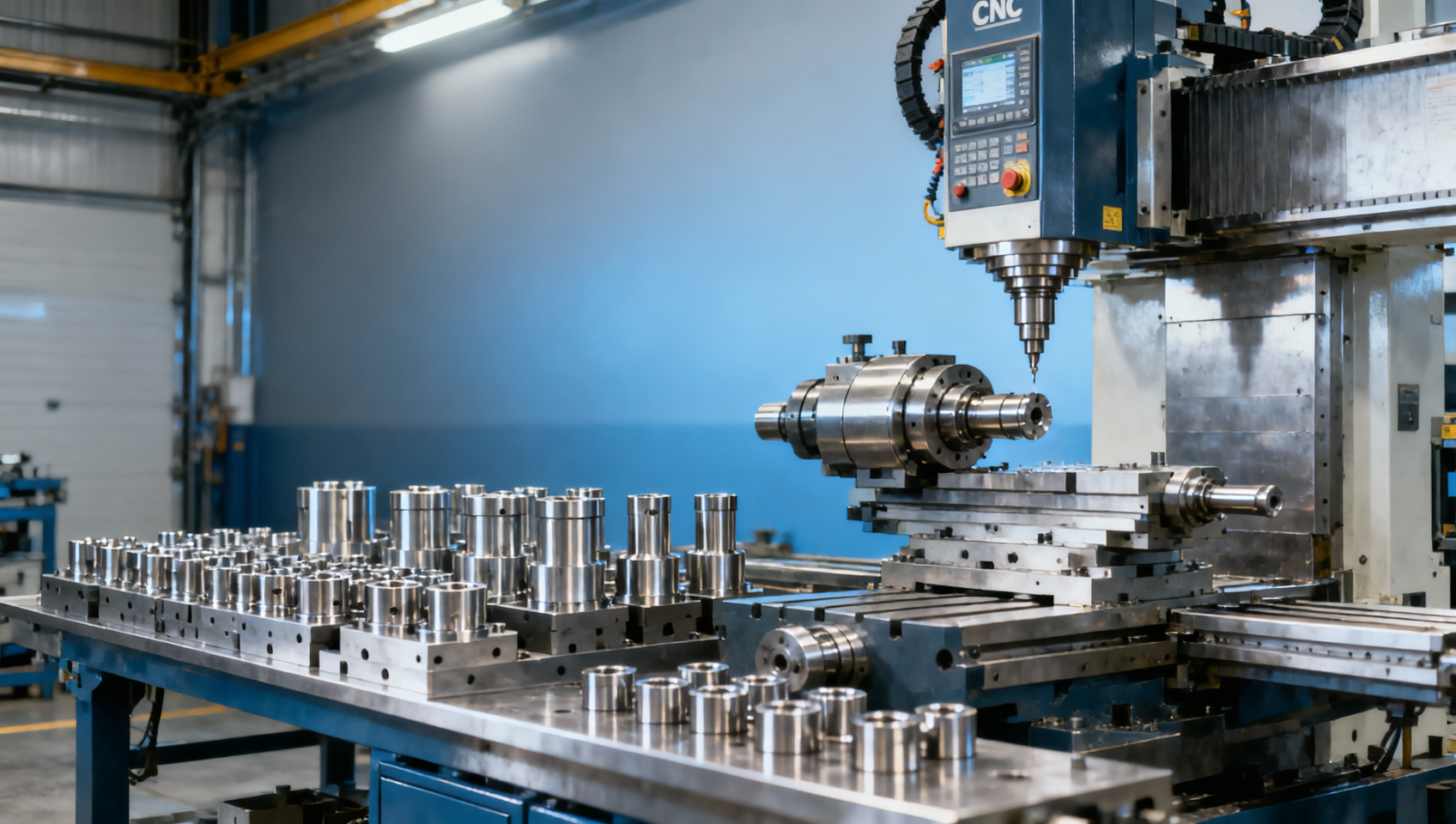
As Global Manufacturing shifts toward smaller batch runs, the Manufacturing Industry is rethinking metal machining through industrial CNC, CNC milling, and automated production. From CNC cutting and metal lathe applications to smarter Production Process design, flexible CNC production is becoming essential for buyers, operators, and decision-makers seeking precision, speed, and cost efficiency.
This shift is not a short-term response to market volatility. It reflects a deeper change in how manufacturers serve customers who now expect faster design updates, shorter product life cycles, and lower inventory risk. In CNC machining, that means machine tools, fixtures, software, and workflow planning must support frequent changeovers without sacrificing dimensional accuracy or cost control.
For procurement teams, the core question is no longer only about maximum output per hour. It is about whether a CNC production system can handle 20 parts this week, 200 next month, and a revised drawing after that, all while keeping tolerances, lead times, and unit economics under control. For operators and production managers, flexibility now matters almost as much as spindle power and axis count.
Why smaller batch CNC production is becoming a mainstream demand
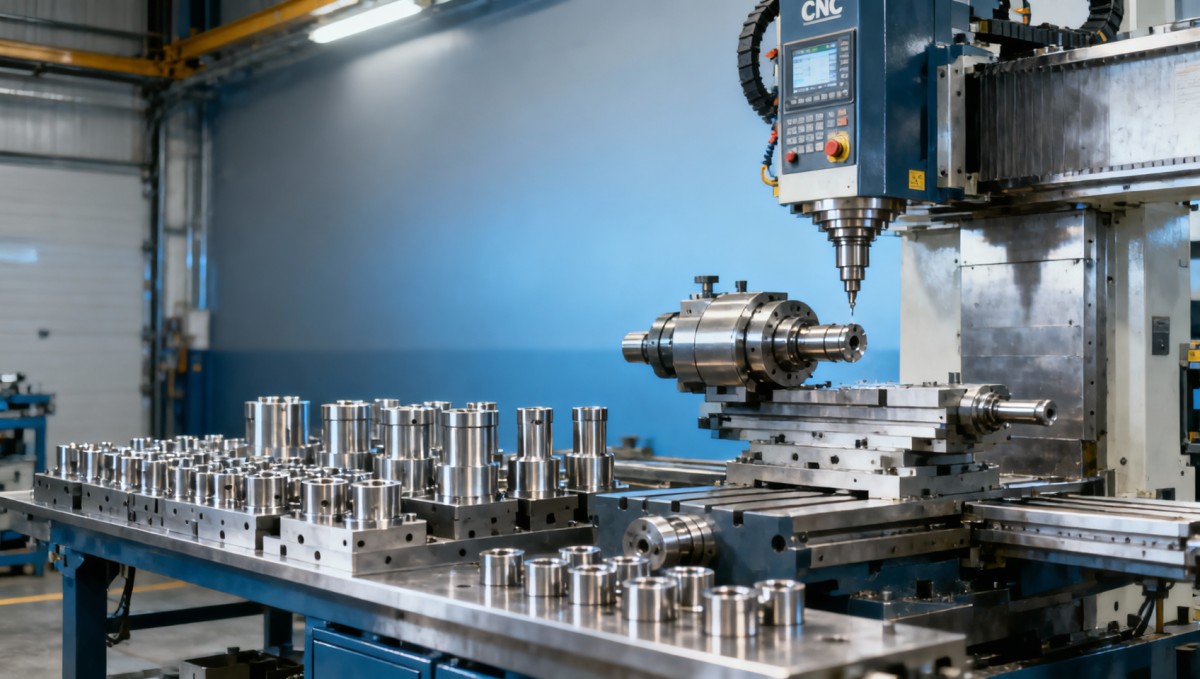
In many sectors, batch sizes are shrinking because end markets are fragmenting. Automotive suppliers must manage more model variants, electronics producers face rapid iteration cycles, and industrial equipment makers increasingly offer customized assemblies. Instead of running 10,000 identical parts over a long period, many workshops now process batches of 30, 80, or 300 parts with more frequent engineering changes.
This pattern changes the economics of CNC machining. Traditional high-volume thinking favors long setup time if it can be spread across thousands of parts. Smaller batch runs make setup time, fixture standardization, tool presetting, and program transfer much more important. A 90-minute setup on a 50-part order has a very different cost impact than the same setup on a 5,000-part order.
Another driver is inventory strategy. Many manufacturers now prefer leaner stock levels and more responsive replenishment. Producing in smaller lots reduces the risk of obsolete components, especially when designs can change in 4 to 12 weeks. For buyers, this can improve cash flow and reduce warehouse pressure, but only if the CNC supplier or in-house line can maintain repeatability across multiple short runs.
Digitalization also supports this shift. Modern machining centers, CNC lathes, and multi-axis systems can store hundreds of programs, support faster parameter switching, and integrate with offline programming or MES workflows. These capabilities make short-run production more practical than it was 10 years ago, especially when paired with barcode-based job routing and tool life monitoring.
Key market pressures behind the change
- Shorter product development cycles, often reduced from 18–24 months to 6–12 months in some component categories.
- More product variants, which increase the number of part numbers and lower average order volume per SKU.
- Higher demand for customized components in aerospace, medical devices, electronics housings, and specialized energy equipment.
- Supply chain risk control, pushing companies to avoid overcommitting to large inventory builds.
Operational impact on factories
The operational effect is clear: flexibility must be engineered into the production process. Shops that still rely on manual setup notes, dedicated one-part fixtures, or disconnected scheduling systems often struggle when order frequency rises. In contrast, shops with modular workholding, standardized tool libraries, and documented setup sheets can switch jobs in 15–40 minutes rather than 1–2 hours.
That improvement does not only affect productivity. It also reduces scrap risk during first-piece validation and improves delivery reliability. In smaller batch CNC production, stable repeatability across frequent restarts is a decisive competitive advantage.
What buyers and production teams should evaluate in flexible CNC capacity
When evaluating CNC suppliers or planning internal capacity upgrades, decision-makers should look beyond machine size alone. For smaller batch runs, the best production system is usually the one that reduces non-cutting time, supports mixed-part scheduling, and keeps tolerance control stable from batch to batch. This is especially relevant for precision shafts, discs, housings, brackets, and structural parts with multiple operations.
A useful evaluation framework combines machine capability, process planning, and service responsiveness. A 3-axis machining center may be cost-effective for simple prismatic parts, while a 5-axis system can reduce total handling steps from 3 setups to 1 setup for complex components. The right choice depends on geometry, tolerance, annual demand, and changeover frequency rather than on machine sophistication alone.
The table below outlines common evaluation points for procurement teams, operators, and plant managers dealing with flexible CNC production.
The main takeaway is that flexible CNC capacity is a system capability, not a single-machine feature. Buyers should compare not only spindle speed or travel range, but also repeat setup performance, fixture strategy, inspection discipline, and engineering support. These are often the factors that determine whether short-run orders remain profitable.
Selection criteria by stakeholder group
For procurement teams
- Confirm minimum economical batch size and whether pricing changes sharply below 50, 100, or 500 pieces.
- Review lead time for first batch, repeat batch, and engineering change orders separately.
- Ask how suppliers manage tooling wear, revision traceability, and lot-level quality records.
For operators and production planners
- Check whether common fixtures and zero-point clamping systems are available.
- Verify tool library standardization and offset management procedures.
- Evaluate whether in-process inspection can be completed at defined intervals such as every 5, 10, or 20 parts.
Process design changes that make small-batch CNC profitable
Smaller batch runs do not automatically mean higher costs. Profitability depends on how the production process is designed. The biggest gains usually come from reducing setup waste, minimizing manual intervention, and improving first-pass yield. In many workshops, a 10% reduction in cutting time matters less than a 30% reduction in setup and verification time.
One effective approach is modularization. Instead of building a dedicated fixture for every part family, manufacturers can use modular vises, soft jaws, pallet systems, and standardized locating surfaces. This can shorten fixture preparation time from several hours to less than 30 minutes for repeat jobs. The same logic applies to tool holders, gauge plans, and CAM templates.
Another major lever is program and revision management. When engineering updates happen frequently, version confusion can create scrap, rework, and delayed shipments. Shops handling flexible CNC production should maintain clear revision history, operator-visible setup instructions, and controlled release procedures. Even a simple 3-step release check can prevent costly errors on precision parts.
Automation does not always mean full lights-out production. For smaller batches, practical automation often includes bar feeders for CNC lathes, tool breakage detection, automatic probing, pallet changers, and robotic loading for repeatable part families. These targeted upgrades can improve spindle utilization by 10% to 25% without the investment intensity of a fully automated cell.
Common process upgrades and their value
The table below shows how selected process improvements support short-run metal machining and CNC production flexibility.
These improvements matter because smaller batch production magnifies every source of overhead. A process that is acceptable for large runs can become inefficient when batch sizes drop below 100 parts. Manufacturers that redesign process flow around flexibility can often protect margins while offering shorter lead times.
A practical 5-step implementation path
- Map current setup time by machine type and part family.
- Standardize fixtures, tools, and setup documents for the top 20 recurring jobs.
- Introduce quick-change workholding or pallet strategy where repeat demand exists.
- Integrate revision control between engineering, programming, and shop floor release.
- Track setup time, scrap rate, and on-time delivery for at least 8–12 weeks.
Risks, cost traps, and purchasing mistakes in small-batch machining
The transition toward smaller batch CNC production creates opportunities, but it also exposes weaknesses in quoting, planning, and quality assurance. One common mistake is comparing suppliers mainly by unit price without understanding setup assumptions. A quote based on a 500-piece run may not remain competitive when actual demand arrives as five separate orders of 100 pieces over several months.
Another risk is underestimating engineering overhead. Frequent drawing revisions, prototype-to-production transitions, and inspection plan changes can add hidden cost. If these activities are not built into the sourcing model, a buyer may face unexpected delays or disputes over change charges. For parts with tight tolerances or multiple finishing steps, this issue becomes even more significant.
Quality variation between batches is also a major concern. When jobs restart after weeks or months, differences in tooling condition, machine calibration, or operator interpretation can shift dimensions. This is why repeat batch validation is essential. In many precision machining environments, checking critical dimensions on the first 3 to 5 parts of a restart lot is a sensible control practice.
Lead time risk should not be ignored either. Shops with good machine capacity can still miss delivery if tooling procurement, inspection bottlenecks, or subcontracted finishing are not aligned. Buyers should ask for realistic lead-time breakdowns rather than relying on a single overall promise.
Frequent mistakes to avoid
- Choosing a supplier based only on hourly machining rate instead of total order economics.
- Ignoring repeat setup capability and assuming every batch will match the original sample run.
- Using part-specific fixtures for low-frequency jobs that could be handled with modular workholding.
- Treating prototype and recurring short-run production as identical cost structures.
Questions buyers should ask before placing an order
Buyers should request clarity on at least four points: repeat order lead time, setup charge policy, quality control at batch restart, and engineering change handling. For example, it is useful to distinguish whether a repeat order can ship in 7–15 days, whether fixture costs are amortized, and whether revised drawings trigger full reprogramming or limited updates.
For enterprise decision-makers, the larger issue is supplier resilience. A smaller batch strategy works only when the machining partner can support frequent order variation without operational instability. That means consistent process documentation, transparent communication, and enough planning discipline to manage mixed demand.
How CNC suppliers and manufacturers can respond with stronger service models
As demand shifts toward smaller lot sizes, the competitive edge increasingly comes from service structure as much as machine capability. Suppliers that respond well usually combine application engineering, flexible scheduling, and clear technical communication. They do not simply sell machining time; they help customers stabilize the full production process from quotation to repeat delivery.
A stronger service model often includes early manufacturability review, process route confirmation, fixture recommendation, and a defined inspection plan before the first batch starts. This can reduce avoidable changes later in the project. For components with multiple surfaces, tight concentricity, or thin-wall features, early review is especially important because these parts are more sensitive to setup and clamping strategy.
Suppliers should also separate service levels for prototype, pilot, and recurring production. A 10-piece prototype run may prioritize speed and engineering iteration, while a 200-piece recurring order should emphasize repeatability, documented setup, and stable delivery cadence. Defining these stages makes quotation, resource planning, and customer expectations more accurate.
For manufacturers building internal capacity, the same principle applies. Flexible CNC production works best when engineering, purchasing, machining, inspection, and logistics are connected through a consistent workflow rather than isolated decisions.
Recommended service framework for small-batch CNC projects
- Stage 1: Drawing and process review within 24–72 hours for standard parts.
- Stage 2: Tooling and fixture assessment with cost visibility before order release.
- Stage 3: First-piece approval supported by documented measurement points.
- Stage 4: Repeat order control with revision lock and setup sheet reuse.
- Stage 5: Delivery feedback loop covering quality, lead time, and process improvement.
FAQ for buyers and plant teams
How small is a “small batch” in CNC machining?
It depends on the part and industry, but common short-run ranges are 10–100 pieces for prototypes or service parts, and 100–1,000 pieces for recurring low-volume production. The key factor is whether setup overhead is a significant share of total order cost.
Are multi-axis machines always better for smaller batches?
Not always. Multi-axis machining can reduce setups and improve complex-part efficiency, but for simple geometry a well-configured 3-axis machine or CNC lathe may offer a better cost balance. The correct choice depends on tolerance, surface access, cycle time, and fixture complexity.
What lead time is realistic for repeat short-run orders?
For stable parts with existing tooling and process documents, repeat orders often fall in the 7–15 day range. New parts or revised drawings may require 2–4 weeks depending on programming, raw material availability, and any secondary processes such as heat treatment or coating.
Smaller batch runs are reshaping the CNC machine tool industry by rewarding flexibility, disciplined process control, and smarter production design. The companies that adapt fastest are not only investing in machine capability, but also improving setup strategy, revision control, modular workholding, and customer-facing service models.
For information researchers, operators, procurement teams, and enterprise leaders, the practical priority is clear: evaluate CNC production as a complete system that balances precision, responsiveness, and total cost across repeated short runs. If you are planning sourcing changes, equipment upgrades, or a more flexible machining workflow, now is the right time to review your options in detail.
Contact us to discuss your batch profile, part complexity, and delivery targets, and get a more tailored CNC production solution for today’s flexible manufacturing environment.
PREVIOUS ARTICLE
Recommended for You
 Heavy-duty Machining Center for mold making: Why coolant filtration standards evolve faster than OEM manualsMachine Tool Industry Editorial Team
 Quick-change Fixture Design for CNC turning: Why clamping force consistency drops after 200 cyclesCNC Machining Technology Center
 5 Axis Machining for impeller manufacturing: Why toolpath smoothing affects surface fatigue lifeCNC Machining Technology Center
 Lean Production Process implementation: Where value stream mapping fails to expose hidden machine downtimeManufacturing Market Research Center
 Modular Tooling System for flexible manufacturing: Why interface repeatability degrades faster than expectedMachine Tool Industry Editorial Team
 Industrial Automation control system for CNC machines: When cybersecurity updates disrupt scheduled maintenanceMachine Tool Industry Editorial Team

Aris Katos
Future of Carbide Coatings
15+ years in precision manufacturing systems. Specialized in high-speed milling and aerospace grade alloy processing.
▶
Machine tool supplier: Why ‘in-stock’ labels don’t guarantee same-week delivery anymoreManufacturing Market Research Center▶
Vertical Lathe Demand Is Rising in Energy Equipment SupplyManufacturing Market Research Center▶
CNC Industrial Demand Is Moving Toward Mid Size FactoriesManufacturing Market Research Center▶
Is Industrial CNC Retrofitting Better Than New Equipment?Manufacturing Market Research Center▶
CNC industrial demand is shifting toward smaller batch runsManufacturing Market Research Center
Mastering 5-Axis Workholding Strategies
Join our technical panel on Nov 15th to learn about reducing vibrations in thin-wall components.

Providing you with integrated sanding solutions
Before-sales and after-sales services
Comprehensive technical support